
In 2016 I attended this conference with David Pearce. In 2018 I did so with Michael Johnson, Adam Safron, and Hunter Meyer. This year we went as a QRI + collaborators contingent with Chris Percy, Asher Soryl, Cube Flipper, Symmetric Vision, Hunter and I. Brad Caldwell also decided to join us at the last second. It turned out to be so much fun!
The Science of Consciousness in Tucson is one of the best events of the year (well, every two years), at least in my mind. The people who attend are generally incredibly smart and tend to be experts in at least one domain of inquiry, such as physics, chemistry, biology, neuroscience, computer science, philosophy, or psychology, along with a significant proportion of meditation, yoga, and “energy work” practitioners. As presented during the plenary “The Science of Consciousness – 30 Years On” (presided over by David Chalmers, Susan Blackmore, Christof Koch, Stuart Hameroff, and Paavo Pylkkänen), one of the key shaping mechanisms for this conference has been Stuart Hameroff’s insistence to allow discussions of currently unexplained phenomena (from psychedelic experiences and meditative states to NDEs and astral projection). According to him, people interested in these phenomena wanted him to design the conference around them, while scientists wanted to keep it strictly within the bounds of conventional views. He stood his ground and defended the importance of having a mixture. On the one hand, the extreme openness that characterizes the conference attracts some people with perhaps somewhat flaky epistemology. But on the other hand, it legitimately enriches the evidential base to work with. Quite aside from the metaphysical implications and speculations surrounding exotic experiences, it ought to be undeniable that any experience whatsoever constitutes an explananda for a complete theory of consciousness. If you can explain normal everyday vision but your theory doesn’t predict the hyperbolic geometry of DMT visions, your theory is far from complete. I think this move by Hameroff was brilliant, and we all owe him gratitude for insisting to keep both sides in.
The way I experienced this conference in particular was very different from how I felt the two previous times I attended. In fact, the phenomenology was so different that I think it would be worth creating a Journal of Phenomenology of Consciousness Conferences, dedicated to piecing together the whys and hows of each participant’s unique lived experience at these events. Both times I attended before I was still working full time as a data scientist at Bay Area companies. Consciousness research remained a side project (which nonetheless consumed an inordinate amount of time and mental energy). My views were already quite developed, but it would be hard to dismiss the progress that we’ve made since then. With papers published in academia, a lively community, a network of artists, meditators, and philosophers who collaborate with us and engage with our research, and much more experience presenting our ideas, I felt myself engaging with the conference at a much deeper level than in previous years. But perhaps most importantly, I believe that meditation has changed to a significant degree how I perceive large-scale social qualia. By this I mean, my attention fixates a lot less on local social dynamics and personalities, and much more on the flow of information, the subagentic networks that make us up, and the resonance of ideas themselves. From this perspective, I perceived the conference as much more of a living organism than before, where I would see it in a more pointillistic fashion, emphasizing the individual contributions of participants and the conflict between worldviews. Now it felt far more fluid, lightly held, and part of a process that is slowly but surely enriching our collective intelligence with explanatory frameworks and productive research attitudes. A lot of this is of course hard to explain, as it relies on changes at a pre-verbal level of attentional dynamics. But the bottom line is that I felt myself tuning in on the information flow across individuals far more than on the individuals themselves, as if able to sense information gradients and updates at a more collective level. Perhaps psychedelics have played a role here as well. I didn’t consume psychedelics at this conference myself, but you could tell some people were doing so. It was in the vibe.
Importantly, the science presented at this conference was legitimately much more clarifying than in previous years, largely due to the rise of novel research paradigms that let go of the neuron doctrine and embrace the causal significance of brainwaves. Let me give you some examples.
Earl K. Miller with a lab at MIT delivered a remote lecture at the plenary “Cortical Oscillations, Waves and Consciousness” that systematically disassembled the assumptions behind the neuron doctrine (which identifies features of our experience with the activation of individual feature-specific neurons, cf. the grandmother cell). He showed that we now know that neurons are very rarely feature-specific and that they tend to preferentially activate with many features (cf. superposition in ANNs). He presented about ephaptic coupling, local field potentials, and the causal effects of brainwaves, informed by a wealth of evidence generated at his lab and elsewhere. I was especially intrigued by the way he discussed the relationship between different layers of the cortex, with beta waves exerting top-down control and gamma waves filling in details bottom-up. He also discussed findings where two different drugs (or drug cocktails) cause the same brainwave effects and phenomenology despite having entirely different pharmacology. Meaning, that the receptor affinity profile of different drugs can be quite different and yet cause the same phenomenology, provided that they bring about the brainwave patterns. Thus, perhaps, brainwaves are much closer to one’s state of consciousness than the neurotransmitters that modulate them.


And:
Justin Riddle at Florida State (see also his excellent YouTube channel) presented at the plenary “Consciousness in Religion and Altered States” on his work on electric oscillations on the brain, also going against the neuron doctrine equipped with causal experimental data. He also introduced a fascinating model of the hierarchical structure of consciousness called Nested Observer Windows (NOW). Here he presents about how NOW would solve the functional information integration problem. In brief, he hypothesizes that cross-frequency coupling as an overarching principle is what functionally binds each of the scales to each other. This to me makes a lot of sense, for the simple reason that the lowest frequency you can generate is a function of your size, so if a large thing is communicating with a small thing (which, say, have similar shapes by default), it would be natural for them to talk by coupling frequencies that are at integer multiple of each other. This naturally increases the dynamic range of their possible interactions, as you don’t stumble upon a frequency limit either too high or too low.


Tuesday: Presentation Day
Now of course this is happening in a context where I am going to present about the topological solution to the boundary problem we published last year. In our paper, Chris Percy and I focus on how topological boundaries in the EM field could solve the boundary problem. As a simple introduction we start out with the binding problem, which can be stated as “how can the close to hundred billion neurons in your brain contribute to a unified moment of experience?”. If you start with an ontology where the universe is made of atoms and forces, it is notoriously difficult to come up with any principled way of establishing how and where information is aggregated. Similarly to how Maxwell and Faraday developed a research aesthetic where they would see electromagnetism as field phenomena, many theorists have pointed out that you can overcome the core of the binding problem (where does unity come at all) with a field ontology. Alas, the victory is short-lasting, for you soon encounter that you have a boundary problem. If we’re all part of a gigantic field of consciousness, how do you develop boundaries in this field so that we each are a unique distinct moment of experience? Our suggestion is that the physical property responsible for creating hard boundaries in the field is topological segmentation. This is not as exotic of a proposition as it may first sound; we find causally significant macroscopic topological changes in the EM field in a lot of places, most famously in the form of magnetic reconnection in the sun, which brings about solar flares and coronal mass ejections.


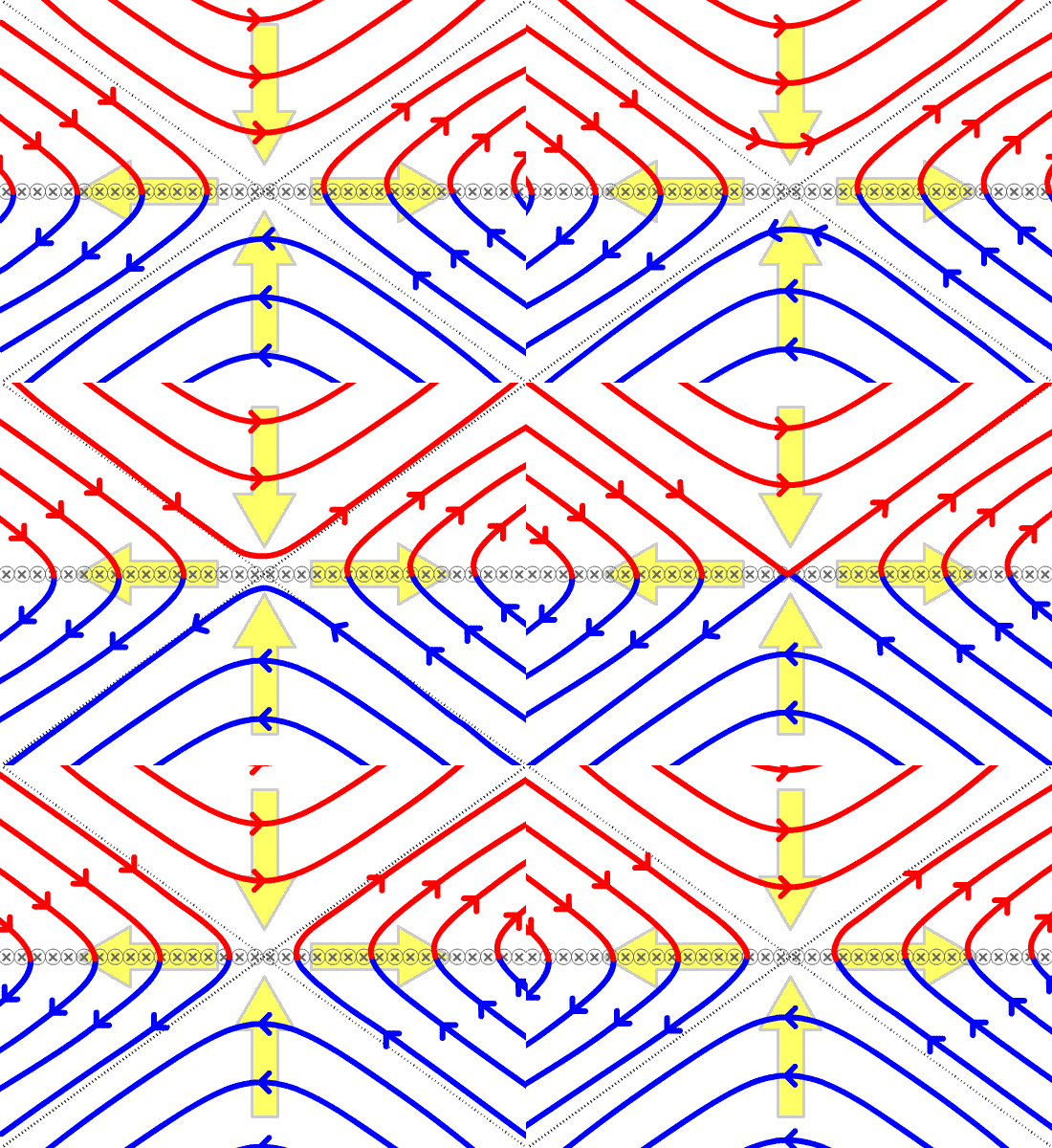

Conceptually, a key takeaway from my presentation is that we can explain the reason why evolution recruited these boundaries. And that is because when you create a topological boundary and you trap energy inside it, you will typically observe harmonic resonant modes of the pocket itself. As a consequence, we have that the specific shape delimited by a boundary is causally significant: it vibrates in a way that expresses the entire shape all at once, therefore has holistic behavior via internal resonance. Evolution would have a reason to use these boundaries: they allow you to coordinate behavior and act as a unit despite being a spatially distributed organism.
Overall the presentation was really well received. It is less that people complimented me on the presentation style, and more that people’s questions and follow-ups indicated that they really “got” the core idea. It feels wonderful to be in a context where a significant proportion of the audience really understands what you’re saying, especially if your experience is that in most contexts almost nobody understands it. People were, it seemed to me, at the right inferential distance from our argument to really grok it, and that was wonderful!
I was lucky that my presentation was scheduled for Tuesday because that way I was able to enjoy the rest of the conference without a big responsibility hanging over my head. After my presentation we hung out at the lobby and met with people like Tam Hunt (of General Resonance Theory fame) and his student Asa Young. I followed the gradient of interesting conversations and ended up at the after-party on the 4th floor. To my surprise it was closed at 11PM, after which there wasn’t any more conference programming. It all fell quiet. At that point I realized that the best time to conduct the demo of the latest secret QRI technology was at 11PM. I started telling people to gather at the QRI hotel room at 11PM the next day, Wednesday.
Wednesday: Demo Day
On Wednesday I attended an invite-only presentation by Shamil Chandaria (it was originally going to be in a hotel room, but due to the level of interest of participants it was moved to a conference room with permission from the organizers; the invite-only status was needed to avoid overflow). In the room was Shinzen Young, Donald Hoffman, Jay Sanguinetti and the ultrasound crew, most of the QRI contingent, and others of note that I am not currently remembering. Shamil’s presentation went much deeper than here (“liberation is the artful construction of top-level priors”) and tackled topics of large-scale brain organization, the difference between awake awareness and liberation, and (I’m told, as I had to leave towards the end to see Justin Riddle’s presentation), a mystical-experience-inducing account of phenomenal transparency in the higher Jhanas and beyond.
I arrived to the plenary of Justin Riddle just on time; he was getting up to the stage when I entered the room. Here is another example of how I felt much more embedded in the conference than in previous years. The reason I couldn’t miss Justin’s presentation was that we were scheduled to record a video the next day. I certainly would have watched it regardless (on YouTube after the fact if need be; they’re saying the videos will be up in a few weeks), but this time I needed to make sure to be up to date with his work so as to not make a fool of myself the following day when our conversation would be recorded. His presentation was delightful, not the least because it confirmed all my prejudices about the causal significance of EM field behavior in the brain. I really enjoyed his inclination to take ideas seriously and meticulously working out their implications, such as the significance of cross-frequency coupling, the explanatory power of hierarchical principles for self organization, and the top-down influence of field states on neuronal activity.
The vibe of the conference was really conducive to high-level thinking. I repeatedly found myself having original ideas and reframings: “When does a path integral surpass the computational power of resonance and topology combined? What exactly can you solve with non-linear optics that you can’t with mechanical resonance in embedded topologies?” would arise in my mind just sitting at the bar, overhearing people’s conversations about the history of EEG, the difference between physical and phenomenal time, and the latest studies on Transcranial Near Infrared Light Stimulation. Throughout the conference I was reminded of the concept of “qualia lensing”. Let me explain: in an atomic bomb explosives with different detonation speed are arranged in such a way that a perfectly spherical wavefront uniformly, and rapidly, compresses a radioactive core. The geometric arrangement and relative detonation speeds of each material results in very precise wave guiding (more generally, see: explosive lens). Geometry and potential, ignited, can result in very precise patterns of hyper-compression. Likewise, it seems to me, many high-voltage ideas can only really arise for the first time in a state of mind capable of pressurizing phenomenal representations and make them overcome the activation energy for their blending, fusion, and fission. Being at a conference where the environment is constantly presenting you different “sides of the elephant” of consciousness, surrounded by talented practitioners of the field, one can feel a lot of “qualia lensing” taking place in one’s mind.
Later that day I went to “Physics of the Mind” and watched the presentation of Florian Metzler on narrowing the state-space of phenomena of interest using heuristics of scale and combinatorial spaces (if I understood correctly) and Greg Horne who explored the possibility of a connection between the phenomenology of gravity and the nature of physical mass (he later shared some thoughts on the boundary problem that I hope to follow up on). I missed the presentation of Nir Lahav on his relativistic theory of consciousness but I know he presented in that group later. I jumped to see the presentations of Isaac David, who deconstructed the unfolding argument by showing that IIT would read entirely different causal structures in its implementation compared to the original network, and then (in still another room), Asher Soryl, who presented about a paper we’re working on that aims to catalog the features that a successful theory of valence ought to satisfy. One funny thing about these concurrent presentations was that I arrived a little early to Isaac’s presentation and soon after David Chalmers sat next to me to ask a question. I texted my friend Enrique Chiu, who was sitting in front to the left of the same room to discreetly snap a picture of me sitting next to Chalmers. He got the message right when Chalmers was about to leave, which made the picture he took look rather odd and funny in hard-to-explain ways:

I missed the presentation of Matteo Grasso who presented after Isaac, but had a chance to exchange quite a few thoughts with him throughout the conference. I perceive this IIT cluster as having significant overlap in insights and research aesthetics, no doubt due to a shared commitment to qualia formalism. It was really cool to talk to another cluster of thinkers who also see why the causal structure of computer simulations is actually quite different from the causal structures of what is being simulated. Not the result of hand-wavy intuitions, but of really probing how information flows take place at the implementation level, and systematically ruling out the existence of higher levels of integrations. Fascinating stuff.


Asher Soryl’s presentation had to work around some technical difficulties due to the projector failing all of a sudden, but a video of the presentation will be put online soon. It was funny to note that they assigned him to the “Psychoanalysis and the Unconscious”, presumably playing the function of a “misc. and etc.” category for this conference, because I can tell you he did not once mention psychoanalysis or the unconscious in his presentation.
I rested in my room for an hour and then got ready for the demo, spreading interesting “qualia of the day”-type artifacts throughout the room. I can’t say much about the demo proper for now, but I can say that it’s like an art installation you might encounter at Burning Man at 3AM in the morning while on LSD. Here was another situation where a sort of supercritical mass of people with complementary skillsets were found together. I enjoyed interacting with everyone, but above all, enjoyed sensing the information flow throughout the gathering. To those who attended, many thank yous. It was delightful.
Thursday: Interview Day
Next day, Thursday, I recorded an interview with Justin Riddle. It’s the second one we’ve recorded (see first one). We talked a lot about cross-frequency coupled oscillators in Nested Observer Windows. I ate a banana, drank a glass of almond milk, and downed a sugar-free red bull (to give you some context for the vibes of the interview). Meaning, I really needed to have all of my cylinders firing for this one. Thanks Justin! I look forward to watching it online 🙂
Following that I hung out with Winslow Strong and Shamil Chandaria for a while, and then with Shamil in particular for a couple more hours, who helped me tune into ways of seeing I hadn’t really experienced before. Here is another moment where the pressurization of the high-level thought-forms ambient in the conference seemed to have a strong effect in me. A feeling, hard to put into words, of collective consciousness among the participants, which accepts and embraces the differences and incongruities currently expressed in favor of noticing the long-term gradual increase in understanding.


Spontaneous visit from Mr. Monk
Then Daniel Ingram appeared, in his nanobot-protecting gear, along with a Sharena Rice who does ultrasound research. After exchanging some consciousness-focused videogame ideas we went to the after-party and I talked to someone who gets psychedelic-level hallucinations from caffeine alone. It didn’t sound very high-valence, but definitely noteworthy. I concluded the night by hanging out with Milan Griffes and QRI friends at Milan’s AirBnB.
Friday: Qualia Manifesto and the End of Consciousness Day
On Friday I saw the panel “The Science of Consciousness – 30 Years On”, which in addition to giving a lot of credit to Stuart for the conference, also presented some interesting sociological observations. I really enjoyed the participants sharing pictures and memories of previous conferences. I suppose personally, the movie What The Bleep Do We Know? does some work to sort of fill-in the blanks of some of the vibes I’ve missed. Stuart appears in that movie, and I recall being quite impressed (as a 13 years old) with his quick way of speaking about things like the relative scale between a proton and an electron, and doing so with a background of a desert with cactuses. It really does some heavy lifting in terms of giving the mind a flavor of the vibe that was probably present, to an extent, in the 90s around these regions of the wavefunction.
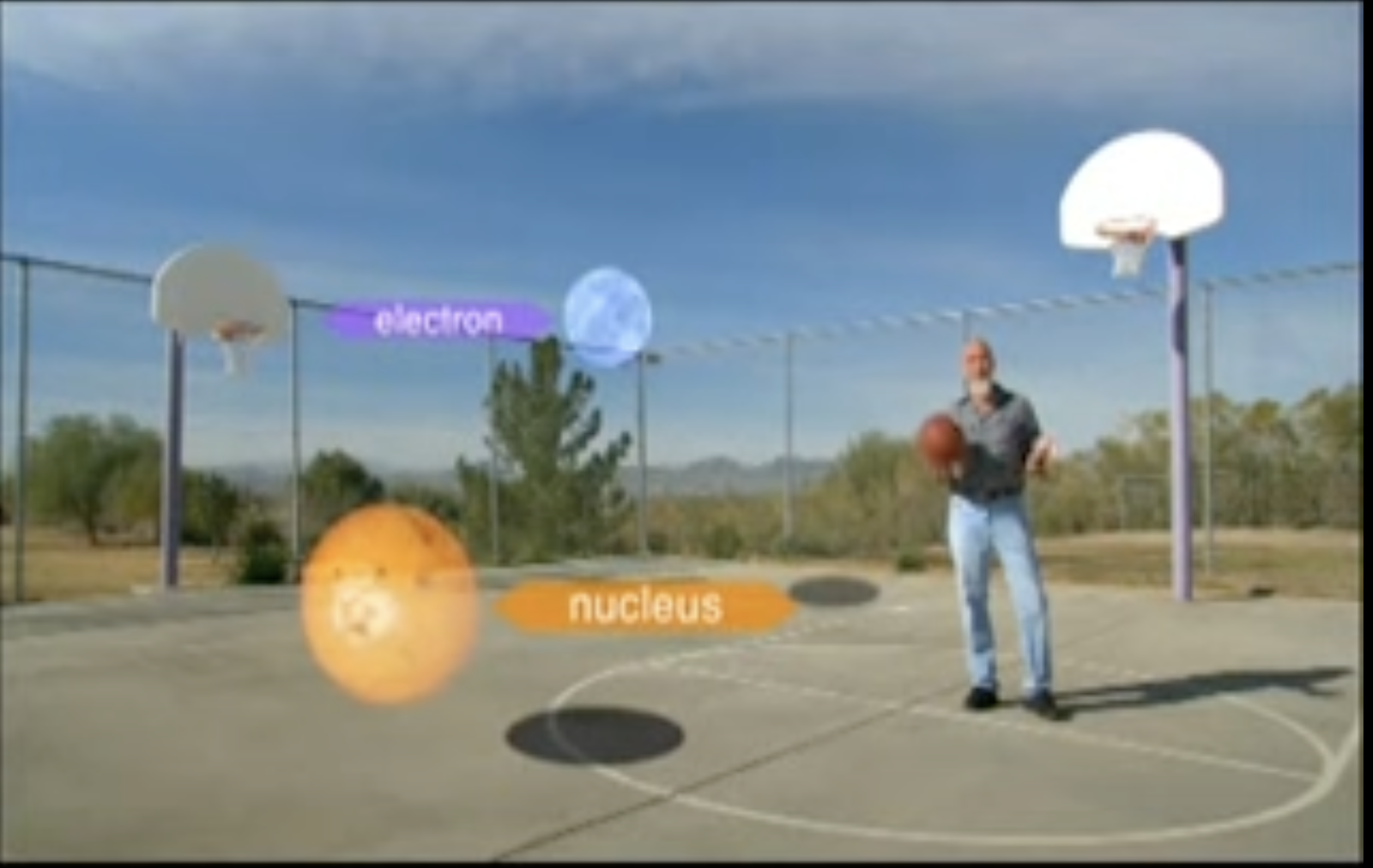
I have to remind my mind that What The Bleep Do We Know? has nothing to do with the conference other than some scenes with Stuart Hameroff in Tucson (and perhaps Dean Radin). But looking at the pictures that people like Susan Blackmore and Christof Koch shared, I did get a bit of the same vibes. Namely, the cultural material of the 90s needed to be lubricated with brightly colored patterned shirts, soft electronic background music, and visuals attempting to depict the quantum level of reality to enable crossing the awkwardness energy barrier needed to be able to talk about consciousness without constantly blushing.


Speaking of the 90s, I was then fortunate enough to hang out with Ken Moji for a bit (see this 2005 article about him in Conscious Entities, a long-standing consciousness blog). He emphasized that the reason why he was able to start and lead a Qualia center at Sony is that he does a lot of other things that are very conventional as well, with multiple jobs spanning a number of disciplines. I suppose this somewhat confirms the view that, especially a couple decades ago, the only way to interest the public in consciousness research was to also deliver a lot of other conventional value at the same time. Of course I am betting on consciousness research producing the bulk of value in the long-term, though I recognize that immediate applications are hardly world-changing (beyond, of course, the use of straight-up high-end consciousness-altering compounds like MDMA and 5-MeO-DMT). Fortunately, the present seems far more receptive to the value of consciousness research at a broad, generational, cultural level. I think the world, and especially liberal West Coast culture, can digest serious attempts at consciousness exploration better than ever before. So the cautious and protective attitude of sticking to conventional epistemologies is far less needed now (to the extent, of course, that we can simultaneously guard away bad epistemologies).

The concurrent sessions of Friday that I attended were the whole set of “Neurostimulation to Understand the Mind”, with Sanjay Manchanda, Milan Pantovic, and Olivia Giguere / Matthew Hicks, chaired by Jay Sanguinetti. The most fascinating takeaway from this series to me was imaging of changes in the brain due to ultrasound stimulation, which could perhaps be used to determine if the intervention is likely to work on someone. They also shared some phenomenology that felt encouraging, where they can induce meditative-like states and behaviorally measure *desire to meditate* in people receiving the stimulation and were able to show that it significantly increases after ultrasound.


Later on Friday I spent some time looking at posters. I enjoyed having Enrique Chiu (who we have in common having gone to math olympiads representing Mexico, and in his case, gone as high as getting a Silver at the IMO in 2013) explain his theory of saliency maps in the state-space of consciousness. It was awesome to see a fellow mathy Mexican also give it a real go at tackling some of these hard problems. I likewise had a good time hearing Anderson Rodriguez’ electroacoustic theory of consciousness, with some interesting ideas about binding. This is also the time when Chris Percy presented his poster about systematically cataloging everything that a complete theory of consciousness will need to account for.
We ate some food (fries and a delicious veggie platter) and headed to the “Poetry Slam – Zombie Blues – No-End of Consciousness Party”. I brought a projector and coordinated with conference organizers to showcase the work of Symmetric Vision during the party. Me and Asher performed some “poetry” about consciousness vs. replicators and far future visions for consciousness. And then I personally partied too hard on the dance floor. I mean, the energy was really vibrant, and Stuart Hameroff was vibrating to the tune of microtubules, and DMT visuals were being projected on the big screen while a bunch of raving scientists of all ages waved colorful LED tubes in various grades of coordinated synchrony and decoherence. It’s one of those things that gets lodged in my mind as a new gestalt because my brain wouldn’t naturally believe those things can happen.
Saturday: Brain Organoids Day
On Saturday we watched the presentations on brain organoids. I am inspired to accelerate our work on figuring out the valence function for arbitrary biological neural networks, because by the looks of it these technologies will start to be deployed much sooner than anticipated. I think that stopping the use of brain organoids on a grand scale is not likely to be possible, but creating and locking in a computing paradigm that uses information-sensitive gradients of bliss might be possible. And I don’t think the window of opportunity here is very large. Perhaps a decade or two.


I was delighted to see Luca Turin’s work on anesthesia shown at Harmut Neven’s fascinating presentation about quantum mechanics and brain organoids. They will be trying out xenon isotopes soon, in the hopes of detecting the influence of quantum states of the anesthetic at the macroscopic level (whether fruit flies get anesthetized or not). This seems extremely important to test, so godspeed to them.
At this point I said goodbye to the crew and just had a couple final meetings, a brief podcast with Tam Hunt, followed by simply resting on a balcony for a several hours, taking note of the highlights of the conference and beginning to decompress (I’m mostly there, though I still have a couple megapascals to go).
I look forward to following up with many of the conference attendees and to continue working on our core research to present next time.
Till next time, Tucson Consciousness!
Infinite bliss!
Andrés 🙂

Hard-Core Salvia Vibes at the Tucson Airport ………..microtubules, man!
Greetings fellow shapeshifter.
thank you for going pioneering out into the deep.
i have a lot to catch up on, and hope i am not to late to help things alone.
Be safe.