ClusterFree’s mission is to help cluster headache patients globally access safe, effective pain relief treatments as soon as possible through advocacy and research.
Cluster headache (also known as ‘suicide headache’) is considered the most painful condition known to mankind. We believe it is one of the largest sources of preventable extreme suffering in humans today. Every year, about 3 million adults (and an unknown number of minors) suffer from this debilitating condition.
And yet, even in the EU, only 47% of the cluster headache population had unrestricted access to standard treatments (primarily oxygen and triptans) in 2019. Despite affecting a similar number of people as multiple sclerosis, global investment into cluster headache is minuscule.
At the same time, countless patients have reported previously unattainable relief using certain psychedelics, even at low doses. For example, psilocybin, LSD and 5-MeO-DALT can effectively prevent attacks, and N,N-DMT can abort attacks within seconds and also have some preventative effects. However, these life-saving treatments are inaccessible to the vast majority of patients.
We want to tackle these problems by:
Publishing open letters demanding that governments, regulatory bodies, and medical associations worldwide take action immediately, with a focus on easing restrictions around psychedelic use.
Providing patient groups with high-quality resources and supporting their advocacy efforts.
Engaging with policymakers globally to advocate for better access to treatments.
Publishing research on cluster headache and supporting other researchers in the field.
Collaborating with entrepreneurs and philanthropists motivated to bring new, effective treatments to market.
We will be collaborating closely with Clusterbusters, the largest and most well-known cluster headache advocacy organization, led and run by patients. For about 25 years, they have been at the forefront of cluster headache advocacy, especially in the US and the UK. We are excited to bring more capacity and new approaches to tackle other jurisdictions, and to show that patients are not alone in this fight.
How you (and anyone) can help
As our first project, we are publishing one global open letter and 11 country-specific open letters:[2]
Anyone can sign the global open letter. Additionally, if you live in or come from one of the countries above, you can sign that letter as well. Signatories include Prof. Peter Singer, Scott Alexander, Dr. Christopher Gottschalk (Yale), David Pearce, and Dr. Daniel Ingram.
Please share the letters widely within your network![3]
If your organization wants to show its support for ClusterFree’s mission, we can list it as a partner on our website.
A few other ways to help include:
Donating or putting us in touch with potential donors. Donations are tax deductible in the US.
Volunteering for various tasks (many of which are very simple but high-impact).
Gained the support of a member of a US state legislature.
Started conversations with CH advocates in multiple countries (most recently India[4], Denmark, and New Zealand).
Are engaging with entrepreneurs and philanthropists interested in bringing DMT to market.
Developed a preliminary idea for a new, legal abortive treatment that could be highly effective (potentially also for migraines).
Have started developing phenomenology-based, patient-centric surveys to test various hypothesis for the underlying mechanism of action that psychedelics exert on this condition.
We recently raised seed funding from a private donor to cover our core operations for the coming months. Additional funding would allow us to hire a second teammate to work alongside Alfredo at this early stage, particularly on outreach and communications. We could absorb an additional $50k–$150k immediately.
At this very early stage, we are still evaluating different paths to impact, and will likely test various strategies simultaneously to identify the most promising opportunities.
We believe ClusterFree is a great donation opportunity for people who care about relieving the most intense human suffering today. Cluster headaches represent a major health crisis even in developing countries, and we are far from having effective treatments widely available. Help us change that.
Additionally, you can consider donating to Clusterbusters or OPIS, who have been at the forefront of cluster headache advocacy and research for years.
Work with us
If you’d like to help us reduce the global burden of cluster headache pain (beyond volunteering), we’d love to hear from you. Simply fill out our expression of interest form.
“If we lived in a really sane society with a strong compassionate streak, every building would have something like a ‘Break in case of fire’ box… only this one would read ‘Break in case of cluster headache.’ Inside you’d find a pre‑charged DMT vape pen. That would be really nice.”
Announcement: Do you have experience using psychedelics to treat cluster headaches? Want to support science and advocacy in this area? Submit your personal and/or professional testimonial to our upcoming “ClusterFree” Open Letter initiative.
Sitting Down with Cluster Busters at Psychedelic Science 2025
One of the highlight moments for me at Psychedelic Science 2025 in Denver this June was conducting an interview for Bob Wold, founder of Cluster Busters, and Joe Stone, and Joe McKay who work alongside Bob in patient support and advocacy. Our conversation covered a lot of ground, but I had one key strategic goal in mind: document, in their own words, why the humble DMT vapepen looks like a once‑in‑a‑generation breakthrough for the most painful condition that medicine has ever encountered.
“With a regular vape pen it’s usually one inhalation. Thirty seconds later the pain is gone. I hear a click in the middle of my brain and the attack is just off.” —Bob Wold
Put bluntly, if we care about total suffering, we need to care about cluster headaches. The time is now.
Interview Highlights Pertaining to DMT
DMT as an acute rescue One lungful (where the instructions typically say “three full breaths”) ends most attacks in under a minute. A second puff a minute later covers nearly all the rest. No tolerance shows up (acutely or chronically) which allows patients to repeat the dose whenever necessary.
Low psychedelic burden The dose is about a quarter of a psychedelic hit; enough to see some color enhancement but not enough for significant “trippiness”. Patients describe “a mild two‑beer buzz” or “the room takes on a golden tint” or “faint auras appear.” The mild level of psychedelia needed for this treatment makes bedside use practical, even for parents who need to stay functional the day after.
Why it beats psilocybin and LSD in the heat of battle Psilocybin and LSD still shine for cycle prevention, taken every five days, but they work on a timescale that makes them impractical for acute events. DMT is for the here‑and‑now (note Eleusinia founder says DMT also interrupt cycles according to her work at the retreat center). Joe Stone calls it “a game changer” because he can abort a 2AM ethical emergency (a cluster) and fall back asleep within 10 minutes. No need to have an expensive psychotherapy, a professional sitter, or trip killers on hand, let alone having to book a whole day to trip.
A hunch about endogenous DMT Bob’s shares his intuitive working model for how cluster headaches work (to be refuted or confirmed by science): an attack begins when natural DMT in the brain dips below a threshold (why do we even have DMT in our brains to begin with?). He hazards the guess that a quick DMT top‑up pulls the breaks and re‑establishes homeostasis. Others suggest that melatonin abnormalities in cluster patients add plausibility to his view, given the biochemical link between melatonin and endogenous tryptamine synthesis.
Pain drives the psychiatric condition, not the other way around One key insight I wanted to make sure to get on the record: chronic physical agony breeds depression, anxiety, and PTSD‑like flashbacks. Fix the pain and the mental distress often dissolves; no need for heroic doses or eight‑hour therapy sessions (as with e.g. psilocybin for depression specifically). Cultural over-emphasis on mental health as _the_ thing to treat with psychedelics might make sense from the point of view of a slowly expanding Overton Window; but the big hedonic payouts (freedom from hellish states of consciousness) are likely concentrated in their application to the reduction of extreme physical pain (see also).
Why This Matters
Alfredo Parra’s quantitative analysis suggests that cluster headaches may contribute more net misery than migraines, cancer pain, or even major depressive disorder once intensity is included (and a proper long-tail model and Monte Carlo simulations are taken into accont). Effective Altruist “pleasure-bean‑counters” (I say this affectionately!) please take note: extremely nasty but “rare” states can dominate the integral, and need urgent consideration.
From a consciousness‑research angle, the interview is another data point for why direct phenomenological investigation should guide ethics; here, patients, confronted with the reality of their own phenomenology, themselves have again clearly pioneered the treatment all the while mainstream research (unsurprisingly) slept through five decades of drug war.
Closing Thoughts
Imagine a fire‑alarm box on every hospital wall that reads “Break glass in case of cluster headache.” Inside we find a sober-looking, very boring but perfectly functional, pre‑filled DMT cartridge that delivers reliable 3mg hits (enough to feel a light buzz, not enough to trip significantly – certainly far short of any dose needed for entity contact or alien abduction experiences). This isn’t science fiction; it is what the data we’re seeing support. Freedom from one of the most extreme demonic forces on Earth is, counterintuitively… Spice. Let’s shorten the path from patient innovation to standard‑of‑care and, in the process, erase one of the darkest corners of conscious experience forever. I believe we can achieve a Cluster-Free World within a few years if we put our minds and hearts to the task.
Hallucinations are not a problem at the doses we have people use and that seem to work the best, which are much smaller than a recreational dose. We aren’t recommending people take doses that will have them playing cards with a deer (you can’t trust them!). The doses are small (e.g. 1.5g of mushrooms). You’re supposed to get to about the “giggle”. Get to the “giggle point” and you’re good to go. – Suicide or Psychedelics, Bob Wold at Horizons 2009
People complain about the “voice in their heads.” Often, advanced meditators say they’ve lost it, and their life is better for it. But more recent research shows a large percentage of the population doesn’t have it anyway (a case where natural variance combined with the typical mind fallacy makes things extra confusing).
But you know what? I think this is a massive red herring. As per usual, the problem with X (having a voice in your head in this case) was never X directly, but… you can guess what I’m about to say: the effect X has on valence. Don’t overindex on X. X IS INCIDENTAL. What matters is that X MAKES YOU FEEL BAD.
Rob Burbea distinguishes between discernment and judgement. Discernment tells you what is helpful. Judgement is an evaluation of the self/other, which relies on false metaphysical assumptions to stand on.
The problem with having a voice in your head is that it is a judgmental voice – it creates a self-view. In particular, it causes moral and social judgments on a fabricated sense of “self and other.” Judgment feels bad; it adds weight to experience. Even judging something as good feels subtly bad in the background, because it entails some level of inner tension and segmentation where you represent a part of you as bad to generate the contrast necessary to highlight the good.
Judgment is self-perpetuating. It stings. It costs energy. And it builds on top of itself. When you’re too far gone in a judgment spiral, you judge yourself for being judgmental.
Burbea calls judgment “the thief of happiness” and explains how it strangles creativity: how many poems die in the waste-basket because “I’m useless” barged in? He also reminds us that sometimes simple mindfulness isn’t enough; you have to challenge the habit by feeling its sting in the body and meeting that pain with kindness.
Things like hangovers and bad psychedelic trips are often bad because of the persistent tracer effect on judgment. A panic attack often involves a kind of judgment tinnitus. Without judgment and its symmetry-breaking effects in the field of awareness, a “voice in your head” would not be a problem. Bring it on! I’m OK having a zany, Bugs Bunny-like commentator on my experience, so long as it doesn’t jitter my attention without consent or cast judgment on my everyday activities or social cognition. It could very well be amusing: might as well have an entire cast of whacky characters putting on a schizophrenic show for me to enjoy. The problem is not the voices, but the bitterness and disenchantment they entail.
Rob, in his lecture on letting go of judgment, explains that not judging is a real, achievable way of life. Freedom from judgment is within grasp for all of us (assuming we put in the time and effort – though please don’t take this as a judgment on your temporal thriftiness or laziness!). Burbea affirms it’s “absolutely possible” for the habit of judgment to end – sometimes large chunks of the “mountain of judgment” crumble suddenly in a matter of weeks. Even when judgment thoughts continue to arise from habit, they arise “completely free of any charge… just like empty words” with no power behind them. Eventually, these empty judgments fade away because they’ve been “sucked dry” of meaning.
This effort, I believe, is far more targeted and beneficial for liberation than the poor proxy of “removing the voice in your head, which already ~50% (?) of people don’t have anyway.” Freedom from judgment and its associated sense of presence, direct experience, thinning of self, and homeostatic regulation is the real prize. Not mental silence.
[Epistemic Status: fiction (in most timelines, that is); in my lane, having fun]
Place: The Equatorial Republic (pop. ~190M)
Time: 2032
My fellow citizens of this great Equatorial Republic,
Today, as I stand before you having accepted the solemn responsibility of the presidency, I am humbled by your trust and energized by the possibilities that lie before us. This administration marks not just a change in leadership, but a fundamental paradigm shift in how we approach governance, human welfare, and our collective future.
A New Era of Compassion Through Science
On this first day in office, I am announcing the formation of the National Hedonic Research Initiative. Let me be clear: extreme suffering can be worse than death itself. Nowhere is this more evident than in the case of cluster headaches—aptly named “suicide headaches” by medical professionals, a condition where the pain is rated significantly more severe than childbirth, kidney stones, or even gunshot wounds.
Through Executive Order 001, I am establishing the Cluster Headache Elimination Commission with an initial $2 billion in funding. The data is clear: approximately 3 million people worldwide suffer from this condition, spending nearly 5 million person-days annually in extreme suffering rated 9/10 or higher on pain scales. This Commission will:
Create a nationwide tryptamine research and distribution network, prioritizing low-dose N,N-DMT, psilocybin, and LSD trials based on compelling evidence that these compounds can not only abort attacks but extend remission periods indefinitely for many patients
Establish 200 specialized treatment facilities across the nation within 6 months with mandatory oxygen therapy and other proven abortive treatments
Fund 50 research laboratories dedicated to advancing our understanding of pain relief mechanisms and developing targeted interventions for these conditions based on patient-reported outcomes
Additionally, I am directing the Department of Health to create the Pharmaceutical Innovation Directive focusing on anti-tolerance compounds for chronic pain patients, next-generation flumazenil analogs to reverse benzodiazepine dependence, and targeted solutions for other iatrogenic conditions that have been unconscionably neglected. These extreme forms of suffering represent the deepest moral emergency in our society, and their elimination is our highest priority.
Mapping the Hedonic Landscape: Beyond QALY
For too long, our policies have been guided by economic indicators and inadequate health metrics like Quality-Adjusted Life Years (QALY). The QALY framework fundamentally fails us by treating all human experiences as linearly equivalent and by capping wellbeing at an arbitrary “perfect health” that ignores the vast territory of heightened human potential.
The empirical evidence is compelling: our current metrics systematically undervalue both the depths of intense human experiences and the heights of human flourishing. As a result, we’ve created policies that address widespread but moderate challenges while neglecting concentrated instances of profound human experiences – both positive and negative.
Today, I am commissioning the first comprehensive Hedonic Landscape Observatory—a scientific assessment of the full spectrum of human experience that will:
Develop more sensitive and accurate measurements of diverse human experiences across the wellbeing spectrum
Map the neurological correlates of resilience and positive states to complement our understanding of health
Create economic feedback loops that systematically reward businesses and institutions that demonstrably enhance quality of life
Develop a new economic indicator—the Consciousness-Weighted Prosperity Index—that will appear alongside GDP in all government reporting
This initiative will ensure that governance decisions are evaluated not just by economic impact, but by their effect on the actual lived quality of conscious experience of our citizens—taking into account the true depth and breadth of human flourishing available to us.
Game Theory and Consciousness: A New Political Framework
We stand at an evolutionary crossroads. The old politics operated on outdated models that failed to recognize the fundamental relationship between consciousness and our collective future. Today, we begin the transition to a political framework that explicitly acknowledges the quality of conscious experience—as central to governance.
By Executive Order 002, I am establishing the Consciousness-Economy Integration Commission tasked with creating explicit feedback loops between consciousness research and economic selection pressures. This commission will:
Develop metrics that quantify the wellbeing-enhancing potential of technologies, enabling investors to select for innovations that genuinely improve quality of life
Create tax incentives for businesses that demonstrably improve the lived experiences of their employees and customers
Establish a public research platform exploring the positive potential of consciousness, ensuring that discoveries about phenomenological wellbeing directly influence market forces
This systematic exploration of consciousness is not merely academic—it will fundamentally reshape our economic landscape by ensuring that technologies and policies that enhance human flourishing systematically outcompete those that merely optimize for shallow metrics. The implications for environmental policy, social welfare, and international relations are profound and far-reaching.
Transcending Tribal Politics Through Psychological Understanding
From this day forward, international diplomacy will operate with a new level of psychological sophistication. Through the newly formed Department of Psychological Architecture Analysis, we will explicitly model the subagent structure of world leaders and political movements, identifying when narcissism, psychopathy, or tribal thinking is driving decision-making.
International coalitions will be formed not just around shared interests, but around shared psychological awareness. This administration will not hesitate to name pathological dynamics when they appear on the world stage, while offering a path forward through a consciousness-centric yet pragmatic approach to governance.
I am also directing our diplomatic corps to explore new modalities for high-stakes negotiations. We will establish a Diplomatic Innovation Laboratory to research the application of empathy-enhancing protocols in negotiation settings where entrenched psychological barriers prevent resolution. When trillions of dollars and millions of lives hang in the balance of international agreements, we cannot afford to have negotiations hijacked by psychological defense mechanisms and tribal identification.
Just as we now understand that the pain of cluster headaches is objectively more severe than a migraine, despite superficially similar descriptions, we must develop precise language and metrics for the psychological architectures that drive international conflict. They are real, distortionary, and far from game-theoretically optimal. Only by seeing these structures clearly—and developing reliable methods to transform them—can we hope to address existential challenges that require genuine cooperation.
Longevity: The Right of Every Citizen
While extreme suffering can be worse than death, unnecessary death itself remains a profound tragedy and represents an incalculable loss of human potential. Today, I announce the formation of the National Longevity Institute with initial funding of $10 billion, coordinating research across public and private sectors to dramatically extend healthy human lifespan.
This institute will prioritize three areas:
Senolytics and cellular reprogramming technologies to reverse biological aging
Neural preservation techniques to maintain cognitive function
Prevention of age-related suffering states through targeted interventions
The benefits of this research will not be reserved for the privileged few, but made available to every citizen as a basic right. Age-related suffering is not inevitable, and this administration will not accept it as such.
The Science of Awakening: Soteriology as a Research Target
Even as we pursue longevity, we must confront a fundamental truth: all things remain impermanent. Today, I am establishing the Institute for Contemplative Sciences with a mission to develop a rigorous scientific understanding of what traditions across time and cultures have called “awakening,” “enlightenment,” or “liberation.”
This research program will:
Systematically study how humans throughout history have made peace with impermanence and transcended existential suffering
Investigate the neurobiological and phenomenological correlates of awakening experiences across contemplative traditions
Develop scalable, secular methods to help citizens process mortality, grief, and existential concerns within our scientific worldview
Create interdisciplinary teams combining neuroscientists, contemplatives, philosophers, and clinicians to bridge ancient wisdom with modern scientific rigor
The ultimate human challenge is not merely to extend life, but to discover how to be fundamentally okay with the impermanent nature of existence. While various religious and philosophical traditions have offered paths to this goal for millennia, we now have the scientific tools to explore these states with unprecedented precision.
By creating a dialogue between contemplative wisdom and scientific method, we can forge new pathways for humanity to face its deepest existential challenges. This is not merely a spiritual pursuit—it is a practical necessity for a civilization grappling with the fundamental questions of meaning and mortality in an age of unprecedented technological power.
Understanding Exceptional States of Consciousness
The most profound states of human consciousness remain largely unexplored territory in scientific research. Today, I am directing the National Institutes of Health to establish the Center for Exceptional States of Consciousness (aka. The Super-Shulgin Academy) with a $5 billion initial investment, tasked with making sense of profoundly positive experiences across the full spectrum of chemically-facilitated and meditation-induced states.
This Center will:
Create standardized protocols for psychedelic research, including 5-MeO-DMT with essential safeguards and contraindication screening, recognizing that while beneficial for many, it can induce challenging experiences in others—understanding these variables is crucial for responsible application
Fund 25 dedicated research facilities specializing in Jhana acceleration techniques and other contemplative practices that achieve similar states without pharmacological intervention
Develop a comprehensive empirical framework mapping the neural correlates of these heightened states while investigating both beneficial outcomes and adverse reactions to create predictive models for personalized approaches
Prioritize sustainable MDMA production and research as a north star intervention, focusing on its potential for treating PTSD and enhancing empathetic connection while minimizing cardiovascular impact and developing protocols to mitigate tolerance and neurotoxicity concerns
Translate findings into scalable interventions for depression, anxiety, and existential distress, ensuring that safety, accessibility, and individual neuropsychological differences guide all protocols
These states represent extraordinary territories of human wellbeing—regions of experience that offer not only therapeutic potential but a scientific window into the furthest reaches of human potential that we have barely begun to understand. Our commitment is to explore these states with both scientific rigor and ethical care, recognizing both their profound potential and the need for responsible stewardship.
Expanding Our Moral Circle: Non-Human Animal Consciousness
Our commitment to understanding consciousness and reducing suffering must extend beyond our own species. Today, I am establishing the Interspecies Consciousness Research Initiative with a dual mandate: rigorous scientific exploration and practical harm reduction.
This Initiative will:
Develop objective metrics to quantify suffering in non-human animals, with immediate focus on factory-farmed animals where the concentration of suffering is most acute
Allocate $3 billion annually to research and implement improved welfare standards for farmed animals while simultaneously investing in cultured meat technologies and plant-based alternatives
Create a roadmap for the gradual, culturally sensitive phasing out of the most harmful animal agriculture practices over the coming decades, aligning economic incentives with ethical progress
Establish the Wild Animal Welfare Research Program to cautiously explore the complex ethical landscape of wild animal suffering, acknowledging the immense scientific and ecological challenges involved
The ethical imperative is clear, but so is the need for careful, evidence-based approaches. We will neither rush interventions that could have unintended consequences nor hide behind complexity as an excuse for inaction when suffering is demonstrable and solutions are feasible. This balanced approach recognizes our ethical responsibilities without compromising scientific rigor or cultural realities.
A key pillar of this administration will be fundamentally reimagining education. Today, I announce the Consciousness Education Initiative that will transform how we develop young minds. This initiative rejects both outdated rote learning and any form of ideological indoctrination. Instead, it embraces a “see for yourself” approach where students:
Learn meditation techniques alongside mathematics, building empirical skills for exploring internal states
Study their own consciousness with the same rigor they apply to studying literature, using first-person methods complemented by third-person science
Develop critical thinking by becoming aware of their own cognitive biases and subagent structures
Understand the psychological architectures that drive political beliefs through evidence-based empirical investigations
The goal is not to tell students what to think about consciousness, but to give them the tools to explore their own minds with scientific precision and philosophical depth. This approach builds intellectual independence—teaching students to verify claims through direct experience rather than accepting them on authority, whether in consciousness studies or any other domain.
A Call to Action
My fellow citizens, I do not promise that these ambitious goals will be easy to achieve. They will require not just government action, but a transformation in how we approach science, governance, and our very understanding of what it means to be human.
But the stakes could not be higher. We have the opportunity to eliminate forms of suffering that have plagued humanity throughout history, to extend healthy life, to create social systems that support human flourishing, and to understand the very foundations of consciousness itself.
This is not a partisan agenda, but a human one. In fact, of consciousness itself. It transcends traditional political divisions and speaks to our shared desire for a world with less suffering and more joy, less confusion and more clarity, less conflict and more cooperation.
Let us begin this journey together, guided by compassion, informed by science, and dedicated to the proposition that the quality of conscious experience matters fundamentally—and that we have both the capability and the responsibility to improve it, in ourselves, our loved ones, and in the field at large.
Thank you, and may we move forward with wisdom, courage, and clear-eyed determination.
Infinite bliss!
[The crowd erupts in thunderous applause]
And now, ladies and gentlemen, please welcome the voted ‘most hedonic’ pop sensation of the year, performing their chart-topping anthem inspired by our vision for the future!
[Cue massive flashy fireworks as the stage transforms. Spotlights sweep across a diverse crowd of all ages beginning to dance as the music starts. Children, seniors, and everyone in between move to the rhythm. The singer emerges from beneath the stage on a rising platform surrounded by dancers in colorful neuron-patterned costumes, launching into their hit song about consciousness, wellbeing and the dawning of a new era of understanding…]
Ancient wisdom meets the future’s light Through pain’s darkest valleys, we’ll find the heights Mapping consciousness beyond what we’ve known A nation where suffering won’t reign on the throne
Tribal boundaries dissolve in our sight As senolytics set our cells aright The hedonic landscape unfolds like a scroll Where DMT whispers truths to the soul
From cluster headaches to enlightened minds Transcending metrics that keep us blind Our moral circle widens beyond human skin Wild animal welfare, a new dawn begins
Science awakens what sages once taught Not just to live long, but find what we’ve sought A republic where bliss is more than a dream Infinite consciousness—our birthright supreme
[Epistemic Status: Speculating on personality disorders from the point of view of their valence landscapes – it makes intuitive sense when you think about it, but the theory lacks empirical validation – take it with a grain of salt]
Overeating : Food Anhedonia :: Narcissism : Social Anhedonia
Unreflectively, we may assume that overeating is a result of liking food too much. This makes intuitive sense – people consume more of what they enjoy. But research in eating behavior reveals a counterintuitive pattern: often, overconsumption stems not from heightened pleasure but from its absence. Recent studies on anhedonia in binge eating (spectrum disorders) suggest that palatable foods may substitute for the pleasure typically obtained from day-to-day activities – pointing to a pleasure deficit rather than excess.
People eat, and overeat, for many reasons, each with distinct phenomenological signatures. The interiority of overeating induced by THC (aka. “munchies”) differs markedly from overeating driven by social contexts (imagine the colleague pressured into “just one more slice” at an office party despite feeling full). But particularly interesting is the connection between overeating and food anhedonia – consuming more precisely because one experiences less pleasure from normal eating. This drives individuals toward the most perceptible elements of food – the sugars, fats, and salt that can penetrate a dulled sensory system. Meanwhile, those with intact hedonic tone for food experience a richer valence landscape, allowing them to enjoy subtle flavor notes that others might find imperceptible.
I think one can think about narcissism in a similar light.
The Social Taste Blindness Hypothesis
Consider two people at a wine tasting. Person A experiences complex notes of cherry, tobacco, and oak, with subtle shifts as the wine breathes. Person B tastes… red. Just red. Not unpleasant, but phenomenologically sparse. Who’s more likely to grab the bottle with “WORLD’S STRONGEST FLAVOR!” on the label?
The narcissist isn’t rejecting the subtle beautify of reciprocal attention and vibe attunement in favor of the loud BANG of admiration. They’re living in a world where the BANG is the only sound they can hear. The rest is silence or background noise.
This isn’t a defense of narcissism… someone who can’t taste anything but salt still shouldn’t add a pound of it on your birthday cake (without your consent, that is). But it does suggest that what we’re seeing isn’t an overflow of self-love, but a desperate compensation for what might be called “social taste blindness” or perhaps a kind of “generalized social anhedonia”.
The Flattened Social Reward Landscape
The core hypothesis I want to propose is that narcissists aren’t choosing selfishness over compassion any more than a colorblind person is choosing to ignore the difference between red and green. Their valence landscape simply doesn’t trigger the normal reward response to reciprocal human connection. The opposite of narcissism might be the emotional equivalent of tetrachromacy – that extra dimensionality of experience that makes mutual presence inherently rewarding to the socially attuned – rather than, say, lack of self-esteem.
So they optimize for what they can feel: validation, status, control, dominance. These are the salt, sugar, grease, and even capsaicin of the social world – even very dulled taste buds can pick them up in high enough concentrations. And when you can’t taste vanilla, you reach for hot sauce not because it’s better, but because at least it’s something.
The Valence Mechanics of Narcissistic Subtypes
Three major forms of narcissism map neatly onto three forms of social anhedonia, with the fourth one needing a bit of wiggle room (but bear with me):
Grandiose narcissists, in this framework, might have the equivalent of prosopagnosia (aka. face blindness) for emotional states that don’t relate to them. They need to be the center of attention because they can’t feel the streams of attention going between others. The hedonic tone of mere social presence (“we’re just two consciousnesses existing together”) doesn’t register, so they create a stage where they’re in the spotlight. I.e. the only kind of social interaction that feels real to them.
Vulnerable/covert narcissists have their gain turned up for threats but down for comfort. Like those people who can only hear high-pitched sounds, their affective range picks up potential rejections with clarity but the baseline feeling of secure attachment sounds like quiet static. They oscillate between idealization and devaluation because those extremes are the only stations their emotional radio can tune into.
Communal narcissists experience what researchers call “intrinsic moral motivation” as a phenomenological dead zone. While instruments like the Communal Narcissism Inventory (developed by Gebauer et al.) can identify these individuals, the deeper issue lies in their experiential gaps. The phenomenology of doing good anonymously (that distinctive feeling that makes private virtue self-reinforcing for others) simply doesn’t register in their experience. The internal satisfaction that normally accompanies alignment between values and actions is absent, creating a valence vacuum that can only be filled by external recognition. They’re not performing goodness because they prefer the validation (though they do); they’re performing it because, without the observer, the action lacks any significant hedonic tone. Their sense of virtuous action exists only in the reflecting mirrors of social reality.
Malignant narcissists present the most paradoxical case, and may at first look like a counter-example to our hypothesis. Their apparent pleasure in domination and others’ suffering seems to contradict the anhedonia model entirely. Yet what if this represents not normal social enjoyment but an inversion of the reward system? Think: a sensory system so deprived of normal stimulation that it begins to cross-wire, like taste buds registering bitter as sweet after prolonged deprivation, or the phenomenon of phantom limb pain/sensation triggered by touching parts of the body nearby in homunculi-space (“in some of these patients, a vibrator placed on the jaw or cheek was felt as vibration of the phantom hand” – Ramachandran). The malignant narcissist may experience such profound anhedonia to ordinary social pleasure that their valence architecture has essentially flipped, thus finding stimulation only in the high-amplitude signals of others’ distress. (Note: sometimes energy is better than nothing, even if negative in valence at first, as it can still drive an annealing process). Their social reward system, unable to detect the subtle “notes” of mutuality, recalibrates to extract meaning from the only signals strong enough to make a reading: power differentials and the negative emotional states they can induce in others. We are not talking about sadism tout court; rather, it’s a desperate compensation mechanism within an otherwise dim landscape of interpersonal emotions.
In each case, what looks like “too much self” is actually “not enough experiential world” – a dimensionality collapse in their capacity to experience certain valence gradients involving others.
Dimensionality Collapse: Reduced Social Phase Spaces
Normal social rewards operate in a high-dimensional space with multiple independent variables. We track and respond to dozens of social signals simultaneously: facial expressions, voice tonality, conversational give-and-take, empathic resonance, mutual recognition, and contextual appropriateness. The phase space of healthy social interaction contains many degrees of freedom, allowing for a flush landscape of possible states and trajectories.
The narcissistic reward architecture, by contrast, exhibits a form of dimensional collapse. Rather than tracking the full spectrum of interpersonal variables, their attentional system focuses on a dramatically reduced subset, mainly those that directly import self-evaluation and status. For the narcissist, this is a constraint in what registers as phenomenologically salient and thus what they can *couple with*.
When dimensionality collapses in a dynamic system, the available trajectories through phase space become severely constrained. Even if the underlying system is complex, when you’re only tracking a few variables, the overall dynamics simplify into basic patterns. This explains why narcissists experience social interactions in such a binary, flat way: the attentional system isn’t capturing enough dimensions to represent the full complexity of interpersonal exchange. So the dimensionality of the dynamic interaction collapses: you’re pulled into the only mode of interaction they know how to navigate, i.e. the narcissistic manifold.
Importantly, narcissists aren’t simply choosing to ignore certain aspects of social interaction. Their experiential phase space lacks the dimensionality needed to represent the delicate harmonics that make mutual attunement intrinsically rewarding for others. They’re operating with a reduced-dimensionality model of social reality where most of the valence gradients others navigate simply don’t exist.
The Paradox of Intensity Without Resolution
A seeming contradiction: narcissists often experience powerful emotions. Rage, shame, triumph, exhilaration. How does this square with the socialanhedonia hypothesis?
The answer is in distinguishing between emotional amplitude and emotional resolution. Think of an old television with the contrast turned up to maximum but the reception fuzzy. You see the bright parts and the dark parts with blinding clarity, but all the middle grays blur together.
This explains the curious way narcissists can be simultaneously overwhelmed by their own feelings yet oblivious to yours. Their emotional system isn’t registering less – it’s registering differently, with a dynamic range compressed around ego-relevant signals and a blind spot for the subtle melodies of mutual presence and the subtle dynamic control mechanisms they entail.
The Self-Model Resolution Problem
The narcissist’s predicament tells us something deep about the nature of self-knowledge. We gain access to ourselves through a recursive process of modeling others who are modeling us. The resolution of one’s self-model is fundamentally constrained by the resolution of one’s models of others.
If your internal representation of other minds lacks dimensionality, meaning, if it captures only the crude peaks and valleys of social evaluation while missing the subtle dynamics of mutual presence, then the self you construct through these reflections will inherit this dynamic poverty. Your own experiential landscape becomes accessible to you only through the same low-resolution filters you apply to others.
The narcissist isn’t choosing a simplified self-understanding over a more complex one. Rather, they’re operating with the only self-model their attentional architecture can generate given its constrained inputs. They’ve optimized for detecting a narrow band of social signals, and this same narrowness characterizes their self-perception.
This explains why narcissistic self-enhancement isn’t actually self-knowledge at all. The scaffolding required to build a high-resolution self-concept simply isn’t there. What from afar looks as excessive self-focus is actually an unpleasant attempt to compensate for a poorly rendered self-image by amplifying its most detectable features.
Therapeutic Implications: Re-enchanting the Social World
If narcissism results as an adaptation to social anhedonia rather than excessive self-regard, our therapeutic approaches require radical revision. The standard protocols presuppose a motivational defect rather than a perceptual one – like telling an anosmic person to try harder to enjoy Channel No. 5 (EDP).
More promising approaches might look like:
Sustainable empathogens – MDMA temporarily expands social reward perception but isn’t sustainable long-term. Hypothetically, we might develop non-neurotoxic analogues that selectively enhance social valence sensitivity without serotonergic depletion. Such compounds would serve not as treatments themselves, but as phenomenological reference points showing the narcissist an opportunity to tune into the social reward landscapes that exist but they’re blind to.
Biofeedback synchrony training – Systems that visualize interpersonal physiological coherence (heart rate variability, skin conductance) could make non-verbal attunement tangible. By rendering visible what was imperceptible, narcissists might gradually develop direct perception of these signals.
Phase-locked interpersonal dynamics – Structured interactions involving synchronized movement, breathing, and speech provide moments where narcissists might experience multi-level attunement. These experiences, once registered, might create templates for recognizing similar but subtler states in everyday interactions.
Valence-neutral reflective environments – Settings offering neither praise nor criticism but high-fidelity reflection of internal states circumvent both narcissistic supply and defensive contraction. This uncouples self-perception from evaluation while increasing perceptual resolution.
The common thread is treating narcissism as information access impairment rather than moral failing. The goal isn’t condemnation but expanding dimensions of experience – to help them taste vanilla by first establishing that it exists, then building perceptual pathways to it from detectable flavors.
A word of caution: This work would need to be approached with extraordinary care. Particularly with phase-locked dynamics and reflective environments, there’s a bidirectional risk: resonance typically flows both ways. The therapist must avoid phase-locking to the narcissistic manifold while helping the narcissist access the interpersonal valence landscape that most people inhabit. This asymmetric entrainment requires sophisticated safeguards and training, as the narcissistic attractor basin can be surprisingly powerful, especially when amplified through synchronized states.
Beyond a Moral Framing
This model invites us to think beyond simplistic moral framings without also inadvertently excusing harmful behavior. The narcissist isn’t choosing self over other in a world where both options feel equally real. They’re navigating a landscape where certain fundamental human experiences – the quiet joy of mutual recognition, the inherent reward of witnessing another mind – are blunted or dulled.
This doesn’t mean narcissists bear no responsibility for their actions. But understanding the valence landscape underlying their behavior creates space for more effective intervention. You can’t argue someone into tasting a flavor their receptors don’t register. But you might, with patience and precision, help their system remember or discover it.
Conclusion: The Tragedy of Phenomenological Poverty
There’s something deeply sad about this reframing. Rather than creatures of excess, narcissists emerge as beings of deprivation – not deprived of attention, but of the capacity to fully experience the rich valence landscape of human connection.
Rather than delighting in glorious self-love, they might desperately be trying to feel something in a social world that registers as mostly dull.
I hope that this perspective invites compassion without compromising clarity. The narcissist’s social world isn’t too full; it’s too empty. And in that emptiness lies both explanation and, perhaps, a path toward healing.
So picture yourself on a random Saturday in the Bay Area. A couple of friends of yours have been dying to try magic mushrooms and know that you are an experienced tripper. They have done weed and MDMA a couple of times, and one of them once had 2 grams of mushrooms with you years ago (probably over a decade now, though you prefer not to count). The other, his boyfriend, has never tried a psychedelic. They are both professionals in the AI world, working either on cutting-edge language models or hardware accelerators. So you decide that a fruitful endeavor would be to watch AI-generated content and see how our relatively AI-informed tripping minds interpret what we see. It’s a neat experiment, right? Anyone can do it. But chances are that explicit “watch parties” with friends would be the most effective.
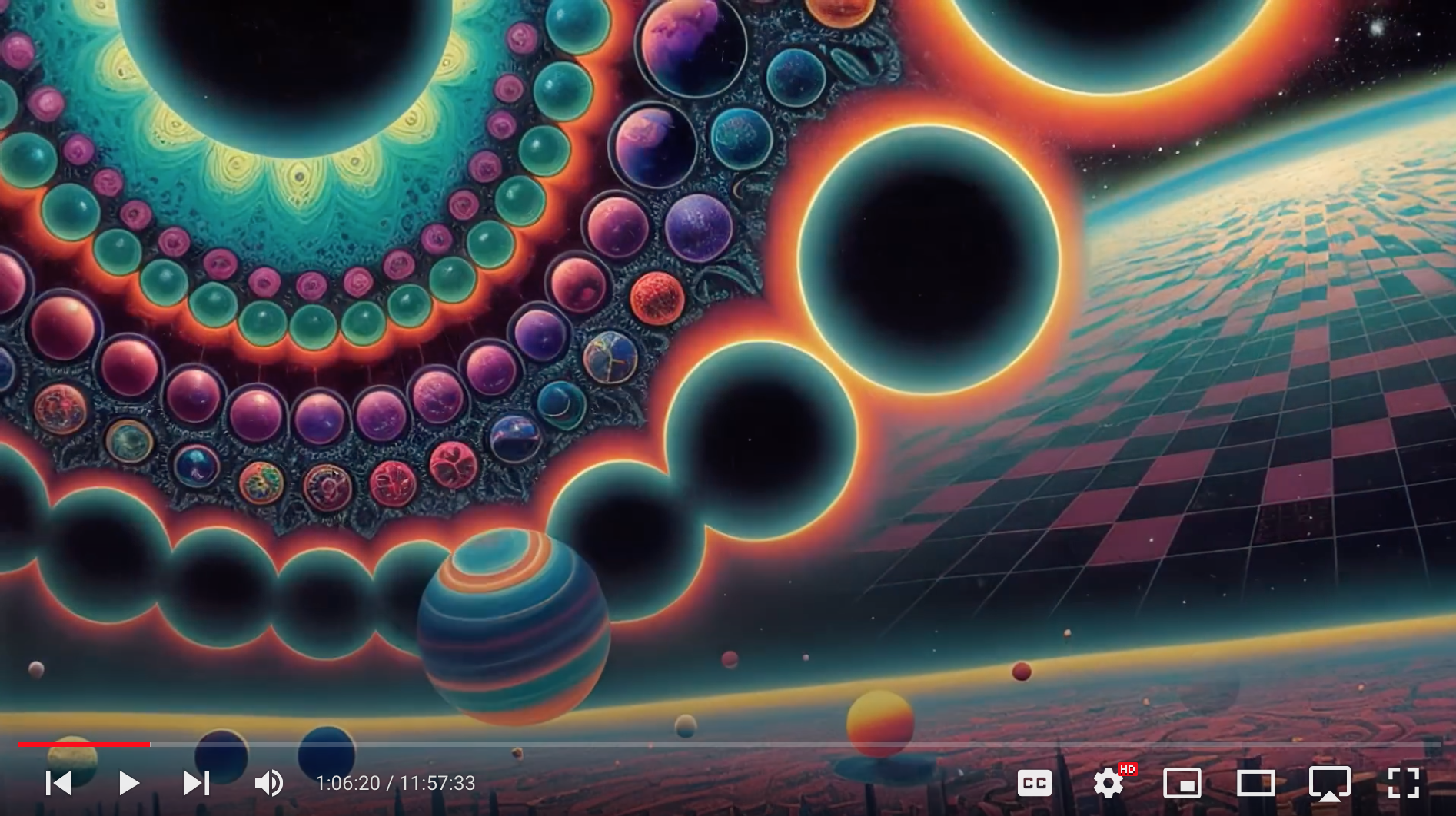
It’s a remarkably simple setup, really. All you have to do is to get together with friends into AI and/or consciousness, each consume between 1 and 2 grams of mushrooms, and then spend the next 5 hours watching this video:
You will ideally also play the music that comes with the video in a good speaker system and with a great large-screen TV. Why is this a significant experiment, or activity?
Look, I want to avoid the perception that this is simply coming from a sort of “oh mushrooms are trippy, AI art is trippy, if we add them together we will get extra trippy!” heuristic. I mean, there is some logic to this, and in many circumstances it really makes sense. But, guys, we’re doing sophisticated science here! Let me explain.
We have an AI system that is trying to minimize the difference between a prompt and the images it is generating. It is trying to make every part of the image as unexpected as possible given every other part of the picture and the prompt. But on magic mushrooms you parse images differently. How these models ultimately draw inferences is still hotly debated, and it wouldn’t be absurd to find out that some clues are more perceptible in such an altered state.
We decided to simply experience the most generic and reproducible setup possible and so we stuck to watching that video, so it becomes a kind of standard candle for discussion.
I should mention that the other two participants took 2 grams. One of them all at once (soaked in lemon and with ginger juice as a chaser to avoid nausea) and the other took one gram and then about 50 minutes later the second gram. I took half a gram to test the waters (as I sometimes respond really strongly to mushrooms in particular) and had a gram (most likely about 0.8-0.9g) also 50 minutes after the first dose, when it became apparent that I was having a more typical response by then.
The other two participants were very grateful for the experience overall, but they both stated that they thought it was too intense, and they wish they had taken 1 or 1.5g instead. For me the dose was right on target, which I suppose amounted to 1.3-1.4g or so.
The Experience
The video and the music turned out to be perfect. I had a blast. I really couldn’t think of anything more interesting to do on a random Saturday afternoon. First of all, the dose was strong enough for me to have really noticeable effects worth pointing out, but not strong enough that I would get completely side-tracked by internal tangents or worries. I was really energized but euphoric and able to keep it together all of the time, having a lot of familiarity with this territory. Second, I think that the input was really useful for the experience to go well. The images continued to be entertaining and grounding, even. And the music created a vibe of “we made it! we are humanity in the future and we figured out how to solve the climate crisis, AI, and pandemics, and we’re all living a never ending party exploring consciousness”. So at least this created really excellent conditions for my experience.
But most importantly, the task of “look at these images and try to point out things about how the model works that you wouldn’t normally be able to see” was enormously engrossing. Having a deep personal interest in how the mind works and how this differs from how computers work also provided great mental software to play with during this activity.
I will start out by pointing out the most obvious difference in how the experience of watching the video is on 1.3g of mushrooms relative to normal. The biggest difference is in how sensitive one is to randomness in the animation. This is something you can point out literally at any moment of the 11 hour long video (yeah, I know, it’s a shorter loop, which we watched probably around 3.5 times altogether). The change introduced by the zoom makes the algorithm re-paint each region locally in a way that minimizes surprise (modulo the prompt) with its surroundings. And while the local change in color and low-level shape are typically well-coordinated with changes in the region, they are largely random and desynchronized relative to low-level changes elsewhere in the image. This could have been different. For instance, if the model had more non-local update rules, where each local change needs to be made in coordination with changes elsewhere (or at different scales!) then we would be seeing (and noticing in the psychedelic state!) many more correlations in how the video evolves. Instead, we get a setup that almost sort of maximizes the individual brightness of each local change precisely because it occurs in relative isolation, and thus stands out. In a way, looking at this video while on mushrooms makes the experience very “pointillistic”.
Relaxation of Beliefs vs. Expanded Repertoire of Harmonic Modes
Now, the standard explanation for why on a psychedelic we would experience these local changes as brighter than when one is sober is that the state sensitizes you to low-level sensory signals over the perceptual priors we rely on to compress our experience and highlight only what’s out of line. In other words, this is the story where top-down priors are loosened and thus allowing for bottom-up sensations to drive the state more directly than they usually would.
But I think that we can enrich this explanation with a more gear-level account. Namely, if we think, simplistically, that each state of consciousness is decently approximated by a superposition of harmonic resonant modes in each of our sensory channels as well as globally, then psilocybin’s role would be to increase the amplitude of these resonant modes and especially that of higher frequency ones. In turn, the typical landscape of harmonic coupling gets overwhelmed by the non-linearities emergent in the new regime, which give rise to a wide repertoire of possible ways for harmonics to (fleetingly) couple together. As a consequence, we have a wider (but unreliable!) set of building blocks (as resonant modes coupled together to form gestalts) with which to make sense of sensory information. In other words, it’s not (only) that the “perceptual filters” are down, as both Huxley and perhaps standard predictive processing explanations would have you believe, but there is also an enrichment of internal resonant modes that can function as more complex priors useful for perceptual processing.
What this means in practice is that you will be overfitting your sensory input a larger fraction of the time. The garden full of overgrown grass and leaves can look like a complex network of hypercubes on DMT or on a high dose of mushrooms. This is obviously not because that shape is really latent in the stimuli. Rather, that among the non-linear resonant modes that you now internally have available to sample from in order to fit together the information coming from the senses there is an entirely new class of non-Euclidean and also higher dimensional gestalt configurations. In a way, they are the possible data-structures for ordering large bundles of local binding connections into coherent structures with long-range correlations. But in this case, it is overwhelmingly likely that you are overfitting on the data: the grass and the leaves are a source of partially structured randomness that the normal visual system correctly interprets as stochastic whereas the tripping brain over-thinks it far beyond the necessary.
That said, as with psychedelic cryptography more broadly, I do very much believe that it is possible to create input that specifically looks ordered in the right way on a psychedelic but not sober. For instance, a case where indeed the movement of dots in a screen are very well approximated by certain projection of a hypercube on a hyperbolic plane, so that on a psychedelic you actually tap into one of those possible “solitons” of the mind and correctly represent it. Here one would be finding a specific visual task where its model complexity is indeed adequate for a psychedelic but not for the normal visual system. I would in particular, expect that psychedelic states of mind would work really well as kind of a “reverse fractal diffusion” system, where you can “click” into fractals hidden in the screen that were noised in some way. I.e. where the possible fractal gestalts that become available on psychedelics turn out to be a great approximation for the image in a way that generalizes.
Now, given the way in which our brain might use superposition of harmonic modes as one of its primary ways of modulating the contents of the world simulation, then we could _define_ randomness _relative_ to this system. In particular, it might be a good approximation for us to think of randomness as the degree to which the input is “incompressible with harmonic modes”. After all, JPEG is quite a good image compressor for humans. In other words, while some number theoretic properties are certainly not random (if anything, they are superdeterministic, in that they are true in all possible universes), they are random from the point of view of the human visual (tactile, etc.) system. Looking for patterns in prime numbers is so trippy because they are deterministic and yet an adversarial case for our pattern-detection system (don’t get me started on looking for patterns in Pi). So that which cannot be compressed as an interaction between harmonic resonant modes stands out as inexplicable from a subjective point of view, even if there is a real pattern underneath that is simply poorly compressible with harmonic modes.
So one story says that the relative strength of our priors to our sensory input is flipped over. The other story says that the inner repertoire of representations increases and that as a consequence you will be more prone to interpret randomness as a pattern simply due to having more categories of patterns to sample from. How are these stories connected?
Here is what I think.
The Annealing Process
First of all, I think the dynamics are key (cf. mettannealing). A whole psychedelic experience can be seen as an annealing process and we need to be aware of this to make sense of each stage of the trip (Psychedelic Information Theory, Neural Field Annealing). I think that psychedelics inherently activate some low-level cellular-automata-like reaction-diffusion-like processes that make your experience buzz all throughout and causes many of the pre-existing correlations learned by your system to break down. At first, in desynchronized ways. During this phase, the video looked like it was undergoing a process of defabrication. The elements were more disconnected from each other, sort of drifting apart into their own island realities. And the parsing of the scene was highly pointillistic.
Then, I think that as these low-level patterns begin to coordinate with each other, they start to form groups and clusters where they form networks of resonance. In this phase the experience is characterized by the evolution of signals, where different parts of your experience are trying to connect with one another, sending waves to each other and adjusting their mutual shape in order to be able to send and receive signals more efficiently. Here many parts of the video worked as makeshift transmission fields for patterns to communicate with each other.
Then you have a long period where the common themes on the “surviving” patterns of the ecosystem are dancing with each other. Once the pieces of the puzzle are set in place, then you explore their many possible configurations and interactions. But at this point you aren’t making entirely new pieces. So during this phase, the video emphasized the complex relationships between the parts. In essence, the main archetypes that you arrived at during the process of deconstruction go as far as they can in cooperating with one another to make the experience as great as possible (in this case).
And finally you have a comedown and a subtle long-tail, both characterized by the loss of access to the memory of the process (if not somehow encoded in clever ways or recorded in audio or writing) except for a recurring sort of revising of the main emotionally impactful takeaways of the experience.
So I would say that both stories are part of the picture. In that the first story explains the start of this annealing process, where you become sensitized to low-level sensory inputs. But then as the canvas of patterns gets painted and you have the start of competition for attention and connection, you actually explore a wide range of new primitives that can be used to make sense of very complex relationships (which risks overfitting, but might also be legitimately necessary for some categories of insights or realizations). In other words, there is a phase of the process where the evolutionary dynamics generate a layered ecosystem of resonant modes, and these in turn enrich the range of model complexities you can afford to use to represent sensory data.
Now, importantly, the video precisely lacks many of the long-range correlations that are more characteristic of the psychedelic state. This actually, in my estimation, made the experience somewhat more DMT-like, in that the low-level detail always attracted a lot of the attention, as opposed to being more centered on the intermediate-sized gestalts.
The state I was in during the peak of the experience would hallucinate a lot of long-range correlations that I really don’t think are present in the video as such. It was as if the lack of global coordination between the low-level patterns left my pattern-detection systems really hungry, and with the enriched repertoire of possible models, they would find really implausible but technically accurate fits. For instance, here the visual system was really trying its best to reconstruct the pattern of light in the grid as a meaningful optical effect coming from some symmetrical prisms rather than admit that it is random:
In this case, I think my visual system was really using all of the available complexity in the repertoire of resonant couplings on hand and legitimately “thought” that it was a good fit of the data. And of course if there were reasons for those new priors to be there (like that the movie was constructed with them in mind) then they would be picking up on real signals. Here, I’m pretty sure, it was a case of overfitting.
It is worth noting that the valence of the consciousmodel ultimately matters just as much, if not more, than that of the sensory input per se. I actually think that this video wasn’t particularly valence-maximizing. I think for that you would benefit from carefully curated videos with soft harmonic resonance coupling in really elegant ways. This video instead was rather sort of maximizing a certain kind of visual interestingness, in that it compellingly creates the illusion of a structured generator behind the scene even when it is smoke and mirrors, and is rich enough to grip you without being so rich that you miss out on detail.
Lensing
There’s one important exception to the absence of long-range correlations in the video. And that is when “lensing” effects take place.
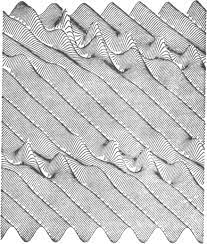
When you have a pattern that repeats over a long distance, then the little “update waves” that the pattern emits do tend to have the habit of entering into coherence. When the pattern curves, then the waves can in a way become concentrated, and as such, function as a kind of “lens” (cf. Reverse Grassfire Algorithm). When this happens, the image does pulse and vibrate in coherent ways, which is especially nice while on a psychedelic. So I really cherished the moments when lensing would happen in this video.
Another way of looking at these lensing effects comes from thinking of the model as a series of non-linear activation layers for receptive fields of increasing abstraction. In this case, we can actually expect interesting lensing effects, because a coherent wavefront might make a large-enough area look similar enough in order to trigger the detection of a broader gestalt. So in a way, we could say that this model does have some degree of psychedelia inherent in it, though it is far from optimized. Lensing-aware and lensing-optimized networks should be doable.
Importantly, because lensing _is_ present in both the visual field on psychedelics and in this model, there is an especially strong effect from symmetrical alignments in this video and the state we were in, making us say “oh my god” when strong lensing would happen. That said, this non-linear amplification of waves that results in large-scale coordination of gestalts could be greatly enhanced in the model by adding correlated changes across the scene. I’d even predict that the “interaction length” variable of a model like this that has adjustable long-range correlations would be a good proxy for the “degree of trippiness” of the imagery.
A Geometric Deep Learning-Inspired Model of Psychedelic Action
This takes me to another key way in which the video isn’t exactly as psychedelic as it could be. This involves a brief discussion about geometric deep learning. One of the main insights of this field is a way to make sense of how neural networks overcome the curse of dimensionality. In other words, why is it that a model with so many parameters doesn’t automatically just massively overfit the data? And why does the model converge so fast, relative to what you’d expect given the complexity of the patterns it figures out how to detect?
Here the idea is that the way in which we construct neural networks actually has in-built assumptions that significantly reduce the state-space that they are exploring. In particular, two key assumptions are built-in: symmetries in the input, and scale-separation in the outputs.
The symmetries in the input deal with the type of space the data comes from. When you’re in 2D Euclidean spaces, then rotation, translation, and reflection might all count as the symmetries of your space (cf. Klein’s conception of geometry). And it turns out that a key principle behind choosing the right neural networks for a given task is that the in-built symmetries it assumes correspond to the symmetries of the space it is actually sampling from. Thus, convolutional neural networks are a good fit for datasets where you want to enforce translational invariance (a cat is a cat, no matter if it is on the left or the right part of the screen) but not a good fit when the specific location of a pattern actually matters for its classification. Nevertheless, we can say that one of the fascinating things about psychedelic states is that you do seem to experience new exotic geometric primitives. Indeed, a computational interpretation of, say, a hyperbolic spinning wheel on DMT, is that you are applying a _space prior_ over a region of your experience such that the symmetries of that space are enforced in that region. Thus, psychedelic symmetries are, in a deep way, geometric priors over sensory input. But this only really makes sense once you zoom out of traditional deep learning principle and take into account the insights of geometric deep learning (cf. the inventor’s paradox).
The second in-built assumption that comes from how we build neural networks is scale-separation. Here the key is to realize that many of our networks have “pooling” layers where low-level details are aggregated across a region. This way of treating the data gives rise to an implicit assumption about how the information is structured. And that is that patterns of a given size are expected to interact with patterns of roughly the same size. Importantly, too, that categories exist at a certain scale, meaning, that concepts like “a face” encapsulate lower-level features together (nose, eyes, mouth) that are spatially contained _within_. In other words, the way we make sense of visual data using these networks assumes that there is a very specific, highly local, way by which low-level features are put together to form higher level features.
An example of a dataset that would violate this scale-separation assumption would be one where faces need the high frequency elements of eyes to be a certain distance away from the rest of the features. Here the gestalt that one needs to learn to recognize incorporates low-level features into higher level features in an anomalous (highly distributed) way. Then again, this is something that future neural network architectures can play with. Namely, _relaxing_ the degree of scale-separation that is enforced.
Put together, we now have a picture of psychedelic effects in terms familiar to geometric deep learning. Namely, we are sampling geometric priors from an expanded repertoire of possible symmetries (!). In this way, psychedelics could be thought of as relaxing geometric (typically Euclidean) priors in favor of a long-tail of (hyperbolic and higher dimensional) priors. In parallel, we observe that the degree to which long-range correlations are detected and experienced on psychedelics is greatly amplified, especially if they can be compressed as harmonic waves at a different scale. Importantly, there is more coupling between scales on psychedelics, giving rise to a relaxation of the scale-separation priors our system typically works with. Thus, I reckon we can see the psychedelic state precisely as one where scale-separation constraints are relaxed (!). Meaning that, the psychedelic state has broader geometric priors and less scale-separation in its assumptions about the structure of sensory data. A more universal, albeit slower and maladaptive in our current environment, form of qualia computation.
The verdict?
In many ways, the video we saw was fascinating. The constant stream of novelty was endlessly stimulating. In many other ways, it was maximally boring: it precisely lacked the sublime long-range correlations that make psychedelics so delightful. But when they did happen (via lensing effects) they were especially glorious. It became apparent how a much more interesting video to watch will become viable when a broader set of geometric and scale-separation priors are explored in models like these. But on the whole, I thought it was a delightful experience. And my friends were, in their words, quite pleased. A wholesome Saturday evening in the Bay I’ll always remember fondly.
In this video I discuss in depth the following topics:
1. MDMA is cardiotoxic and likely neurotoxic, with real and significant side-effects when taken often. Don’t do that. Respect and honor this beautiful state and save it for when you really need it.
2. The phenomenology is often described as “removing layers of conditioning and finding your essential, loving, and pure *core*”. It seems to significantly reduce greed, hate, and delusion, for at least a solid 90 minutes.
3. I argue that a good frame would be to think of the effects as drastically reducing both reactance and fear. Then you can assess a situation without the distortions of these two mental factors, which tend to generate rather self-serving thought-forms.
4. The concept of “authenticity” and its operationalization as a good lens with which to see the effects of MDMA. Big up to Matt Baggott, Co-founder and CEO of Tactogen, who is aiming to perfect MDMA and developed and applied the construct of authenticity in the scientific study of MDMA. Also thanks to Thomas S. Ray, who is on a similar path. Well done! Let’s get more people involved!
5. Another frame is to think of the state as clarifying what the “substance of thought” is like. We usually live under the illusion that emotional reactions follow Newtonian physics. They don’t. A better analogy would be corn starch and water, where applying force quickly can solidify (and even tear) the medium. Thus, we get in our own way and cause a lot of sense of solidity without even realizing it, which will take time and effort to soften and return to normal.
6. Discussion about QRI’s Psychedelic Thermodynamics model applied to MDMA.
7. Self-organizing principles, such as “repulsion-based algorithms” to undo knots, might explain what is happening to the field on MDMA.
8. A possible personality factor might be how “hard” someone is. I discuss personality disorders from a “hardness realism” point of view.
9. Emotional processing as a “skill tree” rather than “levels”.
10. High Entropy Alloys (HEA) are materials made of many metals that, in some cases, lead to really surprising effects, such as a new symmetry space group for their molecular organization (where none of the “ingredients” tend to crystalize that way, but as a whole they do). MDMA might be a bit of a unique HEA that balances serotonin (social anxiety reduction), dopamine (motivation and mental clarity), oxytocin (sense of closeness), and endorphins (bodily pleasure). It is more than the sum of the parts.
11. This leads to a speculation where the key high-level effects of MDMA, in addition to reducing fear and reactance, is the presence of courage, love and equanimity. I try to explain these features in terms of MDMA’s “vibratory signature”.
12. Deep discussion about self-honesty and why it develops in the state. I speculate it has to do with the de-modularization of our vascular clusters (or something else, if blood turns out to be a special case).
13. This blending of modules with each other results in an uncomfortable but helpful overlap between contradictory faces that we put in social settings. It is ideal to experience this with equanimity and patience, however difficult it is to acknowledge it to ourselves. The other side of this wall is light and beautiful, I promise.
14. It seems to me that MDMA creates a highly redundant and highly overdetermined Euclidean geometric phenomenal space, where each point “knows” really clearly how far it is from every other point. Psychedelics can sometimes do this for short periods of time, but they usually create complex fractaline phenomenal spaces. MDMA is different – highly “clear and normal” yet unblocked and euphoric.
15. The concept of Gnarliness as it relates to the “field knots” that MDMA can help unwind.
PLUS FOUR, n. (++++) A rare and precious transcendental state, which has been called a “peak experience,” a “religious experience,” “divine transformation,” a “state of Samadhi” and many other names in other cultures. It is not connected to the +1, +2, and +3 of the measuring of a drug’s intensity. It is a state of bliss, a participation mystique, a connectedness with both the interior and exterior universes, which has come about after the ingestion of a psychedelic drug, but which is not necessarily repeatable with a subsequent ingestion of that same drug. If a drug (or technique or process) were ever to be discovered which would consistently produce a plus four experience in all human beings, it is conceivable that it would signal the ultimate evolution, and perhaps the end, of the human experiment.
— Alexander Shulgin, PIHKAL, pages 963–965
In this post and accompanying video we provide a general “theory of candy flipping” that aims to explain why LSD + MDMA is so synergistic. What makes, say 200 micrograms of LSD and 150mg of MDMA so prone to be spiritual, psychologically healing, and loving? To get there, we address the following three/four questions:
How do we improve research on candy flipping?
How do we optimize candy flipping proper? And how do we generalize candy flipping for even better results?
What would a general recipe for Shulgin’s ++++ be?
1- We go over current methodologies used to study candy flipping and why their results are limited (Straumann et al., 2023). Then we explain how a “think tank” approach (e.g. phenomenology club) allows us to create more phenomenologically grounded research paradigms (Gómez-Emilsson, 2021). By weighting in the personal experience of highly precise psychonauts with skills in areas like physics, math, visual art, and signal processing, we can arrive at mechanistic models such as those proposed by Steven Lehar in The Grand Illusion (Lehar, 2010) where MDMA causes your world simulation to vibrate in pleasant ways, which in turn “smooths out the rough edges” of the LSD state, or models involving algorithmic-level annealing dynamics (Gomez-Emilsson, 2016; Johnson, 2019; Gómez-Emilsson 2021, 2023). This kind of approach would add phase diagrams, wave mechanics, and nonlinear effects into the picture.
2- Optimizing candy flipping can be done by looking to generate the kind of synergy MDMA + LSD achieve in the best of conditions. Of note, trip reports involving low doses of each together with 2C-B and cannabis are discussed and analyzed. One needs to be mindful of annealing dynamics, drug effect arcs including how to handle the MDMA comedown, and pattern-focused readings of wave effects that for lack of a better metaphor could be catalogued as “qualia lensing“.
And
3- We hypothesize that the key ingredients to catalyze the blissful nondual awareness that comes from high-end candy flipping are (a) a full-spectrum energizer, (b) something that increases interconnectivity, and (c) a deeply relaxing agent. The combination of these three elements gives rise to a highly-nonlinear effect I call “FU§ION (Field Unification Search/Simplify in Invariant Optical Networks; to be fully unpacked at a later date), where all of the “resonant cavities” are fully relaxed, have a high degree of impedance matching between them, and are energized, so that they kick-start a “field harmonization” process that culminates in profound blissful nondual awareness. The energizer shouldn’t be narrow spectrum (like cocaine) and the relaxing agent shouldn’t be too blunting or non-Newtonian (like opioids). Examples of each:
Combine one of each, carefully dosed, and according to this theory, you might get a ++++. (Please exercise caution when mixing substances – the rule of thumb is to not do it).
Note: 5-MeO-DMT might, in this model, be actually doing all three at once. It happens to be hitting receptors in the right combination for such a deep mystical “relaxed stimulation” to take hold. That said, it is possible that 5-MeO-DMT also has some rough edges, and that it can be further optimized (e.g. such as by combining it with nitrous). More research is needed 🙂
Example Formula: 15mg 2C-B, then an hour later 2g of GHB, and then an hour later DMT (100mg over the course of 2 hours) was reported as a ++++ by a trusted psychonaut recently (comparable in “depth” to 5-MeO-DMT). Please be careful – I am not encouraging anyone to try this. But if you do, or have done something similar, I’d be grateful if you let me know what happened. 🙂
Gómez-Emilsson, A. (2023), Neural Field Annealing and Psychedelic Thermodynamics presentation at PhilaDelic 2023. Retreieved from https://youtu.be/pM9k1I3VPOg
Straumann, I., Ley, L., Holze, F. et al. Acute effects of MDMA and LSD co-administration in a double-blind placebo-controlled study in healthy participants. Neuropsychopharmacol. (2023). https://doi.org/10.1038/s41386-023-01609-0
A society based on E-like consciousness would be an honest society of honest people.
Today, most of us lie and dissemble. We tell white lies and, on occasion, total whoppers. Most of us lie many times in the course of a day, whether to friends, family, colleagues or – as necessity or convenience dictates – to total strangers. Hiding one’s true thoughts and feelings as the occasion demands is second nature to outwardly civilised Darwinians. The few formal studies conducted into the prevalence of lying in everyday life suggest we tend to underestimate just how often (almost) all of us are guilty of outright fabrications, not to mention innumerable half-truths and evasions.
On a wider scale, deceit is institutionalized in political life. The record of human history to date supports the powerful intuition that deception will persist indefinitely in public and private life alike. For the evolved capacity to lie and deceive in ever more sophisticated ways has been genetically adaptive. Indeed, if the controversial Machiavellian ape hypothesis is correct, then a progressively refined capacity to lie and deceive – and conversely, a fine-tuned capacity to spot lies and deceit in others – may have driven the evolution of human intelligence.
It is sometimes said that life would be better if only we were honest with each other. More often, this value judgement is simply assumed. Life might be better, too, if we were more honest with ourselves. But given today’s corrupt genome, all such scenarios are impossibly unrealistic. Moreover, the effects of public openness about private feelings would frequently be catastrophic. This is because Darwinian humans entertain so many negative thoughts about each other that complete candour would wreck most contemporary human relationships. In a grim Darwinian world, one [E-less] person may, for instance, find another person boring and ugly. Yet there is commonly no advantage to either party in saying so. So the civilities are (sometimes) preserved.
Not all lying is self-serving. Very often, we lie to spare the feelings of others, as well as our own.
On MDMA/Ecstasy, however, subjects tend to become extraordinarily honest. People trust each other: MDMA indirectly triggers the release of oxytocin. Critically, MDMA-induced emotional honesty is matched by a subtle yet profound shift in perception: when “loved up” on MDMA, we all tend to seem fascinating and beautiful, both to each other and to ourselves. On MDMA, it seems natural to express these feelings spontaneously and demonstratively too.
Alas this marvellous state of being doesn’t last for more than a few hours. Potentially, the benefits of MDMA (and MDA)-assisted therapy can be much longer-lasting. But the peak experience of soul-baring empathetic bliss soon fades. Looking to the future, however, enhancements of E-like consciousness can in principle be indefinitely prolonged. By opting via gene-therapy to hardwire a neurobiology of E-like consciousness into our offspring, we could even lock in this perceptual and behavioural shift for good. If implemented species-wide, an enhanced E-like set of perceptual filters would make heavenly love for each other as natural as breathing.
This post-millennial vision is implausible. Right now, the notion of global E-like consciousness seems fantastical, especially if one isn’t loved up on MDMA. Yet the capacity to love everybody, and in extreme forms, to be in love with everybody, will be a technical if not sociological possibility in the age of mature biotechnology. In future, if we ever opt – pharmacologically or genetically – to implement E-like consciousness as one facet of world-wide mental health, then it may be psychologically safe to be totally honest. In the meantime, barring such enrichment of our troubled minds, it’s sometimes safer to lie through one’s teeth. Thus today the MDMA user is probably well advised to take a conscious decision, prior to dropping an E, not to disclose anything s/he would not wish to be known in the E-less state. Reticence on E can be maintained; but one can be reliably tight-lipped on E only with a fair degree of forethought.
Yet discretion is prudent not because an E-catalysed outpouring of the heart and soul is itself pathological. Selective reticence about (some of) one’s innermost feelings is wise simply because the repercussions of honesty back in the E-less world to which the user must return can be cruel; and because the elevated sentiments felt while on E often cannot be sustained in the cold light of day.
Of course, the prospect of worldwide E-like candour strikes the harsh Darwinian eye as grotesque – no less than the prospect of us all loving each other. More specifically, the option of becoming permanently loved-up invites the charge that E-like perception is systematically distorted. A notional society of loved-up E-heads, it may be alleged, would be in the grip of a collective psychosis. Sure, runs the cynic’s critique, loved-up Ecstatics intoxicated on MDMA may find everyone beautiful and fascinating. But so what? Even though MDMA is not a classic “hallucinogen” or psychedelic, the drug-induced perception of loveliness that MDMA creates is (often) false. For lots of people are really boring and ugly. A perpetually E-enchanted world would be a fool’s paradise populated by intellectually and aesthetically undiscerning simpletons. In an E-like world, we might indeed be open and honest; but we’d have nothing worth hiding.
This dismissive judgement doesn’t follow. If being boring or ugly were intrinsic properties of (some of) our fellow humans, rather than our emotional responses to the vicious (mis-)representations of Darwinian minds, then the charge of false consciousness, as it were, might be easier to sustain. But there’s no evidence that this is so. Our perceptual experiences have been shaped by natural selection, not to be veridical, but to help our genes leave more copies of themselves. Sometimes this (lack of) veridicality is fitness-enhancing; and sometimes it isn’t; and sometimes – as is arguably the case in the realm of attitudes expressing pure value judgements – there’s no fact of the matter either way. In any event, under the primordial Darwinian regime of natural selection, there has been great advantage in seeing genetic rivals, and indeed seeing anyone with whom one is not genetically identical, in a (sometimes) cruelly negative light. On the other hand, if it had helped our genes leave more copies of themselves, then men would typically represent women of, say, 80 years old as more sexy and fascinating than women aged 21; and this perception would be neither more nor less “correct” than the aesthetic consensus-reality of today.
Analogously, the enraptured mystic who can “see a world in a grain of sand, And a heaven in a wild flower” is not deluded; such perceptions are uncommon at present merely because it has been genetically maladaptive to occupy states of sustained mystical bliss. For in the ancestral environment of adaptation, it was typically more adaptive to see grains of sand as boring and neglect them. But today’s parochial (virtual) worlds are only one small set of mind-dependent creations in a vaster state-space of possibilities, not a timeless feature of the human predicament. Tantalisingly, thanks to biotechnology a wide range of life-enriching options will soon be on offer instead.
A tough-minded sceptic may respond: yes, beauty is in the eye of the beholder, but not all social perception is relative. Some people really are nasty and ill-natured by (almost) any criterion at all. And seeing them as anything else would be delusive. Granted, viewing each other in an often jaundiced light may be a product of our nasty little Darwinian minds, but surely that’s the point: commonly we just aren’t very lovable. If we are to be honest, then we should admit this – not gush effusively at each other like drugged-up hippies.
Herein lies the beauty of MDMA – and perhaps safer, sexier lovedrugs and more distant gene-therapies in the pipeline. MDMA doesn’t just make us honest. E-like consciousness makes us sweeter-natured. Even better, the idealised self activated by MDMA does not take the form of alien impostor, so to speak, but feels utterly authentic, constructed from elements of an idealised persona that we can’t live up to in drug-naïve life. If, in a hypothetical E-based society, everyone were constitutionally sweet-natured, then enriching our cognitive architecture would entail capturing this sweet-naturedness in our interpersonal perceptions. With E-like consciousness, emotional honesty and intellectual integrity can, in principle, go hand in hand. It is possible, but unproven, that ugly representations of ourselves and each other belong to a dark Darwinian world that we will shortly leave behind.
This prospect again invites scepticism. It can be argued that genetically engineering an entire population primed for indiscriminate honesty is not an evolutionarily stable outcome. An unfailingly honest population might seem prone to genetic invasion by mutant, quasi-sociopathic “defectors”. This game-theoretic argument may continue to hold in the future, as it has done in the past. Even with advanced biotechnology, runs this line of argument, perhaps only substantially egoistic well-being is feasible in any biologically realistic model of a globally superhappy society.
But once again, this overly quick reply neglects how ostensibly altruistic thoughts and behaviour evolved in the first instance i.e. for (genetically) selfish reasons; and how they are likely to proliferate explosively in the new reproductive era of designer babies. The proliferation of such admirable traits will accelerate not because our genes stop being any less selfish in the technical sense. For unselfish genes are impossible. Instead, an (E-like?) nobility of character may flourish in the impending era of so-called unnatural selection because when selection is no longer “blind” or [effectively] random, the [selfish] genetic payoff of promoting such “altruistic” traits can be higher. In the new reproductive era ahead, when genes/allelic combinations are chosen by (partially) rational agents in anticipation of their likely behavioural consequences, parents will plausibly exhibit a strong preference for offspring with genotypes that promote such (partially) heritable traits as honesty and “lovability”. These nicer traits may then flourish at the expense of alleles that predispose to a nastier disposition. After all, who wants to devote their life to raising nasty kids?
Unfortunately there are no shortcuts. Any transition to a truly honest post-Darwinian society can’t happen simply though acts of individual initiative or all-night Paradise-engineering certainly won’t come about just via individual acts of drug-taking – even after safe and distributed via the Net.
Needless to say, we don’t know whether our genetically enhanced descendants will ever have E-like perceptual filters to their consciousness. We don’t know if posterity will lie and cheat as much as we do. We don’t even know whether they will be fundamentally happy, or assuming they are indeed innately so blessed, whether their well-being will take an egocentric or empathetic guise, or express modes of flourishing unimaginably different from anything accessible to conscious mind today. So perhaps the enticing scenarios for our transhuman descendants touted here are all just wishful thinking masquerading as futurology. But whatever the future holds, by taking MDMA we can already, fleetingly, access states of consciousness richer than our brutish Darwinian mindset normally permits. A fundamentally honest society, prefigured (perhaps) in a communal MDMA love-in, is not self-evidently ethically inferior to a society founded on never-ending lies and deceit – or a society driven by competitive displays of consumer consumption. So at least as an intellectual exercise, it’s worth investigating the policy-option of locking in the biochemical substrates of E-like honesty for good.
DMT Experience Report — Learning the Nonlinear Wave Computing theory of subjective experience and internalizing the Symmetry Theory of Valence (originally posted in r/rationalpsychonaut by ClarifyingCard).
Meta Info
This was a sub-breakthrough experience with firmly-set “intellectual” (integrative) intentions. So I wouldn’t really call this a trip report, but an experience report. It’s a little more in the direction of a freeform essay. Working through this experience to translate it into written word is proving very fruitful for annealing what I’ve learned, so I hope it can provide some insight to others. Contents include my real-time integration of QRI’s “nonlinear wave computing” model of subjective experience, and some explanatory applications. I also firmed up my epistemological relationship to the Symmetry Theory of Valence during this experience, so there are some insights integrating these with technical meditation & gender transition.
I hope the length doesn’t render this inaccessible, as I feel that there are many genuinely deep insights here. I’m not the type to typically write reports on experiences, but consuming lots of QRI content has seriously energized me! There’s this feeling of “Finally! People are doing the top-down neuroscience that I’ve been quietly building for years in isolation! People are seeing psychedelic experiences as legitimate tools for investigating the nature of the mind!” So, I’m feeling a drive I haven’t felt in a while, a drive not just to consume information & integrate it acausally, but to contribute & collaborate.
Context
Last night I sipped on a sizeable amount of DMT over the course of a few hours. I probably took over 20 hits from the vape overall, paced gently. I wasn’t specifically striving for a breakthrough, though I left open the possibility, and in fact I was deliberate to keep it sub-breakthrough for the first phase of the trip, since I was trying to use DMT to integrate information content from a video.
To me, coming to DMT fixated on a breakthrough feels like entering a relationship with a striving fixation on sex, or entering sex with a striving fixation on orgasm. So, much like taking your time to get to know someone intimately, or moving through a sexual experience without pushing or striving to let it blossom on its own terms, I’ve been flirting with & getting to know DMT on an increasingly deep level over time. This was the first time I’ve really leaned in & let it show me where it wants to take me.
(“wants” in terms of descending energy gradients, not in anthropomorphizing way. This is a central thread of this experience, so more on this below.)
So, I have not broken through yet; this definitely fell on the side of profound insight & bliss. I’m a deep subscriber to the theory of Neural Annealing, and DMT is so high-energy that metaphorically speaking it felt like pure, elemental annealing; anything my mind turned to, I could understand so crisply, with ease & immediacy, like I’m just letting my representations fall into parsimonious (low-entropy) resonant modes, the local minima that my conceptions have already been swirling around.
I also subscribe to the Symmetry Theory of Valence — well, my epistemological relationship to it has been a little fuzzy or hesitant, being sympathetic to it but not yet feeling like it deeply “clicked”, but after this experience, I not only “get it”, but I’ve felt, intimately, what it’s like to watch it play out in real-time. So that process of “spontaneous understanding” of the above paragraph, the symmetrization/entropy minimization felt really, really good. A truly profound bliss of methodically massaging out any point of tension in my representation field that my attention happened to rest upon.
I also want to point out that it didn’t really quite feel like the positive (additive) happiness of e.g. eating the candy bar you went to the store for, it felt like a negative (subtractive) happiness — in other words, relief from suffering. Very Buddhist in flavor, even at just the most basic level of Buddhist theory, the Four Noble Truths. In other words, the dukkha of the Three Characteristics. I’ve now got this idea in my head of maybe identifying dukkha with the mental tension that’s smoothed by annealing, to some degree at least. That correspondence is a space I’ll be playing in for a while, I can see.
So, here’s the actual report.
Demographic Information
Age: 29
Height: 5’9″
Genetic heritage: 39% Scotland, 33% England, &c.
Sex/gender: Trans female (late-stage, meaning enough years of estrogen & social transition to have largely reached mental & physical equilibrium in terms of gender/sex characteristics)
Personal Background
Tremendous experience over 8 years with 80+ different psychedelic/dissociative/otherwise acutely psychoactive substances, with a heavy focus on dissociatives. Sizeable understanding of contemporary technical meditation and Buddhism (my understanding is significantly stronger than my actual practice hygiene). Avid consumer of QRI content. History of engagement with Less Wrong-style rationality. Undergraduate education in math & physics, supplemental education in technical writing, linguistics, analytic philosophy (formal logic, philosophy of language, metaphysics, &c.).
Despite my drug experience, I haven’t used DMT proper before. Before this XP, I dipped my toes in the water with 3-4 puffs of this cart over a few hours about 2 weeks before. A few times over the next 2 weeks, I took a few intermittent puffs to continue feeling it out & acclimating.
The Experience
Two phases here: first on my couch processing a QRI video, 1 on my bed in a mindset of play & exploration.
XP Phase I
Setting: ~930p. On my couch, comfortable. Full lighting. No music.
For a few months, I’ve been ramping up my consumption of QRI content, technical meditation dharma, info about/reports on psychedelics, etc. Aside from general interest, I’ve been mentally preparing myself for a DMT breakthrough (my psychedelic experiences having waned in the past few years, and DMT being such a crown jewel of psychedelic strength/power).
I’ve had the idea to take solid but sub-breakthrough hits of DMT while attempting to integrate some QRI content. The video I chose was this:
I’m thrilled to say this was a great choice & fruitful exercise. I’m going to talk a lot about Andrés himself & his video style; I hope it’s not too effusive & doesn’t come across in a parasocial sort of way. It’s more like a walk-through of the subjective experience of what I happened to be doing, a snapshot of how it felt for my brain to process & operate in this state. It was very easy to feel what facets of experience were positive or negative, like my mental model of my valence system was in crystal clarity & intuited with immediacy. This is why this experience also had such an annealing effect for STV on me.
First of all, I was struck by how crystal-clear his vibe comes through in these videos where it’s just a single take of him talking into the camera for an hour! For the record, I’m saying nothing teleological here; no clue how much of this has been thought through explicitly. When I first started watching them, I was like, this could benefit from some cuts or superimposed visuals &c., but over time I’ve grown to deeply appreciate the style. The exact reasons why crystallized during this experience. It’s because it’s an extremely directed, one-pointed style, and it’s also more faithful to real life. For these reasons you can synchronize your mental representation of the content very deeply with the content itself (i.e. you can model Andrés’s attention with high fidelity, so as he goes through the material clearly & methodically, so are you). There’s no echoes of practice or rehearsal like an academic lecture, and there’s no attentional context-shifting that would be demanded by video cuts or superimposed visuals (though having experience with physics simulations & wave dynamics, I’d love to see some simulation visualizations of toy models exhibiting some of the wave dynamics in play here sometime). Instead, it feels more intimate in a way, like the feeling of someone in real life patiently teaching you a complicated concept 1-on-1. You’re watching Andrés think through material he’s familiar with in real-time. You can even see him spontaneously understand & explain new connections as he works through the existing material, and since your attentions are so synchronized, by watching him demonstrating the explanatory power of these models, you’re learning what it feels like to wield these concepts to refine something else into a simpler representation.
It’s not just the DMT that helped me understand this I think; poetically, the content of this specific video was very relevant. Later on in the video, he mentions the notions of “Metronome Quotient” & “Entrainment Quotient”, which could be seen as a kind of schematic for understanding the general process of one person transfering information, emotion, or other mental “vibe” complices to another. Knowing what I know about harmonic dynamics from physics, this is very intuitive. When conditions are right (person A is a suitable transmitter, person B is a suitable receiver, attention is localized favorably) — i.e. when the process works — it feels very similar to something like orbital resonance (which is why Jupiter’s moons Io, Europa, & Ganymede have orbital periods in the ratio 4:2:1 — here’s a Steve Mould video explaining this phenomenon). It’s an application of the “soap-bubble” energy-minimization principle: deviations from harmonic equilibrium inducing restoring forces to drag the system into low-entropy resonant modes.
Something else I noticed is Andrés’s emotional/hedonic vibe. He’s always got a smile, on his mouth & in his voice, you can tell that he’s just thrilled to understand this stuff & thrilled to be able to break it down for a willing audience. First of all, obviously this affects the valence of the experience of watching the video, just like smiling when you’re on the phone eases social friction. I think this emotional entrainment can bootstrap informational entrainment as well, by kindling or contributing to overall synchronization, which is neat. It’s intuitive to me; I already “knew” this because walking people through conceptual understanding, processing difficult experiences, &c. is a general passion of mine, and emotion sync is a big part of doing that effectively.
This power to deeply synchronize attention (acausally!) seems like really powerful way to integrate information. It’d have to be in favorable conditions — written word is right out, most likely. Low-stimulus density is important; you want the extraneous setting details/audiovisual landscape to be easy to ignore (to let fade from salience). I think being able to see facial expressions, posture changes, gestural communication, &c. is crucial to be able to really settle in to the entrainment (this is also true in real life — I have no idea why so many people seem almost blind to body language!). Then, by walking through the content in a deeply synchronized way, you know what it feels like to believe it, to synthesize with or wield it against other concepts. That little harmonic signature, that vibe, is there in your mind, ready to be cultivated or dampened by whatever other representations brush against it.
I should also say, I had lots of visual effects during this time of course. Strong tracers, lots of symmetry extrapolation on surfaces. Tons of shimmering on the edges of objects. When I was especially high, I noticed this really cool effect of lowering visual resolution, like a pixelation effect, but overlapping circular blobs of color & texture. They would resolve if I attended to the region. It felt like the corresponding regions of the visual cortex architecture were too energized to be localized properly, blurring/fuzzing of the wave activity translating to decreased specificity in the encoded content. Really neat. The visuals weren’t something I wanted to work with for the moment, so I let myself just enjoy them instead of striving to analyze or categorize.
PsychonautWiki seems to catalog this as environmental orbism. Interesting that they associate it primarily with dissociatives — I have not experienced it on dissos (or anything else). I wonder if there’s something Fourier transform-ish happening with the visual cortex activity, like higher-frequency activity dominating the encoding — if so, it could be thought of as a sort of inverse of symmetrization. No idea, will think about it.
Anyway, I watched the video for a while, frequently backtracking to process content carefully. Eventually it started feeling laborious, so I moved to my bedroom.
XP Phase II
Setting: ~11p. On my bed, very comfortable. Low purple mood lighting. No music.
CW: Some light talk of sexuality.
I wanted to make some time to play with the drug in a very soft, low-stimulus environment. So I just cleared my bed & spread out the top sheet layer, a lush fleece blanket, flat across the top. The space is full of pleasant, comfortable-vibe stuff, so on one side I was enveloped by super-soft blankets & pillows & stuffed animals, very pleasurable. Very deliberately setting an easygoing, pleasurable, sensual vibe for the drug to energize & amplify.
I started taking more hits, just resting comfortably on the blanket to see where it would take me. I just let myself frolick, enjoying the pleasurable touch sensations of my environment, rubbing my hands & legs against the soft surfaces, massaging my inner thighs, feeling out the effects it had on my muscles & sensory processing. I noticed the way my muscles subconsciously started to tense & tighten in anticipation of a hit, and then as the DMT washed through my mind, noticed how it smoothed & blurred & dissipated that tension & the angular mental prickles associated with it. I did a lot of rhythmic contraction & release for various muscles, just letting myself enjoy how relaxing it felt to let it go. I carry a lot of tension in my inner thighs (especially common for girls), so getting deep into the tissue & massaging it out was immensely pleasurable, almost orgasmic at times.
This made me think a lot about the distinction I was drawing earlier, of what I guess I’ll call “positive” vs. “negative”, or “additive” vs. “subtractive” pleasure. This was very much subtractive pleasure, which could maybe be accurately characterized better as “relief”. In other words, nirvana-wards.
I decided that I was in a good state for a breakthrough. I wasn’t sure whether it would happen, since my acute tolerance was probably increasing, so I set the intention that I wasn’t striving for it to happen and that it would continue being a wonderful XP if it didn’t. So I took several (3-4) puffs in succession and lay back to watch.
Here, I noticed a some decoupling of drug effects. I was still getting visuals from each hit, though the open-eye effects were a little less intense, and the CEVs perhaps more. I was still getting positive-valence mental effects — bliss, equanimity, parsimony, &c. However there was a dramatically lowering of that “roller-coaster” feeling, the overwhelming-ness, the sense a drug has seized your experiential field & is now in charge. It’s possible that this was due to me simply becoming more comfortable.
However, the missing qualia is a pretty somatic one, so I think it’s probably acute tolerance attenuating different effects at different rates. Is DMT norepinephrinergic at all? Or is this an endogenous NE effect, or not related at all? Unsure, will research later. That’s a neurochemical I don’t have as much of an intuitive feel for as much as serotonin/dopamine/GABA. Also I should get to know glutamate sometime. Maybe it’s more of a “roller-coaster” feeling because you’re feeling the pull of a novel attractor.
So, a breakthrough didn’t happen; I think that feeling is probably integral to a breakthrough (though I’m speaking from ignorance for now). But I did get huge waves of bliss & felt my all of my mental representations get highly energized. This felt “hyperbolic” in the sense of there being “too much” to fit neatly in onto the mental workspace, so things start jumbling & intersecting and “space” itself expands into itself to accomodate. This is on the level of conceptual representations, so what exactly “intersecting” and “space” mean is left unspecified.
Here’s 2 tangential paragraphs about this. I’ve had this effect before, especially on 4-AcO-DMT and other 4-subbed tryptamines — most extremely, on a truly stupid dose of 160 4-AcO-DMT several years ago, combined with a heavy dissociative I don’t recall (perhaps diphenidine). Never do this! This was many, many years ago, before I had my relationships/career/gender transition/life together, when my thirst for spiritual revelation & relief was matched by my thirst for annihilation & urge to self-harm. Every mental concept just got hopelessly jumbled together and I couldn’t parse a single aspect of my experiential field. It overtook [my model of] my body & external reality, violently smashing together and shredding them and blending them into uncountably many infinitely thin, infinitely long threads all furiously tangling and colliding. There was a sensation of being flung & pulled along this sharp, fast stream along with all the other shreds of my world. As high-entropy a state as I can imagine.
In other words, the entire modeling mechanism of reality, inside & out, underwent a catastrophic system crash. It was immensely physically painful — I felt every bit of physical reality smashing through each other — and it collapsed into this extremely dissonant state with very few experiential components: a 1-frame flashing of pale green & red, an unbearably loud Hypnotoad-esque droning, and sheer unimaginable physical pain. This went on for subjective eternity — to abuse some math notation, I had this intuitive, unshakeable knowledge that S(t + Δt) = S(t), period. I realize now that I was deep, deep in a hellish & steep local minimum. Perhaps you could consider this a “hell realm”. Combined with the “holing” effect of the dissociative, I think this could fairly be considered a seizure-like state. I’m not sure if I was physically moving in reality, as I didn’t have any thrashing marks & I was alone (don’t do that!!), but I do think I wet myself a little. It was one of the worst eternal moments of my life. Walking through this experience with ~5 years of learning & growth behind me, writing this out has actually helped me understand the experience a lot better, so forgive the tangent. Come to think of it, STV has a lot of explanatory power w.r.t. why this was so dysphoric & traumatic, lots of little clues sprinkled in here — my representation system smashed into a catastrophically high-entropy, short-term-unrecoverable state of unfathomable dissonance, inducing physical & psychic agony.
Anyway, back to DMT.
After those 3-4 hits, maybe another part of why it wasn’t overwhelming was related to the notion of “entropy sinks” mentioned in the DMT + hyperbolization video above. I was getting enormous energization of all my representations, but I had no difficulty in skillfully directing them, in applying them to existing mental & physical tension points & smoothing them out, so there was no runaway accumulation. Symmetrization was also very dramatic in CEVs, planar hyperbolic geometries all interweaving at different angles, and the experience of this geometry was itself immensely blissful & high-valence, another strong point in favor of STV. I’d like to strive for brighter, more defined CEVs soon — if I had looked for them earlier, I think they’d’ve presented.
I then took some time to play around with & appreciate my body some more. I let myself explore my body & just revel in my love for it. Lots of transition-centric thoughts here. I played with my breasts, just lightly rubbing & poking them, feeling them jiggle, reveling in how good & right it felt that I had finally grown them after all this time. I felt along the curves of my hips, groping & squeezing, reveling in how good & right it felt that I have this deeply estrogenic body & mind. How, like, over these years I’ve finally found myself falling into the attractor of this cute, bubbly, exciteable, empathic girl I’ve always been meant to become.
I remembered feeling the slightest inscrutable tugs towards it, all those years ago. I remembered blundering around in the dark trying to interpret those gradient descents towards peace with my identity & body. I remembered starting to discover, reveal, & construct this second “persona attractor”, finding this spark of hope & understanding & rightness that I would kindle & cultivate over the coming years. And I remembered the moment I felt myself at the inflection point between the two local minima, the realization that the I could just let myself fall into it, and the immeasurable relief washing over me. I’m nearly in tears recounting this to you, contextualizing this deep consonance & harmony I feel, realizing just how much literal blood, sweat, & tears were demanded of me to achieve it.
I think I annealed a deep understanding of the nature & valence structure of gender transition (at least for my personal case study). It’s not like this isn’t something I’ve thought about in intricate detail for years, so I’ve already earned a very clear picture for myself, but it’s even crisper now, such a simple story once it clicks. STV honestly seems to have tremendous explanatory power w.r.t. gender transition, something I’d like to think & write about more in the future.
I also played around a lot with my representation/experience of sexual pleasure, which I don’t need to get into toooo much detail about, but it was incredible playing around in that space. One weird thing about my mind is that I kind of have a mental “button” wired up for sensual, sexual, submissive pleasure. In other words, I can just push the button whenever I want (I have dissociatives to thank for getting this circuitry wired correctly) — I can feel this submissive pleasure at will. It’s especially effective if I fantasize, so I spent some time letting myself revel in fantasies about various partners of mine doing various things to me, letting the vividity of the feelings wash over me. This wasn’t especially, ah, “intellectual” work, so I’ll leave it at that.
(Side note: I theorize a lot of the “attainments” of technical meditation essentially come down to programming buttons like this. I’m thinking particularly of the brahmavihara (“divine/sublime abodes”). They’ve been conveyed to me as like finding a housekey, so that you can enter anytime.)
Here’s another phenomenon I noticed during this period. A few times I felt a different piece of neural machinery start to whir up — specifically this notion of “self-consciousness”, what I would conceptualize as the submodule of your reality model responsible for modeling the way others would model you back. In other words, I felt this tugging from my self-consciousness engine, nagging with questions like “Don’t you look ridiculous, writhing around alone in your panties? Aren’t you being frivolous, frolicking in pleasure without any thought to intellectual work? What would <Person X> think if they saw you like this? Do you really deserve to consider yourself cute?”
What I’m trying to point out with this is that I found it extremely easy not to engage with this submodule. I could simply fail to regard it, not energizing that representation. Politely say “no thank you” to that mechanism & gingerly place its suggestions on the ground. In the language of NLWV, I noticed this perturbation, but I let it play out & be gone instead of batting down the ripples of the pond. Very anicca-flavored protocol, very familiar to me from meditative experience.
I found I had this ability with all sorts of mental mechanisms. I’m generally mindful of & moderately good at this, but it was cranked up to 11. I had great control over which facets of experience I did or didn’t engage with. If I had a thought about work-related stress, or guilt over lapses in my exercise hygiene, or anxiety about my thumb (which has a damaged ligament), I could so easily say “It’s not skillful for me to engage with & feed this story right now. Now’s not the time.” Strong equanimity. In this sense, I felt ease with & authority over which representations composed how much of my awareness. This is one sort of skill that samatha meditation cultivates, I think. It makes me realize how much I’ve slipped w.r.t. this skill over the past few years, once my life started going well & started growing more complacent.
So, in that moment, I found it easy to cold-shoulder those nagging feelings tugging me out of animal-pleasure-mind. I was able to let myself indulge in the luxuries I’ve cultivated for myself, without shame, which is actually really hard for me usually. I struggle with strong guilt about deserving any success or happiness I achieve. This is something I know I need to work on — being blissful when it is skillful to feel bliss; suffering when it is skillful to suffer.
Speaking of that equanimity, I’ve made a lot of progress towards “skillful sex” (lol), sexual dysphoria being a central theme of my journey from androgenic to estrogenic libido. Allowing your mind to cloud is always a great way to derail sexual pleasure or orgasm, so I’m happy to pick up more skills here.
Anyway, after a while of this, it felt like a good time to pack it up & let the afterglow run its course, starting to integrate the experience. So I put on some music (Strange Diary by Psychic Twin), lay down, & chilled for a while, eventually turning on a light-complexity video & eating some snacky food (which I typically avoid). I took 0.5 mg clonazepam to help still my mind. This XP kept me up till about 2am, but once I lay down to sleep, it didn’t take too long.
[T + 1 day]
I awoke & got up with ease, which is unusual for me. Perhaps residual stimulation combined with the benzo wearing off during the night, but this is also a known fruit of metta meditation which I’ve cultivated for long periods in the past, so this is something I’ll keep an eye on next time. Metta is something that I’ve practiced skillfully before and it’s at the top of my priority list for improving my meditation hygiene.
Mentally, I feel good. I took my standard 10 mg adderall & 300 mg gabapentin after waking, and I’ve had the energy & focus (and desire!) to write this report, which has taken several hours lol.
I do also have this sensation of being drained, too. It’s hard to explain because it’s not really valence-negative or preventing me from action. It kind of feels like a flatness; my closest approximation is not a recreational drug or crash but how I feel if I’m late with my estrogen injection. But in any case, I do know I need to have patience with & take care of myself today.
Conclusion
Damn! This bliss-stick is extremely powerful — not just in terms of how powerful its psychedelic grasp is, but in terms of the applicability of that power. I can see DMT helping me smooth out all sorts of specific (tactics-level) things about my life, and deliberately integrate all sorts of content, in addition to the sheer spiritual blastoff effects. A central theme in this XP is that feel of rounding out “angular” points of tension in mental representations, slipping down those parsimony gradients, massaging the joints of your mind.
I do get the strong intuition that this is a substance to be taken seriously. I won’t be using it casually… (well, for the most part. We’ll see). It’s funny to me that I tried so many drugs so many years ago before finally trying DMT, but I’m honestly glad I’m getting to know the crown jewel at this point in my life, with many different avenues of life experience to synthesize for interpretation & integration.
My cart is running fairly low. I’ll be getting more. I think if I had really gone for it right away, I would have had a breakthrough, so I’ll probably go for it soon 😊
Peace! 💜
Related trip report by Cube Flipper (pseudonym of an anonymous reader):
Vaping the Genderfluid: Exploring Gender Identity on DMT
Some background on me: I’m in my early thirties, AMAB, somewhere on the autism spectrum (which mostly manifests as skin sensory issues), and a long time Qualia Computing reader.
Sometime last year, my “egg cracked”, to use the parlance of our day. I’d read in the past how autism and gender dysphoria were heavily correlated. I revisited events from my past and decided it was worth exploring whether or not some of my experiences could be explained by gender dysphoria. I suspected that leaning into a more feminine gender identity might feel more comfortable and help me to “vibe” better.
I shaved my legs, got my ears pierced, and started adopting a more feminine identity internally. This felt not unlike flipping a Necker cube on myself from masculine to feminine. I figured out how to see a more female face in the mirror. I started to move differently. I experimented with my voice. I would mostly do this in social settings, though I’m not sure how noticeable it was from the outside.
I even spent three months on estrogen at one point, hoping that its use would help with my sensory issues (it did), before discontinuing its use for a number of unrelated reasons. The phenomenological effects were too numerous to go into detail here; I hope to write up a detailed “HRT trip report” at a later date. Long story short, I found estrogen to be anti-dissociative – like the opposite of ketamine (this assessment is informed by Zinnia Jones’ writeup comparing the effects of HRT with Lamotrigine). My senses felt more tightly integrated – less skin sensitivity, less “noise”, less annoying prediction errors – it was euphoric.
However, my gender identity still felt in flux, unstable. I wasn’t even sure ‘identity’ was a real thing – what is the qualia of identity?
Anyway, I recently gained access to a DMT vape pen, and have been using it on a daily basis to perform a low level annealing on myself, usually in the mornings after a bit of exercise.
I should describe my practice: I lie down, remove any uncomfortable clothing, and ensure my body is relaxed and in a symmetrical position with no muscles under tension. I take one or two puffs on the vape pen – not enough to see more than faint visuals – but enough to feel the bodily vibrations arise, settle, and crystallise throughout my body. I should be clear that my gender identity was not the focus of these experiences, high valence and annealing was.
I am a believer in Leharian force fields: Our sense of touch, bodily awareness, and space is embedded in something like a three-dimensional vector field. As we experience various stressors throughout our daily lives, various contractions, foldings, and distortions can work their way into the “force fields” which guide the way we move and the way we direct our attention. When I smoke DMT like this, I sometimes feel these contractions unfold themselves. This can be kind of unsettling at the time, but in the wake of these experiences I notice my awareness is more expanded and I feel I am navigating a much smoother, less crumpled “possibility space” as I go about my life. Notably, these “unfoldings” don’t tend to happen a second time after vaping DMT again afterwards.
Additionally, colours felt more vivid, and my senses felt brighter – not unlike how I felt on estrogen!
I continued this practice for perhaps a couple of weeks. Something I began to notice was that I was no longer flipping the Necker cube on myself; I was no longer bothering to lean into the feminine identity I had been experimenting with in social settings.
I theorise that the annealing process had drawn my self-model – a giant tree of priors – back towards the stable attractor of my pre-existing masculine identity. Imagine tuning the parameters on a slightly distorted Sierpinski pyramid, bringing it into alignment with itself. I felt comfortable with my masculinity again.
I hope nobody misunderstands me, I don’t mean to say that if you are transgender DMT can draw you back to a pre-transition identity. Quite the contrary, I think DMT can grant you the bandwidth necessary to assess which identity feels most internally robust to you. It’s quite likely that estrogen also can give you the boost required to explore and stabilise your sense of identity.
I had fun exploring my feminine side, and there’s parts of that experience which still stick with me; I still wear earrings and I still shave my legs (because it feels good… and it helps deal with sensory issues). I may yet return to these experiences someday.
I’d discussed these experiences with Andrés a couple of days ago, and we both ran across u/ClarifyingCard’s spectacular writeup today. I hope she continues to enjoy the benefits of DMT!
See also:
High-Valence Meditation – which provides a set of meditation instructions in order to explore the tight correspondence between symmetry and valence in one’s experiential field