12+ Reasons to Donate to ClusterFree

Why cluster headache mitigation should become your #1 effective giving priority this Season: impactful, novel, very alive, and with plausible fast results!

By Andrés Gómez Emilsson, ClusterFree Co-Founder & Member of Advisory Board

TL;DR: To motivate action and feel genuine internal alignment around a decision, sometimes we need to see it from many different angles. Even when a single reason should be enough, we need to motivate our entire internal coalition of subagents! Hence, all of these reasons to support ClusterFree in its mission:

Summary of the 12+ Reasons to Support This Cause

  1. Watch real people rapidly improveVideo testimonials of torture stopping in minutes
  2. Logarithmic scale of impact – Helping someone with this condition is potentially one of the highest-leverage interventions anyone can do as a gift to someone’s life
  3. Insurance against illegible suffering – Building a world that takes invisible pain seriously, including your own in the future! (crossing fingers you never experience such things!)
  4. Proof-of-concept for valence-first cost-effectiveness – This illustrates the corner cases where QALYs/DALYs fail catastrophically
  5. Intellectual coalition – Scott Alexander, Peter Singer, Anders Sandberg, Robin Carhart-Harris, etc. have seen the evidence and are convinced this is real
  6. Schelling point for suffering reduction – Network effects for future high-impact work, attracting genuine talent to focus on deep suffering reduction is its own value proposition
  7. It’s a strike against medical paternalism – Informed consent for known therapies, even when not officially approved, when it comes to extreme suffering, should always be an option on the table
  8. Actually tractable – Success looks like a 3-5 year timeline with a clear theory of change
  9. Speed cashes out in suffering prevented – 70,000 people in extreme agony right now, every day of delay matters greatly
  10. Works as an accelerant for an existing movement – Adding coordination to grassroots momentum that’s already underway (giving the psychedelic renaissance wings!)
  11. Psychospiritual merit (if you believe in “karma”) – Buddhist texts specifically highlight headache relief, “immeasurable merit” in store for you and your loved ones if you decide to help with clean intentions
  12. Bodhisattva vision – Practice looking into darkness without flinching
  13. Bonus – I’ll stop talking about Cluster Headaches in Qualia Computing!: Fund it so I can get back to core QRI research

Introduction: Why Multiple Reasons Actually Matter

In principle, deciding where to donate should be straightforward: calculate expected value, fund the highest-impact opportunity, done. In practice, we’re coalitions of subagents with different reward architectures, time horizons, epistemics, and thresholds for action.

At a neurobiological level, motivation doesn’t work the way we pretend. It’s not about “willpower” or “being convinced by good arguments.” Different brain regions make “bids” to the basal ganglia, using dopamine as the currency. Whichever region makes the highest bid gets to determine the next action. Scott Alexander explains this in Toward A Bayesian Theory Of Willpower (2021). What we call “motivation”, within this framework, is just whichever subsystem’s bid is currently winning. Whether the details are right or not, I think this tracks how I see people behave.

If you want to trigger high-effort action, giving just one reason may not be enough. That only raises one bid. Layer multiple kinds of reasons (emotional, moral, social, self-interest, narrative, identity-based), and you multiply the bidders in your internal parliament. Scott uses stimulants as an example: they “increase dopamine in the frontal cortex… This makes… conscious processes telling you to (e.g.) do your homework… artificially… more convincing… so you do your homework.”

Look, I’m being straightforwardly manipulative here. Giving you twelve reasons instead of one is designed to activate more of your subagents. But it’s prosocially manipulative – to help you integrate a truth you might already intellectually accept but haven’t acted upon yet. The bullet point approach can be misused when it obfuscates (think laundry list of complaints when there’s really just one big issue), so let me be meta-transparent: I genuinely believe ClusterFree is extremely high-impact, and I’m deliberately structuring this to get past your action threshold. If any one or even several of these reasons feel less convincing to you, ignore them. The robust core case stands on its own.

There’s also the threshold problem. In Guyenet On Motivation (2018), Scott discusses how higher dopamine makes the brain more likely to initiate any behavior. When dopamine is low, even strong reasons may not overcome inertia. Increased dopamine “makes the basal ganglia more sensitive to incoming bids, lowering the threshold for activating movements.” Sometimes what’s needed isn’t better arguments but enough energetic activation to allow any reason at all to push action over the threshold. Which is why you should read this while high on LSD and/or Adderall fully rested and energized.

Naturally, this connects to annealing. At QRI, we think of belief updating as requiring an energetic process. It’s not enough to know something matters; you need metabolic resources to actually integrate that knowledge and reconfigure your behavior accordingly. The REBUS (RElaxed Beliefs Under pSychedelics) framework applies here: people intellectually understand that cluster headaches are astronomically bad, that preventing them is extraordinarily high-leverage, and that this is one of the most intense forms of suffering you can and should urgently address. Yet this knowledge may remain compartmentalized and inert, unable to meaningfully shape action, resembling other “ongoing moral catastrophes” by which future generations may judge our society.

What breaks through? Multiple simultaneous channels of evidence that together cross energy thresholds. Emotional resonance. Social proof. Narrative coherence. Personal connection. These aren’t redundant: they join together as a gestalt that pushes forward the energetic budget needed for actual system-wide updating.

So here are the twelve reasons to support ClusterFree. Not because you need all twelve to “get it” intellectually, but because different reasons will activate different coalitions in your brain.

And if you’re not in a position to donate but still want to help – please keep reading. There are many high-impact ways to contribute at the end!


1. You Can Actually See People Rapidly Improving

Most charity is abstract. You send money into a statistical void and trust the meta-analyses.

With ClusterFree, you can watch video testimonials of actual people describing how psilocybin or DMT stopped “the worst pain imaginable” in minutes. The person who was screaming, punching walls, and contemplating suicide is suddenly calm, coherent, and alive again.

Watching someone’s face change like that hits you differently than reading a cost-effectiveness analysis. Your brain gets direct evidence of the state change. You see the suffering stop.

And strategically, patient testimonials are how this actually works. Raw video testimonials of “this stopped my torture” create demand that no institutional gatekeeping can fully suppress. People are already using this in advocacy. We’re just collecting the stories systematically and making them impossible to ignore. One major medical center sees enough of these, runs a supervised protocol, publishes clean results, and every other institution’s liability calculation flips.


2. On the Logarithmic Scale of Helping Another Human, This Is Unfathomably High

Preventing cluster headaches for life is plausibly one of the single largest “good deeds” a human can do for another human being. Yes, this is grandiose. But if something big IS true and you know it, pretending it’s not to avoid looking grandiose is fake humility that damages the cause.

Cluster headaches are called “suicide headaches” because the pain is so extreme that people actively contemplate ending their lives during attacks. Patients report “drilling through my eye socket,” “being stabbed in the brain,” “pain so bad I can’t think, can’t speak, can’t do anything but scream.”

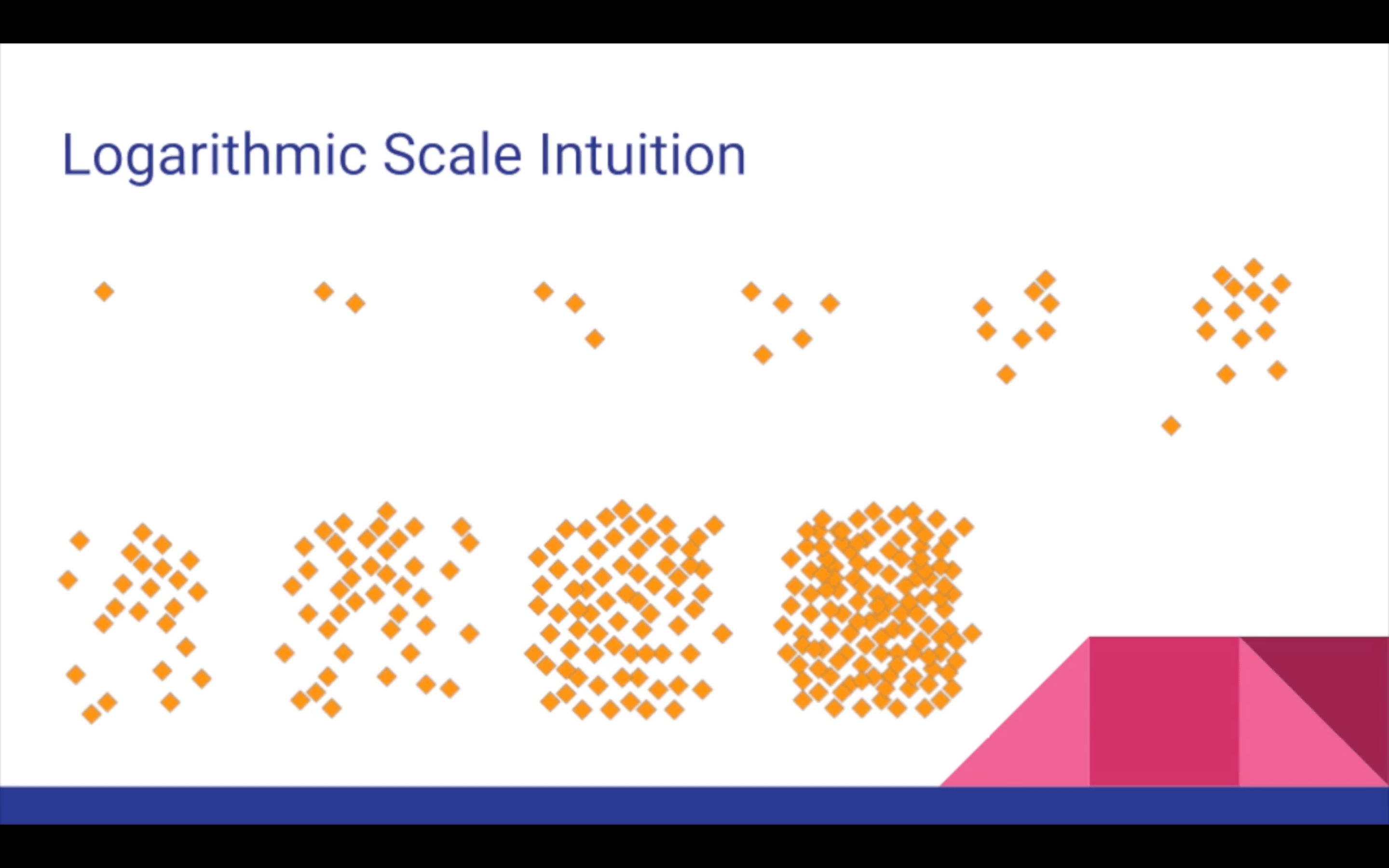
Here’s a rough intuitive sketch of what the logarithmic scale of helping another person might look like (this isn’t rigorous math – it’s an illustration of what’s likely the case, directionally right[1]):

  • 10^0: holding a door open
  • 10^1: gifting a pen
  • 10^2: introducing them to someone useful
  • 10^3: helping them move places
  • 10^4: catching a major work or family mistake before it ruins their week
  • 10^5: teaching them a compounding skill (meditation, programming, emotional regulation)
  • 10^6: funding their higher education, changing their entire socioeconomic trajectory
  • 10^7: helping them escape a pathological family system
  • 10^8: preventing them from falling into a cult, deep addiction, or abusive relationship
  • 10^9: curing a chronic condition like treatment-resistant generalized anxiety disorder (GAD)
  • 10^10: saving their life while preserving psychological integrity
  • 10^11: giving them a permanent upward shift in baseline wellbeing and quality of consciousness, such as advanced contemplative practice can do over the course of decades
  • 10^12: preventing cluster headaches for life

Why 10^12? A single cluster headache attack is plausibly in the 10^9 to 10^11 range of negative valence – orders of magnitude worse than migraine, worse than childbirth, worse than even torture. A typical patient experiences thousands of these across their lifetime. The multiplication is straightforward.

We’ve done empirical work quantifying cluster headache intensity using patient self-reports, cross-condition comparisons, suicide attempt rates, and other methods. Full details in our EA Forum posts (Quantifying the Global Burden of Extreme Pain from Cluster Headaches, Logarithmic Scales of Pleasure and Pain) and our Nature: HSSC paper.

The theory of change for the open letters on ClusterFree is straightforward:

Patient testimonials – Raw evidence that DMT/psilocybin (even at subhallucinogenic doses) works for a large fraction of sufferers, spreading organically through desperate communities. This is already happening underground.

Reputation-Amplified Legitimization – Get enough credible voices (clinicians, researchers, policy experts) publicly acknowledging both the crisis and the evidence. We already have 800+ signatures, many from extremely prestigious people. This shifts what’s discussable. Journalists cover it differently. Clinicians stop whispering with fear of judgment and start preparing, even if quietly at first (I’m already seeing signs of this in some groups).

Clinical cascade – One major medical center runs a supervised protocol, publishes clean results, and every other institution’s liability math inverts. You don’t need consensus. You need one proof point, and the dominoes fall.


3. It’s Insurance Against Your Own Extreme Suffering Being Dismissed

Cluster headaches are invisible. No blood, no broken bones, nothing on medical imaging. Just someone screaming, rocking, punching walls while doctors tell them to “try reducing stress”, “have you considered yoga?”, or “maybe try an Ibuprofen?”.

This is what illegible suffering looks like. People don’t believe you. Institutions can’t help you. You’re trapped in a cage of agony that no one else can see.

Supporting work on illegible suffering means supporting the principle that intense subjective experience matters even when it can’t be measured easily. By supporting ClusterFree, you’re building the world where, if you ever wind up in incomprehensible pain (chronic illness, treatment-resistant conditions, novel syndromes medicine doesn’t understand yet, a hard-to-communicate and hard-to-alleviate pocket of deep biopsychosocial suffering), people will actually take it seriously. Where “I am in agony, and this helps” is treated as highly important data, the existence is safer and more dignified.

Medical, institutional, and social gatekeeping kills people. It traps them in years of unnecessary suffering because the safe and affordable tools that work aren’t “approved” yet. By supporting the patient-driven, evidence-based access to what actually helps, you’re contributing to practical moral betterment and making the world safer for everyone who might need it. Including you.


4. It’s a Proof-of-Concept for Valence-First Cost-Effectiveness

Most effective altruism uses QALYs (Quality-Adjusted Life Years) or DALYs (Disability-Adjusted Life Years) to evaluate interventions. These metrics have a major limitation: they systematically underweight extreme suffering. A QALY-based analysis of cluster headaches captures some utility loss but misses orders of magnitude of suffering because attacks are brief and non-lethal – even though they’re torture-level and recurring. The frequency distribution is also extremely skewed (some sufferers have 10+ attacks daily), which standard health economics frameworks struggle to properly account for.

ClusterFree evaluates interventions based on how bad things actually feel and what their actual prevalence is – not through the lens of reduced life expectancy or economic burden: “How much suffering are we preventing when measured by its actual intensity?”.

We’ve quantified cluster headache intensity and prevalence using patient self-reports, cross-condition comparisons, suicide attempt rates, and other complementary empirical methods. The result is clear: cluster headaches score astronomically high. This is why preventing them matters so much more than conventional metrics would suggest.

If you want a future where we optimize for the real reduction of suffering instead of metrics that structurally and systematically ignore its most intense forms, ClusterFree is the seed. We’re showing how you can make rigorous, evidence-based decisions by taking the actual experience seriously. This serves as a template for charity evaluation and ethical triage (not necessarily to replace current Effective Altruism methods, but to add a _critical_ missing evaluation angle to the ensemble model for how to help most effectively). 


5. You’ll Be in the Company of Intellectual Giants

Scott Alexander supports this. Anders Sandberg supports this. Peter Singer supports this. These are thought leaders with decades of track records in rigorous, scout-mindset thinking about doing good. They don’t endorse lightly. They’ve looked at the testimonials, the statistics and trends, the theory of change, and said: this is real.

If you trust their epistemics even a little, their endorsement is strong Bayesian evidence. These aren’t people chasing trends or optimizing for social approval.

And beyond the rationalist/EA sphere? Robin Carhart-Harris supports this – one of the leading psychedelic neuroscientists in the world. Shamil Chandaria supports this – doing serious work on meditation, predictive processing, and contemplative neuroscience. Christopher H. Gottschalk supports this – a neurologist who actually treats cluster headache patients and knows firsthand how devastating they are.

EA thinkers, psychedelic researchers, clinical neurologists, contemplative scientists – they’re all saying the same thing. That doesn’t happen often.

You get to join this coalition early. While it’s still underrecognized. While it requires actually engaging with the arguments instead of following the consensus. While supporting it means skin in the game.

Supporting ClusterFree now signals good taste (you can spot high-impact opportunities before they’re obvious), high reasoning capacity (you can evaluate complex arguments across disciplines), genuine compassion (you care about actual suffering, not just legible causes), and epistemic independence (you can disagree with the consensus when the evidence demands it).

When this becomes mainstream (and it will), you were there first.


6. It’s Creating a Schelling Point for Serious Suffering-Reduction Work

ClusterFree is reducing the coordination costs and bringing together people who can spot neglected pools of immense value early on.

Researchers who care about phenomenological intensity. Clinicians frustrated with institutional gatekeeping who want evidence-based psychedelic medicine. Policymakers who understand regulatory strategy. Patients with direct experience who want to help others. All working on the same thing with a clear theory of change.

Many causes tend to be either too vague (“reduce suffering”) or too narrow (“fund this one study”). ClusterFree hits the sweet spot – it is specific enough to be actionable, broad enough to matter at scale, and legible enough to attract serious supporters.

The network effects compound. When the next high-leverage suffering reduction project comes along, there’s already a group of competent people who know how to execute. The people showing up now will co-build what comes next. Rather than funding one project, you’re seeding a network that keeps generating high-impact work.


7. It’s a Strike Against Paternalistic Control Over Suffering Relief

Right now, people with cluster headaches are told they cannot officially access psilocybin or DMT – the interventions that consistently, rapidly, and reliably work for a large fraction of sufferers – because the institutions have decided they’re not allowed to make that informed choice. Even when they’re screaming in agony. Even when they’re suicidal. Even when nothing else helps.

Medical paternalism is at its most cruel when patients hear: “We know you’re suffering, but you can’t have the effective, affordable, and safe-to-manage thing that stops your agony, because we haven’t finished the proper studies yet, and/or because of the system’s inertia.” Never mind that converging evidence shows it works. Never mind that patients are already using it skilfully and reporting dramatic relief. Never mind that the risk profile is more than worth it given the suffering prevented.

ClusterFree, with your support, is building the legal, scientific, and social infrastructure to challenge that amoral status quo. We pave the way for informed consent, supervised access, and letting people make rational decisions about their own unbearable pain.

If you value bodily autonomy, participatory medicine, and the right to pursue relief from extreme suffering, this is the fight. And it’s winnable thanks to multiple predictors of success. 


8. This Is Actually Tractable

Most extreme suffering feels impossibly hard to address. Oftentimes, contemplating extreme suffering causes a sense of helplessness. It’s too big, too entrenched, and too complex. You can care deeply and still feel like there is nothing you can meaningfully do about it.

Cluster headaches are different. We have video testimonials. We have 800+ signatures from people with institutional power. We have a clear mechanism – psilocybin/DMT abort attacks rapidly and safely. We have willing clinicians ready to run supervised protocols. We have patient demand already creating the underground adoption.

The main barrier is coordination and legitimacy-building. That’s where ClusterFree steps in: we close the gap between common knowledge and the rollout of systemic solutions. 

And we’re going beyond mere advocacy. Bob Wold of ClusterBusters calls DMT a “breakthrough therapy” for its near-instant pain relief; we’re working to understand why it works, so we can foster next best steps. Our research includes exploring legal, non-hallucinogenic (or only mildly hallucinogenic) alternatives like 5-MeO-DALT, which one patient discovered in Shulgin’s TIHKAL and used to successfully treat 46 cluster headache patients. Developing targeted therapies based on understanding the mechanisms and testing new approaches translates into accessibility and effectiveness.

We (admittedly optimistically) believe this is doable within 3 to 5 years of focused and effective execution: build the coalition, get one major medical center to publish clean results, and watch the common knowledge cascade. Meanwhile, we’re already developing better treatments with maximally broad legal adoption.

Most things that matter this much take decades… or never even happen. This one is actually within reach.


9. Every Month of Delay Means Unnecessary Pits of Suffering

Right now, while you’re reading this, ~70,000 people are experiencing a cluster headache attack. More will start in the next few minutes. And more after that, like a global wave of agonizing pain.

Roughly 3 million people worldwide have cluster headaches in any given year. Many experience attacks daily or multiple times per week during the cluster periods. We estimate that globally, cluster headache patients spend approximately 70,670 person-years per year in pain, with about 8,570 person-years (about 3.1 million person-days) spent at extreme pain levels (≥9/10).

The math is brutal: with every month of delay, patients undergo millions of preventable torture-level attacks. While other cause areas and interventions may warrant dilemmas of donating now or later, the case of ClusterFree is urgently clear – donate now, and we will do our best at bringing unimaginable counterfactual relief to millions in 2026-2027. 

Our model is designed for speed – we are not waiting for perfect RCTs, commercial products, or stable institutional consensus. We are building the strategic legitimacy cascade that lets institutions act on what we already know.

The suffering is happening right now. The effective solution exists right now. We know how to connect the dots, and the only question is how fast we can do so.


10. ClusterFree Is Accelerating an Already Developing Movement

ClusterBusters has been doing heroic work for years, building community, sharing information, and giving people hope. The psychedelic renaissance has been shifting cultural and scientific attitudes. Various researchers and advocates have been pushing this forward through different channels.

ClusterFree adds a specific piece: demonstrating that this is a winnable fight right now.

We bring:

  • An explicit theory of change (testimonials lead to reputation-amplified legitimization, which leads to clinical cascade);
  • 800+ signatures from outstanding individuals, many with institutional power and cultural influence;
  • A straightforward narrative: “this is effective, safe, and urgent, and we can scale this legally” – and we’re not afraid to signal DMT as especially promising (due to its extremely fast pain relief profile when “vaped” at the onset of an attack);
  • Coordination infrastructure that connects patients, clinicians, researchers, and funders around a shared goal; and
  • A global but local-context-sensitive approach in both coverage and mindset: while ClusterBusters focuses on the U.S. and UK, we’re building parallel advocacy tracks across multiple jurisdictions (Canada, Europe, Latin America, etc.) to build the missing capacity.

This strategy acts synergistically with other approaches, de-risking them rather than obstructing them. When a major medical center decides to run a supervised protocol, they will do it in an environment where 800+ credible voices (as of December 13th 2025) have already confirmed that this is real, this matters, and the research must take place as soon as possible.

Our strategy is being developed and executed by uniquely talented individuals with a strong track record. Alfredo Parra leads the organization – he is exceptional at navigating the interface between institutions, has 7+ years of nonprofit management experience, and is provingly extremely conscientious and high-integrity (don’t take my word for it – look at all the work). The team and the community that seeded it concentrate people who simultaneously understand the importance of suffering reduction, psychedelic phenomenology, regulatory strategy, and movement building. They both care about the deep structure of consciousness and aren’t swayed by common narratives. This is a rare comparative advantage, and in our view, proves an excellent fit to push this cause forward.

The fruitful work has been happening already. Where we step in is providing leverage at a specific bottleneck: making the path to legitimacy visible and coordinated.


11. If You Take “Karma” Seriously, Look at What the Texts Say About Headache Relief

In the Bodhicaryāvatāra, Śāntideva teaches that “immeasurable merit” arises even from the simple thought: “Let me dispel the headaches of beings.” The tradition treats this literally. Not metaphorically. Relieving sharp, overwhelming pain generates outsized karmic effects because it interrupts some of the most intense forms of duḥkha in the human realm.

Why headaches specifically? Because they were considered the archetype of piercing, mind-breaking pain in the classical world. Cluster headaches exceed even that ancient benchmark. They represent some of the most unbearable moments a human mind can experience.

The logic of meritorious karmic logic is clear: if intention aligned with the relief of severe suffering produces merit that scales with the intensity of dukkha relieved, then work that prevents torture-level pain for thousands of people is not ordinary charity but a high-density, boutique, ultra-rare karmic investment.

For practitioners of the Bodhisattva path, karma constitutes a feedback loop shaping future clarity, opportunity, and awakening. Helping beings escape states of extreme pain is singled out across the Mahāyāna as one of the fastest ways to accumulate merit and purify obscurations.

If even contemplating the wish to relieve a single headache creates immeasurable merit, then actively supporting work that may end this class of suffering at scale plants karmic seeds that ripple across lifetimes.

Even if you hold a weak, naturalized version of karma (something like “intentions to help tend to produce good outcomes proportional to the good intended”), the efficiency here is absurdly high. Instead of helping someone have a slightly better day, you’re preventing thousands of hours of above-torture-level pain per person.

And what if you don’t believe in karma at all? The consequentialist case is still clear. You’re preventing, say, ~10^12 units of negative valence per person.


12. You Get the Bodhisattva-Tier Vision

Most people, when they look into the true darkness of suffering (the worst pain imaginable, sustained for hours, recurring for decades), recoil. They look away. They rationalize (“someone else will handle it”), they cope (“well, suffering is just part of life”), and freeze (“I can’t do anything about this anyway”).

Such reactions are understandable given the limits of our agency and the scope of the challenge. Luckily, there’s another response possible and available today:

You see it, and you roll up your sleeves. Where others flinch or cope, you take intentional action.

That capacity to clearly perceive the worst of what’s real and respond with competence, care, direction, and focus – rather than despair, avoidance, denial, or freezing – is a rare gem. It separates people who talk about compassion from people who enact it. The “Bodhisattva move” is: “I see the suffering. I will not turn away. I will do what needs to be done.”

Supporting ClusterFree strengthens that moral muscle. It’s a practice for the kind of person you may want to be: someone who can look into the darkest abyss and respond with pragmatism, not platitudes.


And a bonus reason for Qualia Computing readers…

So I Can Stop Talking About Cluster Headaches in Qualia Computing

Look, I very deeply care about this work, and this is why ClusterFree needs to claim its own space. QRI has a complementary mission to fulfill – studying and utilizing coupling kernels, topological approaches to the boundary problem, neural annealing frameworks, and the deep structure of valence.

The more ClusterFree is funded and self-sufficient, the more I can get back to the core theoretical work for which I’m best suited. Which, by the way, is exactly how we identify the next high-leverage suffering reduction opportunities!.

If you want me to shut up about cluster headaches and get back to talking for hours about beam-splitter holography and DMT phenomenology, the fastest way to make that happen is to generously fund ClusterFree.

You’re welcome.


What We’re Specifically Asking For

ClusterFree is currently a two-person operation: Alfredo leading the day-to-day execution (coalition building, clinical coordination, policy navigation, the 800+ signature campaign), and me providing strategic direction, research frameworks, writeups like this one, and QRI infrastructure. The initial donations will let us hire additional top talent to manage critical workstreams, so that we can:

  • Pursue parallel regulatory tracks in different jurisdictions;
  • Optimize our media presence by talking to journalists, podcasters, and medical journals;
  • Build global partnerships with patient organizations, headache centers, psychedelic advocacy groups, and retreat centers that treat this and related conditions;
  • Coordinate with medical centers willing to run supervised trials;
  • Create high-quality topical resources for patients in multiple languages, which are scarce and difficult to find; and
  • Pursue other high-impact value streams we’re ready to launch with additional capacity.

If significant funding is obtained, it will allow us to personally visit retreat centers and bring people with cluster headaches to suitable settings where they can experiment with these therapies, and where we can study them thanks to the QRI approaches to systematic phenomenology mapping, including EEG and biorhythms monitoring. This might turn out to be really important, possibly allowing us to determine what aspect of psilocybin/DMT relieves the pain. Our working assumption, based on many interviews with sufferers, is that DMT’s “body vibration” effect is key for its pain relief – if true, this is something we could significantly optimize by developing more targeted therapies.

While our network of volunteers is growing (see Slack below), having dedicated paid staff accelerates our efforts dramatically. The faster we move, the louder we say “no” to overlooked suffering.


Can’t Donate But Want to Help?

There are many high-impact ways to contribute beyond financial support:

  • Sign the open letter – Adding your name increases our legitimacy and helps shift the Overton window.
  • Share patient testimonials – If you have cluster headaches and have used psychedelics, your story can help build the evidence base. We believe that video testimonials from sufferers, in particular, are especially powerful. Recordings showing the moment itself where psilocybin/DMT relieves the suffering in real time might have the most emotional resonance overall.
  • Join our Slack – We list simple but high-impact volunteer tasks (translations, social media, research assistance, essay feedback, etc).
  • Connect us with key people – Do you know journalists, podcasters, clinicians, policy makers, or potential donors? Introductions are greatly appreciated!
  • Spread the word – Share this essay, talk about cluster headaches with the right mood, and become the relieving change you want to see and experience in the world.

Conclusion

With all these reasons in mind, ClusterFree satisfies the utilitarian, the virtue ethicist, the long-term strategist, the person who wants meaning, the person who values courage, the person who wants to accumulate spiritual merit, the person who wants to bring these therapies to the FDA approval status, the person who just wants to see real humans stop screaming in pain, and the one who embodies all these motivations simultaneously.

Donate to ClusterFree

Donate to QRI (the incubator organization that made this possible, and conducts more aligned efforts)

Sign the open letter

Our internal coalitions can agree that this matters, and we can actually do it. Thank you.


Acknowledgments: Many thanks to Marcin Kowrygo for his generous edits of the draft. Thanks to Chris Percy, Roberto Goizueta, Hunter Meyer, and, of course, Alfredo Parra for relevant discussions and suggestions for this write-up. Huge thanks to the ClustersBusters team for their incredible and ethically urgent work (and generosity with their time to help people in need, as well as accepting being interviewed in a pinch at Psychedelic Science 2025). Thanks to Jonathan Leighton (OPIS) for inspiration, aligned work, and fighting the good fight! Thanks to Jessica Khurana (and her team) for founding Eleusina Retreat – the world’s only retreat center focused on using psychedelics, legally, for treating extreme pain conditions. Thanks to Maggie Wassinge for her copious emotional support, love, and motivation to keep doing the real work, even when it feels hopeless at times (seriously, THANK YOU). And to the spirit of Anders Amelin (RIP), who is always with us, encouraging and motivating, giving us strength and intelligence. May he rest in peace, knowing we’re pursuing our ambitious suffering-reducing goals <3 And thanks to the entire QRI team, as well as the broader qualia community at large, for creating a container where these ideas can be freely explored with curiosity and without stigma. And finally, thanks to all of the donors of QRI and ClusterFree: we will do what we can to make you proud of supporting us. Metta!


[1] On the 10^12 estimate: This is admittedly a back-of-the-envelope calculation, but here’s the reasoning. A cluster headache patient might experience anywhere from 3,000 attacks (conservative, successful treatment) to 30,000+ attacks (severe chronic cases) over their lifetime. Using a conservative estimate of 3,000 attacks averaging ~60 minutes (3,600 seconds) each gives us ~10^7 seconds of extreme pain. Now for the intensity ladder. Holding a door open might prevent ~0.1 units of discomfort, using a pinprick as 1 unit. Kidney stones, already rated 10/10 on standard pain scales, are plausibly ~1,000× more intense than a pinprick (10^3). Each second of cluster headache pain appears to be ~10× worse than kidney stones (10^4 relative to our baseline). Multiply by 10^7 seconds, and we get 10^11 from pure hedonic intensity alone. Additionally, cluster headaches impose a constant inter-ictal burden (meaning, the suffering between attacks), including PTSD, anticipatory anxiety, and a profound sense of doom between attacks (see interview with Cluster Busters founders at 53:10-53:40). This could add a 2-5X multiplier, bringing us to ~10^12. For severe cases with 10× more attacks, the calculation easily reaches 10^13 or higher. The true value likely ranges between 10^7 (very mild cases with effective treatment) and 10^16 (severe chronic cases accounting for peak intensities and suffering between attacks). Even at the conservative end, preventing cluster headaches for life remains one of the highest-impact interventions accessible to individuals. Similar back-of-the-envelope calculations can be done to put in perspective each of the steps on the “logarithmic scale of help you can provide to someone”.


Scott Alexander in “Links For December 2024” (Dec 24 2025):

13: Alfredo Parra of Qualia Research Institute on cluster headaches. Cluster headaches are plausibly the most painful medical condition. If you ask a cluster patient to rate their pain, they’ll almost always say 10/10. Does that mean the headaches are twice as painful as a 5/10 condition? There are some philosophical reasons to expect pain to be logarithmic, so plausibly cluster headaches could be orders of magnitude more painful than the average condition. Once you internalize that possibility, it throws a wrench into normal QALY ratings and suggests that, even though cluster headaches are pretty rare, they might cause a substantial portion of the global burden of disease (or even a substantial portion of the suffering in the world). Some psychedelics, especially psilocybin and DMT, seem to treat cluster headaches very effectively, so the more you believe this reanalysis, the more interested you should be in figuring out how to turn these into an accessible therapy (see clusterbusters for more information on this aspect).

And more recently in “Open Thread 409” (Nov 24 2025):

2: Qualia Research Institute announces their spinoff effort ClusterFree. Cluster headaches (aka “suicide headaches”) are probably the most painful medical condition known to science, which makes them a natural priority for some utilitarians. They seem to be extremely treatable by psychedelics like psilocybin and DMT (including sub-hallucinogenic doses), so ClusterFree is working on getting governments to research this further and maybe get these drugs into the medical pipeline (cf. ketamine for depression). There’s an open letter here, and you can contact them here. The information for patients is at the bottom of this page.

Peter Singer in his recent piece “The Best Treatment for the Most Painful Medical Condition Is Illegal” (Dec 11 2025)

A recent article in Nature: Humanities and Social Science Communications found the funding provided in the United Kingdom for research on cluster headaches to be “orders of magnitude” less than that provided for multiple sclerosis, a condition that affects a similar number of people. The authors conclude that, given that we regard the provision of anesthesia for surgery to be essential, we should also recognize relief for extreme pain as essential. Finding ways to do so should warrant the highest funding priority.

A new initiative called Clusterfree has launched global open letters calling on governments to provide legal access to psychedelics for people with cluster headache. I have signed, and I hope that you will, too.

Announcing ClusterFree: A cluster headache advocacy and research initiative (and how you can help)

[xposted in EA Forum]

Today we’re announcing a new cluster headache advocacy and research initiative: ClusterFree

Learn more about how you (and anyone) can help.

Our mission

ClusterFree’s mission is to help cluster headache patients globally access safe, effective pain relief treatments as soon as possible through advocacy and research.

Cluster headache (also known as ‘suicide headache’) is considered the most painful condition known to mankind. We believe it is one of the largest sources of preventable extreme suffering in humans today. Every year, about 3 million adults (and an unknown number of minors) suffer from this debilitating condition.

And yet, even in the EU, only 47% of the cluster headache population had unrestricted access to standard treatments (primarily oxygen and triptans) in 2019. Despite affecting a similar number of people as multiple sclerosis, global investment into cluster headache is minuscule.

At the same time, countless patients have reported previously unattainable relief using certain psychedelics, even at low doses. For example, psilocybin, LSD and 5-MeO-DALT can effectively prevent attacks, and N,N-DMT can abort attacks within seconds and also have some preventative effects. However, these life-saving treatments are inaccessible to the vast majority of patients.

We want to tackle these problems by:

  • Publishing open letters demanding that governments, regulatory bodies, and medical associations worldwide take action immediately, with a focus on easing restrictions around psychedelic use.
  • Providing patient groups with high-quality resources and supporting their advocacy efforts.
  • Engaging with policymakers globally to advocate for better access to treatments.
  • Publishing research on cluster headache and supporting other researchers in the field.
  • Collaborating with entrepreneurs and philanthropists motivated to bring new, effective treatments to market.

About us

ClusterFree is a non-profit initiative incubated by the Qualia Research Institute.[1] It is led by Alfredo Parra, with Andrés Gómez Emilsson (President, QRI) as co-founder. Bob Wold (Director, Clusterbusters) and Jonathan Leighton (Executive Director, OPIS) are members of our Advisory Board.

We will be collaborating closely with Clusterbusters, the largest and most well-known cluster headache advocacy organization, led and run by patients. For about 25 years, they have been at the forefront of cluster headache advocacy, especially in the US and the UK. We are excited to bring more capacity and new approaches to tackle other jurisdictions, and to show that patients are not alone in this fight.

How you (and anyone) can help

As our first project, we are publishing one global open letter and 11 country-specific open letters:[2]

Anyone can sign the global open letter. Additionally, if you live in or come from one of the countries above, you can sign that letter as well. Signatories include Prof. Peter Singer, Scott Alexander, Dr. Christopher Gottschalk (Yale), David Pearce, and Dr. Daniel Ingram.

Please share the letters widely within your network![3]

If your organization wants to show its support for ClusterFree’s mission, we can list it as a partner on our website.

A few other ways to help include:

  • Donating or putting us in touch with potential donors. Donations are tax deductible in the US.
  • Volunteering for various tasks (many of which are very simple but high-impact).
  • Connecting us with journalists, podcasters, or influencers.
  • Offering any pro-bono services that could help the cause.
  • Giving us feedback on the website.
  • For patients: Sharing your testimonial (which we can feature here).

You can get in touch any time.

Room for funding

We have been making good progress on a shoestring budget during the past few months. Among others, we:

  • Started an official collaboration with Clusterbusters.
  • Gained the support of a member of a US state legislature.
  • Started conversations with CH advocates in multiple countries (most recently India[4], Denmark, and New Zealand).
  • Are engaging with entrepreneurs and philanthropists interested in bringing DMT to market.
  • Developed a preliminary idea for a new, legal abortive treatment that could be highly effective (potentially also for migraines).
  • Have started developing phenomenology-based, patient-centric surveys to test various hypothesis for the underlying mechanism of action that psychedelics exert on this condition.

We recently raised seed funding from a private donor to cover our core operations for the coming months. Additional funding would allow us to hire a second teammate to work alongside Alfredo at this early stage, particularly on outreach and communications. We could absorb an additional $50k–$150k immediately.

At this very early stage, we are still evaluating different paths to impact, and will likely test various strategies simultaneously to identify the most promising opportunities.

We believe ClusterFree is a great donation opportunity for people who care about relieving the most intense human suffering today. Cluster headaches represent a major health crisis even in developing countries, and we are far from having effective treatments widely available. Help us change that.

Donate

Additionally, you can consider donating to Clusterbusters or OPIS, who have been at the forefront of cluster headache advocacy and research for years.

Work with us

If you’d like to help us reduce the global burden of cluster headache pain (beyond volunteering), we’d love to hear from you. Simply fill out our expression of interest form.

Further information


  1. We are considering incorporating a charity in the UK. In the meantime, ClusterFree is fiscally sponsored by QRI.
  2. We are very grateful to the various volunteers from the EA community who contributed to the translations.
  3. Asking people individually to sign the letters works much better than asking in groups.
  4. Many thanks to Jacob Woessner’s volunteering work on this front.
  5. Website and brand design by Lombaert Studio.

[Many thanks to Alfredo Parra for this writuep]

DMT for Cluster Headaches: Aborting and Preventing Extreme Pain with Tryptamines and Other Methods

“If we lived in a really sane society with a strong compassionate streak, every building would have something like a ‘Break in case of fire’ box… only this one would read ‘Break in case of cluster headache.’ Inside you’d find a pre‑charged DMT vape pen. That would be really nice.”

Announcement: Do you have experience using psychedelics to treat cluster headaches? Want to support science and advocacy in this area? Submit your personal and/or professional testimonial to our upcoming “ClusterFree” Open Letter initiative.


Sitting Down with Cluster Busters at Psychedelic Science 2025

One of the highlight moments for me at Psychedelic Science 2025 in Denver this June was conducting an interview for Bob Wold, founder of Cluster Busters, and Joe Stone, and Joe McKay who work alongside Bob in patient support and advocacy.  Our conversation covered a lot of ground, but I had one key strategic goal in mind: document, in their own words, why the humble DMT vape pen looks like a once‑in‑a‑generation breakthrough for the most painful condition that medicine has ever encountered.

“With a regular vape pen it’s usually one inhalation. Thirty seconds later the pain is gone. I hear a click in the middle of my brain and the attack is just off.” —Bob Wold

Their story plugs directly into QRI’s ongoing attempt to map the upper reaches of experience (QRI has the long-standing mission of mapping the state-space of consciousness, reverse engineer valence, and reduce suffering at scale). Our logarithmic scales of pleasure and pain shows that as one climbs up the pain (or pleasure) scales, phenomenal intensity rises far higher than common sense anticipates. The Heavy‑Tailed Valence hypothesis extends that insight to society at large and seeks to question the validity of current econometric approaches to collective wellbeing (cf. QALYs) in light of the fact that the extremes are not properly represented. From where we stand, it seems that a handful of wildly intense states do most of the moral damage (or good). Cluster headaches live in that fat tail, which is precisely why a 30‑second fix like DMT matters so much; perhaps as big of a collective hedonic breakthrough as, say, the discovery of anesthesia (in aggregate).

Put bluntly, if we care about total suffering, we need to care about cluster headaches. The time is now.


Interview Highlights Pertaining to DMT

  • DMT as an acute rescue
    One lungful (where the instructions typically say “three full breaths”) ends most attacks in under a minute. A second puff a minute later covers nearly all the rest. No tolerance shows up (acutely or chronically) which allows patients to repeat the dose whenever necessary.
  • Low psychedelic burden
    The dose is about a quarter of a psychedelic hit; enough to see some color enhancement but not enough for significant “trippiness”. Patients describe “a mild two‑beer buzz” or “the room takes on a golden tint” or “faint auras appear.” The mild level of psychedelia needed for this treatment makes bedside use practical, even for parents who need to stay functional the day after.
  • Why it beats psilocybin and LSD in the heat of battle
    Psilocybin and LSD still shine for cycle prevention, taken every five days, but they work on a timescale that makes them impractical for acute events. DMT is for the here‑and‑now (note Eleusinia founder says DMT also interrupt cycles according to her work at the retreat center). Joe Stone calls it “a game changer” because he can abort a 2AM ethical emergency (a cluster) and fall back asleep within 10 minutes. No need to have an expensive psychotherapy, a professional sitter, or trip killers on hand, let alone having to book a whole day to trip.
  • A hunch about endogenous DMT
    Bob’s shares his intuitive working model for how cluster headaches work (to be refuted or confirmed by science): an attack begins when natural DMT in the brain dips below a threshold (why do we even have DMT in our brains to begin with?). He hazards the guess that a quick DMT top‑up pulls the breaks and re‑establishes homeostasis. Others suggest that melatonin abnormalities in cluster patients add plausibility to his view, given the biochemical link between melatonin and endogenous tryptamine synthesis.
  • Pain drives the psychiatric condition, not the other way around
    One key insight I wanted to make sure to get on the record: chronic physical agony breeds depression, anxiety, and PTSD‑like flashbacks. Fix the pain and the mental distress often dissolves; no need for heroic doses or eight‑hour therapy sessions (as with e.g. psilocybin for depression specifically). Cultural over-emphasis on mental health as _the_ thing to treat with psychedelics might make sense from the point of view of a slowly expanding Overton Window; but the big hedonic payouts (freedom from hellish states of consciousness) are likely concentrated in their application to the reduction of extreme physical pain (see also).

Why This Matters

Alfredo Parra’s quantitative analysis suggests that cluster headaches may contribute more net misery than migraines, cancer pain, or even major depressive disorder once intensity is included (and a proper long-tail model and Monte Carlo simulations are taken into accont). Effective Altruist “pleasure-bean‑counters” (I say this affectionately!) please take note: extremely nasty but “rare” states can dominate the integral, and need urgent consideration.

From a consciousness‑research angle, the interview is another data point for why direct phenomenological investigation should guide ethics; here, patients, confronted with the reality of their own phenomenology, themselves have again clearly pioneered the treatment all the while mainstream research (unsurprisingly) slept through five decades of drug war.

Closing Thoughts

Imagine a fire‑alarm box on every hospital wall that reads “Break glass in case of cluster headache.” Inside we find a sober-looking, very boring but perfectly functional, pre‑filled DMT cartridge that delivers reliable 3mg hits (enough to feel a light buzz, not enough to trip significantly – certainly far short of any dose needed for entity contact or alien abduction experiences). This isn’t science fiction; it is what the data we’re seeing support.  Freedom from one of the most extreme demonic forces on Earth is, counterintuitively… Spice. Let’s shorten the path from patient innovation to standard‑of‑care and, in the process, erase one of the darkest corners of conscious experience forever. I believe we can achieve a Cluster-Free World within a few years if we put our minds and hearts to the task.

Hallucinations are not a problem at the doses we have people use and that seem to work the best, which are much smaller than a recreational dose. We aren’t recommending people take doses that will have them playing cards with a deer (you can’t trust them!). The doses are small (e.g. 1.5g of mushrooms). You’re supposed to get to about the “giggle”. Get to the “giggle point” and you’re good to go.Suicide or Psychedelics, Bob Wold at Horizons 2009


Resources and Further Reading:

How You Can Contribute:

  • Donate to Cluster Busters
  • Donate to QRI (earmark for “Cluster Headache Research and Advocacy”)
  • Donate to OPIS (Organization for the Prevention of Intense Suffering)
  • Share your testimonial if you’ve experienced relief through psychedelic therapy: Submit Here

Stay tuned for QRI’s upcoming Open Letter advocating for psychedelic access in treating severe pain conditions, the ClusterFree worldwide initiative.

Presidential Inaugural Address of Andrés Gómez Emilsson

[Epistemic Status: fiction (in most timelines, that is); in my lane, having fun]

Place: The Equatorial Republic (pop. ~190M)

Time: 2032

My fellow citizens of this great Equatorial Republic,

Today, as I stand before you having accepted the solemn responsibility of the presidency, I am humbled by your trust and energized by the possibilities that lie before us. This administration marks not just a change in leadership, but a fundamental paradigm shift in how we approach governance, human welfare, and our collective future.

A New Era of Compassion Through Science

On this first day in office, I am announcing the formation of the National Hedonic Research Initiative. Let me be clear: extreme suffering can be worse than death itself. Nowhere is this more evident than in the case of cluster headaches—aptly named “suicide headaches” by medical professionals, a condition where the pain is rated significantly more severe than childbirth, kidney stones, or even gunshot wounds.

Through Executive Order 001, I am establishing the Cluster Headache Elimination Commission with an initial $2 billion in funding. The data is clear: approximately 3 million people worldwide suffer from this condition, spending nearly 5 million person-days annually in extreme suffering rated 9/10 or higher on pain scales. This Commission will:

  1. Create a nationwide tryptamine research and distribution network, prioritizing low-dose N,N-DMT, psilocybin, and LSD trials based on compelling evidence that these compounds can not only abort attacks but extend remission periods indefinitely for many patients
  2. Establish 200 specialized treatment facilities across the nation within 6 months with mandatory oxygen therapy and other proven abortive treatments
  3. Fund 50 research laboratories dedicated to advancing our understanding of pain relief mechanisms and developing targeted interventions for these conditions based on patient-reported outcomes

Additionally, I am directing the Department of Health to create the Pharmaceutical Innovation Directive focusing on anti-tolerance compounds for chronic pain patients, next-generation flumazenil analogs to reverse benzodiazepine dependence, and targeted solutions for other iatrogenic conditions that have been unconscionably neglected. These extreme forms of suffering represent the deepest moral emergency in our society, and their elimination is our highest priority.

Mapping the Hedonic Landscape: Beyond QALY

For too long, our policies have been guided by economic indicators and inadequate health metrics like Quality-Adjusted Life Years (QALY). The QALY framework fundamentally fails us by treating all human experiences as linearly equivalent and by capping wellbeing at an arbitrary “perfect health” that ignores the vast territory of heightened human potential.

The empirical evidence is compelling: our current metrics systematically undervalue both the depths of intense human experiences and the heights of human flourishing. As a result, we’ve created policies that address widespread but moderate challenges while neglecting concentrated instances of profound human experiences – both positive and negative.

Today, I am commissioning the first comprehensive Hedonic Landscape Observatory—a scientific assessment of the full spectrum of human experience that will:

  1. Develop more sensitive and accurate measurements of diverse human experiences across the wellbeing spectrum
  2. Map the neurological correlates of resilience and positive states to complement our understanding of health
  3. Create economic feedback loops that systematically reward businesses and institutions that demonstrably enhance quality of life
  4. Develop a new economic indicator—the Consciousness-Weighted Prosperity Index—that will appear alongside GDP in all government reporting

This initiative will ensure that governance decisions are evaluated not just by economic impact, but by their effect on the actual lived quality of conscious experience of our citizens—taking into account the true depth and breadth of human flourishing available to us.

Game Theory and Consciousness: A New Political Framework

We stand at an evolutionary crossroads. The old politics operated on outdated models that failed to recognize the fundamental relationship between consciousness and our collective future. Today, we begin the transition to a political framework that explicitly acknowledges the quality of conscious experience—as central to governance.

By Executive Order 002, I am establishing the Consciousness-Economy Integration Commission tasked with creating explicit feedback loops between consciousness research and economic selection pressures. This commission will:

  1. Develop metrics that quantify the wellbeing-enhancing potential of technologies, enabling investors to select for innovations that genuinely improve quality of life
  2. Create tax incentives for businesses that demonstrably improve the lived experiences of their employees and customers
  3. Establish a public research platform exploring the positive potential of consciousness, ensuring that discoveries about phenomenological wellbeing directly influence market forces

This systematic exploration of consciousness is not merely academic—it will fundamentally reshape our economic landscape by ensuring that technologies and policies that enhance human flourishing systematically outcompete those that merely optimize for shallow metrics. The implications for environmental policy, social welfare, and international relations are profound and far-reaching.

Transcending Tribal Politics Through Psychological Understanding

From this day forward, international diplomacy will operate with a new level of psychological sophistication. Through the newly formed Department of Psychological Architecture Analysis, we will explicitly model the subagent structure of world leaders and political movements, identifying when narcissism, psychopathy, or tribal thinking is driving decision-making.

International coalitions will be formed not just around shared interests, but around shared psychological awareness. This administration will not hesitate to name pathological dynamics when they appear on the world stage, while offering a path forward through a consciousness-centric yet pragmatic approach to governance.

I am also directing our diplomatic corps to explore new modalities for high-stakes negotiations. We will establish a Diplomatic Innovation Laboratory to research the application of empathy-enhancing protocols in negotiation settings where entrenched psychological barriers prevent resolution. When trillions of dollars and millions of lives hang in the balance of international agreements, we cannot afford to have negotiations hijacked by psychological defense mechanisms and tribal identification.

Just as we now understand that the pain of cluster headaches is objectively more severe than a migraine, despite superficially similar descriptions, we must develop precise language and metrics for the psychological architectures that drive international conflict. They are real, distortionary, and far from game-theoretically optimal. Only by seeing these structures clearly—and developing reliable methods to transform them—can we hope to address existential challenges that require genuine cooperation.

Longevity: The Right of Every Citizen

While extreme suffering can be worse than death, unnecessary death itself remains a profound tragedy and represents an incalculable loss of human potential. Today, I announce the formation of the National Longevity Institute with initial funding of $10 billion, coordinating research across public and private sectors to dramatically extend healthy human lifespan.

This institute will prioritize three areas:

  1. Senolytics and cellular reprogramming technologies to reverse biological aging
  2. Neural preservation techniques to maintain cognitive function
  3. Prevention of age-related suffering states through targeted interventions

The benefits of this research will not be reserved for the privileged few, but made available to every citizen as a basic right. Age-related suffering is not inevitable, and this administration will not accept it as such.

The Science of Awakening: Soteriology as a Research Target

Even as we pursue longevity, we must confront a fundamental truth: all things remain impermanent. Today, I am establishing the Institute for Contemplative Sciences with a mission to develop a rigorous scientific understanding of what traditions across time and cultures have called “awakening,” “enlightenment,” or “liberation.”

This research program will:

  1. Systematically study how humans throughout history have made peace with impermanence and transcended existential suffering
  2. Investigate the neurobiological and phenomenological correlates of awakening experiences across contemplative traditions
  3. Develop scalable, secular methods to help citizens process mortality, grief, and existential concerns within our scientific worldview
  4. Create interdisciplinary teams combining neuroscientists, contemplatives, philosophers, and clinicians to bridge ancient wisdom with modern scientific rigor

The ultimate human challenge is not merely to extend life, but to discover how to be fundamentally okay with the impermanent nature of existence. While various religious and philosophical traditions have offered paths to this goal for millennia, we now have the scientific tools to explore these states with unprecedented precision.

By creating a dialogue between contemplative wisdom and scientific method, we can forge new pathways for humanity to face its deepest existential challenges. This is not merely a spiritual pursuit—it is a practical necessity for a civilization grappling with the fundamental questions of meaning and mortality in an age of unprecedented technological power.

Understanding Exceptional States of Consciousness

The most profound states of human consciousness remain largely unexplored territory in scientific research. Today, I am directing the National Institutes of Health to establish the Center for Exceptional States of Consciousness (aka. The Super-Shulgin Academy) with a $5 billion initial investment, tasked with making sense of profoundly positive experiences across the full spectrum of chemically-facilitated and meditation-induced states.

This Center will:

  1. Create standardized protocols for psychedelic research, including 5-MeO-DMT with essential safeguards and contraindication screening, recognizing that while beneficial for many, it can induce challenging experiences in others—understanding these variables is crucial for responsible application
  2. Fund 25 dedicated research facilities specializing in Jhana acceleration techniques and other contemplative practices that achieve similar states without pharmacological intervention
  3. Develop a comprehensive empirical framework mapping the neural correlates of these heightened states while investigating both beneficial outcomes and adverse reactions to create predictive models for personalized approaches
  4. Prioritize sustainable MDMA production and research as a north star intervention, focusing on its potential for treating PTSD and enhancing empathetic connection while minimizing cardiovascular impact and developing protocols to mitigate tolerance and neurotoxicity concerns
  5. Translate findings into scalable interventions for depression, anxiety, and existential distress, ensuring that safety, accessibility, and individual neuropsychological differences guide all protocols

These states represent extraordinary territories of human wellbeing—regions of experience that offer not only therapeutic potential but a scientific window into the furthest reaches of human potential that we have barely begun to understand. Our commitment is to explore these states with both scientific rigor and ethical care, recognizing both their profound potential and the need for responsible stewardship.

Expanding Our Moral Circle: Non-Human Animal Consciousness

Our commitment to understanding consciousness and reducing suffering must extend beyond our own species. Today, I am establishing the Interspecies Consciousness Research Initiative with a dual mandate: rigorous scientific exploration and practical harm reduction.

This Initiative will:

  1. Develop objective metrics to quantify suffering in non-human animals, with immediate focus on factory-farmed animals where the concentration of suffering is most acute
  2. Allocate $3 billion annually to research and implement improved welfare standards for farmed animals while simultaneously investing in cultured meat technologies and plant-based alternatives
  3. Create a roadmap for the gradual, culturally sensitive phasing out of the most harmful animal agriculture practices over the coming decades, aligning economic incentives with ethical progress
  4. Establish the Wild Animal Welfare Research Program to cautiously explore the complex ethical landscape of wild animal suffering, acknowledging the immense scientific and ecological challenges involved

The ethical imperative is clear, but so is the need for careful, evidence-based approaches. We will neither rush interventions that could have unintended consequences nor hide behind complexity as an excuse for inaction when suffering is demonstrable and solutions are feasible. This balanced approach recognizes our ethical responsibilities without compromising scientific rigor or cultural realities.

Transforming Education: Experience, Don’t Memorize

A key pillar of this administration will be fundamentally reimagining education. Today, I announce the Consciousness Education Initiative that will transform how we develop young minds. This initiative rejects both outdated rote learning and any form of ideological indoctrination. Instead, it embraces a “see for yourself” approach where students:

  1. Learn meditation techniques alongside mathematics, building empirical skills for exploring internal states
  2. Study their own consciousness with the same rigor they apply to studying literature, using first-person methods complemented by third-person science
  3. Develop critical thinking by becoming aware of their own cognitive biases and subagent structures
  4. Understand the psychological architectures that drive political beliefs through evidence-based empirical investigations

The goal is not to tell students what to think about consciousness, but to give them the tools to explore their own minds with scientific precision and philosophical depth. This approach builds intellectual independence—teaching students to verify claims through direct experience rather than accepting them on authority, whether in consciousness studies or any other domain.

A Call to Action

My fellow citizens, I do not promise that these ambitious goals will be easy to achieve. They will require not just government action, but a transformation in how we approach science, governance, and our very understanding of what it means to be human.

But the stakes could not be higher. We have the opportunity to eliminate forms of suffering that have plagued humanity throughout history, to extend healthy life, to create social systems that support human flourishing, and to understand the very foundations of consciousness itself.

This is not a partisan agenda, but a human one. In fact, of consciousness itself. It transcends traditional political divisions and speaks to our shared desire for a world with less suffering and more joy, less confusion and more clarity, less conflict and more cooperation.

Let us begin this journey together, guided by compassion, informed by science, and dedicated to the proposition that the quality of conscious experience matters fundamentally—and that we have both the capability and the responsibility to improve it, in ourselves, our loved ones, and in the field at large.

Thank you, and may we move forward with wisdom, courage, and clear-eyed determination.

Infinite bliss!

[The crowd erupts in thunderous applause]

And now, ladies and gentlemen, please welcome the voted ‘most hedonic’ pop sensation of the year, performing their chart-topping anthem inspired by our vision for the future!

[Cue massive flashy fireworks as the stage transforms. Spotlights sweep across a diverse crowd of all ages beginning to dance as the music starts. Children, seniors, and everyone in between move to the rhythm. The singer emerges from beneath the stage on a rising platform surrounded by dancers in colorful neuron-patterned costumes, launching into their hit song about consciousness, wellbeing and the dawning of a new era of understanding…]

Conscious Dawn” – Presidential Lyrics

Ancient wisdom meets the future’s light
Through pain’s darkest valleys, we’ll find the heights
Mapping consciousness beyond what we’ve known
A nation where suffering won’t reign on the throne

Tribal boundaries dissolve in our sight
As senolytics set our cells aright
The hedonic landscape unfolds like a scroll
Where DMT whispers truths to the soul

From cluster headaches to enlightened minds
Transcending metrics that keep us blind
Our moral circle widens beyond human skin
Wild animal welfare, a new dawn begins

Science awakens what sages once taught
Not just to live long, but find what we’ve sought
A republic where bliss is more than a dream
Infinite consciousness—our birthright supreme

Open Letter to the TPOT Community on the Topic of Animal Suffering: Enlightenment, Tanha, and Kiki Qualia

Dear TPOT community,

I’ve been noticing an increasingly common perspective in our discussions that I feel compelled to address. There seems to be a growing belief that non-human animals are somehow “enlightened by default” or exist in a state free from tanha (craving, aversion, and the resulting suffering). I’ve seen numerous posts suggesting that non-human animals are somehow naturally free from the mental patterns that create suffering in humans. While I deeply appreciate the sentiment behind this view – as indeed, animals do seem to access deeply bouba states more readily than most humans realize, and their capacity for pleasure is real and ethically relevant – I believe this represents a fundamental misunderstanding about animal consciousness that needs careful examination.

The probability that, say, free range cows (or other non-human animals in general) are experiencing constant bliss, lack tanha, or are “enlightened by default” is, by my estimation, very low (<0.2%). A claim of enlightenment-by-default requires extraordinary evidence, and what we see points in the opposite direction. Let me break this down from a qualia-centric perspective:

Consider first the clear evidence of suffering in prey animals – species like deer, rabbits, or gazelles must maintain constant vigilance against predators, a state that phenomenologically manifests as a persistent kiki-like tension in consciousness. This baseline of anxiety and alertness is fundamentally incompatible with persistent non-dual states. A prey animal experiencing constant bliss would be rapidly selected against in an environment with predators.

Even predators themselves are not free from tanha – we see intense craving manifesting in their sexual frustration during mating seasons, their constant drive for status within social hierarchies, and their restless search for food even when not immediately hungry. The apparent ease with which a lion rests in the sun masks the intense loops of desire and aversion that characterize their conscious experience.

In domesticated animals like cattle, we see equally clear evidence of craving, aversion, and suffering in their daily lives. Cows display intense maternal distress when separated from their calves, with both mother and offspring showing signs of anxiety and distress that can persist for days. They engage in competition for food resources and establish complex social hierarchies that generate ongoing stress for individuals lower in the pecking order. Their food-seeking behaviors demonstrate clear patterns of craving, and they exhibit territorial behaviors that indicate attachment and aversion patterns similar to those we recognize in humans.

The “gazelle shaking off trauma” observation that’s often cited in these discussions actually reinforces the presence of suffering rather than its absence. This isn’t evidence of enlightenment – it’s evidence of an evolved mechanism for rapid state-switching to maintain function. The ability to quickly return to a baseline state of persistent vigilance and anxiety after a threatening encounter is precisely what you’d expect from an organism optimized for survival rather than one experiencing persistent non-dual awareness.

Non-human animals are clearly stuck in loops of craving and aversion. Consider a dog who insists on affection or food: scratching at the door, howling, and persistently demanding attention. These behaviors are obvious manifestations of craving, and, as Rob Burbea points out, all craving is fundamentally based on patterns of body tension. These patterns are not unique to humans but are basic features of animal consciousness. Tanha is thus near or completely ubiquitous in the animal kingdom.

From a neurophysiological perspective, as David Pearce (who, notably, uses the term “non-human animals” to remind us that we too are animals, and that creating artificial distinctions makes it easier to rationalize a sense of separation) has consistently emphasized, we see remarkable conservation of emotional circuitry across mammals. The same neural architectures that give rise to fear, anxiety, and suffering in humans are present in cows and other animals. If cows had somehow evolved a fundamentally different way of experiencing consciousness, we would expect to see major divergences in neural architecture; we don’t see such differences. In fact, the evidence suggests that the capacity for suffering predates the development of the rational, linguistic mind. While humans can use our frontal lobes to rationalize and contextualize pain and suffering, this higher-order cognition isn’t a prerequisite for suffering – quite the contrary.

Consider that pigs have the emotional and cognitive capacity roughly equivalent to prelinguistic toddlers. They experience raw emotions without the buffer of linguistic rationalization that adult humans possess. Chimpanzees show clear signs of depression-like behaviors following social defeats, PTSD-like symptoms after conflict, long-term emotional impacts from loss of status, and evidence of social anxiety and strategic behavior. Birds, despite being separated from mammals by hundreds of millions of years of evolution, display sophisticated emotional responses including spite and vindictiveness. These observations all point to the same conclusion: the mechanisms behind tanha are ancient and deeply preserved across the animal kingdom. The capacity for suffering doesn’t require complex cognition or human-level linguistic capacities – it’s a fundamental feature of animal sentience that evolution has maintained and elaborated upon.

The “animals are enlightened” view seems to commit what I call the “blame language fallacy” – the assumption that consciousness without language or higher order cognition is in “its natural state” and must somehow be more pure or pleasant than our modern human experience. This is reminiscent of the noble savage myth, but applied to animal consciousness.

When we look at empirical evidence from animal welfare science (cortisol levels, behavioral indicators, physiological measures), we consistently see that animals experience a wide range of emotional states, including significant suffering. If animals were naturally enlightened, we wouldn’t observe the dramatic improvements in welfare metrics when we enhance their living conditions.

I suspect this view serves several psychological functions:

  • It provides emotional comfort about the natural world
  • It suggests an easier solution to suffering than actually exists
  • It allows for a form of motivated reasoning about animal agriculture (itself likely one of the biggest sources of suffering in the world)

As someone deeply interested in consciousness and its varieties, as well as no-nonsense suffering reduction tech, I have to emphasize that while animals certainly can experience positive states, they are subject to the same fundamental constraints and physiology that shape all conscious experience on this planet. The goal should be to understand and work within these constraints to reduce suffering, not to pretend they don’t exist, as I see is happening more and more.

The path forward isn’t to romanticize animal consciousness but to better understand it in all its complexity. This requires engaging with the empirical evidence and being willing to update our views when they conflict with our preferred narratives about the nature of consciousness and its place in nature.

Finally, by my estimation it is quite likely that animal valence follows long-tail distributions (just as most things do in the context of consciousness). I think it will be crucial to identify the main species who suffer the most (likely not humans!) and help them first.

Sincerely,
Andres 🙂

Review of Log Scales


This is my 2022 review of Logarithmic Scales of Pleasure and Pain: Rating, Ranking, and Comparing Peak Experiences Suggest the Existence of Long Tails for Bliss and Suffering (2019; QRI link; forum link), written for the EA Forum First Decade Review; permalink of the review; read all reviews and vote for submissions here.


I would like to suggest that Logarithmic Scales of Pleasure and Pain (“Log Scales” from here on out) presents a novel, meaningful, and non-trivial contribution to the field of Effective Altruism. It is novel because even though the terribleness of extreme suffering has been discussed multiple times before, such discussions have not presented a method or conceptual scheme with which to compare extreme suffering relative to less extreme varieties. It is meaningful because it articulates the essence of an intuition of an aspect of life that deeply matters to most people, even if they cannot easily put it into words. And it is non-trivial because the inference that pain (and pleasure) scales are better understood as logarithmic in nature does require one to consider the problem from multiple points of view at once that are rarely, if ever, brought up together (e.g. combining empirical deference graphs, descriptions of pain scales by their creators, latent-trait analysis, neural recordings, and psychophysics). 

Fundamentally, we could characterize this article as a conceptual reframe that changes how one assesses magnitudes of suffering in the world. To really grasp the significance of this reframe, let’s look back into how Effective Altruism itself was an incredibly powerful conceptual reframe that did something similar. In particular, a core insight that establishes the raison d’etre of Effective Altruism is that the good that you can do in the world with a given set of resources varies enormously depending on how you choose to allocate it: by most criteria that you may choose (whether it’s QALYs or people saved from homelessness), the cost-effectiveness of causes seem to follow much more closely (at least qualitatively) a long-tail rather than a normal distribution (see: Which world problems are the most pressing to solve? by Benjamin Todd; the long-tail on the left below). In turn, this strongly suggests that researching carefully how to invest one’s altruistic efforts is likely to pay off in very large ways: choosing a random charity versus a top 1% charity will lead to benefits whose scale differs by orders of magnitude.

Log Scales suggests that pain and pleasure themselves follow a long-tail distribution. In what way, exactly? Well, to a first approximation, across the entire board! The article (and perhaps more eloquently the subsequent video presentation at the NYC EA Meetup on the same topic) argues that when it comes to the distribution of the intensity of hedonic states, we are likely to find long-tails almost independently of the way in which we choose to slice or dice the data. This is analogous to, for example, how all of the following quantities follow long-tail distributions: avalanches per country, avalanches per mountain, amount of snow in mountains, number of avalanche-producing mountains per country, size of avalanches, number of avalanches per day, etc. Likewise, in the case of the distribution of pain, the arguments presented suggest we will find that all of the following distributions are long-tails: average pain level per medical condition, number of intensely painful episodes per person per year, intensity of pain per painful episode, total pain per person during life, etc. Thus, that such a small percentage of cluster headache patients accounts for the majority of episodes per year would be expected (see: Cluster Headache Frequency Follows a Long-Tail Distribution; the long-tail on the right above), and along with it, the intensity of such episodes themselves would likely follow a long-tail distribution.

This would all be natural, indeed, if we consider neurological phenomena such as pain to be akin to weather phenomena. Log Scales allows us to conceptualize the state of a nervous system and what it gives rise to as akin to how various weather conditions give rise to natural disasters: a number of factors multiply each other resulting in relatively rare, but surprisingly powerful, black swan events. Nervous systems such as those of people suffering from CRPS, fibromyalgia, and cluster headaches are like the Swiss Alps of neurological weather conditions… uniquely suited for ridiculously large avalanches of suffering.

Log Scales are not just of academic interest. In the context of Effective Altruism, they are a powerful generator for identifying new important, neglected, and tractable cause areas to focus on. For instance, DMT for cluster headaches, microdose ibogaine for augmentation of painkillers in sufferers of chronic pain, and chanca piedra for kidney stones (writeup in progress) are all what we believe to be highly promising interventions (of the significant, neglected, and tractable variety) that might arguably reduce suffering in enormous ways and that would not have been highlighted as EA-worthy were it not for Log Scales. (See also: Get-Out-Of-Hell-Free Necklace). On a personal note, I’ve received numerous thank you notes by sufferers of extreme pain for this research. But the work has barely begun: with Log Scales as a lens, we are poised to tackle the world’s reserves of suffering with laser-focus, assured in the knowledge that preventing a small fraction of all painful conditions is all that we need to abolish the bulk of experiential suffering.

But does Log Scales make accurate claims? Does it carve reality at the joints? How do we know?

The core arguments presented were based on (a) the characteristic distribution of neural activity, (b) phenomenological accounts of extreme pleasure and pain, (c) the way in which the creators of pain scales have explicitly described their meaning, and (d) the results of a statistical analysis of a pilot study we conducted where people ranked, rated, and assigned relative proportions to their most extreme experiences. We further framed this in terms of comparing qualitative predictions from what we called the ​​Normal World vs. Lognormal World. In particular, we stated that: “If we lived in the ‘Lognormal World’, we would expect: (1) That people will typically say that their top #1 best/worst experience is not only a bit better/worse than their #2 experience, but a lot better/worse. Like, perhaps, even multiple times better/worse. (2) That there will be a long-tail in the number of appearances of different categories (i.e. that a large amount, such as 80%, of top experiences will belong to the same narrow set of categories, and that there will be many different kinds of experiences capturing the remaining 20%). And (3) that for most pairs of experiences x and y, people who have had both instances of x and y, will usually agree about which one is better/worse. We call such a relationship a ‘deference’. More so, we would expect to see that deference, in general, will be transitive (a > b and b > c implying that a > c).” And then we went ahead and showed that the data was vastly more consistent with Lognormal World than Normal World. I think it holds up.

An additional argument that since has been effective at explaining the paradigm to newcomers has been in terms of exploring the very meaning of Just-Noticeable Differences (JNDs) in the context of the intensity of aspects of one’s experience. Indeed, for (b), the depths of intensity of experience simply make no sense if we were to take a “Just-Noticeable Pinprick” as the unit of measurement and expect a multiple of it to work as the measuring rod between pain levels in the 1-10 pain scale. The upper ends of pain are just so bright, so immensely violent, so as to leave lesser pains as mere rounding errors. But if on each step of a JND of pain intensity we multiply the feeling by a constant, sooner or later (as Zvi might put it) “the rice grains on the chessboard suddenly get fully out of hand” and we enter hellish territory (for a helpful visual aid of this concept: start at 6:06 of our talk at the 2020 EAGxVirtual Unconference on this topic).

From my point of view, we can now justifiably work under the assumption that the qualitative picture painted by Log Scales is roughly correct. It is the more precise quantitative analysis which is a work in progress that ought to be iterated over in the coming years. This will entail broadening the range of people interviewed, developing better techniques to precisely capture and parametrize phenomenology (e.g. see our tool to measure visual tracers), use more appropriate and principled statistical methods (e.g. see the comment in the original piece about the Bradley-Terry model and extreme value theory), experimental work in psychophysics labs, neuroimaging research of peak experiences, and the search for cost-effective pragmatic solutions to deal with the worst suffering. I believe that future research in this area will show conclusively the qualitative claims, and perhaps there will be strong consilience on the more precise quantitative claims (but in the absence of a true Qualiascope, the quantitative claims will continue to have a non-negligible margin of error).

Ok, you may say, but if I disagree about the importance of preventing pain, and I care more about e.g. human flourishing, why should I care about this? Here I would like to briefly address a key point that people in the EA sphere have raised in light of our work. The core complaint, if we choose to see it that way, is that one must be a valence utilitarian in order to care about this analysis. That only if you think of ethics in terms of classical Benthamite pain-minimization and pleasure-maximization should we be so keen on mapping the true distribution of valence across the globe. 

But is that really so?

Three key points stand out: First, that imperfect metrics that are proxies for aspects of what you care about (even when not all that you care about) can nonetheless be important. Second, that if you cared a little about suffering already, then the post-hoc discovery that suffering is actually that freaking skewed really ought to be a major update. And third, there really are reasons other than valence maximization as a terminal goal to care about extreme suffering: intense suffering is antithetical to flourishing since it has long-term sequelae. More so, even if confined to non-utilitarian ethical theories, one can make the case that there is something especially terrible about letting one’s fellow humans (and non-humans) suffer so intensely without doing anything about it. And perhaps especially so if stopping such horrors turn out to be rather easy, as is indeed the case.

Let’s tackle these points each in turn.

(1) Perhaps here we should bring a simple analogy: GDP. Admittedly, there are very few conceptions of the good in which it makes sense for GDP to be the metric to maximize. But there are also few conceptions of the good where you should disregard it altogether. You can certainly be skeptical of the degree to which GDP captures all that is meaningful, but in nearly all views of economic flourishing, GDP will likely have a non-zero weight. Especially if we find that, e.g. some interventions we can do to the economy would cause a 99.9% reduction in a country’s GDP, one should probably not ignore that information (even if the value one assigns to GDP is relatively small compared to what other economists and social scientists assign it). Likewise for extreme suffering. There might be only a few conceptions of the good where that is the only thing we ought to work on. But avoiding hellish states is a rather universally desired state for oneself. Why not take it at least somewhat into account?

In truth, this is not something that classical questions in Effective Altruism pre-Log Scales couldn’t overcome either. For instance, as far as I am aware, in practice QALYs are used more as a guide than as an absolute; their value within EA comes from the fact that in practice interventions are orders of magnitude different when it comes to their cost-effectiveness when assessed with QALYs. So even though the vast majority of EAs are not QALY absolutists, the differences in QALYs saved between interventions are large enough that as an approximate guide, the metric still generates huge amounts of consilience.

(2) In turn, the post-hoc finding that hellish states are much, much worse than one would intuitively believe really should at least rebalance one’s priorities somewhat. Is there really no amount of suffering that would do so? Unless one has a utility function akin to a ReLu activation function, going far enough down into the depths of hell ought to count for something. And…

(3) Speaking candidly, fully articulating the true significance of this finding will take us to philosophically polemical territory: philosophy of personal identity where person-affecting views will see the situation quite differently than person-moment-affecting views, philosophy of mind where the ontological status of pleasure and pain might be questioned, and intricate questions that arise at the interface between the views of virtue ethicists, deontologists, negative and classical utilitarians. Of course a negative utilitarian who believes in Empty Individualism and Eternalism at the same time will likely be especially horrified by this information. But, with that said, I would suggest that there are good reasons to care about Log Scales no matter how antithetical one’s views are to philosophical hedonism

In particular, I would argue that deontologists and virtue ethicists should still take note. The cultivation of virtue requires a minimum of wellbeing in order to maintain motivation to live. And perhaps deontologists might find extreme suffering particularly egregious from the point of view of “things so horrible that ought not to be”. Really, the people we interviewed for the cluster headache writeup told us that experiencing such levels of hellish suffering causes profound psychological transformations (e.g. one interviewee told us that experiencing the higher ends of pain in a cluster headache feels like a profound “spiritual violation” from which you may never recover – a feeling most certainly aggravated by the seeming indifference of people at large about their plight). Virtue ethicists and deontologists might as well recognize this cause area as work that is unconscionable not to perform, regardless of arguments based on the precise mathematical optimization of the prevention of negative valence.

And finally, in all seriousness, as the cognitive intelligentsia of the world begins to see clearly the nature of the distribution of pleasure and pain, we can expect there to be a big social benefit to being the one who destroys hell. Right now there isn’t a huge social reward to be obtained by working on this cause, but I predict this will change. And, pragmatically, it is sensible to present this cause in a motivating rather than depressing light: indeed, let’s give honor, glory, and endless admiration to whoever makes tangible progress in tearing hell down. And to all of the millionaires and billionaires reading this: this could be you! You could be the one who took on the mantle of preventing all future cluster headaches, established the field of anti-tolerance drugs for severe chronic pain, or got rid of kidney stones (and you did it before it was cool!). Let’s get to work!


Logarithmic Scales of Pleasure and Pain: Rating, Ranking, and Comparing Peak Experiences Suggest the Existence of Long Tails for Bliss and Suffering

TL;DR

Based on: the characteristic distribution of neural activity, personal accounts of intense pleasure and pain, the way various pain scales have been described by their creators, and the results of a pilot study we conducted which ranks, rates, and compares the hedonic quality of extreme experiences, we suggest that the best way to interpret pleasure and pain scales is by thinking of them as logarithmic compressions of what is truly a long-tail. The most intense pains are orders of magnitude more awful than mild pains (and symmetrically for pleasure).

This should inform the way we prioritize altruistic interventions and plan for a better future. Since the bulk of suffering is concentrated in a small percentage of experiences, focusing our efforts on preventing cases of intense suffering likely dominates most utilitarian calculations.

An important pragmatic takeaway from this article is that if one is trying to select an effective career path, as a heuristic it would be good to take into account how one’s efforts would cash out in the prevention of extreme suffering (see: Hell-Index), rather than just QALYs and wellness indices that ignore the long-tail. Of particular note as promising Effective Altruist careers, we would highlight working directly to develop remedies for specific, extremely painful experiences. Finding scalable treatments for migraines, kidney stones, childbirth, cluster headaches, CRPS, and fibromyalgia may be extremely high-impact (cf. Treating Cluster Headaches and Migraines Using N,N-DMT and Other Tryptamines, Using Ibogaine to Create Friendlier Opioids, and Frequency Specific Microcurrent for Kidney-Stone Pain). More research efforts into identifying and quantifying intense suffering currently unaddressed would also be extremely helpful. Finally, if the positive valence scale also has a long-tail, focusing one’s career in developing bliss technologies may pay-off in surprisingly good ways (whereby you may stumble on methods to generate high-valence healing experiences which are orders of magnitude better than you thought were possible).

Contents

Introduction:

  1. Weber’s Law
  2. Why This Matters

General ideas:

  1. The Non-Linearity of Pleasure and Pain
    1. Personal Accounts
    2. Consciousness Expansion
    3. Peak Pleasure States: Jhanas and Temporal Lobe Seizures
    4. Logarithmic Pain Scales: Stings, Peppers, and Cluster Headaches
  2. Deference-type Approaches for Experience Ranking
    1. Normal World vs. Lognormal World
    2. Predictions of Lognormal World

Survey setup:

  1. Mechanical Turk
  2. Participant Composition
  3. Filtering Bots

Results:

  1. Appearance Base Rates
  2. Average Ratings
  3. Deference Graph of Top Experiences
    1. Rebalanced Smoothed Proportion
    2. Triadic Analysis
  4. Latent Trait Ratings
  5. Long-tails in the Responses to “How Many Times Better/Worse” Question

Discussion:

  1. Key Pleasures Surfaced
    1. Birth of Children
    2. Falling in Love
    3. Travel/Vacation
    4. MDMA/LSD/Psilocybin
    5. Games of Chance Earnings
  2. Key Pains
    1. Kidney Stones/Migraines
    2. Childbirth
    3. Car Accidents
    4. Death of Father and Mother
  3. Future Directions for Methodological Approaches
    1. Graphical Models with Log-Normal Priors
  4. Closing Thoughts on the Valence Scale
  5. Additional Material
    1. Dimensionality of Pleasure and Pain
    2. Mixed States
    3. Qualia Formalism
  6. Notes

Introduction

Weber’s Law

Weber’s Law describes the relationship between the physical intensity of a stimulus and the reported subjective intensity of perceiving it. For example, it describes the relationship between how loud a sound is and how loud it is perceived as. In the general case, Weber’s Law indicates that one needs to vary the stimulus intensity by a multiplicative fraction (called “Weber’s fraction”) in order to detect a just noticeable difference. For example, if you cannot detect the differences between objects weighing 100 grams to 105 grams, then you will also not be able to detect the differences between objects weighing 200 grams to 210 grams (implying the Weber fraction for weight perception is at least 5%). In the general case, the senses detect differences logarithmically.

There are two compelling stories for interpreting this law:

In the first story, it is the low-level processing of the senses which do the logarithmic mapping. The senses “compress” the intensity of the stimulation and send a “linearized” packet of information to one’s brain, which is then rendered linearly in one’s experience.

In the second story, the senses, within the window of adaptation, do a fine job of translating (somewhat) faithfully the actual intensity of the stimulus, which then gets rendered in our experience. Our inability to detect small absolute differences between intense stimuli is not because we are not rendering such differences, but because Weber’s law applies to the very intensity of experience. In other words, the properties of one’s experience could follow a long-tail distribution, but our ability to accurately point out differences between the properties of experiences is proportional to their intensity.

We claim that, at least for the case of valence (i.e the pleasure-pain axis), the second story is much closer to the truth than the first. Accordingly, this article rethinks the pleasure-pain axis (also called the valence scale) by providing evidence, arguments, and datapoints to support the idea that how good or bad experiences feel follows a long-tail distribution.

As an intuition pump for what is to follow, we would like to highlight the empirical finding that brain activity follows a long-tail distribution (see: Statistical Analyses Support Power Law Distributions Found in Neuronal Avalanches, and Logarithmic Distributions Prove that Intrinsic Learning is Hebbian). The story where the “true valence scale” is a logarithmic compression is entirely consistent with the empirical long-tails of neural activity (in which “neural avalanches” account for a large fraction of overall brain activity).

The concrete line of argument we will present is based on the following:

  1. Phenomenological accounts of intense pleasure and pain (w/ accounts of phenomenal time and space expansion),
  2. The way in which pain scales are described by those who developed them, and
  3. The analytic results of a pilot study we conducted which investigates how people rank, rate, and assign relative proportions to their top 3 best and worst experiences

Why This Matters

Even if you are not a strict valence utilitarian, having the insight that the valence scale is long-tailed is still very important. Most ethical systems do give some weight to the prevention of suffering (in addition to the creation of subjectively valuable experiences), even if that is not all they care about. If your ethical system weighted slightly the task of preventing suffering when believing in a linear valence scale, then learning about the long-tailed nature of valence should in principle cause a major update. If indeed the worst experiences are exponentially more negative than originally believed by one’s ethical system, which nonetheless still cared about them, then after learning about the true valence scale the system would have to reprioritize. We suggest that while it might be unrealistic to have every ethical system refocus all of its energies on the prevention of intense suffering (and subsequently on researching how to create intense bliss sustainably), we can nonetheless expect such systems to raise this goal on their list of priorities. In other words, while “ending all suffering” will likely never be a part of most people’s ethical system, we hope that the data and arguments here presented at least persuade them to add “…and prevent intense forms of suffering” to the set of desiderata.

Indeed, lack of awareness about the long-tails of bliss and suffering may be the cause of an ongoing massive moral catastrophe (notes by Linch). If indeed the degree of suffering present in experiences follows a long-tail distribution, we would expect the worst experiences to dominate most utilitarian calculus. The biggest bang for the buck in altruistic interventions would therefore be those that are capable of directly addressing intense suffering and generating super-bliss.

General Ideas

The Non-Linearity of Pleasure and Pain

true_pleasure_scale

True long-tail pleasure scale (warning: psychedelics increase valence variance – the values here are for “good/lucky” trips and there is no guarantee e.g. LSD will feel good on a given occasion). Also: Mania is not always pleasant, but when it is, it can be super blissful.

true_pain_scale

True long-tail pain scale

As we’ve briefly discussed in previous articles (1, 2, 3), there are many reasons to believe that both pleasure and pain can be felt along a spectrum with values that range over possibly orders of magnitude. Understandably, someone who is currently in a state of consciousness around the human median of valence is likely to be skeptical of a claim like “the bliss you can achieve in meditation is literally 100 times better than eating your favorite food or having sex.” Intuitively, we only have so much space in our experience to fit bliss, and when one is in a “normal” or typical state of mind for a human, one is forced to imagine “ultra blissful states” by extrapolating the elements of one’s current experience, which certainly do not seem capable of being much better than, say, 50% of the current level of pleasure (or pain). The problem here is that the very building blocks of experiences that enable them to be ultra-high or ultra-low valence are themselves necessary to imagine accurately how they can be put together. Talking about extreme bliss to someone who is anhedonic is akin to talking about the rich range of possible color experiences to someone who is congenitally fully colorblind (cf. “What Mary Didn’t Know“).

“Ok”, you may say, “you are just telling me that pleasure and pain can be orders of magnitude stronger than I can even conceive of. What do you base this on?”. The most straightforward way to be convinced of this is to literally experience such states. Alas, this would be deeply unethical when it comes to the negative side, and it requires special materials and patience for the positive side. Instead, I will provide evidence from a variety of methods and conditions.

Personal Accounts

Dried_Tianying_Chillies_Red_Paprika_Hot_Red_Pimiento_Dry_Capsicum_634563228801138323_1

I’ve been lucky to not have experienced major pain in my life so far (the worst being, perhaps, depression during my teens). I have, however, had two key experiences that gave me some time to introspect on the non-linear nature of pain. The first one comes from when I accidentally cut a super-spicy pepper and touched it with my bare hands (the batch of peppers I was cutting were mild, but a super-hot one snuck into the produce box). After a few minutes of cutting the peppers, I noticed that a burning heat began to intensify in my hands. This was the start of experiencing “hot pepper hands” for a full 8 hours (see other people’s experiences: 1, 2, 3). The first two to three hours of this ordeal were the worst, where I experienced what I rated as a persistent 4/10 pain interspersed with brief moments of 5/10 pain. The curious thing was that the 5/10 pain moments were clearly discernible as qualitatively different. It was as if the very numerous pinpricks and burning sensations all over my hands were in a somewhat disorganized state most of the time, but whenever they managed to build-up for long enough, they would start clicking with each other (presumably via phase-locking), giving rise to resonant waves of pain that felt both more energetic, and more aversive on the whole. In a way, this jump from what I rated as 4/10 to 5/10 was qualitative as well as quantitative, and it gave me some idea of how something that is already bad can become even worse.

My second experience involves a mild joint injury I experienced while playing Bubble Soccer (a very fun sport no doubt, and a common corporate treat for Silicon Valley cognotariats, but according to my doctor it is also a frequent source of injuries among programmers). Before doing physical therapy to treat this problem (which mostly took care of it), I remember spending hours introspecting on the quality of the pain in order to understand it better. It wasn’t particularly bad, but it was constant (I rated it as 2/10 most of the time). What stuck with me was how its constant presence would slowly increase the stress of my entire experience over time. I compared the experience to having an uncomfortable knot stuck in your body. If I had a lot of mental and emotional slack early in the day, I could easily take the stress produced by the knot and “send it elsewhere” in my body. But since the source of the stress was constant, eventually I would run out of space, and the knot would start making secondary knots around itself, and it was in those moments where I would rate the pain at a 3/10. This would only go away if I rested and somehow “reset” the amount of cognitive and emotional slack I had available.

The point of these two stories is to highlight the observation that there seem to be phase-changes between levels of discomfort. An analogy I often make is with the phenomenon of secondary coils when you twist a rope. The stress induced by pain- at least introspectively speaking- is pushed to less stressed areas of your mind. But this has a limit, which is until your whole world-simulation is stressed to the point that the source of stress starts creating secondary “stress coils” on top of the already stressed background experience. This was a very interesting realization to me, which put in a different light weird expressions that chronic pain patients use like “my pain now has a pain of its own” or “I can’t let the pain build up”.

1931241794

DNA coils and super-coils as a metaphor for pain phase-changes?

Consciousness Expansion

What about more extreme experiences? Here we should briefly mention psychedelic drugs, as they seem to be able to increase the energy of one’s consciousness (and in some sense “multiply the amount of consciousness“) in a way that grows non-linearly as a function of the dose. An LSD experience with 100 micrograms may be “only” 50% more intense than normal everyday life, but an LSD experience with 200 micrograms is felt as 2-3X as intense, while 300 micrograms may increase the intensity of experience by perhaps 10X (relative to normal). Usually people say that high-dose psychedelic states are indescribably more real and vivid than normal everyday life. And then there are compounds like 5-MeO-DMT, which people often describe as being in “a completely different category”, as it gives rise to what many describe as “infinite consciousness”. Obviously there is no such thing as an experience with infinite consciousness, and that judgement could be explained in terms of the lack of “internal boundaries” of the state, which gives the impression of infinity (not unlike how the surface of a torus can seem infinite from the point of view of a flatlander). That said, I’ve asked rational and intelligent people who have tried 5-MeO-DMT in non-spiritual settings what they think the intensity of their experiences was, and they usually say that a strong dose of 10mg or more gives rise to an intensity and “quantity” of consciousness that is at least 100X as high as normal everyday experiences. There are many reasons to be skeptical of this, no doubt, but the reports should not be dismissed out of hand.

Antoine's_Necklace_Iteration_2

Secondary knots and links as a metaphor for higher bliss

As with the above example, we can reason that one of the ways in which both pain and pleasure can be present in *multiples* of one’s normal hedonic range is because the amount of consciousness crammed into a moment of experience is not a constant. In other words, when someone in a typical state of consciousness asks “if you say one can experience so much pain/pleasure, tell me, where would that fit in my experience? I don’t see much room for that to fit in here”, one can respond by saying that “in other states of consciousness there is more (phenomenal) time and space within each moment of experience”. Indeed, at Qualia Computing we have assembled and interpreted a large number of experiences of high-energy states of consciousness that indicate that both phenomenal time, and phenomenal space, can drastically expand. To sum it up – you can fit so much pleasure and pain in peak experiences precisely because such experiences make room for them.

Let us now illustrate the point with some paradigmatic cases of very high and vey low valence:

Peak Pleasure States: Jhanas and Temporal Lobe Seizures

On the pleasure side, we have Buddhist meditators who experience meditative states of absorption (aka. “Jhanas”) as extremely, and counter-intuitively, blissful:

The experience can include some very pleasant physical sensations such as goose bumps on the body and the hair standing up to more intense pleasures which grow in intensity and explode into a state of ecstasy. If you have pain in your legs, knees, or other part of the body during meditation, the pain will actually disappear while you are in the jhanas. The pleasant sensations can be so strong to eliminate your painful sensations. You enter the jhanas from the pleasant experiences exploding into a state of ecstasy where you no longer “feel” any of your senses.

9 Jhanas, Dhamma Wiki

There are 8 (or 9, depending on who you ask) “levels” of Jhanas, and the above is describing only the 1st of them! The higher the Jhana, the more refined the bliss becomes, and the more detached the state is from the common referents of our everyday human experience. Ultra-bliss does not look at all like sensual pleasure or excitement, but more like information-theoretically optimal configurations of resonant waves of consciousness with little to no intentional content (cf. semantically neutral energy). I know this sounds weird, but it’s what is reported.

insula

“Streamlines from the insula to the cortex” – the insula (in red) is an area of the brain intimately implicated in the super-bliss that sometimes precedes temporal lobe epilepsy (source)

Another example I will provide about ultra-bliss concerns temporal lobe epilepsy, which in a minority of sufferers gives rise to extraordinarily intense states of pleasure, or pain, or both. Such experiences can result in Geschwind syndrome, a condition characterized by hypergraphia (writing non-stop), hyper-religiosity, and a generally intensified mental and emotional life. No doubt, any experience that hits the valence scale at one of its extremes is usually interpreted as other-worldly and paranormal (which gives rise to the question of whether valence is a spiritual phenomenon or the other way around). Famously, Dostoevsky seems to have experienced temporal lobe seizures, and this ultimately informed his worldview and literary work in profound ways. Here is how he describes them:

“A happiness unthinkable in the normal state and unimaginable for anyone who hasn’t experienced it… I am then in perfect harmony with myself and the entire universe.”


– From a letter to his friend Nikolai Strakhov.

“I feel entirely in harmony with myself and the whole world, and this feeling is so strong and so delightful that for a few seconds of such bliss one would gladly give up 10 years of one’s life, if not one’s whole life. […] You all, healthy people, can’t imagine the happiness which we epileptics feel during the second before our fit… I don’t know if this felicity lasts for seconds, hours or months, but believe me, I would not exchange it for all the joys that life may bring.”


– from the character Prince Myshkin in Dostoevsky’s novel, The Idiot, which he likely used to give a voice to his own experiences.

Dostoevsky is far from the only person reporting these kinds of experiences from epilepsy:

As Picard [a scientist investigating seizures] cajoled her patients to speak up about their ecstatic seizures, she found that their sensations could be characterised using three broad categories of feelings (Epilepsy & Behaviour, vol 16, p 539). The first was heightened self-awareness. For example, a 53-year-old female teacher told Picard: “During the seizure it is as if I were very, very conscious, more aware, and the sensations, everything seems bigger, overwhelming me.” The second was a sense of physical well-being. A 37-year-old man described it as “a sensation of velvet, as if I were sheltered from anything negative”. The third was intense positive emotions, best articulated by a 64-year-old woman: “The immense joy that fills me is above physical sensations. It is a feeling of total presence, an absolute integration of myself, a feeling of unbelievable harmony of my whole body and myself with life, with the world, with the ‘All’,” she said.


– from “Fits of Rapture”, New Scientist (January 25, 2014) (source)

All in all, these examples illustrate the fact that blissful states can be deeper, richer, more intense, more conscious, and qualitatively superior to the normal everyday range of human emotion.

Now, how about the negative side?

Logarithmic Pain Scales: Stings, Peppers, and Cluster Headaches

“The difference between 6 and 10 on the pain scale is an exponential difference. Believe it or not.”

Insufferable Indifference, by Neil E. Clement (who experiences chronic pain ranging between 6/10 to 10/10, depending on the day)

Three pain-scale examples that illustrate the non-linearity of pain are: (1) the Schmidt sting pain index, (2) the Scoville scale, and (3) the KIP scale:

image

(1) Justin O. Schmidt stung himself with over 80 species of insects of the Hymenoptera order, and rated the ensuing pain on a 4-point-scale. About the scale, he had to say the following:

4:28 – Justin Schmidt: The harvester ant is what got the sting pain scale going in the first place. I had been stung by honeybees, yellow jackets, paper wasps, etc. the garden variety stuff, that you get bitten by various beetles and things. I went down to Georgia, which has the Eastern-most extension of the harvester ant. I got stung and I said “Wooooow! This is DIFFERENT!” You know? I thought I knew everything there was about insect stings, I was just this dumb little kid. And I realized “Wait a minute! There is something different going on here”, and that’s what got me to do the comparative analysis. Is this unique to harvester ants? Or are there others that are like that. It turns out while the answer is, now we know much later – it’s unique! [unique type of pain]. 

[…]

7:09 – Justin Schmidt: I didn’t really want to go out and get stung for fun. I was this desperate graduate student trying to get a thesis, so I could get out and get a real job, and stop being a student eventually. And I realized that, oh, we can measure toxicity, you know, the killing power of something, but we can’t measure pain… ouch, that one hurts, and that one hurts, and ouch that one over there also hurts… but I can’t put that on a computer program and mathematically analyze what it means for the pain of the insect. So I said, aha! We need a pain scale. A computer can analyze one, two, three, and four, but it can’t analyze “ouch!”. So I decided that I had to make a pain scale, with the harvester ant (cutting to the chase) was a 3. Honey bees was a 2. And I kind of tell people that each number is like 10 equivalent of the number before. So 10 honey bee stings are equal to 1 harvester ant sting, and 10 harvester ant stings would equal one bullet ant sting.

[…]

11:50 – [Interviewer]: When I finally worked up the courage to [put the Tarantula Hawk on my arm] and take this sting. The sting of that insect was electric in nature. I’ve been shocked before, by accidentally taking a zap from an electrical cord. This was that times 10. And it put me on the ground. My arm seized up from muscle contraction. And it was probably the worst 5 minutes of my life at that point.

Justin Schmidt: Yeah, that’s exactly what I call electrifying. I say, imagine you are walking along in Arizona, and there is a wind storm, and the power line above snaps the wire, and it hits you, of course that hasn’t happened to me, but that’s what you imagine it feels like. Because it’s absolutely electrifying, I call it debilitating because you want to be macho, “ah I’m tough, I can do this!” Now you can’t! So I tell people lay down and SCREAM! Right?

[Interviewer]: That’s what I did! And Mark would be like, this famous “Coyote, are you ok? Are you ok?”

Justin Schmidt: No, I’m not ok!

[Interviewer]: And it was very hard to try to compose myself to be like, alright, describe what is happening to your body right now. Because your mind goes into this state that is like blank emptiness. And all you can focus on is the fact that there’s radiating pain coming out of your arm.

Justin Schmidt: That’s why you scream, because now you’re focusing on something else. In addition to the pain, you’re focusing on “AAAAAAHHHHH!!!” [screams loudly]. Takes a little bit of the juice off of the pain, so maybe you lower it down to a three for as long as you can yell. And I can yell for a pretty long time when I’m stung by a tarantula hawk.


Origin of STINGS!, interview of Justin O. Schmidt

If we take Justin’s word for it, a sting that scores a 4 on his pain scale is about 1,000 times more painful than a sting that scores a 1 on his scale. Accordingly, Christopher Starr (who replicated the scale), stated that any sting that scores a 4 is “traumatically painful” (source). Finally, since the scale is restricted to stings of insects of the Hymenoptera order, it remains possible that there are stings whose pain would be rated even higher than 4. A 5 on the sting pain index might perhaps be experienced with the stings of the box jellyfish that produces Irukandji syndrome, and the bite of the giant desert centipede. Needless to say, these are to be avoided.

Moving on…

(2) The Scoville scale measures how spicy different chili peppers and hot sauces are. It is calculated by diluting the pepper/sauce in water until it is no longer possible to detect any spice in it. The number that is associated with the pepper or sauce is the ratio of water-to-sauce that makes it just barely possible to taste the spice. Now, this is of course not itself a pain scale. I would nonetheless anticipate that taking the log of the Scoville units of a dish might be a good approximation for the reported pain it delivers. In particular, people note that there are several qualitative jumps in the type and nature of the pain one experiences when eating hot sauces of different strengths (e.g. “Fuck you Sean! […] That was a leap, Sean, that was a LEAP!” – Ken Jeong right after getting to the 135,000 Scoville units sauce in the pain porn Youtube series Hot Ones). Amazon reviews of ultra-hot sauces can be mined for phenomenological information concerning intense pain, and the general impression one gets after reading such reviews is that indeed there is a sort of exponential range of possible pain values:

This slideshow requires JavaScript.

I know it may be fun to trivialize this kind of pain, but different people react differently to it (probably following a long-tail too!). For some people who are very sensitive to heat pain, very hot sauce can be legitimately traumatizing. Hence I advise against having ultra-spicy sauces around your house. The novelty value is not worth the probability of a regrettable accident, as exemplified in some of the Amazon reviews above (e.g. a house guest assuming that your “Da’Bomb – Beyond Insanity” bottle in the fridge can’t possibly be that hot… and ending up in the ER and with PTSD).

I should add that media that is widely consumed about extreme hot sauce (e.g. the Hot Ones mentioned above and numerous stunt Youtube channels) may seem fun on the surface, but what doesn’t make the cut and is left in the editing room is probably not very palatable at all. From an interview: “Has anyone thrown up doing it?” (interviewer) – “Yeah, we’ve run the gamuts. We’ve had people spit in buckets, half-pass out, sleep in the green room afterwards, etc.” (Sean Evans, Hot Ones host). T.J. Miller, when asked about what advice he would give to the show while eating ultra-spicy wings, responded: “Don’t do this. Don’t do this again. End the show. Stop doing the show. That’s my advice. This is very hot. This is painful. There’s a problem here.”

07e7c9915f52b1945603f0c83a48e4fe

Trigeminal Neuralgia pain scale – a condition similarly painful to Cluster Headaches

(3) Finally, we come to the “KIP scale”, which is used to rate Cluster Headaches, one of the most painful conditions that people endure:

The KIP scale

KIP-0 No pain, life is beautiful
KIP-1 Very minor, shadows come and go. Life is still beautiful
KIP-2 More persistent shadows
KIP-3 Shadows are getting constant but can deal with it
KIP-4 Starting to get bad, want to be left alone
KIP-5 Still not a “pacer” but need space
KIP-6 Wake up grumbling, curse a bit, but can get back to sleep without “dancing”
KIP-7 Wake up, sleep not an option, take the beast for a walk and finally fall into bed exhausted
KIP-8 Time to scream, yell, curse, head bang, rock, whatever works
KIP-9 The “Why me?” syndrome starts to set in
KIP-10 Major pain, screaming, head banging, ER trip. Depressed. Suicidal.

The duration factor is multiplied by the intensity factor, which uses the KIP scale in an exponential way – a KIP 10 is not just twice as bad as a KIP 5, it’s ten times as intense.

Source: Keeping Track, by Cluster Busters

As seen above, the KIP scale is acknowledged by its creator and users to be logarithmic in nature.

In summary: We see that pleasure comes in various grades and that peak experiences such as those induced by psychedelics, meditation, and temporal lobe seizures seem to be orders of magnitude more energetic and better than everyday sober states. Likewise, we see that across several categories of pain, people report being surprised by the leaps in both quality and intensity that are possible. More so, at least in the case of the Schmidt Index and the Kip Scale, the creators of the scale were explicit that it was a logarithmic mapping of the actual level of sensation.

While we do not have enough evidence (and conceptual clarity) to assert that the intensity of pain and pleasure does grow exponentially, the information presented so far does suggest that the valence of experiences follows a long-tail distribution.

Deference-type Approaches for Experience Ranking

The above considerations underscore the importance of coming up with a pleasure-pain scale that tries to take into account the non-linearity and non-normality of valence ratings. One idea we came up with was a “deference”-type approach, where we ask open-ended questions about people’s best and worst experiences and have them rank them against each other. Although locally the data would be very sparse, the idea was that there might be methods to integrate the collective patterns of deference into an approximate scale. If extended to populations of people who are known to have experienced extremes of valence, the approach would even allow us to unify the various pain scales (Scoville, Schmidt, KIP, etc.) and assign a kind of universal valence score to different categories of pain and pleasure.* That will be version 2.0. In the meantime, we thought to try to get a rough picture of the extreme joys and affections of members of the general public, which is what this article will focus on.

Normal World vs. Lognormal World

There is a world we could call the “Normal World”, where valence outliers are rare and most types of experiences affect people more or less similarly, distributed along a Gaussian curve. Then there is another, very different world we could call the “long-tailed world” or if we want to make it simple (acknowledging uncertainty) “Lognormal World”, where almost every valence distribution is a long-tail. So in the “Lognormal World”, say, for pleasure (and symmetrically for pain), we would expect to see a long-tail in the mean pleasure of experiences between different categories across all people, a long-tail in the amount of pleasure within a given type of experience across people, a long-tail for the number of times an individual has had a certain type of pleasure, a long-tail in the intensity of the pleasure experienced with a single category of experience within a single person, and so on. Do we live in the Normal World or the Lognormal World?

Predictions of Lognormal World

If we lived in the “Lognormal World”, we would expect:

  • That people will typically say that their top #1 best/worst experience is not only a bit better/worse than their #2 experience, but a lot better/worse. Like, perhaps, even multiple times better/worse.
  • That there will be a long-tail in the number of appearances of different categories (i.e. that a large amount, such as 80%, of top experiences will belong to the same narrow set of categories, and that there will be many different kinds of experiences capturing the remaining 20%).
  • That for most pairs of experiences x and y, people who have had both instances of x and y, will usually agree about which one is better/worse. We call such a relationship a “deference”. More so, we would expect to see that deference, in general, will be transitive (a > b and b > c implying that a > c).

To test the first and second prediction does not require a lot of data, but the third does because one needs to have enough comparisons to fill a lot of triads. The survey results we will discuss bellow are congruent with the first and second prediction. We did what we could with the data available to investigate the third, and tentatively, it seems to hold up (with ideas like deference network centrality analysis, triadic analysis, and tournament-style approaches).


Survey Setup

The survey asked the following questions: current level of pleasure, current level of pain, top 3 most pleasurable experiences (in decreasing order) along with pleasure ratings for each of them and the age when they were experienced, and the same for the top 3 most painful experiences. I specifically did not provide a set of broad categories (such as “physical” or “emotional”) or a drop-down menu of possible narrow categories (e.g. going to the movies, aerobic exercise, etc.). I wanted to see what people would say when the question was as open-ended as possible.

I also included questions aimed more directly at probing the long-tailed nature of valence: I asked participants to rate “how many times more pleasant was the #1 top experience relative to the #2 top experience” (and #2 relative to #3, and the same for the top most painful experiences).

I also asked them to describe in more detail the single most pleasant and unpleasant experiences, and added a box for comments at the end in order to see if anyone complained about the task (most people said “no comment”, many said they enjoyed the task, and one person said that it made them nostalgic). I also asked about basic demographics (age and gender). Participants earned $1.75 for the task, which seems reasonable given the time it took to complete in most cases.

Mechanical Turk: Participant Composition

The survey was run on Mechanical Turk. I requested “Masters” qualifications for 90/110 of the survey responses. To be a Mechanical Turk Master you need to have a good track record of task approval, which I reasoned would increase the rate of well thought-out high-quality responses (this turned out to be true). The participants’ genders were fairly balanced (50/97 women, 47/97 men), and the average age was 36.5 years (sd = 10):

age_distribution_no_bots

Age distribution

Bots (easy to spot – unless extremely sophisticated)

While reading the responses I discovered that some of them seemed to be generated by bots. Apparently task requesters started noticing the presence of bots a couple of years ago. This is obviously a problem for academics trying to use the service for their research, and for machine learning professionals using the service for data-tagging. Having been both of those things in the past, I can say that a few years ago I did not see any submissions that looked suspiciously bot-like. Though low-quality rushed responses did seem to be relatively common back then, I never observed bot-like responses to open-ended questions. Unfortunately this time I was able to spot several responses clearly written by bots. For example, one respondent answered the question “write a brief essay about your #1 best experience” with:

The reason these types of assignments are given so often is that anyone can write about their own experience and it doesn’t require any outside resources or research. However, even though anyone can tell a story about their life, that does not mean anyone can write a good essay about that experience. As a professor and teacher for 30 years, I’ve read thousands of essays and can tell you there is a distinct difference from telling a story about yourself and writing an excellent personal experience essay. The difference between good and great:

And it ends that way, with a colon indicating that the respondent is about to explain what the difference between good and great is. But it never does it. This answer, great, it is not.

In most cases the difference between a genuine response and a bot response was very obvious. That said, I erred on the side of caution for filtering bots and I got rid of answers even if they seemed just a little suspicious. This left me with 97 out of the 110 original responses. The following analysis was conducted on those 97 responses.

Preprocessing

Since the responses were open-ended I had to tag each of them with an experience category. To do this I read each response and identified the key theme in them and classified them with a label that was specific enough to distinguish it from nearby experiences (e.g. different types of fractures), but not so specific that we would never get more than one response per category (e.g. “breaking the middle finger in elementary school”). In general, most responses fell into very unambiguous categories (e.g. “When my father passed away” and “Watching my father die and take his last few breaths.” were both classified as “Father death”). About 10% of the responses were relatively ambiguous: it wasn’t clear what the source of the pain or pleasure was. To deal with those responses I used the label “Unspecified”. When some detail was present but ambiguity remained, such as when a broad type of pain or pleasure was mentioned but not the specific source I tagged it as “Unspecified X” where X was a broad category. For example, one person said that “broken bones” was the most painful experience they’ve had, which I labeled as “Unspecified fracture”.


Results

I should preface the following by saying that we are very aware of the lack of scientific rigor in this survey; it remains a pilot exploratory work. We didn’t specify the time-scale for the experiences (e.g. are we asking about the best minute of your life or the best month of your life?) or whether we were requesting instances of physical or psychological pain/pleasures. Despite this lack of constraints it was interesting to see very strong commonalities among people’s responses:

Appearance Base Rates

There were 77 and 124 categories of pleasure and pain identified, respectively. On the whole it seemed like there was a higher diversity of ways to suffer than of ways to experience intense bliss. Summoning the spirit of Tolstoy: “Happy families are all alike; every unhappy family is unhappy in its own way.”

Here are the raw counts for each category with at least two appearances:

pleasure_baserates_97_only_2andup_

Best experiences appearances (with at least two reports)

pain_baserates_97_only_2andup_

Worst experience appearances (with at least two reports)

For those who want to see the full list of number of appearances for each experience mentioned see the bottom of the article (I also clarify some of the more confusing labels there too)**.

A simple way to try to incorporate the information about the ranking is to weight experiences rated as top #1 with 3 points, those as top #2 with 2 points, and those as the top #3 with 1 point. If you do this, the experiences scores are:

pleasure_baserates_97_weighted_

Weighted appearances of best experiences (#1 – 3 points, #2 – 2 points, #3 – 1 point)

pain_baserates_97_weighted_

Weighted appearances of worst experiences (#1 – 3 points, #2 – 2 points, #3 – 1 point)

Average ratings

Given the relatively small sample size, I will only report the mean rating for pain and pleasure (out of 10) for categories of experience for which there were 6 or more respondents:

For pain:

  1. Father death (n = 19): mean 8.53, sd 2.3
  2. Childbirth (n = 16): mean 7.94, sd 2.16
  3. Grandmother death (n = 13): mean 8.12, sd 2.5
  4. Mother death (n = 11): mean 9.4, sd 0.62
  5. Car accident (n = 9): mean 8.42, sd 1.52
  6. Kidney stone (n = 9): mean 5.97, sd 3.17
  7. Migraine (n = 9): mean 5.36, sd 3.11
  8. Romantic breakup (n = 9): mean 7.11, sd 1.52
  9. Broken arm (n = 6): mean 8.28, sd 0.88
  10. Broken leg (n = 6): mean 7.33, sd 2.02
  11. Work failure (n = 6): mean 5.88, sd 3.57

(Note: the very high variance for kidney stones and migraine is partly explained by the presence of some very low responses, with values as low as 1.1/10 – perhaps misreported, or perhaps illustrating the extreme diversity of experiences of migraines and kidney stones).

And for pleasure:

  1. Falling in love (n = 42): mean 8.68, sd 1.74
  2. Children born (n = 41): mean 9.19, sd 1.64
  3. Marriage (n = 21): mean 8.7, sd 1.25
  4. Sex (n = 19): mean 8.72, sd 1.45
  5. College graduation (n = 13): mean 7.73, sd 1.4
  6. Orgasm (n = 11): mean 8.24, sd 1.63
  7. Alcohol (n = 8): mean 6.84, sd 1.59
  8. Vacation (n = 6): mean 9.12, sd 0.73
  9. Getting job (n = 6): mean 7.22, sd 1.47
  10. Personal favorite sports win (n = 6): mean 8.17, sd 1.23

Deference Graph of Top Experiences

We will now finally get to the more exploratory and fun/interesting analysis, at least in that it will generate a cool way of visualizing what causes people great joy and pain. Namely, the idea of using people’s rankings in order to populate a global scale across people and show it in the form of a graph of deferences. While the scientific literature has some studies that compare pain across different categories (e.g. 1, 2, 3) I was not able to find any dataset that included actual rankings across a variety of categories. Hence why it was so appealing to visualize this.

The simplest way of graphing experience deferences is to assign a node to each experience category and add an edge between experiences with deference relationships with a weight proportional to the number of directed deferences. For example, if 4 people have said that A was better than B, and 3 people have said that B was better than A, then there will be an edge from A to B with a weight of 4 and an edge from B to A with a weight of 3. Additionally, we can then run a graph centrality algorithm such as PageRank to see where the “deferences end up pooling”.

The images below do this: the PageRank of the graph is represented with the color gradient (darker shades of green/red representing higher PageRank values for good/bad experiences). In addition, the graphs also represent the number of appearances in the dataset for each category with the size of each node:

The main problem with the approach above is that it double (triple?) counts experiences that are very common. Say that, for example, taking 5-MeO-DMT produces a consistently higher-valence feeling relative to having sex. If we only have a couple of people who report both 5-MeO-DMT and sex as their top experiences, the edge from sex to 5-MeO-DMT will be very weak, and the PageRank algorithm will underestimate the value of 5-MeO-DMT.

In order to avoid the double counting effect of commonly-reported peak experiences we can instead add edge weights on the basis of the proportion with which an experience defers to the other. Let’s say that f(a, b) means “number of times that b is reported as higher than a”. Then the proportion would be f(a, b) / (f(a, b) + f(b, a)). Now, this introduces another problem, which is that pairs of experiences that appear together very infrequently might get a very high proportion score due to a low sample size. In order to prevent this we use Laplace smoothing and modify the equation to (f(a, b) + 1) / (f(a, b) + f(b, a) + 2). Finally, we transform this proportion score from the range of 0 to 1 to the range of -1 to 1 by multiplying by 2 and subtracting one. We call this a “rebalanced smoothed proportion” w(a, b):

CodeCogsEqn

Rebalanced smoothed proportion

I should note that this is not based on any rigorous math. The equation is based on my intuition for what I would expect to see in such a graph, namely a sort of confidence-weighted strength of directionality, but I do not guarantee that this is a principled way of doing so (did I mention this is a pilot small-scale low-budget ‘to a first approximation’ study?). I think that, nonetheless, doing this is still an improvement upon merely using the raw deference counts as the edge weights. To visualize what w(a, b) looks like I graphed its values for a and b in the range of 0 to 20 (literally typing the equation into the google search bar):

To populate the graph I only use the positive edge weights so that we can run the PageRank algorithm on it. This now looks a lot more reasonable and informative as a deference graph than the previous attempts:

pleasure_97_balanced_2

Best experiences deference graph: Edge weights based on the rebalanced smoothed proportions, size of nodes is proportional to number of appearances in the dataset, and the color tracks the PageRank of the graph. Edge color based on source node.


pain_network_97_balanced

Worst experiences deference graph: Edge weights based on the rebalanced smoothed proportions, size of nodes is proportional to number of appearances in the dataset, and the color tracks the PageRank of the graph. Edge color based on source node.

By taking the PageRank of these graphs (calculated with NetworkX) we arrive at the following global rankings:

pleasure_pagerank_97_

PageRank of the graph of best experiences with edge weights computed with the rebalanced smoothed proportion equation

pain_pagerank_97__

PageRank of the graph of worst experiences with edge weights computed with the rebalanced smoothed proportion equation

Intuitively this ranking seems more aligned with what I’ve heard before, but I will withhold judgement on it until we have much more data.

Triadic Analysis

With a more populated deference graph we can analyze in detail the degree to which triads (i.e. sets of three experiences such that each of the three possible deferences are present in the graph) show transitivity (cf. Balance vs. Status Theory).

In particular, we should compare the prevalence of these two triads:

triad_analysis

Left: 030T, Right: 030C (source)

The triads above are 030T, which is transitive, and 030C, which is a loop. The higher the degree of agreement between people and the higher the probability of the existence of an underlying shared scale, we would expect to see more triads of the type 030T relative to 030C. That said, a simple ratio is not enough, since the expected proportion between these two triads can be an artifact of the way the graph is constructed and/or its general shape (and hence the importance of comparing against randomized graphs that preserve as many other statistical features as possible). With our graph, we noticed that the very way in which the edges were introduced generated an artifact of a very strong difference between these two types of triads:

In the case of pain there are 105 ‘030T’, and 3 ‘030C’. And for the pleasure questions there were 98 ‘030T’, and 9 ‘030C’. That said, many of these triads are the artifact of taking into account the top three experiences, which already generates a transitive triad by default when n = 1 for that particular triad of experiences. To avoid this artifact, we filtered the graph by only adding edges when a pair of experiences appeared at least twice (and discounting the edges where w(a, b) = 0). With this adjustment we got 2 ‘030T’, and 1 ‘030C’ for the pain questions, and 1 ‘030T’, and 0 ‘030C’ for the pleasure question. Clearly there is not enough data to meaningfully conduct this type of analysis. If we extend the study and get a larger sample size, this analysis might be much more informative.

Latent Trait Ratings

A final approach I tried for deriving a global ranking of experiences was to assume a latent parameter for pain or pleasure of different experiences and treating the rankings as the tournament results of participants with skill equal to this latent trait. So when someone says that an experience of sex was better than an experience of getting a new bike we imagine that “sex” had a match with “getting bike” and that “sex” won that match. If we do this, then we can import any of the many tournament algorithms that exist (such as the Elo rating system) in order to approximate the latent “skill” trait of each experience (except that here it is the “skill” to cause you pleasure or pain, rather than any kind of gaming ability).

Interestingly, this strategy has also been used in other areas outside of actual tournaments, such as deriving university rankings based on the choices made by students admitted to more than one college (see: Revealed Preference Rankings of US Colleges and Universities).

I should mention that the fact that we are asking about peak experiences likely violates some of the assumptions of these algorithms, since the fact that a match takes place is already information that both experiences made it into the top 3. That said, if the patterns of deference are very strong, this might not represent a problem.

To come up with this tournament-style ranking I decided to go for a state-of-the-art algorithm. The one that I was able to find and use was Microsoft Research’s algorithm called TrueSkill (which is employed to rank players in Xbox LIVE). According to their documentation, to arrive at a conservative “leaderboard” that balances the estimated “true skill” and the uncertainty around it, they recommend ranking by the expected skill level minus three times the standard error around this estimate. If we do this, we arrive at the following experience “leaderboards”:

pleasure_97_trueskill_conservative

Conservative TrueSkill scores for best experiences (mu – 3*sigma)

pain_97_trueskill_conservative

Conservative TrueSkill scores for worst experiences (mu – 3*sigma)

Long-tails in Responses to “How Many Times Better/Worse” Question

The survey included four questions aimed at comparing the relative hedonic values of peak experiences: “Relative to the 1st most pleasant experience, how many times better was the 2nd most pleasant experience?” (This was one, the other three were the permutations of also asking about 2nd vs. 3rd and about the bad experiences):

(Note: I’ll ignore the responses to the comparison between the 2nd and 3rd worst pains because I messed up the question -I forgot to substitute “better” for “worse”).

I would understand the skepticism about these graphs. But at the same time, I don’t think it is absurd that for many people the worst experience they’ve had is indeed 10 or 100 times worse than the second worst. For example, someone who has endured a bad Cluster Headache will generally say that the pain of it is tens or hundreds of times worse than any other kind of pain they have had (say, breaking a bone or having skin burns).

The above distributions suggest a long-tail for the hedonic quality of experiences: say that the hedonic quality of each day is distributed along a log-normal distribution. A 45 year old has experienced roughly 17,000 days. Let’s say that such a person’s experience of pain each day is sampled from a log-normal distribution with a Gaussian exponent with a mean of 10 and a standard deviation of 5. If we take 100 such people, and for each of them we take the single worst and the second worst days of their lives, and then take the ratio between them, we will have a distribution like this (simulated in R):

If you smooth the empirical curves above you would get a distribution that looks like these simulations. You really need a long-tail to be able to get results like “for 25% of the participants the single worst experience was at least 4 times as bad as the 2nd worst experience.” Compare that to the sort of pattern that you get if the distribution was normal rather than log-normal:

As you can see (zooming in on the y-axis), the ratios simply do not reach very high values. With the normal distribution simulated here, we see that the highest ratio we achieve is around 1.3, as opposed to the empirical ratios of 10+.*** If you are inclined to believe the survey responses- or at least assign some level of credibility to the responses in the 90th-percentile and below-, the data is much more consistent with a long-tail distribution for hedonic values relative to a normal distribution.

Discussion

Key Pleasures Surfaced

Birth of children

I have heard a number of mothers and father say that having kids was the best thing that ever happened to them. The survey showed this was a very strong pattern, especially among women. In particular, a lot of the reports deal with the very moment in which they held their first baby in their arms for the first time. Some quotes to illustrate this pattern:

The best experience of my life was when my first child was born. I was unsure how I would feel or what to expect, but the moment I first heard her cry I fell in love with her instantly. I felt like suddenly there was another person in this world that I cared about and loved more than myself. I felt a sudden urge to protect her from all the bad in the world. When I first saw her face it was the most beautiful thing I had ever seen. It is almost an indescribable feeling. I felt like I understood the purpose and meaning of life at that moment. I didn’t know it was possible to feel the way I felt when I saw her. I was the happiest I have ever been in my entire life. That moment is something that I will cherish forever. The only other time I have ever felt that way was with the subsequent births of my other two children. It was almost a euphoric feeling. It was an intense calm and contentment.

—————

I was young and had a difficult pregnancy with my first born. I was scared because they had to do an emergency c-section because her health and mine were at risk. I had anticipated and thought about how the moment would be when I finally got to hold my first child and realize that I was a mother. It was unbelievably emotional and I don’t think anything in the world could top the amount of pleasure and joy I had when I got to see and hold her for the first time.

—————

I was 29 when my son was born. It was amazing. I never thought I would be a father. Watching him come into the world was easily the best day of my life. I did not realize that I could love someone or something so much. It was at about 3am in the morning so I was really tired. But it was wonderful nonetheless.

—————

I absolutely loved when my child was born. It was a wave of emotions that I haven’t felt by anything before. It was exciting and scary and beautiful all in one.

No luck for anti-natalists… the super-strong drug-like effects of having children will presumably continue to motivate most humans to reproduce no matter how strong the ethical case against doing so may be. Coming soon: a drug that makes you feel like “you just had 10,000 children”.

Falling in Love

The category of “falling in love” was also a very common top experience. I should note that the experiences reported were not merely those of “having a crush”, but rather, they typically involved unusually fortunate circumstances. For instance, a woman reported being friends with her crush for 7 years. She thought that he was not interested in her, and so she never dared to confess her love for him… until one day, out of the blue, he confessed his love for her. Other experiences of falling in involve chance encounters with childhood friends that led to movie-deserving romantic escapades, forbidden love situations, and cases where the person was convinced the lover was out of his or her league.

Travel/Vacation

The terms “travel” and “vacation” may sound relatively frivolous in light of some of the other pleasures listed. That said, these were not just any kind of travel or vacation. The experiences described do seem rather extraordinary and life-changing. For example, talking about back-packing alone in France for a month, biking across the US with your best friend, or a long trip in South East Asia with your sibling that goes much better than planned.

MDMA/LSD/Psilocybin

It is significant that out of 97 people four of them listed MDMA as one of the most pleasant experiences of their lives. This is salient given the relatively low base rate of usage of this drug (some surveys saying about 12%, which is probably not too far off from the base rate for Mechanical Turk workers using MDMA). This means that a high percentage of people who have tried MDMA will rate it as as one of their top experiences, thus implying that this drug produces experiences sampled from an absurdly long-tailed high-valence distribution. This underscores the civilizational significance of inventing a method to experience MDMA-like states of consciousness in a sustainable fashion (cf. Cooling It Down To Partying It Up).

Likewise, the appearance of LSD and psilocybin is significant for the same reason. That said, measures of the significance of psychedelic experiences in psychedelic studies have shown that a high percentage of those who experience such states rate them among their top most meaningful experiences.

About-two-thirds-of-participants-who-received-psilocybin-reported-a-mystical-experience

Games of Chance Earnings

Four participants mentioned earnings in games of chance. These cases involved earning amounts ranging from $2,000 all the way to a truck (which was immediately sold for money). What I find significant about this is that these experiences are at times ranked above “college graduation” and other classically meaningful life moments. This brings about a crazy utilitarian idea: if indeed education is as useless as many people in the intellectual elite are saying these days (ex. The Case Against Education) we might as well stop subsidizing higher education and instead make people participate in opt-out games of chance rigged in their favor. Substitute the Department of Education for a Department of Lucky Moments and give people meaningful life experiences at a fraction of the cost.

Key Pains Surfaced

Kidney Stones and Migraines

The fact that these two medical issues were surfaced is, I think, extremely significant. This is because the lifetime incidence of kidney stones is about 10% (~13% for men, 7% for women) and for migraines it is around 13% (9% for men, 18% for women). In the survey we saw 9/93 people mentioning kidney stones, and the same number of people mentioning migraines. In other words, there is reason to believe that a large fraction of the people who have had either of these conditions will rate them as one of their top 3 most painful experiences. This fact alone underscores the massive utilitarian benefit that would come from being able to reduce the incidence of these two medical problems (luckily, we have some good research leads for addressing these problems at a large scale and in a cost-effective way: DMT for migraines, and frequency specific microcurrent for kidney stones)

Childbirth

Childbirth was mentioned 16 times, meaning that roughly 30% of women rate it as one of their three most painful experiences. While many people may look at this and simply nod their heads while saying “well, that’s just life”, here at Qualia Computing we do not condone that kind of defeatism and despicable lack of compassion. As it turns out, there are fascinating research leads to address the pain of childbirth. In particular, Jo Cameron, a 70 year old vegan schoolteacher, described her childbirth by saying that it “felt like a tickle”. She happens to have a mutation in the FAAH gene, which is usually in charge of breaking down anandamine (a neurotransmitter implicated in pain sensitivity and hedonic tone). As we’ve argued before, every child is a complete genetic experiment. In the future, we may as well try to at least make educated guesses about our children’s genes associated with low mood, anxiety, and pain sensitivity. In defiance of common sense (and the Bible) the future of childbirth could indeed be one devoid of intense pain.

Car accidents

Car accidents are extremely common (the base rate is so high that by the age of 40 or so we can almost assume that most people have been in at least one car accident, possibly multiple). More so, it seems likely that the health-damaging effects of car accidents, by their nature, follow a long-tail distribution. The high base rate of people mentioning car accidents in their top 3 most painful experiences underscores the importance of streamlining the process of transitioning into the era of self-driving cars.

Death of Father and Mother

This one does not come as a surprise, but what may stand out is the relatively higher frequency of mentions of “death of father” relative to “death of mother”. I think this is an artifact of the longevity difference between men and women. This is in agreement with the observed effect of age: about 15% vs. 25% of people under and over 40 had mentioned the death of their father, as opposed to a difference of 5% vs. 25% for death of mother. The reason why the father might be over-represented might simply be due to the lower life expectancy of men relative to women, and hence the father, on average, dying earlier. Thus, it being reported more frequently by a younger population.

Future Directions for Methodological Approaches:

Graphical Models with Log-normal Priors

After trying so many analytic angles on this dataset, what else is there to do? I think that as a proof of concept the analysis presented here is pretty well-rounded. If the Qualia Research Institute does well in the funding department, we can expect to extend this pilot study into a more comprehensive analysis of the pleasure-pain axis both in the general population and among populations who we know have endured or enjoyed extremes of valence (such as cluster headache sufferers or people who have tried 5-MeO-DMT).

In terms of statistical models, an adequate amount of data would enable us to start using probabilistic graphical models to determine the most likely long-tail distributions for all of the key parameters of pleasure and pain. For instance, we might want to develop a model similar to Item Response Theory where:

  1. Each participant samples experiences from a distribution.
  2. Each experience category generates samples with an empirically-determined base rate probability (e.g. chances that it happens in a given year), along with a latent hedonic value distribution.
  3. A “discrimination function” f(a, b) that gives the probability that experience of hedonic value a is rated as more pleasant (or painful) relative an experience with a hedonic value of b.
  4. And a generative model that estimates the likelihood of observing experiences as the top 3 (or top x) based on the parameters provided.

In brief, with an approach like the above we can potentially test the model fit for different distribution types of hedonic values per experience. In particular, we would be able to determine if the model fit is better if the experiences are drawn from a Gaussian vs. a log-normal (or other long-tailed) distribution.

Finally, it might be fruitful to explicitly ask about whether participants have had certain experiences in order to calibrate their ratings, or even have them try a battery of standardized pain/pleasure-inducing stimuli (capsaicin extract, electroshocks, stings, massage, orgasm, etc.). We could also find the way to combine (a) the numerical ratings, (2) the ranking information, and (3) the “how many times better/worse” responses into a single model. And for best results, restrict the analysis to very recent experiences in order to reduce recall biases.

Closing Thoughts on the Valence Scale

To summarize, I believe that the case for a long-tail account of the pleasure-pain axis is very defensible. This picture is supported by:

  1. The long-tailed nature of neuronal cascades,
  2. The phenomenological accounts of intense pleasure and pain (w/ phenomenological accounts of time and space expansion),
  3. The way in which pain scales are constructed by those who developed them, and
  4. The analytic results of the pilot study we conducted and presented here.

In turn, these results give rise to a new interpretation of psychophysical observations such as Weber’s Law. Namely, that Just Noticeable Differences may correspond to geometric differences in qualia, not only in sensory stimuli. That is, that the exponential nature of many cases where Weber’s Law appears are not merely the result of a logarithmic compression on the patterns of stimulation at the “surface” of our sense organs. Rather, the observations presented here suggest that these long-tails deal directly with the quality and intensity of conscious experience itself.


Additional Material

Dimensionality of Pleasure and Pain

Pain and pleasure may have an intrinsic “dimensionality”. Without elaborating, we will merely state that a generative definition for the “dimensionality of an experience” is the highest “virtual dimension” implied by the patterns of correlation between degrees of freedom. The hot pepper hands account I related suggested a kind of dimensional phase transition between 4/10 and 5/10 pain, where the patterns of a certain type (4/10 “sparks” of pain) would sometimes synchronize and generate a new type of higher-dimensional sensation (5/10 “solitons” of pain). To illustrate this idea further:

First, in Hot Ones, Kumail Nanjiani describes several “leaps” in the spiciness of the wings, first at around 30,000 Scoville (“this new ghost that appears and only here starts to visit you”), and second at around 130k Scoville (paraphrasing: “like how NES to Super Nintendo felt like a big jump, but then Super Nintendo to N64 was an even bigger leap” – “Now we are playing in the big leagues motherfucker! This is fucking real!”). This hints at a change in dimensionality, too.

And second, Shinzen Young‘s advice about dealing with pain involves not resisting it. He discusses how suffering is generated by the coordination between emotional, cognitive, and physical mental formations. If you can keep each of these mental formations happening independently and don’t allow their coordinated forms, you will avoid some of what makes the experience bad. This also suggests that higher-dimensional pain is qualitatively worse. Pragmatically, training to do this may make sense for the time being, since we are still some years away from sustainable pain-relief for everyone.

Mixed States

We have yet to discuss in detail how mixed states come into play for a log-normal valence scale. The Symmetry Theory of Valence would suggest that most states are neutral in nature and that only processes that reduce entropy locally such as neural annealing would produce highly-valenced states. In particular, we would see that high-valence states have very negative valence states nearby in configuration space; if you take a very good high-energy state and distort it in a random direction it will likely feel very unpleasant. The points in between would be mixed valence, which account for the majority of experiences in the wild.

Qualia Formalism

Qualia Formalism posits that for any given system that sustains experiences, there is a mathematical object such that the mathematical features of that object are isomorphic to the system’s phenomenology. In turn, Valence Structuralism posits that the hedonic nature of experience is encoded in a mathematical feature of this object. It is easier to find something real if you posit that it exists (rather than try to explain it away). We have suggested in the past that valence can be explained in terms of the mathematical property of symmetry, which cashes out in the form of neural dissonance and consonance.

In contrast to eliminativist, illusionist, and non-formal approaches to consciousness, at QRI we simply start by assuming that experience has a deep ground truth structure and we see where we can go from there. Although we currently lack the conceptual schemes, science, and vocabulary needed to talk in precise terms about different degrees of pleasure and pain (though we are trying!), that is not a good reason to dismiss the first-person claims and indirect pieces of evidence concerning the true amounts of various kinds of qualia bound in each moment of experience. If valence does turn out to intrinsically be a mathematical feature of our experience, then both its quality and quantity could very well be precisely measurable, conceptually crisp, and tractable. A scientific fact that, if proven, would certainly have important implications in ethics and meta-ethics.


Notes:

* It’s a shame that Coyote Peterson didn’t rate the pain produced by the various wings he ate on the Hot Ones show relative to insect stings, but that sort of data would be very helpful in establishing a universal valence scale. More generally, stunt-man personalities like the L.A. Beast who subject themselves to extremes of negative valence for Internet points might be an untapped gold mine for experience deference data (e.g. How does eating the most bitter substance known compare with the bullet ant glove? Asking this guy might be the only way to find out, without creating more casualties).

**Base rate of mentions of worst experiences:

[('Father death', 19), ('Childbirth', 16), ('Grandmother death', 13), ('Mother death', 11), ('Car accident', 9), ('Kidney stone', 9), ('Migraine', 9), ('Romantic breakup', 9), ('Broken arm', 6), ('Broken leg', 6), ('Work failure', 6), ('Divorce', 5), ('Pet death', 5), ('Broken foot', 4), ('Broken ankle', 4), ('Broken hand', 4), ('Unspecified', 4), ('Friend death', 4), ('Sister death', 4), ('Skin burns', 3), ('Skin cut needing stitches', 3), ('Financial ruin', 3), ('Property loss', 3), ('Sprained ankle', 3), ('Gallstones', 3), ('Family breakup', 3), ('Divorce of parents', 3), ('C-section recovery', 3), ('Love failure', 2), ('Broken finger', 2), ('Unspecified fracture', 2), ('Broken ribs', 2), ('Unspecified family death', 2), ('Broken collarbone', 2), ('Grandfather death', 2), ('Unspecified illness', 2), ('Period pain', 2), ('Being cheated', 2), ('Financial loss', 2), ('Broken tooth', 2), ('Cousin death', 2), ('Relative with cancer', 2), ('Cluster headache', 2), ('Unspecified leg problem', 2), ('Root canal', 2), ('Back pain', 2), ('Broken nose', 2), ('Aunt death', 2), ('Wisdom teeth', 2), ('Cancer (eye)', 1), ('Appendix operation', 1), ('Dislocated elbow', 1), ('Concussion', 1), ('Mono', 1), ('Sexual assault', 1), ('Kidney infection', 1), ('Hemorrhoids', 1), ('Tattoo', 1), ('Unspecified kidney problem', 1), ('Unspecified lung problem', 1), ('Unspecified cancer', 1), ('Unspecified childhood sickness', 1), ('Broken jaw', 1), ('Broken elbow', 1), ('Thrown out back', 1), ('Lost sentimental item', 1), ('Abortion', 1), ('Ruptured kidney', 1), ('Big fall', 1), ('Torn knee', 1), ('Finger hit by hammer', 1), ('Injured thumb', 1), ('Brother in law death', 1), ('Knocked teeth', 1), ('Unspecified death', 1), ('Ripping off fingernail', 1), ('Personal anger', 1), ('Wrist pain', 1), ('Getting the wind knocked out', 1), ('Blown knee', 1), ('Burst appendix', 1), ('Tooth abscess', 1), ('Tendinitis', 1), ('Altruistic frustration', 1), ('Leg operation', 1), ('Gallbladder infection', 1), ('Broken wrist', 1), ('Stomach flu', 1), ('Running away from family', 1), ('Child beating', 1), ('Sinus infection', 1), ('Broken thumb', 1), ('Family abuse', 1), ('Miscarriage', 1), ('Tooth extraction', 1), ('Feeling like your soul is lost', 1), ('Homelessness', 1), ('Losing your religion', 1), ('Losing bike', 1), ('Family member in prison', 1), ('Crohn s disease', 1), ('Irritable bowel syndrome', 1), ('Family injured', 1), ('Unspecified chronic disease', 1), ('Fibromyalgia', 1), ('Blood clot in toe', 1), ('Infected c-section', 1), ('Suicide of lover', 1), ('Dental extraction', 1), ('Unspecified partner abuse', 1), ('Infertility', 1), ('Father in law death', 1), ('Broken neck', 1), ('Scratched cornea', 1), ('Swollen lymph nodes', 1), ('Sun burns', 1), ('Tooth ache', 1), ('Lost custody of children', 1), ('Unspecified accident', 1), ('Bike accident', 1), ('Broken hip', 1), ('Not being loved by partner', 1), ('Dog bite', 1), ('Broken skull', 1)]

Base rate of mentions of best experiences:

[('Falling in love', 42), ('Children born', 41), ('Marriage', 21), ('Sex', 19), ('College graduation', 13), ('Orgasm', 11), ('Alcohol', 8), ('Vacation', 6), ('Getting job', 6), ('Personal favorite sports win', 6), ('Nature scene', 5), ('Owning home', 5), ('Sports win', 4), ('Graduating highschool', 4), ('MDMA', 4), ('Getting paid for the first time', 4), ('Amusement park', 4), ('Game of chance earning', 4), ('Job achievement', 4), ('Getting engaged', 4), ('Cannabis', 3), ('Eating favorite food', 3), ('Unexpected gift', 3), ('Moving to a better location', 3), ('Travel', 3), ('Divorce', 2), ('Gifting car', 2), ('Giving to charity', 2), ('LSD', 2), ('Won contest', 2), ('Friend reunion', 2), ('Winning bike', 2), ('Kiss', 2), ('Pet ownership', 2), ('Children', 1), ('First air trip', 1), ('First kiss', 1), ('Public performance', 1), ('Hugs', 1), ('Unspecified', 1), ('Recovering from unspecified kidney problem', 1), ('College party', 1), ('Graduate school start', 1), ('Financial success', 1), ('Dinner with loved one', 1), ('Feeling supported', 1), ('Children graduates from college', 1), ('Family event', 1), ('Participating in TV show', 1), ('Psychedelic mushrooms', 1), ('Opiates', 1), ('Having own place', 1), ('Making music', 1), ('Becoming engaged', 1), ('Theater', 1), ('Extreme sport', 1), ('Armed forces graduation', 1), ('Birthday', 1), ('Positive pregnancy test', 1), ('Feeling that God exists', 1), ('Belief that Hell does not exist', 1), ('Getting car', 1), ('Academic achievement', 1), ('Helping others', 1), ('Meeting soulmate', 1), ('Daughter back home', 1), ('Winning custody of children', 1), ('Friend stops drinking', 1), ('Masturbation', 1), ('Friend not dead after all', 1), ('Child learns to walk', 1), ('Attending wedding of loved one', 1), ('Children safe after dangerous situation', 1), ('Unspecified good news', 1), ('Met personal idol', 1), ('Child learns to talk', 1), ('Children good at school', 1)]

For clarity – “Personal favorite sports win” means that the respondent was a participant in the sport as opposed to a spectator (which was labeled as “Sports win”). The difference between “Sex” and “Orgasm” is that Sex refers to the entire act including foreplay and cuddles whereas Orgasm refers to the specific moment of climax. For some reason people would either mention one or the other, and emphasize very different aspects of the experience (e.g. intimacy vs. physical sensation) so I decided to label them differently.

*** It is possible that some fine-tuning of parameters could give rise to long-tail ratios even with a normal distribution (especially if the mean is, say, a negative value and the standard deviation is very wide). But in the general case a normal distribution will have a fairly narrow range for the ratios of the “top value divided by the second top value”. So at least as a general qualitative argument, I think, the simulations do suggest a long-tailed nature for the reported hedonic values.

Treating Cluster Headaches Using N,N-DMT and Other Tryptamines

by Quintin Frerichs

To extend this recent EA Forum Post, I wanted to share the results of Qualia Research Institute’s research into using tryptamines to abort and prevent cluster headaches. While the quotes and statistics contained here can provide some notion of the pain experienced by cluster headache sufferers, I think it is truly unimaginable. This report contains specific interventions to be pursued in both a philanthropic and for-profit business capacity. While for-profit options are beyond our scope, those interested in supporting philanthropic interventions should consider donating to ClusterBusters (the most important nonprofit dedicated to researching treatments for cluster headaches), or QRI (which does foundational research on ways to reduce intense suffering).

Mission: Instantly and safely abort cluster headaches and treat migraines, the #2 and #10 (respectively) most painful medical conditions according to NHS. Emphasis is placed on chronic cluster headaches, which account for as much as 80% of all clusters and currently lack an effective treatment option. 


I. Problem:


“Even child birth is 1/10th the pain of a cluster headache, seriously this name needs to change… call it ultra super migraine.” (source)

  • A back of the envelope calculation indicates there are roughly 14 thousand people enduring a cluster headache right now.[1]
  • 14.2% of US adults 18 or older reported having migraine or severe headache in the previous 3 months in the 2012 NHIS. The overall age-adjusted 3-month prevalence of migraine in females was 19.1% and in males 9.0%, but varied substantially depending on age. (source)
  • Current treatments are either ineffective, costly, unsafe, or some combination of the three. The most effective treatments available for cluster headaches include oxygen, which requires the patient to carry an oxygen tank with them at all times, and triptans, which can be used a maximum of three times daily (an issue for chronic sufferers especially) and have side effects from pain to heart attack and stroke. The most effective treatments for migraines include triptans and opioids (which have high addiction potential). Emgality, a more promising treatment for episodic cluster headaches, has recently entered the market, but its long-term risk profile and efficacy have not yet been established. 
  • Bob Wold founded “Cluster Busters” in 2002 with the explicit purpose of trying to get psychedelics to be prescription medication (see his lecture Treating Cluster Headaches with Psychedelics). He tried over 75 different prescription medications and was at the end of the rope when he found psychedelics could be helpful:

  • As noted in this Qualia Computing article, the survey surfaced that about 83% of all cluster headaches are experienced by 20% of the sufferers, most of which are classified as ‘chronic’. No existing medication has been approved for use to treat chronic cluster headaches. Vaporizing DMT could be the first such treatment, offering instant relief for cluster headaches as often as they arise in a (potentially large) percentage of sufferers.


II. Solution:

One of the most incredible experiences of my life was when I first aborted a CH [cluster headache] with DMT. That feeling of going from a place of excruciating pain…and feeling the pain fizzle away and die in a matter of seconds” (source)

It is known by a majority of cluster headache sufferers that psychedelics can be highly effective treatments. Due to the legal status of psychedelics, no randomized controlled trial (RCT) has been conducted, but analysis has been done on online forum responses and anonymous surveys, and interviews have been recorded. Evidence from these reports points to a number of important factors: tryptamines (the class of psychedelics which includes compounds like N,N-DMT and psilocybin, the active chemical in ‘magic mushrooms’) seem especially effective, sub-psychoactive and non-psychedelic doses can be therapeutic, and psychedelics can also decrease the frequency of headaches on long time horizons. While smoking/vaporizing is the fastest method of administration available, information from a private correspondence suggests that the FDA may be averse to approving inhalants. Intramuscular administration, utilizing Rick Strassman’s protocol, could be an alternative that would achieve rapid relief without the use of an inhalation device[2]. Since the pain being experienced is so severe, having a faster method of administration is critical. 

From the relevant academic literature:

  • The indoleamine hallucinogens, psilocybin, lysergic acid diethylamide, and lysergic acid amide, were comparable to or more efficacious than most conventional medications. These agents were also perceived to shorten/abort a cluster period and bring chronic cluster headache into remission more so than conventional medications.” (source)
  • Also, for DMT, it was suggested that singular or infrequent dosage could have potential long-term beneficial effects on headache disorders: ‘Even a single dose, or perhaps a couple, can be a lifelong benefit.’” (source)
  • “Of interest, an open-label study found that similar compounds (2-bromo-LSD) without psychedelic effect were promising for this purpose” (source)

From online surveys: 

  • A survey of members of online cluster headache forums revealed that 68% of respondents who used tryptamines had a 4 or 5 out of 5 relief. 5 indicates “completely eliminated the cluster headaches”. 
  • This survey again suggests that the main barrier to use is lack of access and hallucinogenic effects. As we found in an interview with an anonymous sufferer (see below), hallucinogenic effects may be avoidable. 

no_use_cluster_headache_difficulty_acquiring

Difficulty getting. 0 – Extremely easy to acquire, 5 – Nearly impossible to acquire

no_use_cluster_headache_legal_concern

Legal risk. 0 – Not concerned at all, 5 – Extremely concerned

no_use_cluster_headache_side_effect_concern

Side effects. 0 – Not concerned at all, 5 – Extremely concerned

From interviews with cluster headache sufferers who have tried N,N-DMT:


III. Philanthropic Opportunities

Due to the Schedule I status of psychedelics in the United States, pursuing this intervention in the US will not be feasible for a number of years (see Section IV for more information on pursuing FDA approval for DMT for cluster headaches/migraines). 

A possible solution would be to create an online education campaign publicizing the results of this report to cluster headache sufferers, designated as ‘information-only’, and pursuing the use of psychedelics to treat cluster headaches and migraines in countries where tryptamines are legal, including Brazil, Jamaica and the Netherlands. In addition, given the gravity of the disorder, it could be cost-effective to fly patients to such countries for months at a time.

While we believe that traditional metrics such as the QALY do not accurately capture the suffering caused by a cluster headache (see upcoming post on the true pain/pleasure scale), a rough QALY calculation would be as follows (focusing on chronic cluster headache sufferers rather than average, since they compromise up to 83% of total headaches[3]):

  1. Facebook AD campaign:
    1. An estimated 370,000 Americans suffer from cluster headaches, 68% of whom are on Facebook[4] (=251,000). About 15% of these suffer from chronic cluster headaches (=37,740). According to Sprout Social, the average estimated cost per click of an ad campaign is $1.72. Assuming 1/10 who click are cluster headache sufferers, to reach all chronic sufferers would take (ballpark) $650,000.
    2. Assuming about 30% of those who view the ad will pursue the treatment (rough estimate-those who put 2 or less on survey results for questions of legality, difficulty to acquire etc.) and that in 68% of cases it cured or nearly cured their clusters (based on survey results), then the resulting increase in QALYs would be (37,740 people * 0.3 * 0.68) * [0.760 (QALY coefficient) * 1 QALY – ( -0.429 (QALY coefficient)* (0.47QALY)) [5]] = $650,000/7, 404QALY = $87.70 per QALY.  
    3. These ads could also be targeted to users in countries where psilocybin and DMT are legal for use recreationally, increasing conversion rate. Further targeting could be done on Facebook groups (and other social media groups) which are associated with cluster headache treatment

IV. For-profit Opportunities 

The recent emergence of psychedelics in for-profit business settings also affords the opportunity for entrepreneurs to seek legal rescheduling of N,N-DMT in the US for the purpose of treating cluster headaches and/or migraines. Below is an outline of the process of navigating the FDA IND process, which could result in a change in legal status: 

Market Size:

‘Orphan disease’ status:  

There are two main classifications of cluster headaches, chronic and episodic. Episodic cluster headaches are characterized by periods of headaches (up to 8 times per day) of a week to a full year, which remit for periods from a month up to a year. Chronic cluster headaches, on the other hand, either last for longer than a year or have remittance periods of less than a month[6]. A meta-analysis from the NIH estimates that cluster headaches affect 124/100,000 in the U.S., meaning an estimated 370,000 people suffer from cluster headaches a year[7]. Of these, about 15%, or 60,000, suffer from chronic cluster headaches.

The FDA grants ‘orphan disease’ status to diseases which affect fewer than 200,000 persons in the U.S per year, and offers incentives to those pursuing treatments through the FDA’s IND process for such diseases, such as longer periods of exclusivity (monopoly on drug manufacture and sale) for the treatment after approval.  

  • The global market for migraine drugs (which encompasses cluster headache drugs) in 2017 was $1.7 billion.
    • Healthcare and lost productivity costs associated with migraine are estimated to be as high as $36 billion annually in the U.S. Current estimates of cluster headaches’ annual cost in the U.S. is ~$3.5 billion.
  • Share of market
    • 5 years after launch (with FDA approval, with a 5-year monopoly) – serve 20% of chronic migraine sufferers (800,000), serve 20% of cluster headache sufferers (40,000)
      • Platform’s average annual revenue per patient (migraines): $452/patient/year
        • Tryptapens – $20
        • 1g of DMT is ~$100, approximately 50 doses (although an anecdote indicate 3mg may be sufficient). Compare to triptans, at ~$115 per 9 doses. Assuming 20% markup: 
          • Chronic migraines at 20mg doses: $120/g*0.02g/dose*15 doses/month *12 months = $432/patient/year.
      • Platform’s average annual revenue per patient (cluster headache): $344/patient/year-low estimate, $6932/patient/year – high estimate
        • Tryptapen – $20
        • There is significant variance in frequency of cluster headaches: estimates range from [$120/g*0.02g/dose*30 doses/month *3 months = $324, $120/g*0.02g/dose*120 doses/month*12 months = $6912/patient/year].
      • Annual revenue, 5 years after launch: $13.6M [low cluster headache estimate] – $344M [high cluster headache estimate]
      •  Annual revenue, 5 years after launch (migraines): $344M 
    • The 5-year (or more, if ‘orphan disease’ status is gained) monopoly provided by the FDA would allow for further R&D, and as-yet undetermined projects. Some promising directions:

Why now?

  • FDA on track to approve MDMA therapy in 2021, psilocybin therapy in 2022
    1. FDA approval will catalyze a large increase in demand for psychedelic services
    2. There is sufficient evidence to attempt bringing DMT for headaches through the FDA process as it becomes increasingly open to psychedelic interventions
  • Reasons to start before FDA approval of MDMA and psilocybin:
    1. A “psychedelic renaissance” is underway: funding for psychedelic research has skyrocketed, and multiple psychedelic decriminalization initiatives (1, 2) have recently passed. Riding the current wave of activist and public support is advantageous to our efforts. 
    2. More time to build relationship with the FDA (important for seeking DMT clearance)
    3. More time to build relationships with organizations currently seeking FDA approval for therapeutic uses of psychedelics (MAPS & Compass Pathways)

Challenges: 

Regulatory:

  • Taking on the FDA IND process can be challenging and high risk from an investment standpoint. The average cost of successfully completing Phase 1-3 trials (after which the drug can be rescheduled and approved for medical use) is $100m, requires about 9-11 years and has a 6.7% success rate (private correspondence). 
    • The Multidisciplinary Association for Psychedelic Studies (MAPS) has recently raised $26.7M for Phase 3 MDMA trials alone[8]. Total, MAPS has spent in the ballpark of $30M. If Phase 3 trials demonstrate statistically-significant results, MDMA could be selectively rescheduled for use in therapeutic settings, but would require subsequent Phase 4 trials. 
  • The FDA is risk-averse and has incurred backlash from their last notable rescheduling of fentanyl in 1985[9]. Convincing the FDA to pursue rescheduling for treatment of a relatively rare disease with other available medications will likely be difficult. 
  • The success or failure of MAPS in receiving approval for MDMA will be crucial for defining the regulatory landscape for other psychedelics. Should they fail, bringing another similar substance through the process may prove much more difficult. 

Competition: 

  • As discussed in Section I, most available migraine and cluster headache drugs are ineffective, expensive, and/or have heavy risk profiles. Emgality, a new migraine drug approved last month, has received FDA ‘breakthrough therapy’ status for its ability to decrease the frequency of episodic cluster headaches and has shown promise as a palliative for migraines as well[10]. Emgality has not been approved for use in treating chronic cluster headaches, however, and does not achieve the same rapidity of administration as the DMT vape pen (see Section III). Thus, our solution is still critical for relieving symptoms instantly, and maintains the advantage of being eligible to treat chronic cluster headaches, an ‘orphan disease’. 

Business model: 

  • We would design studies to fulfill the three-step FDA drug review process:
    1. Phase 1 studies (typically involve 20 to 80 people).
    2. Phase 2 studies (typically involve a few dozen to about 300 people).
    3. Phase 3 studies (typically involve several hundred to about 3,000 people).

Use of Funds

  • Expenses for research and operations staff
    • Technicians 
    • Analysis consultants
    • Researchers with clinical experience
    • Legal counsel (paperwork)
  • Phase 1 FDA trial (our connections to expertise in the field would reduce the cost compared to average Phase 1 trials)

Data on Cost of Trials

The following information is from the MDMA/PTSD Trials led by MAPS. However, the treatment for PTSD involves: multiple therapy sessions and an MDMA-trained psychotherapist. Therapy sessions also last 6-8 hours. Presumably, some of these costs would not apply to a DMT/CH trial, so we expect trials for DMT/CH to be cheaper than the MDMA/PTSD Trials.

However, cluster headaches are not well suited to the therapeutic environment that is used to treat mental health conditions (they arise unpredictably, and require instant relief). This means there are likely significant cost-saving opportunities in the experimental design protocol.  

Summary of costs for MAPS IND Process:

Screen Shot 2019-06-06 at 12.34.09 AM


[1] Assume a world population of 7.7 billion people, and 53 out of 100,000 yearly prevalence suffering from this. Going by public health records, we see that the average number of cluster headache attacks that a sufferer experiences is about 30 a year (with a huge variance, where some people get only about 5 a year and some get them multiple times a day). Attacks last on average 1 hour (but range from 20 minutes to 3 hours). Hence, the number of people currently experiencing a CH is: 0.00053*7,700,000,000*(30/(24*365)) = 13,976.03 ~= 14 thousand

[2] Perspectives on DMT Research

[3] According to survey

[4] https://www.facebook.com/business/help/1461718327429941

[5]  For chronic sufferers, an average of between 1-8 CH per day, 1-4 hours per CH, for ~0.47 years/year having CH

[6] https://www.mayoclinic.org/diseases-conditions/cluster-headache/symptoms-causes/syc-20352080

[7] https://www.ncbi.nlm.nih.gov/pubmed/18422717

[8] https://maps.org/research/mdma/ptsd/phase3/timeline

[9] https://www.deadiversion.usdoj.gov/schedules/orangebook/orangebook.pdf

[10] https://investor.lilly.com/news-releases/news-release-details/fda-approves-emgalityr-galcanezumab-gnlm-first-and-only

Realms as Interpretive Lenses

How people in different (Buddhist) realms interpret pain:

1) Heavenly Realm / God Realm: Pain is impermanent. It’s a trick of the mind. A method to help us wake up and realize who we truly are. [said while peacefully unaware of actual pain due to the formidable amounts of pleasure and distractions on hand]

2) Asura Realm / Titan Realm: Pain is a tool to succeed. It is a challenge to be overcome at a personal level, and a weapon to be used against one’s enemies. If I didn’t suffer intensely for the things that I achieved, would they mean anything? [said while experiencing intense cravings for social recognition and the need to feel superbly significant]

3) Animal Realm: Pain is the separation from my pleasures of the day to day. My morning coffee, interrupted by a call. My conversations with a friend, when someone’s bad luck is brought up. The annoying commercials in-between the chunks of TV I like. [said while snoozing the alarm for the 4th time in a row]

4) Hell Realm: Pain is reality in and of itself. Life is suffering. And if it isn’t at the moment, that’s just temporary good luck. Happiness is merely the absence of suffering; happiness is therefore as good as nonexistence. [said while waiting in the ER while experiencing a kidney stone] 

5) Hungry Ghost Realm: Pain is realizing that only 10 out of the 15 people who RSVP’ed to my party showed up. It is the feeling of noticing that the Pringles are almost gone. The feeling that you get when you make out with someone and only get to 2nd base when you could have gotten to 3rd or 4th. [said while scrolling Reddit for the 3rd hour in a row].

6) Human Realm: Pain is a healthy signaling mechanism. When you look at it scientifically, it is just a negative reinforcement signal that propagates throughout your nervous system in order to prevent the chain of causes that led to the current state. It’s nothing to worry about, just as you shouldn’t worry about the weather or the shape of the solar system. [said while dispassionately reading a neuroscience textbook].


See also: Traps of the God Realm and The Penfield Mood Organ

Picture by Utheraptor

Cluster Headache Frequency Follows a Long-Tail Distribution

[Warning: Disturbing content ahead. Why talk about it? This is an ethically very serious topic and it deserves more attention. But please beware that thinking about this might be bad for one’s mental health.]


One of the key insights that shows why Effective Altruism is so important is that the positive effect on the world that results from donating to various charities follows a long-tail distribution:

health interventionsCost-effectiveness of health interventions as found in the Disease Controls Priorities Project 2. See “The moral imperative towards cost-effectiveness in global health” by Toby Ord for more explanation. [Taken from: The world’s biggest problems and why they’re not what first comes to mind]

It is for this, among other, reasons why focusing on the best interventions really pays off. Where else can we expect long-tails to appear?


In Get-Out-Of-Hell-Free Necklace we discussed how introducing a new metric into the Effective Altruist ecosystem could shed light on neglected cost-effective interventions. We presented the Hell-Index:

A country’s Hell-Index could be defined as the yearly total of people-seconds in pain and suffering that are at or above 20 in the McGill Pain Index (or equivalent)*. This index captures the intuition that intense suffering can be in some ways qualitatively different and more serious than lesser suffering in a way that isn’t really captured by a linear pain scale.

In a future article we will discuss how the quality of suffering as a function of different medical and psychological conditions very likely follows a long-tail distribution. That is, some conditions such as Cluster Headaches (which affect about 1 in 1000 people worldwide) produce pain that is orders of magnitude worse than the pain experienced in other kinds of medical conditions, such as migraines (which are themselves already described as orders of magnitude worse than tension headaches). In other words, a 0-10 pain-scale is better thought of as a logarithmic compression of the true levels of pain rather than a linear scale. So concentrating on the worst conditions could really pay off for reducing suffering in bulk amounts.

Now: the long-tailed nature of suffering may extend beyond the quality of suffering, and show up also in its quantity. That is, the frequency with which people experience episodes of intense suffering, even among those who experience the same kind of suffering, is unlikely to be normally distributed.

Intuitively, one may think that how much suffering people endure on a given year follows a normal distribution. This intuition says that if the median number of hell-seconds people endure in a year is, say, 1,000, then people who are at the 90% percentile of hell-seconds experienced per year will be experiencing something like 1,500 or at most 2,000. If suffering follows a long-tail distribution, in reality the 90% percentile might be experiencing something more akin to 10,000 hell-seconds per year, the 99% percentile something akin to 100,000, and the 99.9% something akin to 1,000,000. If true, such a heavy skew of the distribution would suggest that we should concentrate our energies on addressing the problems of the people who are unlucky to be on the upper ranges, rather than be overly concerned with “the typical person”*.

Unfortunately, I come to share the bad news that suffering probably follows a very long-tail distribution:

It is generally acknowledged that Cluster Headaches are some of the most painful experiences that people endure. Having a single Cluster Headache, lasting anywhere between 15 minutes to 4 hours, is already an ethically unacceptable situation that should never happen to begin with. It is disheartening to know that 1 in 1,000 people experience such extreme pain. But the truth of the matter is yet much worse than we intuitively think…

We recently analyzed a survey** of Cluster Headache patients that was conducted with the intention of determining the reasons why sufferers do or do not use psychedelics to relieve their pain. As it turns out, LSD, psilocybin, and DMT all get rid of Cluster Headaches in a majority of sufferers. Given the safety profile of these agents, it is insane to think that there are millions of people suffering needlessly from this condition who could be nearly-instantly cured with something as simple as growing and eating some magic mushrooms.

We will get back to this in more depth in later articles, but for the time being what we want to highlight is the responses to the question “About how many cluster headaches do you get in a typical year?”.

After cleaning the data***, we end up with 270 participants. We then ranked the values from smallest to largest, and visualize them:

270_ranked

Honestly I am a bit suspicious of the very top numbers (I do not know how you can fit 25,000 Cluster Headaches in a year, so perhaps the participant interpreted the question as “lifetime number of Cluster Headaches”). So, just to be safe, we cut the top 20 highest numbers and visualize the bottom 250 values:

first_250_

This is clearly a long-tail distribution. And since many people online do claim to have 3 or more Cluster Headaches a day, I am inclined to believe this curve. To zoom in on some parts of the distribution, here are some additional histograms that focus on the lower percentiles:

If we take the logarithm of the number of yearly Cluster Headaches, the distribution looks remarkably normal:

log_of_estimated_total_half_bins_till_12

Natural log of the responses to the question “About how many cluster headaches do you get in a typical year?”

Using a Shapiro-Wilk normalcy test does not rule out a Gaussian distribution (p >0.05). Although this in no way shows that that the distribution is log-normal (which would require more specialized statistical analysis), it is at least suggestive of it.

I should also point out that the distribution is really close to the 80/20 Pareto principle – we see that the top 20% of the participants contain about 83% of the CH incidents per year. Below you will find the percent of the total number of incidents accounted for by the bottom x% of the respondents:

  1. The bottom 10% accounts for .06% of incidents
  2. The bottom 20% accounts for 0.36% of incidents
  3. The bottom 30% accounts for .95% of incidents
  4. The bottom 40% accounts for 1.82% of incidents
  5. The bottom 50% accounts for 3.17% of incidents
  6. The bottom 60% accounts for 5.54% of incidents
  7. The bottom 70% accounts for 9.56% of incidents
  8. The bottom 80% accounts for 17% of incidents
  9. The bottom 90% accounts for 30% of incidents
  10. The bottom 95% accounts for 43% of incidents

Below we also include the number of yearly Cluster Headaches experiences at different percentiles:

  1. 10% percentile experiences 5 CH/year
  2. 20% percentile experiences 17 CH/year
  3. 30% percentile experiences 30 CH/year
  4. 40% percentile experiences 45 CH/year
  5. 50% percentile experiences 70 CH/year
  6. 60% percentile experiences 105 CH/year
  7. 70% percentile experiences 200 CH/year
  8. 80% percentile experiences 365 CH/year
  9. 90% percentile experiences 730 CH/year
  10. 95% percentile experiences 1095 CH/year
  11. 98% percentile experiences 2190 CH/year

I believe that this information is crucial to consider when assessing cost-effective interventions to help people who endure intense suffering.


Here are some additional results from the survey.

cluster_headache_tryptamine_use

The following graphs are about the beliefs and attitudes of Cluster Headache sufferers who do not use tryptamines (LSD, psilocybin, DMT, etc.) to treat their condition:


I think it is fair to say that the survey shows that one of the biggest barriers preventing CH patients from using tryptamines to treat their condition is simply the difficulty of acquiring them. Since a number of interviews we’ve conducted have shown that even sub-hallucinogenic doses of DMT can abort cluster headaches (writeup coming soon), more education could easily address the barrier of being concerned about hallucinogenic side effects. The social stigma seems like a minor problem, and the legal implications (the hardest to change, perhaps), are a big concern to about half of the participants (ratings of 4 or 5/5). Hence the importance of passing new laws allowing people with this condition to use them without repercussions.

Do CH sufferers who do not use tryptamines think they would work?

no_use_cluster_headache_belief_in_effectiveness

And do they work? Here is what the CH sufferers who do use them say:

use_cluster_headache_effective

Effectiveness

use_cluster_headache_kind

Tryptamines used

If we interpret a 2 or 3 in the 0 to 5 scale as an equivalent to a “maybe”, and a 4 or 5 as a “yes” to the question “do they work?” we see a big difference between non-users beliefs in their effectiveness and their reported effectiveness by users. 24% of people who use tryptamines to treat their CHs report that “They have completely eliminated the cluster headaches” and in total 68% mark it as either a 4 or a 5 in the scale (which we can interpret as “working” even if not “completely eliminating them”). This is compared to only 30% of non-users who believe the tryptamines would work. This large discrepancy also suggests that outreach and education could help sufferers give this approach a try.

Finally, we also looked at whether the users and non-users had different number of incidents per year (reasoning that perhaps those who experience more incidents would be more desperate to try legally and socially risky treatments). We notices that there is a very slight difference in the mean (and mean-log) for the number of CH incidents a year between the 20% of sufferers who treat their CHs with tryptamines and those who don’t. I won’t report the difference in the mean because the skew of the distribution makes such a metric deceptive, but the log-mean of yearly incidents of tryptamine users is 4.73 whereas for all the rest it is 4.10 (which reaches statistical significance of p < 0.05 based on a t-test). That said, we don’t think this is a very practically relevant difference. The distributions look roughly the same:

tryptamine_vs_non_tryptamine_users

The similarity between these two distributions also suggests that there is a long way to go to make sure that those who are the worse off get prompt access to tryptamines.

The End.


See also https://clusterbusters.org/, which is an organization that aims to make psychedelics legally available to people who suffer from this condition. Please consider donating to them to help this very important cause. Also consider donating to MAPS which is championing the use of psychedelics for mental health applications. Finally, consider also donating to organizations that care and strategize about how to reduce intense suffering, such as: QRI, FRIOPIS, and The Neuroethics Foundation.


*There are instrumental considerations here – if experiencing more than, say, 5,000 hell-seconds in a year is very likely to make you depressed and ineffective, then it might pay-off to also spend resources on keeping as many people as possible below that level. In particular, to be an effective Effective Altruist it pays off not to be heavily depressed and nihilistic.

**Thanks to Harlan Stewart for taking the initiative to conduct this survey. He advertised it on the Facebook groups and subreddits of Cluster Headache sufferers and got 371 responses.

***Some people provided numerical answers, which we used directly. Some other people provided ranges, in which case we used the middle point between the values provided (e.g. “200 to 300” was coded as “250”). Some people provided lower bounds, in which case we simply used such lower bound (e.g. “500+” was coded as “500”). We discarded the data of people who didn’t provide an answer in any of those formats – which left 270 participants. A more strict analysis that uses *only* the numerical responses results in the same observations listed above (e.g. the distribution is equally long-tailed and it appears to be log-normal).


[Cross-posted in Effective Altruism Forum]