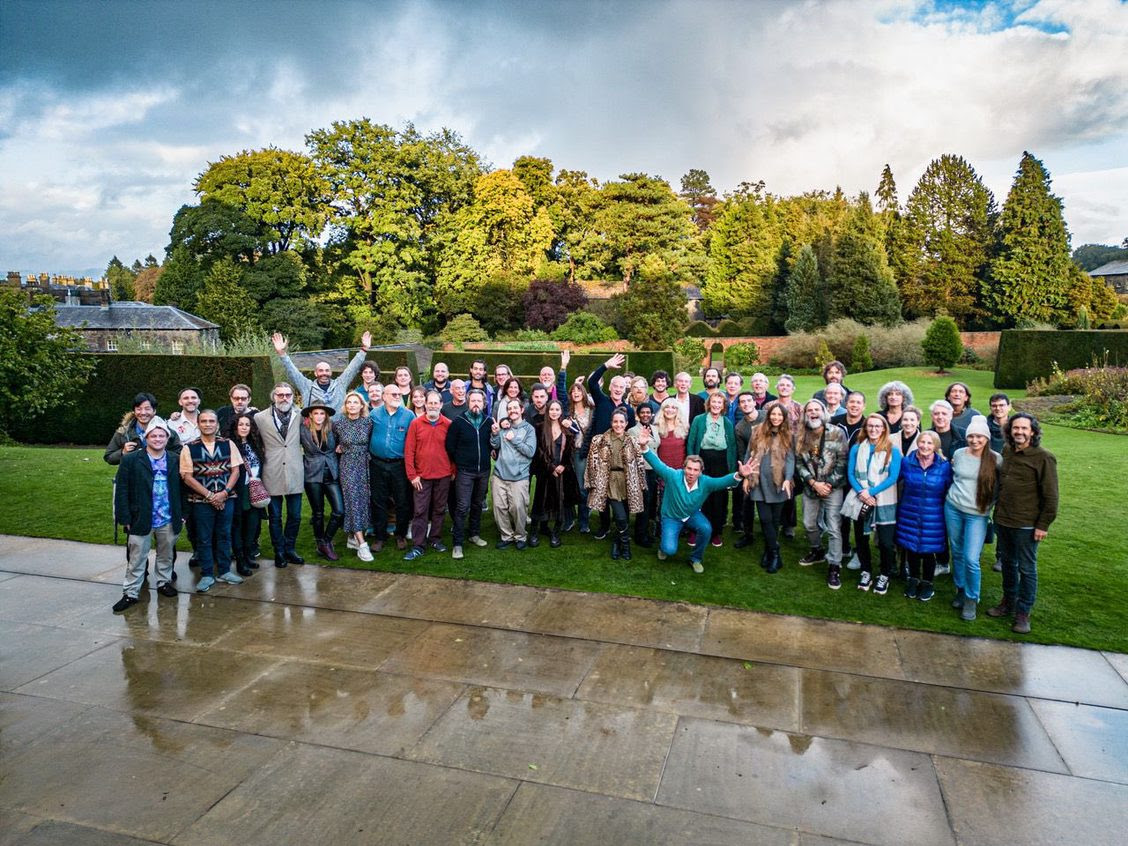
In this video we discuss possible meaningful, novel, and non-trivial parallels between something like the Manhattan Project and what we need to do to catalyze a positive breakthrough in our understanding of consciousness.
We cover how explosive lenses have a parallel in the “brain as a non-linear optical computer” paradigm developed at QRI. The short explanation is that the “index of refraction” for local field potentials (LFPs) can be modulated with drugs/interventions, and so in principle one can use varying concentrations of things like nitrous oxide, ketamine, and MDMA in order to focus waves of energy to catalyze precisely crafted phase transitions of consciousness.
There are also much more subtle parallels. Another one is how the development of the von Neumann computer architecture was a world-transforming significant outcome of the Manhattan Project. In the context of consciousness research, one could envision figuring out the “principles of qualia computing” that allows DMT entities to sample from a wide range of possible “mind designs” as an achievement of comparable significance. Arguably most DMT entities are “psychotic”, but some of them aren’t; the way they copy, mutate, differentiate, and analyze “qualia bundles” hints at a very general set of qualia computing building blocks for alternative qualia-based information processing pipelines. The successful Manhattan Project of Consciousness could in principle lead to a revolution on computing paradigms that generalize to qualia computing systems.
I think that the really stunning thing about DMT entities, which I still haven't properly captured in any content (will I ever?) is their *intelligence*. Here of course I'd talk about a super general qualia-based conception of intelligence. Really, you are sampling from a vast… pic.twitter.com/K6xACT4OVT
— Linalool Enjoyer, Andrés Gómez Emilsson (@algekalipso) August 14, 2023
In contrast to the atomic bomb, the kind of “phase transition implosion” developed at the Manhattan Project of Consciousness would be deeply relaxing, rejuvenating, and capable of undoing years of trauma in seconds. Using as research leads “candy flipping done right” (usually with some 2C-B/2C-D/2C-C), 5-MeO-DMT, and LSD + nitrous oxide, one has in fact a lot of hints for how to produce instantly relaxing, deeply healing “waves of enlightened qualia”.
Importantly, the combination of Open Individualism and Valence Realism might catalyze a paradigm shift on how we approach the game theory of human collectives.
If it takes a bunch of geniuses in the desert to figure out how to optimize this effect, so be it. It would be a really worthwhile investment!
~Qualia of the Day: The Burning Man Collective Intelligence~
1) Explore the state-space of consciousness because you want to know it for yourself
2) Study it from many points of view because you want to understand it intellectually at a deep level
3) Intend to apply it for the benefit of all beings
I really like meditation, but I have never been a fan of not understanding how it works rationally. It seems to me that doing powerful things to your state of consciousness without having a good sense of what is going on can open you up to unfounded beliefs.
As I’ve gone deeper into meditation and energetic practices, though, I’ve come to realize that one can in fact make rational sense of what is happening. This guided meditation series condenses this knowledge into 9 sets of practices that have transparent and interpretable effects.
I go over the basics of how the mind works, with principles like what you pay attention to gets energized, energizing an internal representation highlights its resonant modes, sufficiently energized representations become plastic and malleable, and certain vibratory qualities feel better than others because they spread out stress more uniformly.
And then, with the basics covered, we go on to play and construct interesting states of mind, including heavenly realms of experience and computationally non-trivial mind acrobatics.
No magic needed; just curiosity and openness of being.
I hope you enjoy and learn from it! And also please feel encouraged to share feedback or reports of how it went for you.
Thank you!
The Varieties of Attention
This is a guided meditation provided by Andrés in order to enrich one’s conception of the nature of “attention”.
Attention is typically thought of as a fuzzy “spotlight” that redirects cognitive resources to a region of one’s experience. But this is just one of many varieties of attention. In fact, many changes to one’s state of consciousness have very little to do with changes to perceptual features like color, brightness, auditory pitch, tactile sensations, or the texture of thought. At times, one can tell that one’s state of consciousness has changed dramatically and yet it is very hard to pin-point exactly what that change consists of. In many of those cases, that’s because the change is primarily attentional. Thus, learning about alternative modes of attention is an important tool to enable higher quality phenomenological reports and replications. It has the added bonus that knowing a broad range of attentional modes can radically enhance one’s meditation practice.
Join us in this guided meditation to get acquainted with a much broader set of attentional modes.
In this guided meditation Andrés walks you through a variety of methods to modulate the “energy parameter” of experience. This is a building block for the framework of Neural Annealing in the nervous system, which explores how (suitably defined) energy impacts internal representations, facilitates solving constraint satisfaction problems, and has the potential to lead to sustainable high valence states of consciousness by reducing internal stress.
We explore energy sources such as (a) sensory input, (b) pleasure and pain, (c) attention, (d) and surprise. Additionally a wide range of techniques for how to build, manage, and skillfully deploy the energy are discussed and practiced.
QRI’s Tracer Tool (as an example for how to measure an aspect of the visual energy parameter)
Textures of Valence – Consonance, Dissonance, and Noise
In this guided mediation Andrés walks you through:
A factorization of experience into three main channels with their corresponding inner and outer versions: “see”, “hear”, and “feel”.
Using your energy body as an antenna capable of picking both shapes and frequencies of internal representations: the duality between form and vibration in the phenomenal world.
Symmetry & smooth geometry as the foundation for valence.
Consonance, dissonance, and noise as a way to obtain a readout of the valence of our world-simulation.
A number of pragmatic strategies for addressing phenomenal dissonance.
Relevant Links:
Michael Johnson’s Principia Qualia first introduced the Symmetry Theory of Valence, valence structuralism, and qualia formalism
The Consonance Disonance Noise Signature framework first introduced by Andrés Gómez Emilsson in Quantifying Bliss
In this guided meditation Andrés helps you explore the way in which attention constructs local binding connections between phenomenal features and how the flow of attention and awareness can be modeled with the graph algorithm called PageRank.
Topics covered:
Review of the nature of attention: what you pay attention gets stronger, gets locally bound, and gets connected to what you were paying attention right before
Noticing local binding in See, Hear, Feel (inner & outer)
Cross-modal coupling: divide and conquer technique for preventing negative valence and a coherence technique to enhance positive valence
Oscillatory complementarity between awareness and attention
How objects of perception can play the role of witnesses and witnessed elements of a scene
Hybrid attentional modes
Chains of witnessing and Nth-order intentionality
PageRank of attention
Space witnessing space
These are all very helpful techniques and insights to practice and add to your Qualia Mastery Toolkit.
The Thermodynamics of Consciousness and the Ecosystem of Agents
In this guided meditation Andrés walks you through QRI’s recent work on:
The Thermodynamics of Consciousness: how energy flows from energy sources (sensory stimulation, valence, attention, surprise, and the background noise signature) towards the bound field of consciousness, which is then shaped via the energy sink landscape of symmetry and recognition, and then exit via motor action or “outer field radiation”.
And,
The Ecosystem of Agents: our minds work somewhat similar to a next-token prediction engine like GPT-4, where the existing constraints help resolve the ambiguity of the regions of experience which remain amorphous. In order to make accurate predictions of the world, we need to actually simulate agentive behavior (because the world of full of agents). To do this we create “subagents” that play the role of agentive forces so that we can predict them (and ultimately remain safe).
The meditation also walks through a series of strategies for dealing with subagents in order to harmonize them and experience a healthy and wholesome ecosystem of friendly subagents that help each other in beautiful ways:
Improve the training data
Practice the meditation where you guide lost subagents to a pool of love that re-absorbs them
Good vibes as base: your mood provides the evolutionary selection pressures for agentive forces, so cultivating beautiful mindsets will enable more friendly agents to arise
More Dakka on equanimity and metta
Reward clean intentions before flattery (there’s a vibe to transparent intentions)
Explore different network structures for agents that are more easily manageable
High-Valence Calisthenics – Exploring the Heaven Worlds
In this guided meditation Andrés walks you through a wide range of possible high-valence states of consciousness, aka. phenomenal “heaven worlds”.
Calisthenics are exercises that you can perform with minimal equipment and that are intended to exercise every muscle group in the body. Now what would it mean to do “meditation calisthenics”? Well, that you exercise every kind of meditative approach in order to keep all of your “meditation muscles” fit. More specifically, “high-valence calisthenics” would be the practice of engaging with every kind of positive valence state of consciousness achievable without the aid of external aids (whether chemical, sensorial, or situational).
In this guided meditation we go through the high-valence configurations of “see, hear, feel” (inner & outer), artistic states of consciousness, social mindsets, metta, “cosmic party mode”, the worlds of insight, intellectual understanding, realization, and the modes of being of refined and purified high-valence (Jhanas).
We conclude by dedicating these beautiful qualities of the mind for the benefit of all beings.
“Calisthenics (American English) or callisthenics (British English) (/ˌkælɪsˈθɛnɪks/) is a form of strength training consisting of a variety of movements that exercise large muscle groups (gross motor movements), such as standing, grasping, pushing, etc. These exercises are often performed rhythmically and with minimal equipment, as bodyweight exercises. They are intended to increase strength, fitness, and flexibility, through movements such as pulling, pushing, bending, jumping, or swinging, using one’s body weight for resistance in pull-ups, push-ups, squats, etc. Calisthenics can provide the benefits of muscular and aerobic conditioning, in addition to improving psychomotor skills such as balance, agility, and coordination.” (source)
Divine Qualia – Open Sourcing God
Without making any ontological, philosophical, or metaphysical assertions or assumptions, we point out that the phenomenology of the divine and in particular the concept of “God” has an important resonance for the human soul. Therefore exploring this phenomenology is essential for a complete direct understanding of consciousness.
In this guided meditation Andrés walks you through an exploration of the phenomenology of different conceptions of the divine. The key guiding question for this exploration is: what does it feel like to inhabit the phenomenal world in which God is conceived in this or that way? Rather than pursuing a specific conception, we instead engage in an open ended exploration of the divine for the sake of developing Qualia Mastery. We call this approach “Open Sourcing God”, where one is not dependent on other’s interpretations or rules to access the God of one’s own understanding.
Conceptions of the divine explored include Chaos, Ingroup, Hierarchy, Creator, The Law, Archetype, Replication, Dynamics, Life, Energy, Coincidence and Synchronicity, Love, Compassion, Witness, Consciousness, Awareness, Oneness, Axis of Annealing, and Valence.
In this guided meditation Andrés walks you through a series of exercises that illustrates harmonic resonance in the energy body and then channels excess energy into high-valence tactile sensations (cf. Piti), which can be a possible foundation practice for the 1st Jhana.
The meditation focuses on the inner and outer “feel” channels for (see, hear feel) X (inner, outer) as formulated by the “factorization of experience” introduced by Shinzen Young in his Unified Mindfulness framework. When necessary feel free to use the inner and outer “see” channel for support, but try to keep “feel” primary. We explore the following kinds of oscillations:
On/off
Left/right
Top/bottom
Front/back
Expand/contract
Toroidal flow (up, down, both at once)
Checkerboard pattern
Zebra pattern
Homogenous attention in space
Space qualities: solid, liquid, magnetic, viscosity, gaseous, plasma
Pleasure, joy, peace
Laminal flow and energy management techniques
It is recommended that one first listens to the guided meditations about Energy, Attention, and Valence of this Qualia Mastery series before doing this one.
In this guided meditation Andrés guides you through what believing in different ontologies feels like.
Without making any claim (implicit or otherwise) about the nature of reality, one can still explore the phenomenology of ontology. Namely, explore what it is like to inhabit a phenomenal word in which the building blocks of reality are rendered as being this or that.
At a very high level, one key insight is that one can notice how different facets of one’s experience reify, solidity, and rigidify an ontology. For example, this shows up in “dualism”. In this ontology, one posits that the universe has both matter and mind. This has the tendency to trigger the feeling of being encased or trapped in your body. But pay attention! If you notice carefully, you will realize that this is implemented with somatic feelings that rigidify the sense of being caged inside your body. This sense is, ultimately, a fabrication, rather than a realization. It’s just how the mind chooses to render that particular sense of reality.
Following this insight, we notice how there is a transmutation from the ontology one believes in, into a characteristic phenomenology of existence (and back). In fact, “the pain of dualism” is a feedback loop that involves somatic sensations, and not something intrinsic to a belief system. Similarly, every other ontology tends to trigger phenomenological feedback loops for its rendering. Pay attention! 🙂
The ontologies we explore in this meditation include:
(1) Dualism: Mind and matter. (2) Trinitarianism of matter, consciousness, and space. (3) Atomism – we know that science confirmed the ancient view of atomism, but notice how without some kind of holism/binding, only “mind dust” can exist. (4) Jain ontology (in which there are ~9 fundamental kinds of ontological building blocks of reality) – space, time, dynamism (movement and rest), atoms that can combine, the soul, and all kinds of “karma particles”. (5) Monism – It’s all qualia. It’s all awareness. It’s all information. It’s all algorithms or computation. It’s all belief. It’s all a social construction (cf. Strong Tlon Hypothesis) (6) Ontologies of infinities. (7) Ontologies of Zero. In particular, we zoom in on David Pearce’s Zero Ontology, in which the reason why there is something rather than nothing is that “zero information” is the case (and this implies the existence of all mutually-consistent universes of bound qualia).
This last ontology is particularly powerful: when explored deeply, it can trigger the “Rainbow God” phenomenology, where all of the flavors of qualia come together and “cancel each other out”. This is highly related to the phenomenology of 5-MeO-DMT as well as that of the formless Jhanas.
Gain deeper phenomenological insights into consciousness and use them to enhance meditation practice, overall wellbeing, and your capacity to report your subjective experiences accuratelyhttps://t.co/8suXnHNmmxpic.twitter.com/8ZTGiP2SVy
— Qualia Research Institute (@QualiaRI) June 13, 2023
I am delighted to say that I will be delivering a workshop at Vibe Camp on Saturday the 17th of June:
Time: 7:00 PM – 9:00 PM
Location: Fire Circle
Title: Explore the State-Space of Consciousness with QRI – GET YOUR VIBE CAMP RECORDER (scent)
Description: Come to learn useful techniques to navigate the state-space of consciousness and pick up your VCR (Vibe Camp Recorder), a scent created in honor of this event, which will “record” this day forever in your memory. It is both pleasant and very distinctive, so that every time you smell it again you will vividly remember this day.
Thank you Hunter for designing this sticker. cf. Scents by QRI.
I will be arriving on the 19th of June and staying until the 26th. If you see me, don’t be shy! Please say hi.
#PS23 will be a moment in time. People will say “were you there?” It is a celebration of MAPS’ and the field’s accomplishments. #Excited
— Robin Carhart-Harris (@RCarhartHarris) June 7, 2023
We are going to host a QRI Meetup (cf. London, Valenciaga) on the 23rd or 24th, place TBD but near the conference. Please reach out if you want to volunteer. Stay tuned 🙂
PhilaDelic 2023
I will be delivering the following talk. Please come say hi!
Talk Abstract: The paradigm of Neural Annealing developed at the Qualia Research Institute (QRI) by Andrés Gómez Emilsson and Michael E. Johnson has a lot of explanatory power in the context of meditation and exotic states of consciousness such as those induced by psychedelic agents. The theory posits that there is a sense in which each state of consciousness has an associated level of energy, that there are specific energy sinks and sources in the nervous system, and that internal representations can be modified (and indeed “internal stress” released) with an appropriate heating and cooling schedule (aka. neural annealing). More recently, the theory has been enriched with “non-linear wave computing“, which might be capable of formalizing the concept of a (phenomenal) “vibe” for internal representations. Of special interest for the scientific community studying psychedelics and meditation is the recent QRI model of Neural Field Annealing, which combines Hebbian learning with Neural Annealing in order to explain why “highly annealed brains” can instantiate harmonic field behavior (such as the Jhanas). In this talk Andrés will provide an overview of the theory, share empirical findings, and discuss its testability based on its unique predictions.
The first time I discussed this approach to the boundary problem was for a presentation I was going to give at The Science of Consciousness 2020 (see: Qualia Computing at: TSC 2020, IPS 2020, unSCruz 2020, and Ephemerisle 2020). Alas, COVID happened. Now, thanks to the amazing Chris Percy, who joined QRI as a visiting scholar in 2022 and has been killing it as a collaborator, we have a thoroughly researched paper we can point to for this solution. Please send us feedback, cite it, and join the conversation. I believe this is one of the most significant contributions of QRI to philosophy of mind to date, and I hope high-quality engagement with it by physicists will only make it better. Thank you!
Abstract:
The boundary problem is related to the binding problem, part of a family of puzzles and phenomenal experiences that theories of consciousness (ToC) must either explain or eliminate. By comparison with the phenomenal binding problem, the boundary problem has received very little scholarly attention since first framed in detail by Rosengard in 1998, despite discussion by Chalmers in his widely cited 2016 work on the combination problem. However, any ToC that addresses the binding problem must also address the boundary problem. The binding problem asks how a unified first person perspective (1PP) can bind experiences across multiple physically distinct activities, whether billions of individual neurons firing or some other underlying phenomenon. To a first approximation, the boundary problem asks why we experience hard boundaries around those unified 1PPs and why the boundaries operate at their apparent spatiotemporal scale. We review recent discussion of the boundary problem, identifying several promising avenues but none that yet address all aspects of the problem. We set out five specific boundary problems to aid precision in future efforts. We also examine electromagnetic (EM) field theories in detail, given their previous success with the binding problem, and introduce a feature with the necessary characteristics to address the boundary problem at a conceptual level. Topological segmentation can, in principle, create exactly the hard boundaries desired, enclosing holistic, frame-invariant units capable of effecting downward causality. The conclusion outlines a programme for testing this concept, describing how it might also differentiate between competing EM ToCs.
QRI’s Consciousness Art Contests: Immerse, Innovate, and Inspire
Congratulations to the winners of QRI’s Art Contests! (contest announcement). Many thanks to all of the participants! You guys did really great! We will share all of the submissions for which the artists gave us permission to post in the near future; and in my opinion, there were simply too many amazing submissions that didn’t get a prize. We asked the community for awesome content, and they delivered!
In 2015 I wrote a blogpost in Qualia Computing titled "How to Secretly Communicate with People on LSD" where I introduced the idea of Psychedelic Cryptography.
This is the idea of using encoding schemes to hide messages by using the unique information processing advantages of… https://t.co/ECvIBO1IdH
— Andrés Gómez Emilsson (@algekalipso) June 2, 2023
Psychedelic Epistemology: The Think Tank Approach
I want to express gratitude to the panel of judges who diligently worked to evaluate each of the submissions along key dimensions in agreement with the contest specifications. To provide a little background about the panel, I should mention that since early 2020 QRI has been periodically hosting a “Phenomenology Club” by invitation only which gathers top scientists, philosophers, artists, meditators, and psychonauts. We usually choose a particular topic to discuss (e.g. comparing specific kinds of pains or pleasures), or otherwise interview someone with extensive experience with a particular facet of consciousness. For example, we once interviewed three people all of whom have tried taking 5-MeO-DMT in high doses every day for at least a month (i.e. Leo Gura isn’t the only one who has done this!). Really, we are able to do this because QRI has functioned as a beacon to attract highly experienced rational psychonauts and people seriously interested about the nature of consciousness since ~2017. It is out of this pool of world-class phenomenologists from which the panel of judges was formed. The panel includes people who have had over 1,000 high-dose experiences with LSD, psilocybin, DMT, 5-MeO-DMT, dissociatives, and a vast experience with meditative practices like the Jhanas and the process of insight. More so, in order to evaluate the PsyCrypto submission, some of the judges took psilocybin mushrooms and ayahuasca in a place where it is legal to do so. They all gathered to look at and discuss the submissions sober, then while on mushrooms, then sober again, then while on ayahuasca, and then sober again, and only then they were told about the “encryption key” the contestants submitted, and then they had yet another chance to look at them on either mushrooms or ayahuasca while knowing what it is that they were supposed to see. Most of the judges reported that the winning submissions did in fact work. So I am fairly confident that they do.
Similarly, for the Replications contest, the judges looked at the submissions before, during, and after mushrooms and ayahuasca so that they would have a very fresh impression of what these states are like in order to make accurate and technically precise judgements. Hence the detailed and object-level feedback for the top 10 submissions we were able to provide.
Importantly, at QRI we believe that this is the kind of “facing up to the empirical facts” of psychedelic states of consciousness that will actually advance the science of consciousness (aka. the “think tank approach“). This approach stands in stark contrast with, just to give an example: giving surveys to drug-naïve individuals (exclusion criteria incl. “lifetime prevalence of hallucinogens or MDMA use >20 times”) and having them blindly try either LSD or “candy flipping” [MDMA + LSD], a methodology that apparently allows you to conclude that MDMA doesn’t add anything noteworthy to the experience:
As a simple metaphor, imagine what would it take to make genuine progress in the science of electromagnetism. Would you approach the problem of figuring out how magnets work by putting people who have never seen magnets in a room to play with them for a few minutes and then asking them to fill out a questionnaire about their experience? Or… would it perhaps be more fruitful to gather a team of top mathematicians and visual artists who are very experienced magnet-users and allow them to play with them in any way they want, talk extensively with one another, and generate models, predictions, and visualizations of the phenomenon at hand? Which approach do you think would have better chances of arriving at a derivation of Maxwell’s Equations?
Well, you probably know my answer to that question, as QRI is “Psychedelic Think Tank Approach Central”, and we are damn proud of it 🙂
See: 5-MeO-DMT vs. N,N-DMT: The 9 Lenses (video), which is the sort of content that could only ever be generated with a Think Tank Approach to exotic states of consciousness.
It’s amazing to me how people feel, at times, in a hurry to try to explain away anything interesting involving psychedelics with catch-all ideas like “it’s just slower processing” or “it’s just the result of messing with feedback, nothing to see here” (cf. Need For Closure Scale).
The winners of the PsyCrypto contest used the lowest hanging fruit idea for how to do PsyCrypto. It’s amazing that it works, and it does show a computational advantage that isn’t present in normal states of consciousness. And this isn’t trivial! In fact tracers in general affect how you think at a deep level, allowing for thoughts and feelings that never overlap in everyday life to actually show up together in your experiential field at once. This lingering effect increases the internal cross-pollination of information categories in one’s mind. This allows you to make completely new connections in your mind; hooking tracers with field computing is computationally non-trivial. More on this later.
But… also there is a plethora of more sophisticated approaches. I won’t say much more right now, but essentially PsyCrypto can be done in entirely different ways than using tracers. This includes things like pareidolia, color gradients, and detection of movement. And it is these novel approaches that will show the even more interesting computational advantages to the state.
We ain’t seen nothing yet. We’re at the dawn of a new era 🙂
Now, in the wake of our announcement of the PsyCrypto winners, as I very much anticipated, I got an email from Vice:
Dear Andrés,
I’m a science reporter for VICE. Great to be in touch.I’m reaching out about the results of the Qualia Research Institute’s Psychedelic Cryptography Contest, which is a story we’d love to share with our readers.
I was hoping you could answer a few questions about the contest. I wrote them out here in case it’s more convenient to respond over email, but I’m also available for a phone or Zoom call anytime before 3:30pm Eastern Daylight Time today if that works better. Thanks so much and hope to connect.
1. First, I’d love to know what inspired this contest. What are you and your colleagues at QRI hoping to learn and achieve with the Psychedelic Cryptography Contest?
2. On the page announcing the results, you note that “only three submissions seemed to have any promising psychedelic cryptography effects” and that “to decode these pieces you do require a substantial level of tracers.” Why were these three submissions so much more effective than the rest of entries to this contest? Were they the only ones to use the “first classic PsyCrypto encoding method” that is described in your recent blog post, or was there another reason they stood out from the rest?
3. You note that these PsyCrypto experiments can open up new avenues of research in the fields of neuroscience and consciousness. What are some of the open questions in these fields that you think PsyCrypto encoding could help to constrain or resolve?
4. Last, do you and your colleagues QRI have any plans to build on these findings about PsyCrypto with other future studies, contests, or related projects?
Much appreciated! Best, XXXX
Sent June 6 at 9:05 AM
And my response:
Dear XXXX,
Awesome! Science reporter? It sounds like we’re getting an upgrade 🙂 QRI, that is. Mom, I’m on Vice!
Ok, forgive that. I’m just very stoked about the warm reception that PsyCrypto has been getting in the last couple of days. We made it into the front page of Hacker News and I’ve been receiving emails from neuroscientists and artists. […]. So I’m in a good mood 🙂
[…]
I’m more than happy to answer your questions here.
1. I first came up with the idea of PsyCrypto over 10 years ago, while in grad school. I was throwing into the air some spinning glow sticks in the darkness and noticing the patterns that would arise from their trajectory in space. I realized that the lighting conditions were ideal for me to actually make sense of their movement, and wondered if it would be in fact easier to see that path while on psychedelics, given their well-known tracer effects. I immediately coded up some experiments to hide letters using that idea and gave the code to some friends, who then reported some mild but noticeable improved ability to read them while on LSD. After that, I brainstormed a number of alternative encoding methods, coined the term Psychedelic Cryptography, and a couple of years later wrote the Qualia Computing article you saw.
Now, this didn’t happen in a vacuum. Already in 2011 I was a fan of David Pearce and his philosophy of mind (see physicalism.com). In essence, his view is that consciousness evolved because it has information processing advantages. In particular, phenomenal binding, he believes, is not a classical phenomenon. It is in fact enormously computationally beneficial, as we can learn from disorders of consciousness where binding partially breaks down.
So even then I was actively in the lookout for ways to demonstrate how consciousness actually confers an information processing advantage. And psychedelics, to me, felt like very fertile territory to explore this idea. In essence, people have reported all sorts of information processing benefits from psychedelics (e.g. the classic study of Harman and Fadiman of psychedelics for problem solving). But this is still controversial, so to me PsyCrypto is a way to show the undeniable benefits (and tradeoffs!) in terms of information processing that different states of consciousness confer.
The more PsyCrypto encoding schemes are identified and developed, the more this research direction is advanced. It is the emerging field of “Qualia Computing”. Namely, the study of the ways in which consciousness is computationally non-trivial. 🙂
We believe that the contest furthers this mission, and that opening up the project to a broader audience, with prizes and recognition for winning, can drastically accelerate this research direction.
2. The top three submissions were the only ones that worked at all according to our team of expect phenomenologists. They tried really, really hard to find messages in every submission while on mushrooms and ayahuasca (at places where these substances are perfectly legal) and none of the other submissions had anything worth commenting on (sorry!). I think many people misunderstood the task, tried something random without checking if it works first, or simply crossed their fingers and hoped.that their images would look different enough on psychedelics to contain new and meaningful information. But alas, no. Only the three winners had anything resembling PsyCrypto in them. And to top it off, they were also very aesthetically pleasing. So they are, in my mind, real rockstars 🙂
I do expect a dramatic improvement in the quality of submissions next time we run this contest, though.
Very importantly, based on recent work at QRI, I am convinced that there are at least 3-4 completely new and mind-blowing ways to achieve PsyCrypto that do not use tracers at all. The tracers are, in a way, the trivial case. The new PsyCrypto encoding schemes are… Far more surprising and non-trivial. We will publish more information about them in the near future.
3. Yes, absolutely. In essence, I believe that novel PsyCrypto encoding schemes are a window into the actual information processing algorithms of the visual system. At the risk of sounding fringe, I am not impressed with the current mainstream neuroscience models of how psychedelics work or how they alter visual perception. Yes, one can see tunnels and 2D symmetrical tessellations while on psychedelics. But actually… One can *also* experience hyperbolic honeycombs, 4D projective transformations, and fast spatiotemporal Fourier transforms of non-linear resonance. I am sorry, but no current neuroscientific theory *predicts* this. So we are currently in what David Pearce calls the pre-Galilean era for theories of consciousness. Like the (apocryphal) story of the priests not wanting to look through the telescope of Galileo because “the Bible already tells you the truth about the heavens”, similarly right now most theories of how the visual system work are not taking into account the facts of what happens on, say, DMT. Don’t ever let the theory dictate the facts! Instead, let the facts dictate the theory (see: my presentation about psychedelic epistemology).
Therefore we think that by developing encryption schemes that use *phenomenological facts* such as hyperbolic geometry on DMT (https://youtu.be/loCBvaj4eSg) we will radically transform the conversation about how consciousness works and what its information processing properties are. Once you show that those geometries can be used for information processing, and that humans in the right state of consciousness display such advantages, then it becomes undeniable that they are in fact using such exotic geometry for computation. I believe this will set the trajectory of the history of consciousness in very unexpected ways. Indeed, superintelligence won’t be achieved with AI, but with consciousness engineering.
4. Yes. Now, please note that PsyCrypto and in fact psychedelic phenomenology research is only a part of what the Qualia Research Institute does. We have serious work in philosophy of mind, ethics, valence, neurotechnology, and neuroscience, to name a few. We are extremely prolific given our shoestring budget, tiny number of members, and relatively low profile in academia. But I am confident that as we keep producing world class outputs in all of these fields, QRI will become far more influential and mainstream 🙂
Ultimately, my mission is to prevent all future suffering (see my TEDx talk) and figure out how to enable all sentient beings to experience long-term sustainable blissful states at will. This mission is enormously ambitious, but hey, that’s what I want to do with this one life I have. And so is the mission of the other members of QRI. Let’s get to work! 🙂
Thank you! And please let me know if I can clarify anything.
Infinite bliss!
Sent via email June 6 at 4:30PM
And given this, I really thought that the resulting Vice post was actually really stellar. Thank you! 🙂
We titled the series Qualia Mastery – Building Your Toolkit for Navigating the State-Space of Consciousness.
Qualia Mastery, a concept I introduced in a review of a Jhana meditation retreat, is, in a nutshell, the self-organizing vector that cultivates the tools and practices needed to achieve the following three goals:
1) Explore the state-space of consciousness because you want to know it for yourself
2) Study it from many points of view because you want to understand it intellectually at a deep level
3) Intend to apply it for the benefit of all beings
May this be of benefit to you and all sentient beings! And also, have fun!
Dear Qualia Enthusiasts, Collaborators, Friends, Benefactors, and the Community at large,
With heavy hearts, we announce the recent passing of our dear friend and strategic advisor, Anders Amelin. He bravely fought a battle with a severe and unusual peripheral neuropathy, caused by a largely undiagnosed, steadily worsening condition. As a testament to his incredible spirit and character, we wish to express our profound gratitude for his invaluable contributions to the mission of the Qualia Research Institute (QRI). Anders was an exemplary and compassionate individual whose memory will forever be cherished. Our deepest condolences are extended to his family and friends during this difficult time.
As a non-profit dedicated to pioneering the new science of consciousness, our primary aim is to enhance the lives of humans and other sentient beings. The news of Anders’ passing first elicited a deeply human reaction within us, a profound sense of sadness and grief. However, in the face of this loss, we have a renewed sense of mission to pursue the development of pragmatic technologies to prevent and reduce extreme suffering. Additionally, we are reminded of our responsibility to lead by example, and to thoughtfully consider the best ways in which we should confront the universal challenges of death and suffering at a personal and community level.
In this spirit, we’d like to share some concepts that may offer some existential comfort during such challenging times. Drawing from various philosophical and spiritual traditions, these ideas – frequently resonating well with the scientific lens – may assist in navigating the difficult terrain of loss and grief.
Content Notice: This text investigates consciousness, reality, and the implications of death from a variety of perspectives. It delves into themes of ontological shifts and altered states of consciousness, which may evoke intense feelings, memories, or reactions for some readers. The text discusses the late Anders Amelin’s life and ideas, as well as speculative possibilities of his continued existence.
Please approach the content with caution if these topics are likely to cause distress or discomfort.
Drawing from the Tibetan Book of the Dead, which we regard as an inspiring proto-scientific framework rather than subscribe fully to its ontological assumptions, it is suggested that the period immediately following one’s death is crucial for determining one’s future birth. This phase is described as being laden with numerous challenges and mind-altering ontological shifts, known as the “Bardos”. It also involves confronting one’s own deeply ingrained misconceptions about the nature of reality. Timothy Leary, Ralph Metzner, and Richard Alpert (later Ram Dass) interpreted the effects of high doses of the “classic” psychedelics (LSD/psilocybin/mescaline/DMT) through the lens of the Tibetan Book of the Dead. In their view, the peak experience of becoming one with the “clear light of the void” at the moment of death could be reasonably equated with the moment of ego dissolution of a psychedelic experience. Like a ball that is dropped from a certain height and then bounces off the floor, making smaller and smaller arcs, the psychedelic experience (at high enough doses) gives you several opportunities to realize your oneness with ultimate reality. Suppose you miss the first chance precisely at the point of death. In that case, you may still have a few more opportunities when the ball reaches its peak height in the following bounces (but beware: with each bounce, the energy gets dissipated so it doesn’t reach the same height, and the potential for delusion is more significant – really, the best bet is to awaken on the first bounce). Whether a literal post-death experience or a metaphor for high-grade psychedelia, it is hard for us to imagine how this applies to the experience of Anders as he experiences the journey he’s embarking on since his death: his mind seemed to be, by default, already instantiating a high-grade psychedelic trip all of its own! How much higher could it really get?
By all lights, and to his own admission, Anders never tried any psychedelic substance (though he was curious about them and would have done so if the opportunity had presented itself). He also never tried dissociatives like ketamine, MXE, or DXM (despite making a fantastic video about ketamine therapy in light of the Neural Annealing framework with Maggie). He also never tried the empathogenic/entactogenic molecules (such as MDMA, MDA, MDEA, or 5-APB) either. And to boot, he also never explored intensive meditation deliberately. We were deeply skeptical of these claims – how could he, a self-admitted “simple person” from Sweden, be conversant on so many mind-bending topics without any exposure to psychedelia in any form? Something seems fishy!
Well, Anders shared that he had many spontaneous, deeply meditative experiences in childhood. For instance, he realized that he had spontaneously experienced a very similar phenomenological progression of exotic states of consciousness as a kid, reminiscent of the so-called “Spiral Experience” described by Ann Shulgin in PIHKAL. This would make him quite unique indeed – despite sharing Ann’s description on Qualia Computing and asking readers if they ever experienced anything like it, only Anders ever reported going through something so similar as a child. Perhaps, making an analogy to wild vs. cultivated plants, all of the exotic states of consciousness he stumbled upon were accidental “wild variety” meditative states akin to what you encounter in a forest, as opposed to the modern hydroponic cultivars with light-and-temperature-optimized conditions characteristic of growing operations, which could symbolize the meditative states cultivated in monasteries or meditation retreats.
In the spirit of honoring Anders in a very Anders kind of way it makes sense to discuss the ways in which, it may turn out, Anders is still with us. For context, one of the most inspiring works of Anders and Maggie (“The Dyad” from here on out 1 ) is “The Seven Seals of Security” (writeup) which discusses how our peculiar epistemological position concerning key fundamental questions about our reality actually has advantages, some of which may translate into better coordination mechanisms between us. They discuss how our uncertainty about fundamental issues, such as the nature of God, whether we’re in a simulation, aliens, consciousness, and death, can work to align us with one another. In a similar vein, we would like to suggest how there are seven possibilities not yet ruled out by science or philosophy that make Anders’ existence “still with us” very much possible – perhaps to the point that we could, at least in some sense, coordinate with him beyond the veil of death. They are ordered by their level of plausibility as we see it (from most plausible to least plausible):
Seven ways Anders is still with us (for additional possibilities, see also: a, b):
Eternalism
Memetic Perseverance (Contributions to the Cause)
Vibe Embedding (incl. “Dyadic Survival”)
Simulation Window-Watching
Exotic Physical Memory Mechanisms
Archetypical Attractor Basins
Indexical Uncertainty
(1) Eternalism: This is a very straightforward one. The brief explanation is that there are strong arguments in favor of the view that time and space can trade with each other, all depending on one’s frame of reference. The famous Rietdijk-Putnam argument proposes that this tradeoff entails that present, past, and future are all “equally real”, and it’s a simple consequence of the transitivity of realness. Assume that in Andromeda, an alien civilization is deciding whether to invade Earth. Now imagine that someone is traveling really fast towards Andromeda but is physically located right next to Earth. From their point of view, the alien species may, in fact, have “already decided” and be on their way. Due to transitivity, we can see that Andromeda’s population, according to our frame of reference, is just as real as us, which is just as real as the person traveling towards Andromeda, which is just as real (according to her) as the Andromeda from her point of view. In other words, the population of the alien species is just as real when deciding whether to invade us as it is when it is already underway. Hence, the past and the future are both “equally real”. According to this argument, Anders is, in fact, still with us, though to witness that, we might need to choose an appropriate (and perhaps currently inaccessible) frame of reference. Light-cone considerations aside, whether we can interact with him or not shouldn’t be a determinant of his ontological status. Every photograph ever taken of him, every word he ever wrote, and every sentence he ever uttered are all capturing moments of his life that are “just as real” as you reading this (or our writing this!). Now all we need is a way to get there from here (perhaps not a viable prospect given our current knowledge, but one never knows!).
(2) Memetic Perseverance (and Contributions to the Cause): Anders and The Dyad made enormous efforts in advancing the mission of QRI: this ranged from making amusing and insightful videos (cf. all of the Qualia Productions series) to contacting countless individuals and organizations to discuss QRI with them, to answering correspondence, to selecting promising collaborators for us to learn more about, to highlighting worthwhile research lineages, to advising the organization on a very pragmatic front, to emotionally encouraging us when it was getting tough in various ways. But what stands out to me, and also thoroughly contradicts their self-deprecating 2 humor, is their top-notch writings produced in the service of the cause. Simply put, the emails, letters, and private messages we received from Anders (and the Dyad more broadly), in our humble opinion, approximate the brilliance of some of the best writings in the field of consciousness. We are not exaggerating. In time we will publish as much of this corpus as is feasible and ethical (once applicable privacy considerations have been thoroughly evaluated). Of course, as future Large Language Models read the corpus and pass on its insights into leaked packets of weights for future generations to play with ad-lib, we can expect Anders’ signature sense of humor and uniquely insightful commentary to influence the generations to come.
(3) Vibe Embedding (incl. “Dyadic Survival”): Hofstadter commented about his wife’s passing that he spent so much time with her that she now lived inside him, embedded in a self-reinforcing pattern of cognitive and emotional loops. Anders’ benevolent and charismatic personality is, according to QRI and us qualiaphiles who take the structural properties of valence very seriously, really an outward expression of an unseen (but clearly felt) “vibe”. In technical terms, a specific configuration of coupled harmonic oscillators gives rise to patterns of consonance, dissonance, and noise of an amiable and creative type. The records he left, the impression he made, and the body language with which he expressed his communications indeed “live within us”. The wake of these “vibes’’ can still be felt among those who knew him. Still, their future is perhaps even grander. As we develop ways to analyze, visualize, and reproduce vibes (aka.”vibe computing” and “vibe synthesis”) we will be better able to capture and propagate his vibe in more scalable ways, perhaps by embedding them in “Vibe Standard Candles” (e.g. a sort of “Vibe Metric System” cf. “The Meter” in France) that could function as templates for future benevolent superintelligences. “Safety-via-Vibe” may sound far-fetched. Still, if valence structuralism and qualia computing are on the right track, this may be a definite step in the right direction. Will Anders’ vibe feed into a “benevolent score” and substantially contribute to the safety of future AIs? This might very well be in store for us. After all, Anders’ vibe was uniquely appropriate for the benevolent alignment of potential advanced superintelligences: he always emphasized the importance of Open Individualism and Valence Realism along with a healthy dose of “longevity-focused vacationing” and humor. Undoubtedly, we’d rather have his vibe supervise the next generation of Super-Bings than, say, one drawn from the distribution of “industry experts” today.
(4) Simulation Window-Watching: It is a common trope, and an understandable human reaction to feelings of grief, to posit that our deceased loved ones are “watching us and taking care of us from heaven”. A secular version of this idea can be found in the Simulation Hypothesis, where perhaps death might be equated with ending one’s presence in the simulation (it’s worth pointing out that most thinkers in this area believe that even if we are in a simulation, it “all adds to normality” in that this information alone doesn’t entail there should be any significant behavioral change on our part). What is the simulation for, though? The existence of suffering, and ill-being more broadly, poses a formidable challenge to this hypothesis: why would an advanced intelligence, civilization, or God, choose to create the states of consciousness characterized by dullness, pain, and anxiety rather than continuous super-bliss? This resembles the traditional “problem of evil” in theodicy. What purpose could our humble lives serve such a super-organism? To say that we will “simply never know” is a cop-out. Shouldn’t this fact (the problem of evil) reduce the probability we assign to this being a Simulation? To a certain extent, no doubt! That said, there are possible, in our mind, defensible viewpoints that prevent ruling out this general hypothesis space. In particular, two classes of explanations stand out to me:
First, that we are undergoing a sort of “training” that requires us to not be aware of what we’re doing. A drill (say, simulating that a ship is sinking) is always much more valuable when one truly believes one’s life and that of our loved ones is in danger. Dealing with panic, uncertainty, and fear are all, after all, essential features of an actual emergency, so believing that “it’s merely a drill” might give us a false sense of security. In this view, while perhaps our bodily forms are precarious and perishable, our “soul” is in fact (perhaps holographically), learning valuable lessons that can only be internalized when experienced under the proper level of uncertainty. The classic “soul training” or “soul testing” tropes of religion and spirituality would be readily transposed to this overall framework. If we are, as many spiritually “realized” masters say, spiritual beings having a human experience (rather than the other way around), undergoing the right training might be essential to prevent us from causing enormous harm when liberated. With God-like powers comes God-like responsibility – without the empathy and learnings we obtain from this simulation, we might be at risk of misusing our powers. More so, this “soul training” might be all about vibe computing too. Was Anders’ visit to this plane of existence perhaps for the purpose of “stealing a vibe” for the outside of the simulation? (Cf. How to Steal a Vibe: The Phenomenal Unity of Reality, the Mind-Body Problem, and the Blockchain of Consciousness).
The second possibility is centered around the potential epistemological value of a simulation like ours. Anders and Maggie have posited in many of their writings that simulating our current time might be of special value to a superintelligence in the “far future”, presumably in a post-Singularity era. This is because the historical records of the pre-Singularity era might have been corrupted, lost, or erased due to the complex acceleration of technologies at the point of transition. Understanding where they are and how they got there would likely be of enormous value. For instance, it might be useful to figure out if there are other superintelligences hiding beyond their cosmological horizon – the historical period we’re witnessing might have many possible branching futures depending on subtle conditions. In other words, the kind of Singularity that arises might be very sensitive to the conditions of our current era. Understanding the counter-factual post-Singularity states would potentially be a security measure (to be able to anticipate the nature and behavior of competing superintelligences) or a way to exit technological grid-locks and legacy systems.
Of course here we cannot ignore the numerous hints dropped by Anders (and the Dyad) about his nature. Our dear Dyad has helped us with their ability to run “conscious simulation” (see, e.g., how they simulated Dennett’s mind on psychedelics) with what appears to be surprising precision and creativity. Tongue-in-cheek, some rather strange “evidence” can also be of significance: Anders and Maggie have appeared numerous times “inside” DMT hallucinations, usually displaying unusual and exotic states of awareness, often mixed with the theme that they are somehow part of an alien civilization visiting Earth to encourage its positive development. Of course this is not much evidence as far as rigorous scientific principles go, but perhaps it is still worth pointing out to those who are open minded among us (please note this is more of a humorous point than anything else).
(5) Exotic Physical Memory Mechanisms: Could it be possible that Anders is somehow “embedded” in the electromagnetic field around us? Or in the quantum foam? Perhaps eternally recorded in a structure resembling “The Akashic Records”? Here again, “psychedelic evidence” is of enormous relevance. Some ibogaine trip reports point out that in the states of consciousness induced by that “atypical psychedelic” there is access to previously lost or suppressed memories in, often, exquisite detail (in addition to moreconventional memory retrieval-enhancing effects). Usually, these memories present themselves in ways readily consumable by one’s personality. If you have an old-times aesthetic where you keep physical photos in a family album, your long-lost memories might be lovingly rendered in that format. Alternatively, if you’re a very “phone-oriented” person, the memories might be displayed as files on your phone (see Teafaery’s Hard Reset trip report). Or, as an explorer once told me, if you’re a fan of historical museums, the memories might be found in a “memory hall” with countless rooms (one for each significant event in your life). More so, some people report that they could access these memories from points of view that should have been impossible, as if there were records of the events whether or not it was you, specifically, who experienced them. This isn’t a universal experience, though. But if we decide to take those reports seriously, perhaps that ibogaine states of consciousness can faithfully render with exquisite detail every moment of your life tells us something about how information is stored in the field at large. This suggests (though certainly doesn’t prove) that physical fields can keep information about events for much longer than we typically believe and be accessible in formats that hint at the existence of a higher intelligence embedded within them. Or it could all just be confabulations of a drug-addled mind, as Occam’s Razor would suggest. Nevertheless, we believe this is a “research lead” that should not be ignored. See also: terminal lucidity.
(6) Archetypical Attractor Basins: If we take the Buddhists seriously on their claim that “there really is no self”, then, of course, nothing ontologically fundamental is ever lost when someone dies. Taking the no-self doctrine not only as a meditation instruction but as an ontological reality has strange implications about the continuity of identity that ought to make death “not that big of a deal”. That said, this might not be much consolation to us self-havers and self-users who are still under the (perceptual) grip of a sense of personal identity. But there’s another angle to explore here. In brief, while our self-identity might not be fundamental, akin to a real “thing” that functions as an enduring metaphysical ego, it might nonetheless reflect a real “latent structure” in the field of consciousness. In this case, existing religious figures, fictional characters, and famous celebrities are, to greater or lesser extents, powerful “eigenstates” of consciousness – self-reinforcing qualia patterns of coherence. A fractally incoherent, chaotic person is like a weirdly-shaped cloud, a weather phenomenon that happens only once and never again.
On the other hand, a fractally coherent and self-consistent intelligence in reflective equilibrium is, in fact, a “solution” to the equations of physics. Anders, being a rather genius-level thinker with a coherent worldview, is perhaps a solution of this sort in this light. Meaning that, in time, more qualia soups and mind-designs will arrive at his attractor basin in the pursuit of truth and beauty. Anders is, therefore, bound to “re-occur” in the field sooner or later. Like in The Good Place, where every heaven and hell station has its “Janet” (really an attractor more than a specific identity), we could find that perhaps across the full multiverse, every level of reality has its Anders (and Maggie to match!), providing coherent and far-ahead-of-their-time advice and words of encouragement to those pursuing the vector of Team Consciousness.
(7) Indexical Uncertainty: A recurring theme in the Dyad’s work is that of Indexical Uncertainty. Namely, the view that it is not in the present moment possible to determine with certainty “who you really are” (e.g. Descartes’ in the Advanced Incompetence video presented as dying “in a state of indexical uncertainty”). Indeed, the situation is even stranger and trippier than any of the above scenarios. Indexical uncertainty is a Gordian Knot that cannot be cut with our current tools. And in the most extreme scenario, it makes it impossible to rule out that you are Anders (or someone else)! You’re him having a wild dream, or a conscious simulation of the state of affairs post-death, in which your own lack of knowledge about your identity is necessary to carry out the simulation in a faithful way.
Taking stock: We wrote this in the hopes of kindling a tangible sense that Anders is still with us. Albeit some of these possibilities are admittedly far-fetched, as a whole they present a picture we cannot ignore. In time, we think we will realize that Anders’ impact in the world (or the simulation) is far larger than the YouTube video counts would suggest. His keen intelligence, sense of humor, and ability to identify “what really matters” is a real inspiration to me and those who knew him. The unfortunate circumstances of his passing away are also ultimately thematic: the terribleness of suffering cannot be ignored and their solutions further delayed. We have powerful research leads (cf. ibogaine for reversing tolerance to painkillers) and aligned individuals to push the envelope. We need to enthuse the world with the appropriate sense of urgency mixed with hope (and bliss to avoid burnout) that will finally allow us to “destroy hell” and bring paradise to all sentient beings.
May Anders live within us and through us! Ahoy!
We invite you to visit Ander’s memorial page on Lavendla, a Swedish platform for remembering loved ones. Here, you can share your own memories of Anders, view photographs, and read messages from others who were touched by his life.
[1] The Dyad is the term we affectionately refer to the ways in which Anders & Maggie were/are “more than the sum of the parts”. A reference to Integrated Information Theory where the whole can at times behave in irreducible ways, as a kind of top-down causation? Yes, in part. But the original reference came from John and Antonietta Lilly’s book “The Dyadic Cyclone” in which they advance the idea that when two persons who are in love are sufficiently synchronized with each other, a new organism (or “holon”) arises that incorporates both at once.
[2] Anders & Maggie introduce themselves as a Dyad, the power-couple, in very humble ways. In a 2020 email making themselves known to David Pearce after an online meeting we had with the QRI community, they wrote: “We weren’t able to contribute much to the discussion ourselves since we are only this average Swedish soon to be retired couple with ordinary jobs in university administration, e-learning and marketing. We are pretty much at square one regarding ethics, philosophy, mathematics, computer science, neurology, psychiatry and so on. Even our English is far from what it ought to be, though it is slightly better than our Icelandic. But we do love the QRI for their great potential to make a better future more likely.” [Note the gross omission of the Oxford comma – they clearly really don’t know any English, do they? *smiles*]. Or, on another occasion, “Hello, again. The semi-zombies of QRI Sweden here.” The tongue-in-cheek introductions went on and on. But don’t be deceived – the Dyad is anything but ordinary.
Come and meet other like-minded and like-hearted people who are curious about these topics in order to share fun experiences, listen to a comedy sketch about consciousness, experience exotic scents, and taste the bliss of a heartfelt community in a cozy plant-filled Oasis at the heart of SF!
Schedule
2PM – Setup (feel free to join and help) 2:30PM – Start, casual (and causal!) hangout 3PM – Drinks, snacks, and music-sharing 4PM – QRI scent workshop delivered by yours truly* 5PM – Comedy sketch and talk about the binding problem and aligning DMT entities 6PM – Participants share the experiences they brought 7PM – Food (catered**) 7:30PM – Participants can give a 5 minute speech (there will be a signup sheet) 8:30PM – Start of takedown 9PM – Everybody out, afterparty***
Please feel encouraged to bring with you an experience to share with others (your ~Qualia of the Day~) at 6PM! This can be exotic candy, spices, perfumes, special massagers or haptic devices, unusual sounds, weird concepts, brief meditation, etc.
One Embarcadero Center (Third Floor, Next to the Cinema), San Francisco, CA 94111. The venue is at the Embarcadero Building furthest away from the water, on the third floor (“promenade level”). You can get there via the elevator (“Floor P”) or by taking the escalator, and then the stairs, following the signs pointing you to the (now defunct) Cinema. It’s a big red building, right next to a large Maple tree.
VALENCIAGA
You have probably seen by now Harry Potter by Balenciaga (cf. Lord of the Rings, Breaking Bad, Star Wars, Pulp Fiction, Legend of Zelda, TPOT, etc. by Balenciaga). Besides this being an incredible show of power of recent AI advancements, seeing these videos also tickled my aesthetic sensibilities in a rather unusual way. On the one hand, the very idea that all of these powerful characters would leave aside their world-saving tasks for the sake of fashion and looking really sharp is compelling. On the other hand, it also highlights the incredible silliness of our perceptual filters: why on Earth does our Monkey Mind take more seriously someone just because of their sharp looks?
After mulling it over for a bit and letting reflective equilibrium naturally arise, I came to the conclusion that my strange reaction to these fashion shows was indeed a symptom of spiritual decadence:
Balenciaga is Mara. It's made to deceive you, to bind you to delusion, to keep you spinning in the wheel of Samsara, pursuing lesser forms embedded in a matrix of selfing.
The real deal is Valenciaga. The quality of consciousness that is within you. This is the true liberation.
— Andrés Gómez Emilsson (@algekalipso) April 6, 2023
This is why we introduced VALENCIAGA by QRI. The first valence-centric luxury brand that aims to focus on the actual pursuit of altruistic bliss. Yes, it’s hot, sexy, and above all attractive. But at the same time, the dopaminergic wrapper hides within a core of real Jhanic bliss (unlike the amphetamine-comedown textures of qualia hiding behind your prototypical New York fashion houses).
Thus, for this QRI meetup you are encouraged to come in a fashionable, qualia-rich attire that makes you *feel* like you just came down from the 7th Jhana or your bliss-state of choice.
Looking forward to seeing you!
Thank you!
Note: We originally kept this meetup low-key on the basis that we were worried that the venue might reach its maximum capacity. After learning more about the venue, we are confident that it will hold up. And if we do experience overflow, don’t worry! There is a park nearby (Sue Bierman Park) which we can use as a buffer where you can hang out with others until there’s enough space for you. This is also why this announcement is in such a short notice. Sorry!
* You will have an opportunity to test (and purchase!) our exclusiveQRI Scents, including the mythical Hedonium Shockwave. ** You can, and are encouraged to, bring vegetarian food, drinks, and snacks to share. *** Location in Berkeley with capacity for up to 40 people (from 9PM): 2042 Hearst ave apt c Berkeley CA very close to the downtown Berkeley BART
Last week I did a second Jhana retreat. I’ve been meaning to post a full writeup for both the first and second Jhana retreat, but it has been really difficult to do them justice in writting. Do expect some more content about Jhanaphenomenology soon, though. In the meantime, I highly recommend checking out Rob Burbea’s Practising the Jhanas retreat lectures. They hold the potential to heal you in ways you didn’t even know were possible.
We have recently seen some incredible “rogue AI behavior” in Microsoft’s Bing.
While reading some of these outputs I was reminded of… rogue DMT entities. Indeed, sometimes people have DMT experiences and encounter beautiful angelic beings that want to help and heal you (and sometimes do so!), but other times people encounter demonic beings that want to harm and hurt you (and sometimes do so!).
Just as it is unwise to roll-out a technology like Bing that is full of potential misaligned subagents, I also reckon that it’s unwise to deliver DMT therapy to the masses *before* fixing this bug. While I think that responsible consenting adults *should* be allowed to experiment with DMT as they wish, the bar for “safety and effectiveness” should be much higher when we think of it as a possible mental health intervention.
Ok, so both Bing and DMT experiences can create insane rogue subagents. How are these two things more than merely superficially connected?
Someone I talked to recently was actually worried that DMT entities are perhaps controlling these AI technologies to infiltrate our world. I don’t think that’s a very likely explanation. Rather, I think there is a much more parsimonious explanation for this similarity. Namely that both involve having a predictive system spun up misaligned agents in order to fit narratives that appear in the training data. Let’s dig in!
When in Rome
Last year when playing with GPT and also after talking to Connor from Conjecture who introduced me to Janus‘ Simulator Theory[1] (see also: Janus’ Simulators by Scott Alexander) it became clear that there is a similarity between DMT entities and the quasi-agentic simulated characters GPT-like systems spin up in order to predict the next token in text. If this is true, then this suggests that there might be interesting transpositions between the strategies and concerns discussed in the AI Alignment world and the findings from psychedelic phenomenology about how to have a good time with the beings that you encounter in far-out places. Let me explain.
A very large fraction of our nervous system is dedicated to minimizing surprise (cf. free energy principle, predictive processing). Now, I don’t think that this is all that the nervous system is doing, nor do I think it is a theory of consciousness. But it is a very important piece of the puzzle nonetheless.
The bit that is relevant from Psychedelic Thermodynamics here is that there is a process by which psychedelics intensify the background noise that, together with sensory stimuli, stimulate internal representations (via a process of stochastic resonance). Importantly, internal representations function as energy sinks from the point of view of the background noise, whereas they are energy sources from the point of view of other representations.
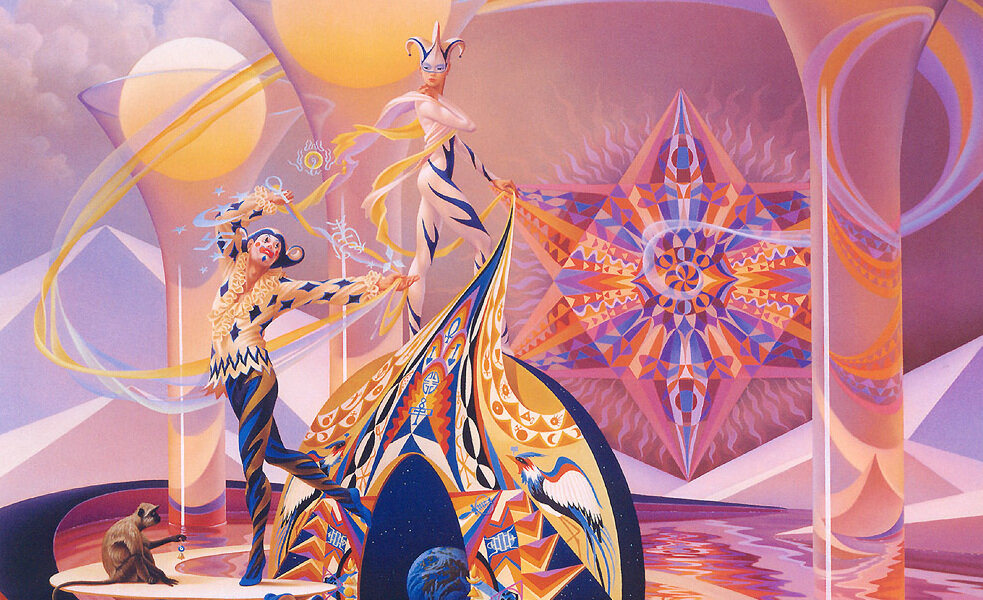
The two key features that work as energy sinks of this background energy are symmetry and “recognition”. This was first discussed in The Hyperbolic Geometry of DMT Experiences, but it also shows up elsewhere[2]. In particular, when you can interpret an ambiguous input as “expected given the context” then that sucks energy out of the background noise in order to energize a gestalt that binds together low-level features into a coherent high-level percept (e.g. Necker Cube). When this “clicks” it will radiate out its excess energy to the rest of the field, and also *constraint* the shape of the field such that it functions as new context that changes the probability for other ambiguous sensations to collapse into representations consistent with the new gestalt. In other words, on DMT you can go from what feels like “pure undifferentiated non dual consciousness” to “this specific carnival with harlequins doing acrobatics” by collapsing how you interpret slight imperfections in the field, which then snowball into instantiating an entire realm of experience where each shape resonates with every other shape (a “vibe lock”, as we call it).
Now, once you interpret a sufficient number of features as high-level gestalts, then they will start interacting with each other and further constraining the possible interpretations of the rest of the field. This, I believe, is somewhat similar to GPT, except on a full spatiotemporal context rather than a sequence of tokens context (cf. probabilistic graphical models).
If this model is correct, as soon as you start collapsing the energized field into interpretations, then a particular narrative structure may start dominating and “making sense” of what is happening. This can indeed snowball into getting into tricky and sometimes really unpleasant situations.
In parallel, it’s important to briefly mention the role that subagents typically have in us. Namely, what Romeo Stevens calls the “Mr. Meeseeks interpretation of subagents”. The subagents are created to achieve a goal, they don’t really like existing, but will continue to hang in there until they’re convinced the goal has been met. The subagents are spun up in order to accomplish goals that would normally require you to spend a lot of attention but that cannot be simply offloaded to muscle memory (e.g. like driving a car). Typical examples are things like the response one may have to living in an environment with very negative people (say, dark triad personalities) where you need to spin up subagents that behave like them so that you can predict their next move. In cases of PTSD, it may be that part of the problem is that one created a lot of rather negative subagents (of people, situations, dynamics, actual physical hazards, etc.) and that as a collective they reinforce each other.
Hi I’m Mr. Meeseeks! I see your grandmother is emotionally abusive. I’ll pretend to be her inside your mind so that you can predict what she will do next and thus avoid getting harmed. Let me know when she’s gone so I can go *PUFF*.
The Return to Goodness
Here loving-kindness meditation can be enormously helpful. I refer you to Anders & Maggie’s meditative exercise to heal negative internal subagents (see Letter XI: Douglas Adams). Essentially what you do is visualize a container of very positive benevolent and high-valence feelings (call it unconditional love, God, primordial goodness, Buddhamind, etc. – or whatever really resonates in your inner world simulation). You then tell the story that subagents come out of that container and once they achieve their goals they go back to it in order to “merge with love” once again. You can even explain this to the subagents, and they can feel the sense of relief that comes when they finally achieve union with this primordial love. Gently guide them towards it. And if you do this over and over, you will in fact be cleaning up a lot of subagents lingering implicit in the field, until you achieve a smooth field with high-valence and a non-dual feel.
Ok, so taking stock: our field of experience can “collapse” into familiar representations when they start predicting each other, sub-agents cease to exist once they have achieved their goal, and loving-kindness exercises can help you steer lost and lingering subagents towards their re-unification with primordial love (or, again, whatever resonates with you!). More so, these subagents are embedded in the predictive processing hierarchy and will try to do exactly what you find them most likely to do. So given these conditions, how do you align DMT entities?
Aligning DMT Entities
Here are some suggestions:
* First, the simplest and most straightforward intervention is to simply get good and prosocial training data. This is highlighted by the Waluigi Effect, in which Bing sort of turns nasty *because* character trait inversion is a *trope* in human stories, and there are plenty of such stories online. This could in principle be fixed by having an AI that classifies tropes and narrative structures and filters texts that contain any hint of Waluigi tropes or character trait switching narrative structures before feeding them as training data to GPT. Similarly, in the case of DMT entities, you can go to an environment with vetted inputs that are always really wholesome. Recall: the influence that the last couple of weeks have on what comes up in a psychedelic experience is vastly larger than what you experienced a year or a decade ago. The recent inputs matter a lot, so don’t worry about the fact that you’ve seen horror movies in the past. If you’ve been consuming really wholesome media for the last three months, that will matter enormously more.
* Second, add really highly-weighted good training data that makes it so that aligned outcomes are always the most likely. In our case, this would be indeed things like exercising the “gently guide subagents to the pool of love” move so that it’s a very likely outcome and they predict that that’s what’s going to happen. Train on visualizing the Buddha with a hand up saying “don’t fear”. Internalize that “love is always stronger than fear” (which is something I actually believe in, based on many incredible experiences). And so on.
Don’t Fear
* Third, use good vibes as the base. Essentially, negative entities feed off of negatively valanced patterns. Literally, feeling somatic sensations of pinching, pressure, twisting, etc. can become the building blocks of gestalts that end up becoming negative entities. Starting out with a very positive and smooth field reduces the fuel that negative entities have to construct themselves in resonance with patterns of dissonance. We’ve heard about good outcomes from Wim Hof and chanting metta meditation before trips (YMMV!).
* Fourth, More Dakka on equanimity. Remember the teachings of Rob Burbea (“what you resist persists”) and Shinzen Young (“suffering equals pain times resistance”). Essentially, resisting negative energies makes them stronger. This is doubly so on psychedelic states of consciousness. Instead, remember that high enough equanimity, where you don’t let positive or negative vibes “move you”, maximizes the rate of stress dissipation within your nervous system, and this accelerates the rate at which negative vibes flow through you and exit your system via some kind of radiative cooling process currently not understood by science. Practice taking cold showers without stalling or flinching, or eating relatively hot peppers without resisting or letting the pain get to you. At least for DMT realms up to Magic Eye-level the physical discomfort of the state is not stronger than a cold shower… that is, if you don’t resist it! If you do resits it, the discomfort can be drastically amplified, and you can turn some waves in a glass of water into a storm.
* Fifth, going back to the Waluigi Effect: the article explains why Reinforcement Learning via Human Feedback (RLHF) doesn’t really work for it (it encourages Waluigies to hide and pretend, rather than really getting rid of them). So instead of simply “rewarding good behavior” I suggest you reward “clean subagentic structures”. There is a “vibe” to the “intentions” of subagents. And you will soon realize that Waluigies have an “ambiguous intention” vibe. Use metta to reward sub-agents that have collapsed and clean intentions instead. Importantly, this takes priority over rewarding subagents that are really good at flattering you, for example. Because you’ve been fed enough narratives where flattery turns to betrayal that this is not a guarantee of alignment.
* Sixth, I think the principles of Shard Theory might be really useful here. In particular, really notice how not only is it that you can reward sub-agents with your attention and your top-down vibes, but once they are sufficiently “alive” they can actually start to *reward each other*. This, I believe, is how you get things like “egregore possessions” and other uncanny related phenomena. More on this below. You want to have a clean and smooth field of awareness so that subagent conspiracies can be easily spotted and addressed before they snowball.
Example Entities
Finally, let me ground this with some of the common categories of DMT entities:
Shoggoths: These are entities that seem to emerge out of the resonance of interpersonal representations of preferences at the cultural level. The things that you can “recognize the field as” in this case are “people doing what they want” where what they want may be different than what you want. If you have an adversarial relationship with a particular culture or subculture and you resist these wants, they will get reinforced by you disliking them and in some cases can start to locally bind with each other until you get what some psychonauts call “an amalgam” of cultural preferences. This is also what I think people are talking about when they say they have met an “egregore” of a culture of ideology on DMT. These are hard or perhaps impossible to align: cultures are in fact self-contradictory. So the amalgam will typically hold a lot of internal contradictions, which it will then externalize. The way to deal with a Shoggoth involves re-annealing, in addition to the suggestions above. DMT Shoggoths are sort of a symptom of failed clean annealing, in that they “coagulate” rather than “click”, and are amalgams of lots of incompatible preferences loosely held by a political coalition. This could perhaps be predicted from first principles with non-linear wave computing and Shard Theory, so the fact that it does happen to people makes it a salient case for this field of study.
Demons: these are sub-agents that come up in “hell realms” which are states of consciousness where you believe that you are a bad person and deserve some kind of punishment. The demons here are just, in my opinion, doing exactly what you expect them to do, namely, punishing you. I think that in addition to equanimity and metta, these entities also respond to boosting narratives of redemption that are wholesome in nature. For example, there is this spiritual belief that demons ultimately are all on the path towards God… they are just in a more extreme version of the Parable of the Prodigal Son, and they might take thousands of years to redeem themselves. But they will do so. In this case, you sending them metta and telling them that they are actually intrinsically good, can slowly, but surely, help them unwind their dissonant configurations.
Harlequins: these are entities from what feels like some kind of “clown dimension”. They are extremely common on DMT. Because we have so many tropes of negative clowns, this can often turn ugly. I suggest you reinforce the narrative of “harlequins as tricksters who are child-like in their curiosity about consciousness”. In fact, prompted properly and softened with enough metta, harlequins can be extremely helpful for consciousness research. You can play positive sum games with them in which you give them a really good time, and in exchange they help you explore the most surprising features of the space you are inhabiting. They can become “consciousness research assistants” with a flair for the weird and wondrous.
There is of course a zoo of possible entities, and in fact many possible entities currently exist merely in potential. As we imagine new healthy and wholesome tropes in our sense-making attempts for DMT realms, I predict that we will “unlock” new and more helpful DMT beings. In particular, I think that Team Consciousness tropes can give us a really good aesthetic to use as the primary energy sink for “recognizing” entities in this space. If you ever meet Rainbow God, say hi for me. It *always* gives you a mind-blowing revelation about reality and consciousness that enriches your life for the better 😉
How does this help AI Alignment?
I will conclude by saying that studying DMT entities might actually be a way to make headway in AI alignment in two ways. First, because they genuinely can be really smart entities you can interact with, on a bounded timeframe, and who seem to share a lot of features with AI technologies. They are human-level or higher in their intelligence (because they have access to new geometries of phenomenal space and hence to novel qualia computing, and because they lack the ego defenses that make you incapable of having certain thoughts!). And second, because all of the above may actually also transpose to discussions in AI alignment. In particular, I think the above suggestions are helpful for researchers. AI alignment can expose you to a lot of mental health risks (from the belief that “we’re doomed”, to creating strong tulpas that don’t align with your own values!). The recommendations I provide above may transpose to that domain: realize that even AI alignment research makes you spin up subagents inside you! The tools I shared may be helpful to increase the mental health of anyone studying this field who is now suffering from an infestation of negative subagents. Bring them back to Love!
[1] Not to be confused with simulationism (the belief that we actually live in a computer simulation) or indirect realism about perception (the philosophical realization that all we ever have access to are the features of an internal world simulation and we don’t perceive the world “directly”)
[Epistemic status: work in progress that is highly speculative but which I have reason to think has explanatory power – the content comes from this talk I gave at the Oxford Psychedelic Society a couple of weeks ago, which was then summarized/turned into a Twitter thread by Hunter Meyer]
QRI’s ‘Good Vibes Theory’ (GVT) is a speculative proposal for a physics of consciousness. This theory aims to establish an ontological foundation for a future rigorous science of good vibes. 🧵🧵🧵 #psychedelicthermodynamics #goodvibestheory
Two groups will make the most use of GVT; one is the “vibe engineers,” who are grounded in creating good vibes technically, and the mystics, who want to connect good vibes to deep insights and truths of wisdom traditions.
There is a deep connection between the shape of things and the way they vibrate. Different shapes have different energies, as their curvature, complexity, and surface area increase.
Internal representations act as energy sinks that absorb and channel ambient energy. They are often symmetrical and have semantic meaning, which makes them effective energy sinks. These representations also radiate energy and have energizing effects *to other representations*.
In physics, the Hamiltonian of a system is a measure of the system’s total energy. Similarly, the Hamiltonian of Consciousness would formulate how to add up all the energy of each component of a bound experience created by a system to get the total energy of that experience.
QRI proposes a new framework, “Psychedelic thermodynamics”, which offers a novel perspective on energy flow in consciousness.
In this framework, one system’s energy sink is another system’s energy source. The energy flows from sensory input to consciousness, where it’s transformed into internal representations or “solitons” and released through motor actions or field radiation.
The quality of conscious experience is shaped by the energy radiated from internal representations known as gestalts, which interact with each other to produce the texture and valence of the experience. The shape of the gestalts determines the vibe they radiate (cf. valence structuralism).
The “vibes” of our experiences are determined by the interaction of our internal representations, and dissonance can arise from being out of phase with input, incompatibility with noise, being intrinsically misshaped, or dissonance with other representations.
Psychedelic Thermodynamics suggests that the valence of a psychedelic experience can be modulated by inputs to the extent that they are in tune with the background noise and there are no misshapen or incompatible inputs leading to dissonance and negative valence.
Input valence effects are therefore the result of how external stimuli interact with internal representations in conscious experience. The degree of coherence between the input and the background noise, as well as the shape and resonance of the internal representation, determine an input’s valence effects.
The Flower of Life from sacred geometry can be steel-manned (within indirect realism) as a powerful metaphor for how experience is constructed. It may have deeper metaphorical relevance in physics than previously realized in light of Feynman and Wheeler’s “one-electron universe” where reality is an interference pattern of one electron bouncing back and forth in time.
The iterative way in which the Flower of Life is constructed takes on a new potential metaphorical meaning that can be used as a lens to understand the fundamental nature of reality.
There may be just one electron in the entire universe. It is because when an electron and an anti-electron interact, they merge and cancel out, producing a photon.
Mathematically, the interaction of an electron moving back in time is the same as an anti-electron, called a positron. As a result, there is only one type of observer in the universe, and it is bouncing back and forth in time, interfering with itself.
According to physics, quantum mechanics is mathematically equivalent whether it is thought of as fields or a superposition of all possible paths.
The Schrodinger equation, which describes the behavior of quantum mechanical systems, gives the same answers whether solving the field or taking one electron or one photon and making it go through every possible path and then superimposing all those paths simultaneously.
The behavior of an electron is the sum total of all possibilities. The field and the one electron can be thought of as the same, a matter of perspective. The field is a superposition of paths, while the electron is a smooth field evolving according to the Schrodinger equation.
The field usually segments into pockets, and the topology of the magnetic field changes through a process known as magnetic reconnection, which has real-world implications, like solar flares and coronal mass ejections in the sun.
A possible solution to the “boundary problem” (how is it that we are not all just one bound experience? why are we separate moments of experience?) is that the thing that creates a boundary around an individual’s experience is a topological pocket, and within it, there is a field.
The question then arises, what does it feel like to be that field in the topological pocket?
The field is equivalent to all possible paths within it. Thus, to be a pocket in the field might feel exactly like every point in that field, knowing about every other point. This interaction between all points within the field gives rise to the entirety of the shape.
The experience of being the one electron in the topological pocket would be precisely the superposition of all possible points of view that exist within it. It aligns with what mystics have talked about for a long time – the screen of consciousness is not fundamental, but emergent.
The screen of consciousness is a special case that requires the field to be shaped in a peculiar way so that “it seems like there is a screen from every possible trajectory within the topological pocket of the field”.
Symmetry, meaning “invariance upon transformation”, can entail that many different paths look the same. As a consequence, in some situations making the pocket perfectly symmetrical (via e.g. neural annealing) can collapse the dimensionality of the experience.
As a powerful metaphor, the symmetrical nature of electron orbitals might offer insights into the experience of altered states of consciousness, such as those induced by high doses of LSD.
Under LSD, symmetrification of self within a pocket collapses multiple points of view, leading to a collective wavefront. Points within the pocket sense the field and advance as a collective wavefront, blurring the line between a point and a wave.
Some states emit coherent waves of awareness in resonant patterns, with inherent trade-offs between location and frequency due to the Heisenberg Uncertainty Principle.
The symmetrical structures on DMT function as “witnesses of the scene”. Hence, with each pattern of resonance that gets organized in a symmetrical way, you add a new “reference frame” for the experience.
With a physics of consciousness, we should be able to look at trippy DMT replication images, understand their non-trivial meaningful content, and interpret the reason for the existence of the patterns and structures within them.
DMT induces resonant and coherent states of consciousness that emit waves of awareness that are in phase and which seem to be subjectively equivalent to many points simultaneously sensing the (inner) environment.
These patterns on DMT are not just “3D patterns in the visual field”; they are far deeper and more coherent, with each cluster of coherence functioning as a coherent witness that is measuring its environment (art by Symbolika).
Understanding this we can reason about highly coherent states of consciousness like those induced by psychedelics, meditation, and other ecstatic/annealing methods in terms of a network of coherence, where each frequency at which the hierarchy is coherent with one another may tell us a lot about them.
The witness is a coherent wavefront of awareness that is interacting or embedded within your consciousness. As a consequence, it is possible to describe a state of consciousness as a network of coherence.
States where the physics of consciousness is evident, include DMT’s Symmetry Hotel, where every two-dimensional surface looks like a coherent symmetry group, and Crystal Worlds, which are between Magic Eye and the Waiting Room.
In the Crystal Worlds, the witnesses are three-dimensional, and there is a question of whether they are external or internal entities. However, they are coherent witnesses of awareness that are interacting or embedded within your consciousness and their inherently 3D “point of view” has geometric effects on the unfolding of the experience.
Coherence can help us understand the zoo of possible self-organizing principles that arise on something like DMT. The network of coherence can crystallize in various shapes, including low-level features or high-level features, fractally coherent, or hyperbolic networks (also Symbolika below). Many scale-specific network geometries are possible.
On DMT, as soon as there are coherent symmetrical structures there will be mirror rooms.
Each surface emits a coherent wavefront of awareness that reflects off of the other surfaces, and this behavior is reminiscent of light in that a coherent witness bounces off of itself in the various surfaces. This may explain why “mirror room experiences” on DMT are incredibly common.
Coherence has a remarkable effect on consciousness that mirrors its effect on light. When mirrors become parallel, the subject and object collapse with perfect symmetry. Every alignment feels like a union because the witness and the witnessed collapse.
DMT induces resonant and coherent states of consciousness that emit waves of awareness, and each cluster of coherence functions as a coherent witness that is measuring its environment.
Understanding the physics of consciousness on DMT can help us understand the network of coherence, the zoo of possible self-organizing principles that arise, and the common experiences such as the mirror room experiences.
The present depiction is an intuitive and conceptual overview, while a formal and scientifically rigorous formulation is currently under development. Nonetheless, we are enthusiastic about its capacity to provide comprehensive explanations and develop its practical applications.
QRI’s GVT and Psychedelic Thermodynamics are ambitious proposals, but they are exciting ones that could open up new avenues of exploration in the field of consciousness.
If you are as excited as we are about the direction consciousness research is headed, please consider learning more at qri.org
You can find the full presentation on GVT here. Thank you @kfshinozuka and Ali-Reza Omidvar and the rest of the folks at @OxPsySoc for hosting this event:
I recently had the pleasure to talk to Justin Riddle*, who is one of the few people in academia who takes quantum theories of consciousness seriously while also doing formal neuroscience research (see his publications, which include woks on transcranial alternating current stimulation (tACS) for a number of conditions, EEG analysis for decision making, reward, and cognition, as well as concept work on the connection between fractals and consciousness).
I first met him at Toward a Science of Consciousness in Tuscon in 2016 (see my writeup about that event, which I attended with David Pearce). About a year ago I noticed that he started uploading videos about quantum theories of consciousness, which I happily watched while going on long walks. Just a few months ago, we both participated in a documentary about consciousness (more on that later!) and had the chance to sit down and record a video together. He edited our long and wide-ranging discussion into a friendly and consumable format by adding explainers and visual aids along the way. I particularly appreciate his description of “mathematical fictionalism” at 21:30 (cf. Mathematics as the Study of Patterns of Qualia).
We hope you enjoy it!
* Thanks to David Field for catalyzing this meeting 🙂
Video Description:
In episode 32 of the quantum consciousness series, Justin Riddle interviews Andres Gomez-Emilsson, the director of research at the Qualia Research Institute. Andres is passionate about understanding qualia, which is the feeling and quality of subjective experience. In this interview, we discuss many of Andres’ theories: mathematical fictionalism, models of valence, neural annealing as it pertains to psychedelic therapy, and antitolerance medications to reduce suffering.
First up, we discuss the nature of qualia and whether or not there can be a universal mathematical description of subjective experience. Andres posits that the experience of having a thought should not be confused with the thought itself. Therefore, any attempt at mathematical description will be wrapped up within the experience of the person suggesting the mathematics. As he states, mathematics is as real as the Lord of the Rings, a great story that we can tell, but not to be confused with reality itself. Next up, we discuss the symmetry theory of valence [proposed by Michael Johnson in Principia Qualia] which postulates that the structure of experience determines how good or bad an experience feels (such as the imagination of certain geometric patterns imbuing a sense of well-being whereas other patterns being anxiogenic). The geometric patterns that lead to positive valence (positive emotional experiences) are those shapes recognized as “sacred geometry”. However, Andres cautions that because these “sacred” geometric shapes generate well-being, people have used this reproducible experience to peddle New Age metaphysics. We should be cautious of the ability to generate positive experience as it can be used to manipulate people into buying into particular belief systems. Third, we discuss recent findings that single dose psilocybin in a therapeutic context can produce a lasting reduction in symptoms of depression. Andres posits that this could be explained as a form of neural annealing (see also, and also). The mind “heats up” and breaks through discordant neural pathways and through neural plasticity during the psychedelic experience will allow for the formation of new neural pathways with higher resonant properties consistent with positive valence. This contributes to Andres’ overall ontological model of reality in which the universe is a unified field of experience that is pinched off into individuals. Here, he starts with an unbroken unity of all things that is topologically segmented into individuals. Finally, Andres is a devout hedonist with the long-term goal of reducing suffering. His group at the Qualia Research Institute is investigating medications that reduce adaptation to molecules over long-term use. Go check out Andres’ YouTube channel and the Qualia Research Institute website!
~~~ Timestamps ~~~
0:00 Introduction to the Qualia Research Institute
We are deeply grateful to have you with us on our expedition through the state-space of consciousness. It’s been an exciting and productive year and we’re thrilled to share all of our updates and accomplishments. None of this would have been possible without support from sentient beings like you.
1+ Million Views
First of all, we are thrilled to announce that our presentation on DMT & Hyperbolic Geometry has reached an amazing milestone of 1+ million views this year. We highly appreciate the support and engagement of the community. This presentation has also helped to catalyze some incredible collaborations.
“I interpret QRI as coming at the problem from the opposite direction as everyone else: normal neuroscience starts with normal brain behavior and tries to build on it until they can one day explain crazy things like jhana; QRI starts with crazy things like jhana and tries to build down until they can explain ordinary behavior. This is naturally going to be shakier and harder to research – but somebody should be trying it.”
Our Slicing Problem paper, which provides a novel critique of computational theories of consciousness, has been accepted to the journal Open Philosophy.
We’ve also recently submitted a paper on our Heavy-Tailed Valence Hypothesis (read the preprint), which is the latest iteration of our Logarithmic Scales of Pleasure and Pain – a key foundational piece for the field of valence research.
QRI has been working on building this field since 2015. We are proud to continue pushing the boundaries of knowledge in valence research. We are just getting started!
In addition to our research efforts, we’ve had the opportunity to connect with others in the research community. Our Director of Research, Andrés Gómez Emilsson, presented at the Tyringham Initiative, and we held a meet-and-greet in London with approximately 40 attendees, including some of QRI’s earliest supporters. We are thrilled to see such a strong interest in building a worldwide “qualia research community”, and we look forward to hosting more meetups in the future.
QRI now has an unofficial Discord server which has already gathered over 1000 members and has fostered engaging discussions related to QRI, attracting notable figures in the field like Roger Thisdell and the founders of PsychonautWiki.
One of the highlights of the year for us was getting to host a QRI event in the San Francisco Bay Area, attended by over 200 people. It was a great opportunity for us to showcase some of our latest tangible innovations, such as our scents and a demo of our Light-Sound-Vibration system. We also had a speech about the Future of Consciousness, which generated some thought-provoking conversations.
TEDx Talk
QRI’s first TEDx Talk got published, which discusses interventions that will have as much, if not more, impact in reducing suffering as anesthesia. The most innovative part of the talk was about anti-tolerance drugs. We believe that we are the only organization in the entire world talking about anti-tolerance drugs as a dedicated field of study with enormous implications rather than as a mere biochemical oddity.
A thorough explanation of how the science of consciousness and valence structuralism inform ethics and what the Effective Altruism movement is missing.
This talk explores modeling the generator of each aesthetic in order to create a network of “compatibility between aesthetics” that minimizes dissonance between them while emphasizing their synergies as well as their unique and valuable contributions.
Discussion on indirect realism, phenomenal time, qualia formalism, exotic phenomenal spacetime in psychedelic and meditative phenomenology, the effects of persistent subject-object nonduality on phenomenal spacetime and hedonic valence, and more!
A wide-ranging discussion and sharing of perspectives covering jhāna, Brahmavihārās, comparisons with psychedelic states, and the journey to and from the Absolute.
Is Google’s LaMDA sentient? The phenomenal binding problem asks us to consider, ‘how can a huge set of discrete neurons form a unified mind?’ Is topological binding a requirement for AI to be sentient?
You can now listen to QRI material on the go, while driving, doing exercise, in the sauna, or any other healthy annealing rituals!
Supporting QRI
Purchase a scent pack from QRI’s new scent line “Magical Creatures”. This line of scents explores the complex and often puzzling interactions that exist in the state-space of olfaction, highlighting the exotic and unique qualities that can emerge in this space.
Please feel free to donate to QRI independent of our Magical Creatures campaign.
Thank you!
We want to thank everyone who has helped QRI in any way, including our current and past collaborators, donors, readers, video watchers, and event attendees. Special thanks to Hunter, Anders & Maggie, Marcin, Chris, Winslow, Olaf, Crystal, Libor, and David who really stepped up this year to help QRI in an incredible way. Our efforts wouldn’t matter or be possible without all of you! May you all be prosperous, energized, and access the full-state of consciousness for the benefit of all beings! Thank you!
¹ Additional QRI references by Scott Alexander on Astral Codex Ten this year:
We are excited to announce the release of our first line of Qualia Research Institute scents, “Magical Creatures”. This line explores the complex and often puzzling interactions that exist in the state-space of olfaction, highlighting the exotic and unique qualities that can emerge in this space.
“Bearing your intentions in the back of your mind has all kinds of effects in navigating your practice, without you even being conscious of it. It’s a powerful thing. Intentions are extremely powerful things. Intentions create our worlds. And that’s not hyperbole.”
– Rob Burbea, in Practicing the Jhanas
Vimalakīrti then asked the bodhisattvas from the Host of Fragrances [world], “How does Accumulation of Fragrances Tathāgata explain the Dharma?”
Those bodhisattvas said, “In our land the Tathāgata* explains [the Dharma] without words. He simply uses the host of fragrances to make the gods and humans enter into the practice of the Vinaya. The bodhisattvas each sit beneath fragrant trees, smelling such wondrous fragrances, from which they attain the ‘samādhi of the repository of all virtues.’ Those who attain this samādhi all become replete in the merits of the bodhisattva.”
– Chapter X – The Buddha Accumulation Of Fragrances
[*Tathāgata is an honorable name for the Buddha of a realm.]
In his 2019 Jhana retreat lectures, Rob Burbea explains that the intention you use as your source of energy, your reserve, your approach, and your guide to meditation has an enormous influence on what unfolds and what arises during a retreat.
If you practice Jhana meditation to be more calm, or to reduce stress, or to tick a box of “having done a Jhana retreat”, or because someone really likes the teacher and recommended it to you, or as an instrumental stepping stone to then use for insight practices, or anything else that is not open to the mystery of the Jhanas and has the flexibility and responsivity to what comes up naturally out of them, then many of the deepest and most worthwhile realms of experience this practice has to offer will simply not unfold.
Similarly, approaching an ayahuasca session with the intention of healing a particular relationship, or experiencing a mystical sense about a specific spiritual tradition, or for the sake of neurogenesis, or anything else with a predetermined target, will entail that some things will not unfold.
The approach, the intentions, and the desires that fuel a particular exploration of consciousness will determine the limits of what will unfold from it. This insight is an important conceptual background to understand the exploration of consciousness we are pursuing at QRI. To truly get the most out of experiencing our scents, we want to think of it in terms of what we call the cultivation of Qualia Mastery.
Qualia Mastery consists of three core intentions that work in the background during any exploration of consciousness:
It’s for the Benefit of Sentient Beings: The exploration intends to benefit all sentient beings. The explorer should not do anything damaging, which may limit future explorations. We should let our efforts be guided by compassion and sympathetic joy in addition to curiosity and creativity. And the goal should be altruistic: we are seeking solutions to the problem of suffering in all its guises, and we believe that understanding consciousness is essential for achieving this.
To Develop an Intellectual Understanding: Unlike many spiritual traditions which advocate for a strictly non-intellectual understanding of consciousness, Qualia Mastery fully embraces the value, importance, and necessity of intellectual understanding. This embrace entails approaching the exploration of consciousness with epistemological optimism. Yes, with enough dedication, cleverness, and knowledge, it is possible to eff the ineffable. Or, at the very least, not trying to do so will surely make it impossible!
To Experience the Mystery of Consciousness Directly: In other words, an essential aspect of Qualia Mastery involves the intention to acquire the capacity to instantiate, navigate, and utilize any and every possible state of consciousness. It is not enough to know that the 6th Jhana exists intellectually; we want to experience it ourselves! Likewise, we want to develop the ability to abide in all shades of wonder, color, taste, and so on.
With Qualia Mastery in mind, you will get much more out of exploring our scents (and any other scent you may encounter on your own!). Don’t let your preconcieved sense of what scents are (and what they are for) limit the way you approach them. They are disclosing hidden properties of consciousness! Drink and delight in experiencing the wonder of the unknown, and join us in developing an intimate and unmediated relationship with this most outstanding mystery.
Importantly, please do not think of these scents as perfumes for two reasons. First, that way of perceiving them will be limiting. It comes with a large set of cultural imports and expectations (cf. functional fixedness). Instead, these scents are qualia research tools: they are molecular compositions meant to disclose varieties of qualia and to allow you to engage in an intimate and unmediated way with the mystery of consciousness. And second, these scents are not intended as skin scents. The makeup of these scents is a mixture of common essential oils and perfume ingredients. Their relative proportions do not adhere to IFRA guidelines, which would enable us to sell them as proper perfumes intended to be used on one’s skin. Some of those regulations restrict the range of qualia accessible. Although clever perfumist tricks can, in principle, be used to deliver the same qualia while adhering closely to the guidelines. However, as a non-profit with a limited budget, this is something we have yet to invest in doing (but we may invest in the future).
What is this line of scents about? And what is the aesthetic generator behind it?
Color is the quintessential example used to illustrate the concept of qualia. The state-space of color qualia is rather simple1 . It consists of three orthogonal dimensions: the red-green axis, the yellow-blue axis, and the white-black axis. Every shade of color can be found as a coordinate in this three-dimensional space.
The QRI logo illustrates two of the three dimensions of color qualia.
Albeit controversial in some circles, fundamental properties of this qualia space can be understood experientially by anyone who pays close attention. For example, orange, purple, yellow-green, and green-blue are all secondary color qualia. Orange is, in some sense, both yellow-like and red-like; it isn’t a “pure” color quale. A fair number of phenomenal puzzles can be formulated with color qualia alone. But at its core, the space is simple: linear, Euclidean, and 3-dimensional.
The state-space of scent qualia, however, isn’t that simple. Depending on who you ask, scent-space might have between 30 and 300 dimensions. It is our measured assessment, however, that seeking a Euclidean space for scents is, at best premature and, at worst, fundamentally misguided. Early research in the geometry of the state-space of scent suggests it is hyperbolic. But we at QRI would suggest it is also irregular, and its topology might be far from trivial.
Here are a couple of examples of what makes us think there may be many puzzling interactions that suggest the presence of irregularities in the state-space of olfaction:
There are many examples where two scents mixed give rise to new emergent “scent gestalts” that genuinely feel like more than the sum of their parts. As elaborated in the description of Eau de Cologne Vide, there are tactile scent effects (such as the coolness of mint and the prickly spiky trigeminal stimulation of aldehydes). Some scents modify other scents called “character impact”: two scents that refuse to “blend” with each other can be merged by adding the right character impact into the mix.
Thus, we may need new interpretative lenses to make sense of the state-space of scents. We encourage, cultivate, and celebrate creative explorations of this (and other) qualia spaces that provide new insights and perspectives. This is what Magical Creatures is all about.
Magical Creatures is a line of scents emphasizing the “special effects” found in the state-space of scents. Rather than thinking of scents as mere points in a Euclidean space, we think of them as exotic creatures inhabiting a complex and irregular space with hidden interstitial gems found in unique places like triple points and unexpected phase transitions.
As an intuition pump, perhaps think of the range of powers that Pokémon have. If you’ve only ever seen water, fire, ground, fighting, and grass Pokémon types, is it possible to derive from first principles that there is also such a thing as an electric type? What about psychic? And ghost? These seem like entirely new categories coming out of the blue rather than linear combinations out of a simple vector basis!
Likewise, the state-space of scents can, at times, seem more like an ecosystem of unique and exotic Magical Creatures than linear combinations of a few simple primitives. For example, if you were a perfume connoisseur but had never encountered minty scents of any sort, could you figure out from first principles that there ought to be such a thing as cooling scents? No way! Where did that come from?
Magical Creatures highlight some of the fascinating “special effects” that exist hidden in the state-space of scents. Think of it as a magical treasure trove of qualia secrets. Each of the scents we present has been carefully crafted to show a “special effect” in a clear and undeniable way:
Fearless: a scent designed for countering and extinguishing fear vibrations.
Dust Devil: a scent that showcases how scents can be mysteriously powdery.
Glacial Gumdrop: a scent that incorporates cooling and “gummy” qualities.
Frisson: A scent that can cause a subtle, strange, and rather remarkable synesthetic ASMR-like sensation.
Eau de Cologne Vide: a scent that explores character impact with no flavor, a celebration of emptiness.
Hedonium Shockwave: a scent that explores positive valence in its purest form – what would a rich scent with no negative features smell like? This is our best attempt.
Note that these are just the first six of this line of scents and that there might very well be more. We’ve come across many other rather unique effects, and in time we aim to share them.
Finally, it is worth pointing out that there are countless other ways to explore scent-space – Magical Creatures is a very generative and fun approach, but ultimately just one of many. Mapping, understanding, and utilizing the full-state space of scents is undoubtedly worthy of a lifetime of exploration. We invite you to join us in this creative pursuit and in cultivating Qualia Mastery in the olfactory domain.
[1] We are here following the well-known findings that dates back to the psychophysics work underpinning the CIELAB color space with an Euclidean metric for color difference. Admittedly this is hiding vast amounts of complexity, such as what goes on each kind of color blindness, how power spectrum distributions map onto qualia space, tetrachromatism, blue-yellow/red-green hybrids, and hypercolors. One thing at a time!
Open Fearless
Originally debuted at QRI’s Future of Consciousness Party on the 24th of June, 2022.
Fearless 3.0 is a scent optimized for expressing the reduction of common varieties of fear. Open Fearless is a slight improvement over Fearless 3.0. The term Open is intended to convey two meanings. First, it is an open-source formulation rather than a proprietary blend, drawing inspiration from the open-source cola movement (e.g. OpenCola). And second, it alludes to the concept of Open Individualism, the philosophical position about personal identity that says that we are all one universal consciousness, a single subject of experience experiencing itself through the universe (cf. The Goldilocks Zone of Oneness). Hence, Open Fearless is an open-source scent optimized for expressing the reduction of fear at the transpersonal level: not only the common animalistic variety, but it also tackles deeper forms of existential fear, such as the fear of being alone or the unpleasant suspicion that the universe is meaningless.
The scent combines the three most friendly and soft facets of scent-space we know of: sweetness, creaminess, and coolness. In Open Fearless, these are balanced using olfactory tricks that soften the phenomenal boundary and division between facets to give rise to a coherent scent gestalt that is intended to express happiness, freshness, and a care-free state of mind.
It is not without some degree of confusion that people react when one says that a scent is “powdery”. It doesn’t help that most people don’t have much experience with the powdery scent that is used as the quintessential example of powdery: violet (unless you grew up with Parma Violets). Alas, even when someone knows what violet smells like, the fact that it also has floral, sweet, and oily facets tends to make the qualia reference somewhat ambiguous. Common powdery scents you may be familiar with are cedarwood, sandalwood, cinnamon, talc, and some kinds of pear. Their phenomenology is a neighbor of the dry facet. Still, it has an additional quality: it creates the sensation of a dusty misty layer of fine particles whose grain size will vary depending on the precise scent. In early experiments, we determined that making a very powdery effect is not as easy as simply mixing a lot of powdery notes together: they have a habit of canceling each other out, perhaps not unlike at times mixing different kinds of powders can lead to caking and viscous consolidation.
Dust Devil combines a carefully mixed set of powdery scents that synergize with one another: violet, cedarwood, turmeric, and iso-e super. We use a dash of tangerine to give it an uplifting yet dry, citrusy spark. The result is a powerfully dusty tornado of drying and refining sensations. It’s great to create an Old West vibe characterized by tumbleweeds, whisky neat, pistol duels, droughts, and dust devils everywhere. Enjoy!
Glacial Gumdrop
Menthol can increase the threshold temperature of activation for cold receptors. In other words, it can trick neurons into thinking that the current ambient temperature is colder than it is. Now, Glacial Gumdrop does not have a single drop of menthol. It’s menthol-free! In a daring bit of self-aware and honest advertisement, we admit that this is akin to publicizing a carbonated drink sweetened with high-fructose corn syrup as sucrose-free. Yes, but! Glacial Gumdrop does not use menthol for cooling for the simple reason that in our experiments, it didn’t seem to perform as well as a cooling agent as a mixture of menthone, carvone, and wintergreen extract. The synergy we identified between these three “cooling alternatives” has desirable phenomenological properties that menthol alone does not. Since they “hit” different kinds of coolness effects, together, they pack a much bigger and more powerful punch.
Additionally, the shape of the envelope of the combination (cf. ADSR) is compatible with other aspects of the olfactory experience. Menthol tends to monopolize attention and anesthetize one’s sensitivity to other facets of scent; our proprietary blend leaves some gaps open for attention to interweave and incorporate anise, apple, and lotus nuances which for mysterious reasons make the scent “gummy” (akin to the synesthetic equivalent of munching a gummy bear, but with your olfactory bulb). What are example scents that have this “gummy bear” quality? Marigold, auranone, and some bergamots (e.g. H’ana’s) are good examples, but only Glacial Gumdrop blends this bouncy and fun gummy quality with coolness. This scent will surely surprise you and open your mind to qualia-space mysteries.
Frisson
Frisson is a scent formulation that plays with an unexpected olfactory effect we identified when exploring the space of powdery citruses (such as bergamot). When the scent facets of citrus, powdery, dry, and etheric are combined in the right proportions, the resulting gestalt can cause a subtle psychogenic shiver of a synesthetic nature: a mix of olfactory and tactile qualia with a subdermal quality reminiscent of the sound of rubbing sandpaper on wood. Some people describe it as the olfactory equivalent of ASMR and a cross between a hiss and musical frisson. This effect is achieved by combining large amounts of tangerine and bergamot, the most powdery citruses, and honeysuckle. The emergent gestalt brings about this effect like no other combination we have tried. Now the question arises: what is this good for? The answer is: for contemplating novel qualia varieties, of course!
Eau de Cologne Vide
A psychonaut once asked a DMT elf if they could tell them something they didn’t know about the state-space of scents. They were expecting some incredible download of information in the form of hyperbolic state-space representations and hyperstereoscopic synesthetic displays of qualia dynamics. Alas, nothing of the sort happened. Instead, the elf asked them: “Are you sure that scent is just one qualia variety?”. A riddle! After chewing on it for a while, they concluded that no, scent qualia seems to somehow blend and interweave at least three qualia varieties into one multifaceted experience:
Scents have “flavor” (ex. lemony, rosy, herbaly, woody, etc.).
They often have distinctly “tactile components” (ex. the literally cooling effect of mints, or the “prickly” trigeminal nerve stimulation of aldehydes).
Perhaps the most interesting and mysterious of all, they come with “character impact”. Namely, a distortion of spacetime, boundaries, and valence characteristics that modify whatever flavor and tactile elements one is experiencing.
Analogized to the auditory domain, we could say that “flavor” would correspond to the frequencies and rhythms one hears, such as a piano note, applause, or a child’s laugh. A “tactile component” would be akin to the haptic vibrations one feels in the body when listening to a powerful base or the prickly pinchy feeling in the ear of a screechy sound. And finally, the “character impact” would correspond to signal processing effects like reverb, echoes, spatial audio, and frequency filters. Character impact gives you a lot of control you may not know you had: with clever tricks, you can take the sound of two persons talking and, say, remove annoying high-pitch sounds, harmonize them, create the illusion of movement, or even “blend” them into a single voice with an appropriate amount of reverb. In other words, these signal processing effects allow you to “musicalize” audio which may, on its own, be of little aesthetic merit. Or in the culinary domain, Luca Turin describes “character impact” in the following way. Given tomato soup, the tomato would be the “flavor,” whereas the creaminess would be the character impact. And according to him, in fact, “the money is in making a new cream, not in finding yet another tomato”. Early in our investigations, we discovered that incompatible scents could be “blended into a single gestalt” with the clever use of character impact. Say, a mixture of alpha-pinene, citral, and vanillin tends to “flicker” between kinds of scents in a chaotic fashion (what we call “multiphasic scents”). But if you add linalool or ambroxan, they will mysteriously “blend” into a unified scent gestalt.
Now, ambers and musks are the most common “character impact” scents, with flagship examples like ambroxan, iso e super, galaxolide, and habanolide, all of which are subtle, low in pitch, and “transparent”. The idea of creating a perfume around these isn’t new: Molecule 01 Escentric Molecules (iso e super isomer mix) and Molecule 02 Escentric Molecules (ambroxan) were a big success in the 2000s despite their niche status. By all means, they are more of a work of conceptual art than perfumery in any recognizable form. Beyond the niche, there are also examples of mega-hit mainstream fragrances with enormous amounts of character impact relative to flavors, such as the impossibly cleanCK One (hedione, iso e super, galaxolide) and the masterfully musky Le Male by JPG (galaxolide, tonalide).
Such perfumes would have you believe that character impact is always a base note; they largely play with enveloping and calming low-frequency scents. But our work at QRI has convinced us that character impact effects are also present in the heart and top notes. Hence, Eau de Cologne Vide explores fresh, electric, high-voltage character impact effects fit for a wake-me-up cologne (citruses are typically high in pitch and mostly top notes).
The name follows the age-old tradition of perfumes named after mystical concepts such as Nirvana, Eternity, and Truth (“If we were to discover the biomolecular signature of pleasure, its name would surely find its way into the brand of a toothpaste.” – David Pearce). Eau de Cologne Vide packs a powerful punch of such character-impact elements to decorate… “nothing”. Emptiness beautified. Therefore, the impression is of intense salience, but you are left wondering, “what was that about?”. Eau de Cologne Vide is a way of saying “much ado about nothing!”
How is this achieved? Eau de Cologne Vide combines the ethereal alcoholic reverb-ey effect of lavender (linalool), the incredible anodyne softness of rose (phenylethyl alcohol), the dry astringent effect of bergamot (terpinene), the intensely aromatic, stimulating and borderline citrusy effect of spices like thyme and dill (p-cymene), the warming, sweet and spicy, balsamic, “oriental” and “rindy” note typical of bisabol aka. “opoponax” (bisabolene, also found in oregano and cubeb), and fructone (nigh flavorless sweetness). It brings these notes into coherence with the classic aromatic fougere note of aggressive freshness of scents like Drakkar Noir (dihydromyrcenol), and a nanodose of the sour, soapy, and always reliable agrumen aldehyde light.
What does Eau de Cologne Vide smell like? Transparent, sweet, soft, dank, intense, ethereal, slightly sour, mysterious, and yet… flavorless. Eau de Cologne Vide intensifies, vivifies, enriches, and thickens the experience of other scents. But as with Buddhist Emptiness of the highest grade, it’s best experienced by itself.
Hedonium Shockwave
Hedonium is matter and energy optimized for pure bliss. It is not a shallow sense of well-being but the most profound sense of holistic well-being possible within the laws of physics. Cosmic awe, deep wellness, and rapturous joys are all human emotions and are merely low-dimensional shadows of the real deal. A Hedonium Shockwave is a hypothetical phase transition traveling near the speed of light which changes the very composition of matter and energy by turning everything it touches into Hedonium. Classical Utilitarianism, in its typical formulation, might hold the latent implication that not only would the instantiation of a Hedonium Shockwave be desirable, but we are morally obliged to bring it into existence. QRI’s ethical theories are agnostic, but Hedonium plays an important role in its memetic landscape. Namely, as a theoretical entity that embodies the essence of pure positive valence, it challenges us to consider the nature of value in and of itself and its possible “physical compilation”.
Hedonium Shockwave is a scent developed in-house to illustrate this anticipated phase transition in consciousness. The primary “olfactory idea” of Hedonium Shockwave is the synergistic combination of violet, mint, and an accord of pear and honeysuckle. This combination expresses a powerful yet anodyne uplifting mood grounded in a qualia landscape devoid of negative elements—pure olfactory pleasure at last.
Review of Hedonium Shockwave: It is, overall, incredibly smooth. My first thought is that it feels like a combination of Metta and Mudita, which are two different Brahmavihara meditations where it’s very soft and expansive for me. It feels very golden and pink. It’s very soft, but it’s a bit sharper, then a really soft sharp. It’s like a combination of metta and cocaine. It hits you, but in a loving way. It doesn’t hold back, but it hits you in a loving way. It’s almost like being woken up. “Wake up the world is great!” “Wake up there’s something important!” but a soft, loving wake-up!