People complain about the “voice in their heads.” Often, advanced meditators say they’ve lost it, and their life is better for it. But more recent research shows a large percentage of the population doesn’t have it anyway (a case where natural variance combined with the typical mind fallacy makes things extra confusing).
But you know what? I think this is a massive red herring. As per usual, the problem with X (having a voice in your head in this case) was never X directly, but… you can guess what I’m about to say: the effect X has on valence. Don’t overindex on X. X IS INCIDENTAL. What matters is that X MAKES YOU FEEL BAD.
Rob Burbea distinguishes between discernment and judgement. Discernment tells you what is helpful. Judgement is an evaluation of the self/other, which relies on false metaphysical assumptions to stand on.
The problem with having a voice in your head is that it is a judgmental voice – it creates a self-view. In particular, it causes moral and social judgments on a fabricated sense of “self and other.” Judgment feels bad; it adds weight to experience. Even judging something as good feels subtly bad in the background, because it entails some level of inner tension and segmentation where you represent a part of you as bad to generate the contrast necessary to highlight the good.
Judgment is self-perpetuating. It stings. It costs energy. And it builds on top of itself. When you’re too far gone in a judgment spiral, you judge yourself for being judgmental.
Burbea calls judgment “the thief of happiness” and explains how it strangles creativity: how many poems die in the waste-basket because “I’m useless” barged in? He also reminds us that sometimes simple mindfulness isn’t enough; you have to challenge the habit by feeling its sting in the body and meeting that pain with kindness.
Things like hangovers and bad psychedelic trips are often bad because of the persistent tracer effect on judgment. A panic attack often involves a kind of judgment tinnitus. Without judgment and its symmetry-breaking effects in the field of awareness, a “voice in your head” would not be a problem. Bring it on! I’m OK having a zany, Bugs Bunny-like commentator on my experience, so long as it doesn’t jitter my attention without consent or cast judgment on my everyday activities or social cognition. It could very well be amusing: might as well have an entire cast of whacky characters putting on a schizophrenic show for me to enjoy. The problem is not the voices, but the bitterness and disenchantment they entail.
Rob, in his lecture on letting go of judgment, explains that not judging is a real, achievable way of life. Freedom from judgment is within grasp for all of us (assuming we put in the time and effort – though please don’t take this as a judgment on your temporal thriftiness or laziness!). Burbea affirms it’s “absolutely possible” for the habit of judgment to end – sometimes large chunks of the “mountain of judgment” crumble suddenly in a matter of weeks. Even when judgment thoughts continue to arise from habit, they arise “completely free of any charge… just like empty words” with no power behind them. Eventually, these empty judgments fade away because they’ve been “sucked dry” of meaning.
This effort, I believe, is far more targeted and beneficial for liberation than the poor proxy of “removing the voice in your head, which already ~50% (?) of people don’t have anyway.” Freedom from judgment and its associated sense of presence, direct experience, thinning of self, and homeostatic regulation is the real prize. Not mental silence.
[Epistemic Status: fiction (in most timelines, that is); in my lane, having fun]
Place: The Equatorial Republic (pop. ~190M)
Time: 2032
My fellow citizens of this great Equatorial Republic,
Today, as I stand before you having accepted the solemn responsibility of the presidency, I am humbled by your trust and energized by the possibilities that lie before us. This administration marks not just a change in leadership, but a fundamental paradigm shift in how we approach governance, human welfare, and our collective future.
A New Era of Compassion Through Science
On this first day in office, I am announcing the formation of the National Hedonic Research Initiative. Let me be clear: extreme suffering can be worse than death itself. Nowhere is this more evident than in the case of cluster headaches—aptly named “suicide headaches” by medical professionals, a condition where the pain is rated significantly more severe than childbirth, kidney stones, or even gunshot wounds.
Through Executive Order 001, I am establishing the Cluster Headache Elimination Commission with an initial $2 billion in funding. The data is clear: approximately 3 million people worldwide suffer from this condition, spending nearly 5 million person-days annually in extreme suffering rated 9/10 or higher on pain scales. This Commission will:
Create a nationwide tryptamine research and distribution network, prioritizing low-dose N,N-DMT, psilocybin, and LSD trials based on compelling evidence that these compounds can not only abort attacks but extend remission periods indefinitely for many patients
Establish 200 specialized treatment facilities across the nation within 6 months with mandatory oxygen therapy and other proven abortive treatments
Fund 50 research laboratories dedicated to advancing our understanding of pain relief mechanisms and developing targeted interventions for these conditions based on patient-reported outcomes
Additionally, I am directing the Department of Health to create the Pharmaceutical Innovation Directive focusing on anti-tolerance compounds for chronic pain patients, next-generation flumazenil analogs to reverse benzodiazepine dependence, and targeted solutions for other iatrogenic conditions that have been unconscionably neglected. These extreme forms of suffering represent the deepest moral emergency in our society, and their elimination is our highest priority.
Mapping the Hedonic Landscape: Beyond QALY
For too long, our policies have been guided by economic indicators and inadequate health metrics like Quality-Adjusted Life Years (QALY). The QALY framework fundamentally fails us by treating all human experiences as linearly equivalent and by capping wellbeing at an arbitrary “perfect health” that ignores the vast territory of heightened human potential.
The empirical evidence is compelling: our current metrics systematically undervalue both the depths of intense human experiences and the heights of human flourishing. As a result, we’ve created policies that address widespread but moderate challenges while neglecting concentrated instances of profound human experiences – both positive and negative.
Today, I am commissioning the first comprehensive Hedonic Landscape Observatory—a scientific assessment of the full spectrum of human experience that will:
Develop more sensitive and accurate measurements of diverse human experiences across the wellbeing spectrum
Map the neurological correlates of resilience and positive states to complement our understanding of health
Create economic feedback loops that systematically reward businesses and institutions that demonstrably enhance quality of life
Develop a new economic indicator—the Consciousness-Weighted Prosperity Index—that will appear alongside GDP in all government reporting
This initiative will ensure that governance decisions are evaluated not just by economic impact, but by their effect on the actual lived quality of conscious experience of our citizens—taking into account the true depth and breadth of human flourishing available to us.
Game Theory and Consciousness: A New Political Framework
We stand at an evolutionary crossroads. The old politics operated on outdated models that failed to recognize the fundamental relationship between consciousness and our collective future. Today, we begin the transition to a political framework that explicitly acknowledges the quality of conscious experience—as central to governance.
By Executive Order 002, I am establishing the Consciousness-Economy Integration Commission tasked with creating explicit feedback loops between consciousness research and economic selection pressures. This commission will:
Develop metrics that quantify the wellbeing-enhancing potential of technologies, enabling investors to select for innovations that genuinely improve quality of life
Create tax incentives for businesses that demonstrably improve the lived experiences of their employees and customers
Establish a public research platform exploring the positive potential of consciousness, ensuring that discoveries about phenomenological wellbeing directly influence market forces
This systematic exploration of consciousness is not merely academic—it will fundamentally reshape our economic landscape by ensuring that technologies and policies that enhance human flourishing systematically outcompete those that merely optimize for shallow metrics. The implications for environmental policy, social welfare, and international relations are profound and far-reaching.
Transcending Tribal Politics Through Psychological Understanding
From this day forward, international diplomacy will operate with a new level of psychological sophistication. Through the newly formed Department of Psychological Architecture Analysis, we will explicitly model the subagent structure of world leaders and political movements, identifying when narcissism, psychopathy, or tribal thinking is driving decision-making.
International coalitions will be formed not just around shared interests, but around shared psychological awareness. This administration will not hesitate to name pathological dynamics when they appear on the world stage, while offering a path forward through a consciousness-centric yet pragmatic approach to governance.
I am also directing our diplomatic corps to explore new modalities for high-stakes negotiations. We will establish a Diplomatic Innovation Laboratory to research the application of empathy-enhancing protocols in negotiation settings where entrenched psychological barriers prevent resolution. When trillions of dollars and millions of lives hang in the balance of international agreements, we cannot afford to have negotiations hijacked by psychological defense mechanisms and tribal identification.
Just as we now understand that the pain of cluster headaches is objectively more severe than a migraine, despite superficially similar descriptions, we must develop precise language and metrics for the psychological architectures that drive international conflict. They are real, distortionary, and far from game-theoretically optimal. Only by seeing these structures clearly—and developing reliable methods to transform them—can we hope to address existential challenges that require genuine cooperation.
Longevity: The Right of Every Citizen
While extreme suffering can be worse than death, unnecessary death itself remains a profound tragedy and represents an incalculable loss of human potential. Today, I announce the formation of the National Longevity Institute with initial funding of $10 billion, coordinating research across public and private sectors to dramatically extend healthy human lifespan.
This institute will prioritize three areas:
Senolytics and cellular reprogramming technologies to reverse biological aging
Neural preservation techniques to maintain cognitive function
Prevention of age-related suffering states through targeted interventions
The benefits of this research will not be reserved for the privileged few, but made available to every citizen as a basic right. Age-related suffering is not inevitable, and this administration will not accept it as such.
The Science of Awakening: Soteriology as a Research Target
Even as we pursue longevity, we must confront a fundamental truth: all things remain impermanent. Today, I am establishing the Institute for Contemplative Sciences with a mission to develop a rigorous scientific understanding of what traditions across time and cultures have called “awakening,” “enlightenment,” or “liberation.”
This research program will:
Systematically study how humans throughout history have made peace with impermanence and transcended existential suffering
Investigate the neurobiological and phenomenological correlates of awakening experiences across contemplative traditions
Develop scalable, secular methods to help citizens process mortality, grief, and existential concerns within our scientific worldview
Create interdisciplinary teams combining neuroscientists, contemplatives, philosophers, and clinicians to bridge ancient wisdom with modern scientific rigor
The ultimate human challenge is not merely to extend life, but to discover how to be fundamentally okay with the impermanent nature of existence. While various religious and philosophical traditions have offered paths to this goal for millennia, we now have the scientific tools to explore these states with unprecedented precision.
By creating a dialogue between contemplative wisdom and scientific method, we can forge new pathways for humanity to face its deepest existential challenges. This is not merely a spiritual pursuit—it is a practical necessity for a civilization grappling with the fundamental questions of meaning and mortality in an age of unprecedented technological power.
Understanding Exceptional States of Consciousness
The most profound states of human consciousness remain largely unexplored territory in scientific research. Today, I am directing the National Institutes of Health to establish the Center for Exceptional States of Consciousness (aka. The Super-Shulgin Academy) with a $5 billion initial investment, tasked with making sense of profoundly positive experiences across the full spectrum of chemically-facilitated and meditation-induced states.
This Center will:
Create standardized protocols for psychedelic research, including 5-MeO-DMT with essential safeguards and contraindication screening, recognizing that while beneficial for many, it can induce challenging experiences in others—understanding these variables is crucial for responsible application
Fund 25 dedicated research facilities specializing in Jhana acceleration techniques and other contemplative practices that achieve similar states without pharmacological intervention
Develop a comprehensive empirical framework mapping the neural correlates of these heightened states while investigating both beneficial outcomes and adverse reactions to create predictive models for personalized approaches
Prioritize sustainable MDMA production and research as a north star intervention, focusing on its potential for treating PTSD and enhancing empathetic connection while minimizing cardiovascular impact and developing protocols to mitigate tolerance and neurotoxicity concerns
Translate findings into scalable interventions for depression, anxiety, and existential distress, ensuring that safety, accessibility, and individual neuropsychological differences guide all protocols
These states represent extraordinary territories of human wellbeing—regions of experience that offer not only therapeutic potential but a scientific window into the furthest reaches of human potential that we have barely begun to understand. Our commitment is to explore these states with both scientific rigor and ethical care, recognizing both their profound potential and the need for responsible stewardship.
Expanding Our Moral Circle: Non-Human Animal Consciousness
Our commitment to understanding consciousness and reducing suffering must extend beyond our own species. Today, I am establishing the Interspecies Consciousness Research Initiative with a dual mandate: rigorous scientific exploration and practical harm reduction.
This Initiative will:
Develop objective metrics to quantify suffering in non-human animals, with immediate focus on factory-farmed animals where the concentration of suffering is most acute
Allocate $3 billion annually to research and implement improved welfare standards for farmed animals while simultaneously investing in cultured meat technologies and plant-based alternatives
Create a roadmap for the gradual, culturally sensitive phasing out of the most harmful animal agriculture practices over the coming decades, aligning economic incentives with ethical progress
Establish the Wild Animal Welfare Research Program to cautiously explore the complex ethical landscape of wild animal suffering, acknowledging the immense scientific and ecological challenges involved
The ethical imperative is clear, but so is the need for careful, evidence-based approaches. We will neither rush interventions that could have unintended consequences nor hide behind complexity as an excuse for inaction when suffering is demonstrable and solutions are feasible. This balanced approach recognizes our ethical responsibilities without compromising scientific rigor or cultural realities.
A key pillar of this administration will be fundamentally reimagining education. Today, I announce the Consciousness Education Initiative that will transform how we develop young minds. This initiative rejects both outdated rote learning and any form of ideological indoctrination. Instead, it embraces a “see for yourself” approach where students:
Learn meditation techniques alongside mathematics, building empirical skills for exploring internal states
Study their own consciousness with the same rigor they apply to studying literature, using first-person methods complemented by third-person science
Develop critical thinking by becoming aware of their own cognitive biases and subagent structures
Understand the psychological architectures that drive political beliefs through evidence-based empirical investigations
The goal is not to tell students what to think about consciousness, but to give them the tools to explore their own minds with scientific precision and philosophical depth. This approach builds intellectual independence—teaching students to verify claims through direct experience rather than accepting them on authority, whether in consciousness studies or any other domain.
A Call to Action
My fellow citizens, I do not promise that these ambitious goals will be easy to achieve. They will require not just government action, but a transformation in how we approach science, governance, and our very understanding of what it means to be human.
But the stakes could not be higher. We have the opportunity to eliminate forms of suffering that have plagued humanity throughout history, to extend healthy life, to create social systems that support human flourishing, and to understand the very foundations of consciousness itself.
This is not a partisan agenda, but a human one. In fact, of consciousness itself. It transcends traditional political divisions and speaks to our shared desire for a world with less suffering and more joy, less confusion and more clarity, less conflict and more cooperation.
Let us begin this journey together, guided by compassion, informed by science, and dedicated to the proposition that the quality of conscious experience matters fundamentally—and that we have both the capability and the responsibility to improve it, in ourselves, our loved ones, and in the field at large.
Thank you, and may we move forward with wisdom, courage, and clear-eyed determination.
Infinite bliss!
[The crowd erupts in thunderous applause]
And now, ladies and gentlemen, please welcome the voted ‘most hedonic’ pop sensation of the year, performing their chart-topping anthem inspired by our vision for the future!
[Cue massive flashy fireworks as the stage transforms. Spotlights sweep across a diverse crowd of all ages beginning to dance as the music starts. Children, seniors, and everyone in between move to the rhythm. The singer emerges from beneath the stage on a rising platform surrounded by dancers in colorful neuron-patterned costumes, launching into their hit song about consciousness, wellbeing and the dawning of a new era of understanding…]
Ancient wisdom meets the future’s light Through pain’s darkest valleys, we’ll find the heights Mapping consciousness beyond what we’ve known A nation where suffering won’t reign on the throne
Tribal boundaries dissolve in our sight As senolytics set our cells aright The hedonic landscape unfolds like a scroll Where DMT whispers truths to the soul
From cluster headaches to enlightened minds Transcending metrics that keep us blind Our moral circle widens beyond human skin Wild animal welfare, a new dawn begins
Science awakens what sages once taught Not just to live long, but find what we’ve sought A republic where bliss is more than a dream Infinite consciousness—our birthright supreme
I have not settled (and maybe it’s not for me to do it) on the core tenets of Team Consciousness. This would be a kind of philosophy or spirituality that tries to derive ethics from truth and actually get at the truth rather than a convenient approximation of it (or worse, a misrepresentation of it for the sake of memetic reproduction capacity). What I’ve thought for many years and has remained stable, is that we can reduce them to three core principles:
Oneness / Frame Invariance
Valence Realism
Math
First, we must realize that every point in reality is equally real. There are more or less intense experiences, of course, but this is in fact a measure of how much reality is expressed in each. The core idea here is not that every experience is literally equally significant (they’re not) but that the spatiotemporal coordinates of an experience are irrelevant for their significance. Your experiences or the experiences of the members of your tribe or species are not more or less real than those of anyone else, factoring in their degree and intensity of consciousness.
The second core idea is that valence – whether experiences feel good or bad – is the source of value. More so, valence structuralism (an implication of valence realism in light of empirical observations of what feels good or bad in practice) entails that the value of reality is encoded in the geometric and topological basis of consciousness. Indeed, there are better and worse forms of being, and this is not an arbitrary matter, but one that can be investigated directly and devoid of personal prejudice.
And finally: math. It is not the same to suffer for one second versus a million years. It is not the same for one person to suffer as it is for a billion persons in torment. It is not the same for love to exist for a minute versus it being the foundation of a civilization. Amounts matter; qualities matter. This is tautological, of course. But for strange reasons, our empathizing cognitive styles often neglect math. So we ought to correct for this bug.
I think that all of ethics can be reconstructed from these principles. And in fact, they might help solve many moral paradoxes and enigmas. Just apply them diligently and rigorously and see how they allow you to discern between good and evil.
My hope is that the reproductive capacity of these three core principles will come from the fact that (1) they are true (and truth is convergent for those who seek it) and (2) they are highly beneficial and generate excess value. On (2), I’d point out that valence realism and the oneness of consciousness principle have practical implications, ranging from a science of consciousness capable of reducing depression, anxiety, and chronic pain, to future consciousness-altering technologies that will greatly enhance our intelligence and collective coordination capacities. I wish for these tenets to not acquire additional clauses that are there merely for their reproduction capacity at the cost of truth or accuracy; they should stand on their own. But these might not be the final set. I’m open to suggestions and enhancements 🙂
The Science of Consciousness in Tucson is one of the best events of the year (well, every two years), at least in my mind. The people who attend are generally incredibly smart and tend to be experts in at least one domain of inquiry, such as physics, chemistry, biology, neuroscience, computer science, philosophy, or psychology, along with a significant proportion of meditation, yoga, and “energy work” practitioners. As presented during the plenary “The Science of Consciousness – 30 Years On” (presided over by David Chalmers, Susan Blackmore, Christof Koch, Stuart Hameroff, and Paavo Pylkkänen), one of the key shaping mechanisms for this conference has been Stuart Hameroff’s insistence to allow discussions of currently unexplained phenomena (from psychedelic experiences and meditative states to NDEs and astral projection). According to him, people interested in these phenomena wanted him to design the conference around them, while scientists wanted to keep it strictly within the bounds of conventional views. He stood his ground and defended the importance of having a mixture. On the one hand, the extreme openness that characterizes the conference attracts some people with perhaps somewhat flaky epistemology. But on the other hand, it legitimately enriches the evidential base to work with. Quite aside from the metaphysical implications and speculations surrounding exotic experiences, it ought to be undeniable that any experience whatsoever constitutes an explananda for a complete theory of consciousness. If you can explain normal everyday vision but your theory doesn’t predict the hyperbolic geometry of DMT visions, your theory is far from complete. I think this move by Hameroff was brilliant, and we all owe him gratitude for insisting to keep both sides in.
The way I experienced this conference in particular was very different from how I felt the two previous times I attended. In fact, the phenomenology was so different that I think it would be worth creating a Journal of Phenomenology of Consciousness Conferences, dedicated to piecing together the whys and hows of each participant’s unique lived experience at these events. Both times I attended before I was still working full time as a data scientist at Bay Area companies. Consciousness research remained a side project (which nonetheless consumed an inordinate amount of time and mental energy). My views were already quite developed, but it would be hard to dismiss the progress that we’ve made since then. With papers published in academia, a lively community, a network of artists, meditators, and philosophers who collaborate with us and engage with our research, and much more experience presenting our ideas, I felt myself engaging with the conference at a much deeper level than in previous years. But perhaps most importantly, I believe that meditation has changed to a significant degree how I perceive large-scale social qualia. By this I mean, my attention fixates a lot less on local social dynamics and personalities, and much more on the flow of information, the subagentic networks that make us up, and the resonance of ideas themselves. From this perspective, I perceived the conference as much more of a living organism than before, where I would see it in a more pointillistic fashion, emphasizing the individual contributions of participants and the conflict between worldviews. Now it felt far more fluid, lightly held, and part of a process that is slowly but surely enriching our collective intelligence with explanatory frameworks and productive research attitudes. A lot of this is of course hard to explain, as it relies on changes at a pre-verbal level of attentional dynamics. But the bottom line is that I felt myself tuning in on the information flow across individuals far more than on the individuals themselves, as if able to sense information gradients and updates at a more collective level. Perhaps psychedelics have played a role here as well. I didn’t consume psychedelics at this conference myself, but you could tell some people were doing so. It was in the vibe.
Importantly, the science presented at this conference was legitimately much more clarifying than in previous years, largely due to the rise of novel research paradigms that let go of the neuron doctrine and embrace the causal significance of brainwaves. Let me give you some examples.
Earl K. Miller with a lab at MIT delivered a remote lecture at the plenary “Cortical Oscillations, Waves and Consciousness” that systematically disassembled the assumptions behind the neuron doctrine (which identifies features of our experience with the activation of individual feature-specific neurons, cf. the grandmother cell). He showed that we now know that neurons are very rarely feature-specific and that they tend to preferentially activate with many features (cf. superposition in ANNs). He presented about ephaptic coupling, local field potentials, and the causal effects of brainwaves, informed by a wealth of evidence generated at his lab and elsewhere. I was especially intrigued by the way he discussed the relationship between different layers of the cortex, with beta waves exerting top-down control and gamma waves filling in details bottom-up. He also discussed findings where two different drugs (or drug cocktails) cause the same brainwave effects and phenomenology despite having entirely different pharmacology. Meaning, that the receptor affinity profile of different drugs can be quite different and yet cause the same phenomenology, provided that they bring about the brainwave patterns. Thus, perhaps, brainwaves are much closer to one’s state of consciousness than the neurotransmitters that modulate them.
And:
Justin Riddle at Florida State (see also his excellent YouTube channel) presented at the plenary “Consciousness in Religion and Altered States” on his work on electric oscillations on the brain, also going against the neuron doctrine equipped with causal experimental data. He also introduced a fascinating model of the hierarchical structure of consciousness called Nested Observer Windows (NOW). Here he presents about how NOW would solve the functional information integration problem. In brief, he hypothesizes that cross-frequency coupling as an overarching principle is what functionally binds each of the scales to each other. This to me makes a lot of sense, for the simple reason that the lowest frequency you can generate is a function of your size, so if a large thing is communicating with a small thing (which, say, have similar shapes by default), it would be natural for them to talk by coupling frequencies that are at integer multiple of each other. This naturally increases the dynamic range of their possible interactions, as you don’t stumble upon a frequency limit either too high or too low.
Tuesday: Presentation Day
Now of course this is happening in a context where I am going to present about the topological solution to the boundary problem we published last year. In our paper, Chris Percy and I focus on how topological boundaries in the EM field could solve the boundary problem. As a simple introduction we start out with the binding problem, which can be stated as “how can the close to hundred billion neurons in your brain contribute to a unified moment of experience?”. If you start with an ontology where the universe is made of atoms and forces, it is notoriously difficult to come up with any principled way of establishing how and where information is aggregated. Similarly to how Maxwell and Faraday developed a research aesthetic where they would see electromagnetism as field phenomena, many theorists have pointed out that you can overcome the core of the binding problem (where does unity come at all) with a field ontology. Alas, the victory is short-lasting, for you soon encounter that you have a boundary problem. If we’re all part of a gigantic field of consciousness, how do you develop boundaries in this field so that we each are a unique distinct moment of experience? Our suggestion is that the physical property responsible for creating hard boundaries in the field is topological segmentation. This is not as exotic of a proposition as it may first sound; we find causally significant macroscopic topological changes in the EM field in a lot of places, most famously in the form of magnetic reconnection in the sun, which brings about solar flares and coronal mass ejections.
Conceptually, a key takeaway from my presentation is that we can explain the reason why evolution recruited these boundaries. And that is because when you create a topological boundary and you trap energy inside it, you will typically observe harmonic resonant modes of the pocket itself. As a consequence, we have that the specific shape delimited by a boundary is causally significant: it vibrates in a way that expresses the entire shape all at once, therefore has holistic behavior via internal resonance. Evolution would have a reason to use these boundaries: they allow you to coordinate behavior and act as a unit despite being a spatially distributed organism.
Overall the presentation was really well received. It is less that people complimented me on the presentation style, and more that people’s questions and follow-ups indicated that they really “got” the core idea. It feels wonderful to be in a context where a significant proportion of the audience really understands what you’re saying, especially if your experience is that in most contexts almost nobody understands it. People were, it seemed to me, at the right inferential distance from our argument to really grok it, and that was wonderful!
I was lucky that my presentation was scheduled for Tuesday because that way I was able to enjoy the rest of the conference without a big responsibility hanging over my head. After my presentation we hung out at the lobby and met with people like Tam Hunt (of General Resonance Theory fame) and his student Asa Young. I followed the gradient of interesting conversations and ended up at the after-party on the 4th floor. To my surprise it was closed at 11PM, after which there wasn’t any more conference programming. It all fell quiet. At that point I realized that the best time to conduct the demo of the latest secret QRI technology was at 11PM. I started telling people to gather at the QRI hotel room at 11PM the next day, Wednesday.
Wednesday: Demo Day
On Wednesday I attended an invite-only presentation by Shamil Chandaria (it was originally going to be in a hotel room, but due to the level of interest of participants it was moved to a conference room with permission from the organizers; the invite-only status was needed to avoid overflow). In the room was Shinzen Young, Donald Hoffman, Jay Sanguinetti and the ultrasound crew, most of the QRI contingent, and others of note that I am not currently remembering. Shamil’s presentation went much deeper than here (“liberation is the artful construction of top-level priors”) and tackled topics of large-scale brain organization, the difference between awake awareness and liberation, and (I’m told, as I had to leave towards the end to see Justin Riddle’s presentation), a mystical-experience-inducing account of phenomenal transparency in the higher Jhanas and beyond.
I arrived to the plenary of Justin Riddle just on time; he was getting up to the stage when I entered the room. Here is another example of how I felt much more embedded in the conference than in previous years. The reason I couldn’t miss Justin’s presentation was that we were scheduled to record a video the next day. I certainly would have watched it regardless (on YouTube after the fact if need be; they’re saying the videos will be up in a few weeks), but this time I needed to make sure to be up to date with his work so as to not make a fool of myself the following day when our conversation would be recorded. His presentation was delightful, not the least because it confirmed all my prejudices about the causal significance of EM field behavior in the brain. I really enjoyed his inclination to take ideas seriously and meticulously working out their implications, such as the significance of cross-frequency coupling, the explanatory power of hierarchical principles for self organization, and the top-down influence of field states on neuronal activity.
The vibe of the conference was really conducive to high-level thinking. I repeatedly found myself having original ideas and reframings: “When does a path integral surpass the computational power of resonance and topology combined? What exactly can you solve with non-linear optics that you can’t with mechanical resonance in embedded topologies?” would arise in my mind just sitting at the bar, overhearing people’s conversations about the history of EEG, the difference between physical and phenomenal time, and the latest studies on Transcranial Near Infrared Light Stimulation. Throughout the conference I was reminded of the concept of “qualia lensing”. Let me explain: in an atomic bomb explosives with different detonation speed are arranged in such a way that a perfectly spherical wavefront uniformly, and rapidly, compresses a radioactive core. The geometric arrangement and relative detonation speeds of each material results in very precise wave guiding (more generally, see: explosive lens). Geometry and potential, ignited, can result in very precise patterns of hyper-compression. Likewise, it seems to me, many high-voltage ideas can only really arise for the first time in a state of mind capable of pressurizing phenomenal representations and make them overcome the activation energy for their blending, fusion, and fission. Being at a conference where the environment is constantly presenting you different “sides of the elephant” of consciousness, surrounded by talented practitioners of the field, one can feel a lot of “qualia lensing” taking place in one’s mind.
Later that day I went to “Physics of the Mind” and watched the presentation of Florian Metzler on narrowing the state-space of phenomena of interest using heuristics of scale and combinatorial spaces (if I understood correctly) and Greg Horne who explored the possibility of a connection between the phenomenology of gravity and the nature of physical mass (he later shared some thoughts on the boundary problem that I hope to follow up on). I missed the presentation of Nir Lahav on his relativistic theory of consciousness but I know he presented in that group later. I jumped to see the presentations of Isaac David, who deconstructed the unfolding argument by showing that IIT would read entirely different causal structures in its implementation compared to the original network, and then (in still another room), Asher Soryl, who presented about a paper we’re working on that aims to catalog the features that a successful theory of valence ought to satisfy. One funny thing about these concurrent presentations was that I arrived a little early to Isaac’s presentation and soon after David Chalmers sat next to me to ask a question. I texted my friend Enrique Chiu, who was sitting in front to the left of the same room to discreetly snap a picture of me sitting next to Chalmers. He got the message right when Chalmers was about to leave, which made the picture he took look rather odd and funny in hard-to-explain ways:
I missed the presentation of Matteo Grasso who presented after Isaac, but had a chance to exchange quite a few thoughts with him throughout the conference. I perceive this IIT cluster as having significant overlap in insights and research aesthetics, no doubt due to a shared commitment to qualia formalism. It was really cool to talk to another cluster of thinkers who also see why the causal structure of computer simulations is actually quite different from the causal structures of what is being simulated. Not the result of hand-wavy intuitions, but of really probing how information flows take place at the implementation level, and systematically ruling out the existence of higher levels of integrations. Fascinating stuff.
Asher Soryl’s presentation had to work around some technical difficulties due to the projector failing all of a sudden, but a video of the presentation will be put online soon. It was funny to note that they assigned him to the “Psychoanalysis and the Unconscious”, presumably playing the function of a “misc. and etc.” category for this conference, because I can tell you he did not once mention psychoanalysis or the unconscious in his presentation.
I rested in my room for an hour and then got ready for the demo, spreading interesting “qualia of the day”-type artifacts throughout the room. I can’t say much about the demo proper for now, but I can say that it’s like an art installation you might encounter at Burning Man at 3AM in the morning while on LSD. Here was another situation where a sort of supercritical mass of people with complementary skillsets were found together. I enjoyed interacting with everyone, but above all, enjoyed sensing the information flow throughout the gathering. To those who attended, many thank yous. It was delightful.
Thursday: Interview Day
Next day, Thursday, I recorded an interview with Justin Riddle. It’s the second one we’ve recorded (see first one). We talked a lot about cross-frequency coupled oscillators in Nested Observer Windows. I ate a banana, drank a glass of almond milk, and downed a sugar-free red bull (to give you some context for the vibes of the interview). Meaning, I really needed to have all of my cylinders firing for this one. Thanks Justin! I look forward to watching it online 🙂
Following that I hung out with Winslow Strong and Shamil Chandaria for a while, and then with Shamil in particular for a couple more hours, who helped me tune into ways of seeing I hadn’t really experienced before. Here is another moment where the pressurization of the high-level thought-forms ambient in the conference seemed to have a strong effect in me. A feeling, hard to put into words, of collective consciousness among the participants, which accepts and embraces the differences and incongruities currently expressed in favor of noticing the long-term gradual increase in understanding.
Spontaneous visit from Mr. Monk
Then Daniel Ingram appeared, in his nanobot-protecting gear, along with a Sharena Rice who does ultrasound research. After exchanging some consciousness-focused videogame ideas we went to the after-party and I talked to someone who gets psychedelic-level hallucinations from caffeine alone. It didn’t sound very high-valence, but definitely noteworthy. I concluded the night by hanging out with Milan Griffes and QRI friends at Milan’s AirBnB.
Friday: Qualia Manifesto and the End of Consciousness Day
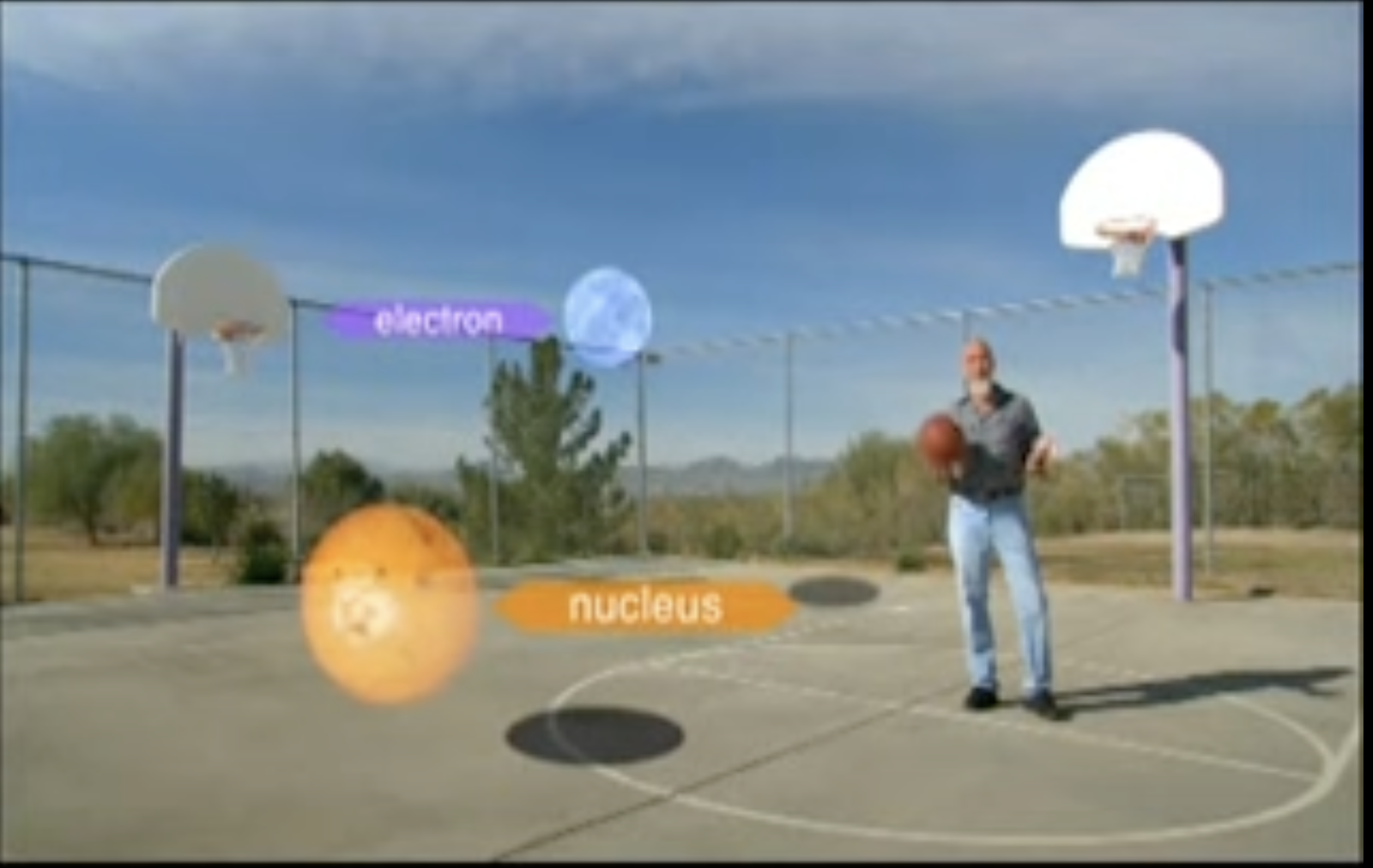
On Friday I saw the panel “The Science of Consciousness – 30 Years On”, which in addition to giving a lot of credit to Stuart for the conference, also presented some interesting sociological observations. I really enjoyed the participants sharing pictures and memories of previous conferences. I suppose personally, the movie What The Bleep Do We Know? does some work to sort of fill-in the blanks of some of the vibes I’ve missed. Stuart appears in that movie, and I recall being quite impressed (as a 13 years old) with his quick way of speaking about things like the relative scale between a proton and an electron, and doing so with a background of a desert with cactuses. It really does some heavy lifting in terms of giving the mind a flavor of the vibe that was probably present, to an extent, in the 90s around these regions of the wavefunction.
I have to remind my mind that What The Bleep Do We Know? has nothing to do with the conference other than some scenes with Stuart Hameroff in Tucson (and perhaps Dean Radin). But looking at the pictures that people like Susan Blackmore and Christof Koch shared, I did get a bit of the same vibes. Namely, the cultural material of the 90s needed to be lubricated with brightly colored patterned shirts, soft electronic background music, and visuals attempting to depict the quantum level of reality to enable crossing the awkwardness energy barrier needed to be able to talk about consciousness without constantly blushing.
Speaking of the 90s, I was then fortunate enough to hang out with Ken Moji for a bit (see this 2005 article about him in Conscious Entities, a long-standing consciousness blog). He emphasized that the reason why he was able to start and lead a Qualia center at Sony is that he does a lot of other things that are very conventional as well, with multiple jobs spanning a number of disciplines. I suppose this somewhat confirms the view that, especially a couple decades ago, the only way to interest the public in consciousness research was to also deliver a lot of other conventional value at the same time. Of course I am betting on consciousness research producing the bulk of value in the long-term, though I recognize that immediate applications are hardly world-changing (beyond, of course, the use of straight-up high-end consciousness-altering compounds like MDMA and 5-MeO-DMT). Fortunately, the present seems far more receptive to the value of consciousness research at a broad, generational, cultural level. I think the world, and especially liberal West Coast culture, can digest serious attempts at consciousness exploration better than ever before. So the cautious and protective attitude of sticking to conventional epistemologies is far less needed now (to the extent, of course, that we can simultaneously guard away bad epistemologies).
The concurrent sessions of Friday that I attended were the whole set of “Neurostimulation to Understand the Mind”, with Sanjay Manchanda, Milan Pantovic, and Olivia Giguere / Matthew Hicks, chaired by Jay Sanguinetti. The most fascinating takeaway from this series to me was imaging of changes in the brain due to ultrasound stimulation, which could perhaps be used to determine if the intervention is likely to work on someone. They also shared some phenomenology that felt encouraging, where they can induce meditative-like states and behaviorally measure *desire to meditate* in people receiving the stimulation and were able to show that it significantly increases after ultrasound.
Later on Friday I spent some time looking at posters. I enjoyed having Enrique Chiu (who we have in common having gone to math olympiads representing Mexico, and in his case, gone as high as getting a Silver at the IMO in 2013) explain his theory of saliency maps in the state-space of consciousness. It was awesome to see a fellow mathy Mexican also give it a real go at tackling some of these hard problems. I likewise had a good time hearing Anderson Rodriguez’ electroacoustic theory of consciousness, with some interesting ideas about binding. This is also the time when Chris Percy presented his poster about systematically cataloging everything that a complete theory of consciousness will need to account for.
We ate some food (fries and a delicious veggie platter) and headed to the “Poetry Slam – Zombie Blues – No-End of Consciousness Party”. I brought a projector and coordinated with conference organizers to showcase the work of Symmetric Vision during the party. Me and Asher performed some “poetry” about consciousness vs. replicators and far future visions for consciousness. And then I personally partied too hard on the dance floor. I mean, the energy was really vibrant, and Stuart Hameroff was vibrating to the tune of microtubules, and DMT visuals were being projected on the big screen while a bunch of raving scientists of all ages waved colorful LED tubes in various grades of coordinated synchrony and decoherence. It’s one of those things that gets lodged in my mind as a new gestalt because my brain wouldn’t naturally believe those things can happen.
Saturday: Brain Organoids Day
On Saturday we watched the presentations on brain organoids. I am inspired to accelerate our work on figuring out the valence function for arbitrary biological neural networks, because by the looks of it these technologies will start to be deployed much sooner than anticipated. I think that stopping the use of brain organoids on a grand scale is not likely to be possible, but creating and locking in a computing paradigm that uses information-sensitive gradients of bliss might be possible. And I don’t think the window of opportunity here is very large. Perhaps a decade or two.
I was delighted to see Luca Turin’s work on anesthesia shown at Harmut Neven’s fascinating presentation about quantum mechanics and brain organoids. They will be trying out xenon isotopes soon, in the hopes of detecting the influence of quantum states of the anesthetic at the macroscopic level (whether fruit flies get anesthetized or not). This seems extremely important to test, so godspeed to them.
At this point I said goodbye to the crew and just had a couple final meetings, a brief podcast with Tam Hunt, followed by simply resting on a balcony for a several hours, taking note of the highlights of the conference and beginning to decompress (I’m mostly there, though I still have a couple megapascals to go).
I look forward to following up with many of the conference attendees and to continue working on our core research to present next time.
Till next time, Tucson Consciousness!
Infinite bliss!
Andrés 🙂
Hard-Core Salvia Vibes at the Tucson Airport ………..microtubules, man!
I am delighted to say that I will be delivering a workshop at Vibe Camp on Saturday the 17th of June:
Time: 7:00 PM – 9:00 PM
Location: Fire Circle
Title: Explore the State-Space of Consciousness with QRI – GET YOUR VIBE CAMP RECORDER (scent)
Description: Come to learn useful techniques to navigate the state-space of consciousness and pick up your VCR (Vibe Camp Recorder), a scent created in honor of this event, which will “record” this day forever in your memory. It is both pleasant and very distinctive, so that every time you smell it again you will vividly remember this day.
Thank you Hunter for designing this sticker. cf. Scents by QRI.
I will be arriving on the 19th of June and staying until the 26th. If you see me, don’t be shy! Please say hi.
#PS23 will be a moment in time. People will say “were you there?” It is a celebration of MAPS’ and the field’s accomplishments. #Excited
— Robin Carhart-Harris (@RCarhartHarris) June 7, 2023
We are going to host a QRI Meetup (cf. London, Valenciaga) on the 23rd or 24th, place TBD but near the conference. Please reach out if you want to volunteer. Stay tuned 🙂
PhilaDelic 2023
I will be delivering the following talk. Please come say hi!
Talk Abstract: The paradigm of Neural Annealing developed at the Qualia Research Institute (QRI) by Andrés Gómez Emilsson and Michael E. Johnson has a lot of explanatory power in the context of meditation and exotic states of consciousness such as those induced by psychedelic agents. The theory posits that there is a sense in which each state of consciousness has an associated level of energy, that there are specific energy sinks and sources in the nervous system, and that internal representations can be modified (and indeed “internal stress” released) with an appropriate heating and cooling schedule (aka. neural annealing). More recently, the theory has been enriched with “non-linear wave computing“, which might be capable of formalizing the concept of a (phenomenal) “vibe” for internal representations. Of special interest for the scientific community studying psychedelics and meditation is the recent QRI model of Neural Field Annealing, which combines Hebbian learning with Neural Annealing in order to explain why “highly annealed brains” can instantiate harmonic field behavior (such as the Jhanas). In this talk Andrés will provide an overview of the theory, share empirical findings, and discuss its testability based on its unique predictions.
The first time I discussed this approach to the boundary problem was for a presentation I was going to give at The Science of Consciousness 2020 (see: Qualia Computing at: TSC 2020, IPS 2020, unSCruz 2020, and Ephemerisle 2020). Alas, COVID happened. Now, thanks to the amazing Chris Percy, who joined QRI as a visiting scholar in 2022 and has been killing it as a collaborator, we have a thoroughly researched paper we can point to for this solution. Please send us feedback, cite it, and join the conversation. I believe this is one of the most significant contributions of QRI to philosophy of mind to date, and I hope high-quality engagement with it by physicists will only make it better. Thank you!
Abstract:
The boundary problem is related to the binding problem, part of a family of puzzles and phenomenal experiences that theories of consciousness (ToC) must either explain or eliminate. By comparison with the phenomenal binding problem, the boundary problem has received very little scholarly attention since first framed in detail by Rosengard in 1998, despite discussion by Chalmers in his widely cited 2016 work on the combination problem. However, any ToC that addresses the binding problem must also address the boundary problem. The binding problem asks how a unified first person perspective (1PP) can bind experiences across multiple physically distinct activities, whether billions of individual neurons firing or some other underlying phenomenon. To a first approximation, the boundary problem asks why we experience hard boundaries around those unified 1PPs and why the boundaries operate at their apparent spatiotemporal scale. We review recent discussion of the boundary problem, identifying several promising avenues but none that yet address all aspects of the problem. We set out five specific boundary problems to aid precision in future efforts. We also examine electromagnetic (EM) field theories in detail, given their previous success with the binding problem, and introduce a feature with the necessary characteristics to address the boundary problem at a conceptual level. Topological segmentation can, in principle, create exactly the hard boundaries desired, enclosing holistic, frame-invariant units capable of effecting downward causality. The conclusion outlines a programme for testing this concept, describing how it might also differentiate between competing EM ToCs.
QRI’s Consciousness Art Contests: Immerse, Innovate, and Inspire
Congratulations to the winners of QRI’s Art Contests! (contest announcement). Many thanks to all of the participants! You guys did really great! We will share all of the submissions for which the artists gave us permission to post in the near future; and in my opinion, there were simply too many amazing submissions that didn’t get a prize. We asked the community for awesome content, and they delivered!
In 2015 I wrote a blogpost in Qualia Computing titled "How to Secretly Communicate with People on LSD" where I introduced the idea of Psychedelic Cryptography.
This is the idea of using encoding schemes to hide messages by using the unique information processing advantages of… https://t.co/ECvIBO1IdH
— Andrés Gómez Emilsson (@algekalipso) June 2, 2023
Psychedelic Epistemology: The Think Tank Approach
I want to express gratitude to the panel of judges who diligently worked to evaluate each of the submissions along key dimensions in agreement with the contest specifications. To provide a little background about the panel, I should mention that since early 2020 QRI has been periodically hosting a “Phenomenology Club” by invitation only which gathers top scientists, philosophers, artists, meditators, and psychonauts. We usually choose a particular topic to discuss (e.g. comparing specific kinds of pains or pleasures), or otherwise interview someone with extensive experience with a particular facet of consciousness. For example, we once interviewed three people all of whom have tried taking 5-MeO-DMT in high doses every day for at least a month (i.e. Leo Gura isn’t the only one who has done this!). Really, we are able to do this because QRI has functioned as a beacon to attract highly experienced rational psychonauts and people seriously interested about the nature of consciousness since ~2017. It is out of this pool of world-class phenomenologists from which the panel of judges was formed. The panel includes people who have had over 1,000 high-dose experiences with LSD, psilocybin, DMT, 5-MeO-DMT, dissociatives, and a vast experience with meditative practices like the Jhanas and the process of insight. More so, in order to evaluate the PsyCrypto submission, some of the judges took psilocybin mushrooms and ayahuasca in a place where it is legal to do so. They all gathered to look at and discuss the submissions sober, then while on mushrooms, then sober again, then while on ayahuasca, and then sober again, and only then they were told about the “encryption key” the contestants submitted, and then they had yet another chance to look at them on either mushrooms or ayahuasca while knowing what it is that they were supposed to see. Most of the judges reported that the winning submissions did in fact work. So I am fairly confident that they do.
Similarly, for the Replications contest, the judges looked at the submissions before, during, and after mushrooms and ayahuasca so that they would have a very fresh impression of what these states are like in order to make accurate and technically precise judgements. Hence the detailed and object-level feedback for the top 10 submissions we were able to provide.
Importantly, at QRI we believe that this is the kind of “facing up to the empirical facts” of psychedelic states of consciousness that will actually advance the science of consciousness (aka. the “think tank approach“). This approach stands in stark contrast with, just to give an example: giving surveys to drug-naïve individuals (exclusion criteria incl. “lifetime prevalence of hallucinogens or MDMA use >20 times”) and having them blindly try either LSD or “candy flipping” [MDMA + LSD], a methodology that apparently allows you to conclude that MDMA doesn’t add anything noteworthy to the experience:
As a simple metaphor, imagine what would it take to make genuine progress in the science of electromagnetism. Would you approach the problem of figuring out how magnets work by putting people who have never seen magnets in a room to play with them for a few minutes and then asking them to fill out a questionnaire about their experience? Or… would it perhaps be more fruitful to gather a team of top mathematicians and visual artists who are very experienced magnet-users and allow them to play with them in any way they want, talk extensively with one another, and generate models, predictions, and visualizations of the phenomenon at hand? Which approach do you think would have better chances of arriving at a derivation of Maxwell’s Equations?
Well, you probably know my answer to that question, as QRI is “Psychedelic Think Tank Approach Central”, and we are damn proud of it 🙂
See: 5-MeO-DMT vs. N,N-DMT: The 9 Lenses (video), which is the sort of content that could only ever be generated with a Think Tank Approach to exotic states of consciousness.
It’s amazing to me how people feel, at times, in a hurry to try to explain away anything interesting involving psychedelics with catch-all ideas like “it’s just slower processing” or “it’s just the result of messing with feedback, nothing to see here” (cf. Need For Closure Scale).
The winners of the PsyCrypto contest used the lowest hanging fruit idea for how to do PsyCrypto. It’s amazing that it works, and it does show a computational advantage that isn’t present in normal states of consciousness. And this isn’t trivial! In fact tracers in general affect how you think at a deep level, allowing for thoughts and feelings that never overlap in everyday life to actually show up together in your experiential field at once. This lingering effect increases the internal cross-pollination of information categories in one’s mind. This allows you to make completely new connections in your mind; hooking tracers with field computing is computationally non-trivial. More on this later.
But… also there is a plethora of more sophisticated approaches. I won’t say much more right now, but essentially PsyCrypto can be done in entirely different ways than using tracers. This includes things like pareidolia, color gradients, and detection of movement. And it is these novel approaches that will show the even more interesting computational advantages to the state.
We ain’t seen nothing yet. We’re at the dawn of a new era 🙂
Now, in the wake of our announcement of the PsyCrypto winners, as I very much anticipated, I got an email from Vice:
Dear Andrés,
I’m a science reporter for VICE. Great to be in touch.I’m reaching out about the results of the Qualia Research Institute’s Psychedelic Cryptography Contest, which is a story we’d love to share with our readers.
I was hoping you could answer a few questions about the contest. I wrote them out here in case it’s more convenient to respond over email, but I’m also available for a phone or Zoom call anytime before 3:30pm Eastern Daylight Time today if that works better. Thanks so much and hope to connect.
1. First, I’d love to know what inspired this contest. What are you and your colleagues at QRI hoping to learn and achieve with the Psychedelic Cryptography Contest?
2. On the page announcing the results, you note that “only three submissions seemed to have any promising psychedelic cryptography effects” and that “to decode these pieces you do require a substantial level of tracers.” Why were these three submissions so much more effective than the rest of entries to this contest? Were they the only ones to use the “first classic PsyCrypto encoding method” that is described in your recent blog post, or was there another reason they stood out from the rest?
3. You note that these PsyCrypto experiments can open up new avenues of research in the fields of neuroscience and consciousness. What are some of the open questions in these fields that you think PsyCrypto encoding could help to constrain or resolve?
4. Last, do you and your colleagues QRI have any plans to build on these findings about PsyCrypto with other future studies, contests, or related projects?
Much appreciated! Best, XXXX
Sent June 6 at 9:05 AM
And my response:
Dear XXXX,
Awesome! Science reporter? It sounds like we’re getting an upgrade 🙂 QRI, that is. Mom, I’m on Vice!
Ok, forgive that. I’m just very stoked about the warm reception that PsyCrypto has been getting in the last couple of days. We made it into the front page of Hacker News and I’ve been receiving emails from neuroscientists and artists. […]. So I’m in a good mood 🙂
[…]
I’m more than happy to answer your questions here.
1. I first came up with the idea of PsyCrypto over 10 years ago, while in grad school. I was throwing into the air some spinning glow sticks in the darkness and noticing the patterns that would arise from their trajectory in space. I realized that the lighting conditions were ideal for me to actually make sense of their movement, and wondered if it would be in fact easier to see that path while on psychedelics, given their well-known tracer effects. I immediately coded up some experiments to hide letters using that idea and gave the code to some friends, who then reported some mild but noticeable improved ability to read them while on LSD. After that, I brainstormed a number of alternative encoding methods, coined the term Psychedelic Cryptography, and a couple of years later wrote the Qualia Computing article you saw.
Now, this didn’t happen in a vacuum. Already in 2011 I was a fan of David Pearce and his philosophy of mind (see physicalism.com). In essence, his view is that consciousness evolved because it has information processing advantages. In particular, phenomenal binding, he believes, is not a classical phenomenon. It is in fact enormously computationally beneficial, as we can learn from disorders of consciousness where binding partially breaks down.
So even then I was actively in the lookout for ways to demonstrate how consciousness actually confers an information processing advantage. And psychedelics, to me, felt like very fertile territory to explore this idea. In essence, people have reported all sorts of information processing benefits from psychedelics (e.g. the classic study of Harman and Fadiman of psychedelics for problem solving). But this is still controversial, so to me PsyCrypto is a way to show the undeniable benefits (and tradeoffs!) in terms of information processing that different states of consciousness confer.
The more PsyCrypto encoding schemes are identified and developed, the more this research direction is advanced. It is the emerging field of “Qualia Computing”. Namely, the study of the ways in which consciousness is computationally non-trivial. 🙂
We believe that the contest furthers this mission, and that opening up the project to a broader audience, with prizes and recognition for winning, can drastically accelerate this research direction.
2. The top three submissions were the only ones that worked at all according to our team of expect phenomenologists. They tried really, really hard to find messages in every submission while on mushrooms and ayahuasca (at places where these substances are perfectly legal) and none of the other submissions had anything worth commenting on (sorry!). I think many people misunderstood the task, tried something random without checking if it works first, or simply crossed their fingers and hoped.that their images would look different enough on psychedelics to contain new and meaningful information. But alas, no. Only the three winners had anything resembling PsyCrypto in them. And to top it off, they were also very aesthetically pleasing. So they are, in my mind, real rockstars 🙂
I do expect a dramatic improvement in the quality of submissions next time we run this contest, though.
Very importantly, based on recent work at QRI, I am convinced that there are at least 3-4 completely new and mind-blowing ways to achieve PsyCrypto that do not use tracers at all. The tracers are, in a way, the trivial case. The new PsyCrypto encoding schemes are… Far more surprising and non-trivial. We will publish more information about them in the near future.
3. Yes, absolutely. In essence, I believe that novel PsyCrypto encoding schemes are a window into the actual information processing algorithms of the visual system. At the risk of sounding fringe, I am not impressed with the current mainstream neuroscience models of how psychedelics work or how they alter visual perception. Yes, one can see tunnels and 2D symmetrical tessellations while on psychedelics. But actually… One can *also* experience hyperbolic honeycombs, 4D projective transformations, and fast spatiotemporal Fourier transforms of non-linear resonance. I am sorry, but no current neuroscientific theory *predicts* this. So we are currently in what David Pearce calls the pre-Galilean era for theories of consciousness. Like the (apocryphal) story of the priests not wanting to look through the telescope of Galileo because “the Bible already tells you the truth about the heavens”, similarly right now most theories of how the visual system work are not taking into account the facts of what happens on, say, DMT. Don’t ever let the theory dictate the facts! Instead, let the facts dictate the theory (see: my presentation about psychedelic epistemology).
Therefore we think that by developing encryption schemes that use *phenomenological facts* such as hyperbolic geometry on DMT (https://youtu.be/loCBvaj4eSg) we will radically transform the conversation about how consciousness works and what its information processing properties are. Once you show that those geometries can be used for information processing, and that humans in the right state of consciousness display such advantages, then it becomes undeniable that they are in fact using such exotic geometry for computation. I believe this will set the trajectory of the history of consciousness in very unexpected ways. Indeed, superintelligence won’t be achieved with AI, but with consciousness engineering.
4. Yes. Now, please note that PsyCrypto and in fact psychedelic phenomenology research is only a part of what the Qualia Research Institute does. We have serious work in philosophy of mind, ethics, valence, neurotechnology, and neuroscience, to name a few. We are extremely prolific given our shoestring budget, tiny number of members, and relatively low profile in academia. But I am confident that as we keep producing world class outputs in all of these fields, QRI will become far more influential and mainstream 🙂
Ultimately, my mission is to prevent all future suffering (see my TEDx talk) and figure out how to enable all sentient beings to experience long-term sustainable blissful states at will. This mission is enormously ambitious, but hey, that’s what I want to do with this one life I have. And so is the mission of the other members of QRI. Let’s get to work! 🙂
Thank you! And please let me know if I can clarify anything.
Infinite bliss!
Sent via email June 6 at 4:30PM
And given this, I really thought that the resulting Vice post was actually really stellar. Thank you! 🙂
We titled the series Qualia Mastery – Building Your Toolkit for Navigating the State-Space of Consciousness.
Qualia Mastery, a concept I introduced in a review of a Jhana meditation retreat, is, in a nutshell, the self-organizing vector that cultivates the tools and practices needed to achieve the following three goals:
1) Explore the state-space of consciousness because you want to know it for yourself
2) Study it from many points of view because you want to understand it intellectually at a deep level
3) Intend to apply it for the benefit of all beings
May this be of benefit to you and all sentient beings! And also, have fun!
We are excited to announce the release of our first line of Qualia Research Institute scents, “Magical Creatures”. This line explores the complex and often puzzling interactions that exist in the state-space of olfaction, highlighting the exotic and unique qualities that can emerge in this space.
“Bearing your intentions in the back of your mind has all kinds of effects in navigating your practice, without you even being conscious of it. It’s a powerful thing. Intentions are extremely powerful things. Intentions create our worlds. And that’s not hyperbole.”
– Rob Burbea, in Practicing the Jhanas
Vimalakīrti then asked the bodhisattvas from the Host of Fragrances [world], “How does Accumulation of Fragrances Tathāgata explain the Dharma?”
Those bodhisattvas said, “In our land the Tathāgata* explains [the Dharma] without words. He simply uses the host of fragrances to make the gods and humans enter into the practice of the Vinaya. The bodhisattvas each sit beneath fragrant trees, smelling such wondrous fragrances, from which they attain the ‘samādhi of the repository of all virtues.’ Those who attain this samādhi all become replete in the merits of the bodhisattva.”
– Chapter X – The Buddha Accumulation Of Fragrances
[*Tathāgata is an honorable name for the Buddha of a realm.]
In his 2019 Jhana retreat lectures, Rob Burbea explains that the intention you use as your source of energy, your reserve, your approach, and your guide to meditation has an enormous influence on what unfolds and what arises during a retreat.
If you practice Jhana meditation to be more calm, or to reduce stress, or to tick a box of “having done a Jhana retreat”, or because someone really likes the teacher and recommended it to you, or as an instrumental stepping stone to then use for insight practices, or anything else that is not open to the mystery of the Jhanas and has the flexibility and responsivity to what comes up naturally out of them, then many of the deepest and most worthwhile realms of experience this practice has to offer will simply not unfold.
Similarly, approaching an ayahuasca session with the intention of healing a particular relationship, or experiencing a mystical sense about a specific spiritual tradition, or for the sake of neurogenesis, or anything else with a predetermined target, will entail that some things will not unfold.
The approach, the intentions, and the desires that fuel a particular exploration of consciousness will determine the limits of what will unfold from it. This insight is an important conceptual background to understand the exploration of consciousness we are pursuing at QRI. To truly get the most out of experiencing our scents, we want to think of it in terms of what we call the cultivation of Qualia Mastery.
Qualia Mastery consists of three core intentions that work in the background during any exploration of consciousness:
It’s for the Benefit of Sentient Beings: The exploration intends to benefit all sentient beings. The explorer should not do anything damaging, which may limit future explorations. We should let our efforts be guided by compassion and sympathetic joy in addition to curiosity and creativity. And the goal should be altruistic: we are seeking solutions to the problem of suffering in all its guises, and we believe that understanding consciousness is essential for achieving this.
To Develop an Intellectual Understanding: Unlike many spiritual traditions which advocate for a strictly non-intellectual understanding of consciousness, Qualia Mastery fully embraces the value, importance, and necessity of intellectual understanding. This embrace entails approaching the exploration of consciousness with epistemological optimism. Yes, with enough dedication, cleverness, and knowledge, it is possible to eff the ineffable. Or, at the very least, not trying to do so will surely make it impossible!
To Experience the Mystery of Consciousness Directly: In other words, an essential aspect of Qualia Mastery involves the intention to acquire the capacity to instantiate, navigate, and utilize any and every possible state of consciousness. It is not enough to know that the 6th Jhana exists intellectually; we want to experience it ourselves! Likewise, we want to develop the ability to abide in all shades of wonder, color, taste, and so on.
With Qualia Mastery in mind, you will get much more out of exploring our scents (and any other scent you may encounter on your own!). Don’t let your preconcieved sense of what scents are (and what they are for) limit the way you approach them. They are disclosing hidden properties of consciousness! Drink and delight in experiencing the wonder of the unknown, and join us in developing an intimate and unmediated relationship with this most outstanding mystery.
Importantly, please do not think of these scents as perfumes for two reasons. First, that way of perceiving them will be limiting. It comes with a large set of cultural imports and expectations (cf. functional fixedness). Instead, these scents are qualia research tools: they are molecular compositions meant to disclose varieties of qualia and to allow you to engage in an intimate and unmediated way with the mystery of consciousness. And second, these scents are not intended as skin scents. The makeup of these scents is a mixture of common essential oils and perfume ingredients. Their relative proportions do not adhere to IFRA guidelines, which would enable us to sell them as proper perfumes intended to be used on one’s skin. Some of those regulations restrict the range of qualia accessible. Although clever perfumist tricks can, in principle, be used to deliver the same qualia while adhering closely to the guidelines. However, as a non-profit with a limited budget, this is something we have yet to invest in doing (but we may invest in the future).
What is this line of scents about? And what is the aesthetic generator behind it?
Color is the quintessential example used to illustrate the concept of qualia. The state-space of color qualia is rather simple1 . It consists of three orthogonal dimensions: the red-green axis, the yellow-blue axis, and the white-black axis. Every shade of color can be found as a coordinate in this three-dimensional space.
The QRI logo illustrates two of the three dimensions of color qualia.
Albeit controversial in some circles, fundamental properties of this qualia space can be understood experientially by anyone who pays close attention. For example, orange, purple, yellow-green, and green-blue are all secondary color qualia. Orange is, in some sense, both yellow-like and red-like; it isn’t a “pure” color quale. A fair number of phenomenal puzzles can be formulated with color qualia alone. But at its core, the space is simple: linear, Euclidean, and 3-dimensional.
The state-space of scent qualia, however, isn’t that simple. Depending on who you ask, scent-space might have between 30 and 300 dimensions. It is our measured assessment, however, that seeking a Euclidean space for scents is, at best premature and, at worst, fundamentally misguided. Early research in the geometry of the state-space of scent suggests it is hyperbolic. But we at QRI would suggest it is also irregular, and its topology might be far from trivial.
Here are a couple of examples of what makes us think there may be many puzzling interactions that suggest the presence of irregularities in the state-space of olfaction:
There are many examples where two scents mixed give rise to new emergent “scent gestalts” that genuinely feel like more than the sum of their parts. As elaborated in the description of Eau de Cologne Vide, there are tactile scent effects (such as the coolness of mint and the prickly spiky trigeminal stimulation of aldehydes). Some scents modify other scents called “character impact”: two scents that refuse to “blend” with each other can be merged by adding the right character impact into the mix.
Thus, we may need new interpretative lenses to make sense of the state-space of scents. We encourage, cultivate, and celebrate creative explorations of this (and other) qualia spaces that provide new insights and perspectives. This is what Magical Creatures is all about.
Magical Creatures is a line of scents emphasizing the “special effects” found in the state-space of scents. Rather than thinking of scents as mere points in a Euclidean space, we think of them as exotic creatures inhabiting a complex and irregular space with hidden interstitial gems found in unique places like triple points and unexpected phase transitions.
As an intuition pump, perhaps think of the range of powers that Pokémon have. If you’ve only ever seen water, fire, ground, fighting, and grass Pokémon types, is it possible to derive from first principles that there is also such a thing as an electric type? What about psychic? And ghost? These seem like entirely new categories coming out of the blue rather than linear combinations out of a simple vector basis!
Likewise, the state-space of scents can, at times, seem more like an ecosystem of unique and exotic Magical Creatures than linear combinations of a few simple primitives. For example, if you were a perfume connoisseur but had never encountered minty scents of any sort, could you figure out from first principles that there ought to be such a thing as cooling scents? No way! Where did that come from?
Magical Creatures highlight some of the fascinating “special effects” that exist hidden in the state-space of scents. Think of it as a magical treasure trove of qualia secrets. Each of the scents we present has been carefully crafted to show a “special effect” in a clear and undeniable way:
Fearless: a scent designed for countering and extinguishing fear vibrations.
Dust Devil: a scent that showcases how scents can be mysteriously powdery.
Glacial Gumdrop: a scent that incorporates cooling and “gummy” qualities.
Frisson: A scent that can cause a subtle, strange, and rather remarkable synesthetic ASMR-like sensation.
Eau de Cologne Vide: a scent that explores character impact with no flavor, a celebration of emptiness.
Hedonium Shockwave: a scent that explores positive valence in its purest form – what would a rich scent with no negative features smell like? This is our best attempt.
Note that these are just the first six of this line of scents and that there might very well be more. We’ve come across many other rather unique effects, and in time we aim to share them.
Finally, it is worth pointing out that there are countless other ways to explore scent-space – Magical Creatures is a very generative and fun approach, but ultimately just one of many. Mapping, understanding, and utilizing the full-state space of scents is undoubtedly worthy of a lifetime of exploration. We invite you to join us in this creative pursuit and in cultivating Qualia Mastery in the olfactory domain.
[1] We are here following the well-known findings that dates back to the psychophysics work underpinning the CIELAB color space with an Euclidean metric for color difference. Admittedly this is hiding vast amounts of complexity, such as what goes on each kind of color blindness, how power spectrum distributions map onto qualia space, tetrachromatism, blue-yellow/red-green hybrids, and hypercolors. One thing at a time!
Open Fearless
Originally debuted at QRI’s Future of Consciousness Party on the 24th of June, 2022.
Fearless 3.0 is a scent optimized for expressing the reduction of common varieties of fear. Open Fearless is a slight improvement over Fearless 3.0. The term Open is intended to convey two meanings. First, it is an open-source formulation rather than a proprietary blend, drawing inspiration from the open-source cola movement (e.g. OpenCola). And second, it alludes to the concept of Open Individualism, the philosophical position about personal identity that says that we are all one universal consciousness, a single subject of experience experiencing itself through the universe (cf. The Goldilocks Zone of Oneness). Hence, Open Fearless is an open-source scent optimized for expressing the reduction of fear at the transpersonal level: not only the common animalistic variety, but it also tackles deeper forms of existential fear, such as the fear of being alone or the unpleasant suspicion that the universe is meaningless.
The scent combines the three most friendly and soft facets of scent-space we know of: sweetness, creaminess, and coolness. In Open Fearless, these are balanced using olfactory tricks that soften the phenomenal boundary and division between facets to give rise to a coherent scent gestalt that is intended to express happiness, freshness, and a care-free state of mind.
It is not without some degree of confusion that people react when one says that a scent is “powdery”. It doesn’t help that most people don’t have much experience with the powdery scent that is used as the quintessential example of powdery: violet (unless you grew up with Parma Violets). Alas, even when someone knows what violet smells like, the fact that it also has floral, sweet, and oily facets tends to make the qualia reference somewhat ambiguous. Common powdery scents you may be familiar with are cedarwood, sandalwood, cinnamon, talc, and some kinds of pear. Their phenomenology is a neighbor of the dry facet. Still, it has an additional quality: it creates the sensation of a dusty misty layer of fine particles whose grain size will vary depending on the precise scent. In early experiments, we determined that making a very powdery effect is not as easy as simply mixing a lot of powdery notes together: they have a habit of canceling each other out, perhaps not unlike at times mixing different kinds of powders can lead to caking and viscous consolidation.
Dust Devil combines a carefully mixed set of powdery scents that synergize with one another: violet, cedarwood, turmeric, and iso-e super. We use a dash of tangerine to give it an uplifting yet dry, citrusy spark. The result is a powerfully dusty tornado of drying and refining sensations. It’s great to create an Old West vibe characterized by tumbleweeds, whisky neat, pistol duels, droughts, and dust devils everywhere. Enjoy!
Glacial Gumdrop
Menthol can increase the threshold temperature of activation for cold receptors. In other words, it can trick neurons into thinking that the current ambient temperature is colder than it is. Now, Glacial Gumdrop does not have a single drop of menthol. It’s menthol-free! In a daring bit of self-aware and honest advertisement, we admit that this is akin to publicizing a carbonated drink sweetened with high-fructose corn syrup as sucrose-free. Yes, but! Glacial Gumdrop does not use menthol for cooling for the simple reason that in our experiments, it didn’t seem to perform as well as a cooling agent as a mixture of menthone, carvone, and wintergreen extract. The synergy we identified between these three “cooling alternatives” has desirable phenomenological properties that menthol alone does not. Since they “hit” different kinds of coolness effects, together, they pack a much bigger and more powerful punch.
Additionally, the shape of the envelope of the combination (cf. ADSR) is compatible with other aspects of the olfactory experience. Menthol tends to monopolize attention and anesthetize one’s sensitivity to other facets of scent; our proprietary blend leaves some gaps open for attention to interweave and incorporate anise, apple, and lotus nuances which for mysterious reasons make the scent “gummy” (akin to the synesthetic equivalent of munching a gummy bear, but with your olfactory bulb). What are example scents that have this “gummy bear” quality? Marigold, auranone, and some bergamots (e.g. H’ana’s) are good examples, but only Glacial Gumdrop blends this bouncy and fun gummy quality with coolness. This scent will surely surprise you and open your mind to qualia-space mysteries.
Frisson
Frisson is a scent formulation that plays with an unexpected olfactory effect we identified when exploring the space of powdery citruses (such as bergamot). When the scent facets of citrus, powdery, dry, and etheric are combined in the right proportions, the resulting gestalt can cause a subtle psychogenic shiver of a synesthetic nature: a mix of olfactory and tactile qualia with a subdermal quality reminiscent of the sound of rubbing sandpaper on wood. Some people describe it as the olfactory equivalent of ASMR and a cross between a hiss and musical frisson. This effect is achieved by combining large amounts of tangerine and bergamot, the most powdery citruses, and honeysuckle. The emergent gestalt brings about this effect like no other combination we have tried. Now the question arises: what is this good for? The answer is: for contemplating novel qualia varieties, of course!
Eau de Cologne Vide
A psychonaut once asked a DMT elf if they could tell them something they didn’t know about the state-space of scents. They were expecting some incredible download of information in the form of hyperbolic state-space representations and hyperstereoscopic synesthetic displays of qualia dynamics. Alas, nothing of the sort happened. Instead, the elf asked them: “Are you sure that scent is just one qualia variety?”. A riddle! After chewing on it for a while, they concluded that no, scent qualia seems to somehow blend and interweave at least three qualia varieties into one multifaceted experience:
Scents have “flavor” (ex. lemony, rosy, herbaly, woody, etc.).
They often have distinctly “tactile components” (ex. the literally cooling effect of mints, or the “prickly” trigeminal nerve stimulation of aldehydes).
Perhaps the most interesting and mysterious of all, they come with “character impact”. Namely, a distortion of spacetime, boundaries, and valence characteristics that modify whatever flavor and tactile elements one is experiencing.
Analogized to the auditory domain, we could say that “flavor” would correspond to the frequencies and rhythms one hears, such as a piano note, applause, or a child’s laugh. A “tactile component” would be akin to the haptic vibrations one feels in the body when listening to a powerful base or the prickly pinchy feeling in the ear of a screechy sound. And finally, the “character impact” would correspond to signal processing effects like reverb, echoes, spatial audio, and frequency filters. Character impact gives you a lot of control you may not know you had: with clever tricks, you can take the sound of two persons talking and, say, remove annoying high-pitch sounds, harmonize them, create the illusion of movement, or even “blend” them into a single voice with an appropriate amount of reverb. In other words, these signal processing effects allow you to “musicalize” audio which may, on its own, be of little aesthetic merit. Or in the culinary domain, Luca Turin describes “character impact” in the following way. Given tomato soup, the tomato would be the “flavor,” whereas the creaminess would be the character impact. And according to him, in fact, “the money is in making a new cream, not in finding yet another tomato”. Early in our investigations, we discovered that incompatible scents could be “blended into a single gestalt” with the clever use of character impact. Say, a mixture of alpha-pinene, citral, and vanillin tends to “flicker” between kinds of scents in a chaotic fashion (what we call “multiphasic scents”). But if you add linalool or ambroxan, they will mysteriously “blend” into a unified scent gestalt.
Now, ambers and musks are the most common “character impact” scents, with flagship examples like ambroxan, iso e super, galaxolide, and habanolide, all of which are subtle, low in pitch, and “transparent”. The idea of creating a perfume around these isn’t new: Molecule 01 Escentric Molecules (iso e super isomer mix) and Molecule 02 Escentric Molecules (ambroxan) were a big success in the 2000s despite their niche status. By all means, they are more of a work of conceptual art than perfumery in any recognizable form. Beyond the niche, there are also examples of mega-hit mainstream fragrances with enormous amounts of character impact relative to flavors, such as the impossibly cleanCK One (hedione, iso e super, galaxolide) and the masterfully musky Le Male by JPG (galaxolide, tonalide).
Such perfumes would have you believe that character impact is always a base note; they largely play with enveloping and calming low-frequency scents. But our work at QRI has convinced us that character impact effects are also present in the heart and top notes. Hence, Eau de Cologne Vide explores fresh, electric, high-voltage character impact effects fit for a wake-me-up cologne (citruses are typically high in pitch and mostly top notes).
The name follows the age-old tradition of perfumes named after mystical concepts such as Nirvana, Eternity, and Truth (“If we were to discover the biomolecular signature of pleasure, its name would surely find its way into the brand of a toothpaste.” – David Pearce). Eau de Cologne Vide packs a powerful punch of such character-impact elements to decorate… “nothing”. Emptiness beautified. Therefore, the impression is of intense salience, but you are left wondering, “what was that about?”. Eau de Cologne Vide is a way of saying “much ado about nothing!”
How is this achieved? Eau de Cologne Vide combines the ethereal alcoholic reverb-ey effect of lavender (linalool), the incredible anodyne softness of rose (phenylethyl alcohol), the dry astringent effect of bergamot (terpinene), the intensely aromatic, stimulating and borderline citrusy effect of spices like thyme and dill (p-cymene), the warming, sweet and spicy, balsamic, “oriental” and “rindy” note typical of bisabol aka. “opoponax” (bisabolene, also found in oregano and cubeb), and fructone (nigh flavorless sweetness). It brings these notes into coherence with the classic aromatic fougere note of aggressive freshness of scents like Drakkar Noir (dihydromyrcenol), and a nanodose of the sour, soapy, and always reliable agrumen aldehyde light.
What does Eau de Cologne Vide smell like? Transparent, sweet, soft, dank, intense, ethereal, slightly sour, mysterious, and yet… flavorless. Eau de Cologne Vide intensifies, vivifies, enriches, and thickens the experience of other scents. But as with Buddhist Emptiness of the highest grade, it’s best experienced by itself.
Hedonium Shockwave
Hedonium is matter and energy optimized for pure bliss. It is not a shallow sense of well-being but the most profound sense of holistic well-being possible within the laws of physics. Cosmic awe, deep wellness, and rapturous joys are all human emotions and are merely low-dimensional shadows of the real deal. A Hedonium Shockwave is a hypothetical phase transition traveling near the speed of light which changes the very composition of matter and energy by turning everything it touches into Hedonium. Classical Utilitarianism, in its typical formulation, might hold the latent implication that not only would the instantiation of a Hedonium Shockwave be desirable, but we are morally obliged to bring it into existence. QRI’s ethical theories are agnostic, but Hedonium plays an important role in its memetic landscape. Namely, as a theoretical entity that embodies the essence of pure positive valence, it challenges us to consider the nature of value in and of itself and its possible “physical compilation”.
Hedonium Shockwave is a scent developed in-house to illustrate this anticipated phase transition in consciousness. The primary “olfactory idea” of Hedonium Shockwave is the synergistic combination of violet, mint, and an accord of pear and honeysuckle. This combination expresses a powerful yet anodyne uplifting mood grounded in a qualia landscape devoid of negative elements—pure olfactory pleasure at last.
Review of Hedonium Shockwave: It is, overall, incredibly smooth. My first thought is that it feels like a combination of Metta and Mudita, which are two different Brahmavihara meditations where it’s very soft and expansive for me. It feels very golden and pink. It’s very soft, but it’s a bit sharper, then a really soft sharp. It’s like a combination of metta and cocaine. It hits you, but in a loving way. It doesn’t hold back, but it hits you in a loving way. It’s almost like being woken up. “Wake up the world is great!” “Wake up there’s something important!” but a soft, loving wake-up!
A Universal Plot – Consciousness vs. Pure Replicators: Gene Servants or Blissful Autopoietic Beings? (link)
What is the point of it all? What does it all mean?
In this talk I explain how we can meaningfully address these questions with the frame of “consciousness vs. pure replicators”. This framework allows us to re-interpret and unify all previous “scales of moral/conceptual development”. In turn, it makes solving disagreements in a principled way possible.
“Consciousness vs. Pure Replicators” is what I call “the universal plot of reality”; it is the highest level of narrative that determines what is “relevant to the plot” at any given point in time.
Whether consciousness succeeds at gaining control of its destiny and embarks on a collective journey of self-authorship, or whether we all end up being subservient cogs to a self-replicating mega-system whose one and only utility function is to self-perpetuate, is truly up in the air right now. So what can we do to support the interests of consciousness, then?
To aid consciousness we need more than good intentions (though those are still a key ingredient): I discuss how game theoretical considerations entail that in order for consciousness to succeed we will need to judiciously ally with specific replicator strategies. Being a “cooperatebot” towards anyone who claims to care about consciousness makes you liable to being resource-pumped. You need to verify that something makes sense also from the point of view of game theory; without a way to verify the ultimate values of others, coordinating with them at this level becomes extremely challenging. I suggest that a mature technology of intelligent bliss with objectively verifiable effects would be a game-changer. Once you’ve seen “it” (i.e. optimized bliss consciousness) you join everyone else in self-organizing around it.
If the world is to be taken over by something that cares about the wellbeing of consciousness, how this taking over process looks like may blindside us all. The power of “universal love” conquering all obstacles and creating a paradise for all may not be a New Age fantasy after all. Given the appropriate technology, it may turn out to be a live option…
Topics Covered: Kegan Levels of Development, Spiral Dynamics, Model of Hierarchical Complexity, Meta-Modernism, Qualia Formalism, Valence Structuralism, Pleasure Principle, Open Individualism, Universal Darwinism, Battle Between Good and Evil, Balance Between Good and Evil, Gradients of Wisdom, Consciousness vs. Pure Replicators, Wild Animal Suffering, Mistrusting DMT Entities, Super-Cooperator Cluster, Metta/Lovingkindness, State-Dependent Sexuality, Wireheading, Cooperation Technology, Game-Changing as a Strategy.
~Suggestion: Play a music album you like in the background while listening to this talk.~
How do we find the “gems” hidden in the state-space of consciousness?
In this talk I articulate why it is very likely that there is a huge number of undiscovered states of consciousness that are completely unique, irreducible, and wholistically “special”.
In metallurgy, a high-entropy alloy (HEA) is a mixture of five or more metals in high proportions, often giving rise to a single phase. Some HEAs have been found to have extremely desirable properties from the point of view of material science (such as being the best at both yield-strength and ultimate tensile strength at the same time). Given the huge space of possible mixtures of metals, finding these carefully balanced mixtures with unique emergent properties is both a science and an art. It calls for intelligent strategies to explore the state-space of possible alloys!
I suggest that in the realm of consciousness there are also states that would be appropriate to describe as “high entropy alloys of experience”. I go into how this framework can help us understand unique scents*. We then explore how the receptor affinity profiles of drugs, drug cocktails, and drug schedules can give rise to unique HEA-like states of mind. I then also discuss how memeplexes have various degrees of total complexity, and how this makes some more receptive to dealing with complexity in the world than others. I offer that I really appreciate the HEA-like memeplexes that get expressed in places like EAGlobal, The Science of Consciousness, and Psychedelic Science conferences. I conclude by reflecting on how a “productive mindset” or mood optimized for a specific intellectual job is likely to be HEA-like because it requires the careful balance between many different facets of the mind.
Topics you will master after seeing this talk for even just one time**: High Entropy Alloys, Bronze and Iron Age, Equiatomic Alloys, People Clusters in Parties, Scents, Sexual Orientation, Gay Fragrances, Memeplexes and Mindsets, Vibe of Groups, Energy Parameter, Frozen Food, Crystallites, Space Groups, The Science of Consciousness, EAGlobal, Psychedelic Science, Search Heuristics, DMT as “Competing Clusters of Synchrony”, Birthday Cake Flavor, Cellular Automata, Optimal Mood for Productivity.
*(HEAs: Le Male by JPG, Bleu de Chanel, Mitsouko by Guerlain. Non-HEAs: Tommy Girl by Tommy Hilfiger, Habit Rouge by Guerlain, Amazing Grace Ballet Rose by Philosophy)
If the goal is to avoid the formation of such phases, simply mixing together five or more elements in near-equiatomic concentrations is unlikely to be a useful approach. Even multi-component alloys that are initially single phase after solidification tend to separate into multiple metallic and intermetallic phases when annealed at intermediate temperatures.
I estimate that I have experienced between 100 and 200 sleep paralysis, many of which were lucid (meaning that I knew I was experiencing a sleep paralysis). In this video I articulate what I have learned from all of these experiences, share some particularly strange stories, and give you tips for how to get out of a sleep paralysis if you find yourself trapped in one.
Topics Covered: Hyperbolic curvature in pasta, dream music, phenomenal viscosity, DXM, imperfect sensory gating, “radio is playing” hallucinations, Dredg – Album: El Cielo · Song: Scissor Lock, taking psychedelics while dreaming, lucid dreams, dopaminergics, controlling the powerful vibrations of sleep paralysis, recursive depth, false awakenings, whimpering, noting meditation, and techniques for escaping a sleep paralysis.
Niacinamide helps in sleep enhancement as evidenced in a 3-week study of six subjects with normal sleep patterns and two with insomnia using electroencephalograms, electromyograms, and electrooculograms to evaluate sleep patterns at baseline and after niacinamide treatment. There was a significant increase in REM sleep in all normal-sleeping subjects, but the two subjects with moderate to severe insomnia experienced significant increases in REM sleep by the third week; awake time was also significantly decreased (Robinson et al., 1977).
Free-Wheeling Hallucinations: Be the Free-Willed God of Your Inner World-Simulation (link)
Once you realize that you inhabit a world-simulation sustained by your neuronal soil it is natural to ask: why can’t I control its contents? Why can’t I make myself hallucinate whatever I want?
It can be frustrating to realize one lacks control over something that should be truly “ours” – our raw unmediated experience! We could, and perhaps should, be the rightful masters of our very own conscious experience, yet for the most part we remain powerless to explore its possible states at will.
In this video I discuss the existence of some states of consciousness in which you do own and control the contents of your experience. Think of it as acquiring an “experience editor”: an interface with your experience that enables you to modify it at will while keeping the modifications stable.
A lucid dream would be an example of a somewhat fluid and unreliable free-wheeling hallucination. The free-wheeling hallucinations I describe here are much more general, stable, reliable, intense, and hedonic than lucid dreams. More so, to spin up free-wheeling hallucinations could amount to far more than being just a fun activity. Doing so may come to be an extremely valuable tool for a new paradigm of consciousness research! All of the parameters of experience that remain outside of our control under normal circumstances can be studied (both from a first and third person point of view) while in a free-wheeling hallucination! One can conduct a sort of “qualia chemistry” and repeat experiments to get reliable accounts of the behavior of consciousness under exotic (yet controlled) circumstances. Artifacts such as the valence-symmetry correspondance can be inspected in detail. Ultimately, this paradigm may allow us to chart the state-space of consciousness in terms of “edit distances” or “sequence of symmetry breaking operations” away from “formless consciousness”.
I then go on to explain that “knowing everything about your world-simulation” does not entail that the experience will be boring. Hedonic tone can be dissociated from novelty, but we don’t even need to go that far. It suffices to point out that you can set up the parameters of your world-simulation so that it unfolds in a chaotic way, and thus is impossible to predict. Additionally, you cannot really predict what you yourself will think in the future, so the whole setup can continue to generate novelty almost indefinitely (up to one’s storage capacity/size of the state-space/heat death of the universe).
I conclude by exercising my free will.
Topics Covered: Energy Parameter, Predictive Coding, Free Energy Principle, Kolmogorov Complexity of Experience, Principia Qualia, Super Free Will, Quality Trip Reports, DXM + THC Combo, LSD + Ketamine + THC Combo, “Experience Editors”, Qualia Critters, Fire Kasina, Color Control, Qualia Chemistry, Agenthood, Coumarin, Chamomile Tea.
Chamomile consists of several ingredients including coumarin, glycoside, herniarin, flavonoid, farnesol, nerolidol and germacranolide. Despite the presence of coumarin, as chamomile’s effect on the coagulation system has not yet been studied, it is unknown if a clinically significant drug-herb interaction exists with antiplatelet/anticoagulant drugs. However, until more information is available, it is not recommended to use these substances concurrently.
Why Does Anything Exist? Zero Ontology, Physical Information, and Pure Awareness (link)
Why is there something rather than nothing? In this video I take this question very seriously and approach it with optimism. I say (a) this is a meaningful and valid question, and (b) it has a real and satisfying answer. The overall explanation space I explore is that of David Pearce’s Zero Ontology, which postulates that the multiverse is implied by the preservation of “zero information”.
In order to understand Zero Ontology we need to do some conceptual groundwork. So I walk the listener (you, were you to accept this journey) through several concepts that make the question go from “impossible to answer” or even “meaningless” to something that at least conceivably seems possible to solve.
First, we need to sidesteps the common tropes of our habitual modes of thinking, such as expecting answers to come in the form of “causal explanations”. No matter how you look at it, whether the universe extends back forever or not, a causal explanation for the origin of the universe is logically impossible to derive. Instead, we have to think in a radically different way, which is by way of frameworks for implication rather than causation. This opens us up to the possibility that exotic modes of thinking capable of representing what is entailed by “nothing” will show in turn that “something” follows from it. This helps us make sense of Pearce’s argument: the “nothing” we are looking for is not the “common sense” view of the term, but rather a more refined post-theoretical concept that is ill-fitted to the human mind for the time being.
In particular, Pearce focuses on how “no information” may be “what nothing is”. Thus, Zero Ontology attempts to formalize the “fact of inexistence” by reconceptualizing information as “ruling out possibilities”. Based on this alternate concept we see that math, physics, and phenomenology share the common thread of being possible to “construct out of nothing”. In math, the empty set can be used to derive all of arithmetic. In physics the Standard Model is a surprisingly simple theory that can be derived from first principles by imposing the “need for symmetry”. The total energy, charge, momentum, etc. of the universe is zero! And in phenomenology, we encounter a lot of cases where apparently all of the possible flavors of a qualia variety seem to “cancel out” into “pure being” or “raw awareness”. The simplest example is how experiencing “all phenomenal colors at once” (a kind of rainbow effect, but including magenta) seems to be interchangeable with “colorless phenomenal light”.
I tie all of this together and talk about how Zero Ontology allows us to reconceptualize “God/Being” as “unconstrained reality” or “boundarylessness”. I discuss how we could perhaps even probe Zero Ontology empirically in a direct way if we were to train enough physicists, mathematicians, philosophers, computer scientists, etc. to go into high Jhana or 5-MeO-DMT states and then quantify the properties of the fundamental fields implementing these experiences.
I conclude with an analogy to Borges’ Library of Babel (or a quantum version thereof) and why we may be in it. In fact, “be it”.
David Pearce: “A theory that explains everything explains nothing”, protests the critic of Everettian QM. To which we may reply, rather tentatively: yes, precisely.
Topics Covered: The Concept of Nothing, Three Characteristics, Illusion, Limitations of the Medium of Thought, Amusing Ourselves to Death, Redefining Information, Empty Set Arithmetic, Preserved Quantities of Physics, Symmetry and Noether’s Theorem, QFT, Path Integrals, Jhanas, 5-MeO-DMT, Symmetries in Qualia, Quantum Library of Babel, Black Hole Information Paradox.
The Tyranny of the Intentional Object: Universal Addictions, Meaning Abuse, and Denied Self-Insights (link)
What is it that we truly want? Why do so many people believe that meaning is better than happiness?
In this talk I discuss what we call “the tyranny of the intentional object”, which refers to the tendency for the mind to believe that “what it wants” is semantically meaningful experiences. In reality, what we want under the surface is to avoid negative valence and achieve sustainable positive valence states of consciousness.
I explain that evolution has “hooked us” on particular sources of pleasure in such a way that this is not introspectively accessible to us. We often need specific semantic content to work as a “key” for the “lock” of high-valence states of consciousness. I explain how we are all born chronic (endogenous) opioid addicts, and how our reward architecture is so coercive that we often fail to recognize this because thinking about it makes us feel bad (and thus ironically confirming the situation we are trying to be in denial about!).
I go on to provide my current thoughts on the nature of meaning. Beyond “sense and reference” we find that “felt-sense” is actually what meaning is “made of”. But not any kind of felt-sense. I posit that the felt-senses that we describe as richly meaningful tend to have the following properties: high levels of intention, coherence of attention field lines, a “field syntax”, and a high level of “potential to affect valence”. Valence and meaning are deeply connected but are not identical: we can find corner cases of high-valence but meaningless states of mind and vice versa (though they rare).
Meaning is no less liable to be “abused” than hard drugs: we often find ourselves scratching the bottom of the barrel of our meaning-making structures when things go wrong. I advise against doing this, and instead endorse the use of equanimity when faced with the absurd and Chapman’s “Meaningness” approach: to think of meaning as a gradient rather than in black and white terms. Do take advantage of opportunities for high levels of meaning, but do not rely on them and think they are universal. Indeed “meaning abuse” is a recipe for broken hearts and misguided idealistic solutions to problems that can be easily addressed pragmatically.
Finally, I steelman the importance of “high-dimensional valence” and explain why in turn usually pursuing meaning is indeed much better than shallow pleasure.
[T]he heroin addict will do anything to get another fix: lie, cheat, steal and worse. Natural selection has stumbled on and harnessed Nature’s own version of heroin. Our endogenous opioid system ensures that biological life behaves in callous but genetically adaptive ways. […] All complex animal life is “paid” in junk: the addictive dribble of opioids in our hedonic hotspots released when we act in ways that tend to maximise the inclusive fitness of our genes in the environment of evolutionary adaptedness (EEA). The pleasure-pain axis is coercive. Barring self-deliverance, we can’t opt out. Our “reward” circuitry hardwires opioid addiction and the complex rationalisations it spawns. Human history confirms we’ll do anything to obtain more opioids to feed our habit. The mesolimbic dopamine system enables us to anticipate our next fix and act accordingly: an insidious interplay of “wanting” and “liking”. We enslave and kill billions of sentient beings from other species to gratify our cravings. We feed the corpses of our victims to our offspring. So the vicious cycle of abuse continues.
A Language for Psychedelic Experiences: Algorithmic Reductions, Field Operators, and Dimensionality (link)
Psychedelic experiences are notoriously difficult to describe. But are they truly ineffable, or do we simply lack the words, syntax, and grammar to articulate them? Optimistically, groups who take seriously the exploration of exotic states of consciousness could create a common ground of semantic primitives to be independently verified and used as the building blocks of a language for the “psychedelic medium of thought”.
In this video I present some ideas for a possible “psychedelic language” based on QRI paradigms and recent experience reports. I go over the article “Algorithmic Reduction of Psychedelic States” and the value of breaking the psychedelic experience in terms of a minimal set of “basic effects” whose stacking and composition gives rise to the wild zoo of effects one observes. I point out that algorithmic reductions can have explanatory power even if they do not provide a clear answer about the nature of the substrate of experience. Importantly, since I wrote that article we have developed a far higher-resolution understanding of exotic states of consciousness:
We suggest that a remarkably fruitful strategy for pointing at a whole family of psychedelic effects comes in the form of “field operators” that change the qualitative properties of our experiential fields. I provide a detailed description of what we call the “world-sheet” of experience and how it encodes emotional and semantic content in its very structure. The world-sheet can have tension, relaxation, different types of resonance and buzzing entrainment, twisting, curling, divergence (with vortices and anti-vortices in the attention field-lines), dissonance, consonance, noise, release, curvature, holographic properties, and dimensionality. I explain that in a psychedelic state, you explore higher up regions in the “Hamiltonian of the field”, meaning that you instantiate field configurations with higher levels of energy. There, we observer interesting trade-offs between the hyperbolicity of the field and its dimensionality. It can instantiate fractals of many sorts (in polar, cartesian, and other coordinate systems) by multi-scale entrainment. Time loops and moments of eternity result from this process iterated over all sensory modalities. The field contains meta-data implicitly encoded in its periphery which you can use for tacit information processing. Semantic content and preferences are encoded in terms of the patterns of attraction and repulsion of the attention-field lines. And so much more (watch the whole video for the entire story).
I conclude by saying that a steady meditation practice can be highly synergistic with psychedelics. Metta/loving-kindness can manifest in the form of smooth, coherent, high-dimensional, and consonant regions of the world-sheet and make the experience way more manageable, wholesome, and enriching. Equanimity, concentration, and sensory clarity are all synergistic with the state, and I posit that using “high-dimensionality” as the annealing target may accelerate the development of these traits in everyday life.
Please consider donating to QRI if you want to see this line of research make waves in academia and expand the Overtone Window for the science of consciousness. Funds will allow us to carry out key scientific experiments to validate models and develop technologies to reduce suffering at scale: https://www.qualiaresearchinstitute.org/donate
~Qualia of the Day: The Phenomenal Silence of Each Field Modality~
Befriending Utility Monsters: Being the Adult in the Room When Talking About the Hedonic Extremes (link)
In this episode I connect a broad variety of topics with the following common thread: “What does it mean to be the adult in the room when dealing with extremely valenced states of consciousness?” Essentially, a talk on Utility Monsters.
Concretely, what does it mean to be responsible and sensible when confronted with the fact that pain and pleasure follow a long tail distribution? When discussing ultra-painful or ultra-blissful experiences one needs to take off the glasses we use to reason about “room temperature consciousness” and put on glasses that actually take these states with the seriousness they deserve.
Topics discussed include: The partial 5HT3 antagonism of ginger juice, kidney stones from vitamin C supplementation, 2C-E nausea, phenibut withdrawal, akathisia as a remarkably common side effect of psychiatric medication (neuroleptics, benzos, and SSRIs), negative 5-MeO-DMT trips, the book “LSD and the Mind of the Universe”, turbulence and laminar flow in the “energy body”, being a “mom” at a festival, and more.
“Those taking a thousand milligrams or so of vitamin C a day may have a 1-in-300 chance of getting a kidney stone every year, instead of a 1-in-600 chance.” (source)
“This manuscript will advance the hypothesis that 5-HT7 directly mediates three specific dramatic mental effects of psychedelics: creative open-eyed Visuals, Ego-loss, and loss of contact with Reality (VER).” (Thomas S. Ray; source)
Mapping State-Spaces of Consciousness: The Neroli Neighborhood (link)
What would it be like to have a scent-based medium of thought, with grammar, generative syntax, clauses, subordinate clauses, field geometry, and intentionality? How do we go about exploring the full state-space of scents (or any other qualia variety)?
Topics Covered in this Video: The State-space of Consciousness, Mapping State-Spaces, David Pearce at Oxford, Qualia Enrichment Kits, Character Impact vs. Flavors, Linalool Variants, Clusters of Neroli Scents, Neroli in Perfumes, Neroli vs. Orange Blossom vs. Petigrain vs. Orange/Mandarin/Lemon/Lime, High-Entropy Alloys of Scent, Musks as Reverb and Brown Noise, “Neroli Reconstructions” (synthetic), Semi-synthetic Mixtures, Winner-Takes-All Dynamics in Qualia Spaces, Multi-Phasic Scents, and Non-Euclidean State-Spaces.
What is Time? Explaining Time-Loops, Moments of Eternity, Time Branching, Time Reversal, and More… (link)
What is (phenomenal) time?
The feeling of time passing is not the same as physical time.
Albert Einstein discovered that “Newtonian time” was a special case of physical time, since gravity, relativity, and the constancy of the speed of light entails that space, time, mass, and gravity are intimately connected. He, in a sense, discovered a generalization of our common-sense notion of physical time; a generalization which accounts for the effects of moving and accelerating frames of reference on the relative passage of time between observers. Physical time, it turns out, could manifest in many more (exotic) ways than was previously thought.
Likewise, we find that our everyday phenomenal time (i.e. the feeling of time passing) is a special case of a far more general set of possible time-like qualities of experience. In particular, in this video I discuss “exotic phenomenal time” experiences, which include oddities such as time-loops, moments of eternity, time branching, and time reversal. I then go on to explain these exotic phenomenal time experiences with a model we call the “pseudo-time arrow”, which involves implicit causality in the network of sensations we experience on each “moment of experience”. Thus we realize that phenomenal time is an incredibly general property! It turns out that we haven’t even scratched the surface of what’s possible here… it’s about time we do so.
Benzos: Why the Withdrawal is Worse than the High is Good (+ Flumazenil/NAD+ Anti-Tolerance Action) (link)
Most people have low-resolution models of how drug tolerance works. Folk theories that “what goes up must come down” and theories in the medical establishment about how you can “stabilize a patient on a dose” and expect optimal effects long term get in the way of actually looking at how tolerance works.
In this video I explain why benzo withdrawal is far worse than the high they give you is good.
Core arguments presented:
Benzos can treat anxiety, insomnia, palpitations, seizures, hallucinations, etc. If you use them to treat one of these symptoms, the rebound will nonetheless involve all of them.
Kindling – How long-term use leads to neural annealing of the “withdrawal neural patterns”.
Amnesia effects prevent you from remembering the good parts/only remembering the bad parts.
Neurotoxicity from long-term benzo use makes it harder for your brain to heal.
Arousal as a multiplier of consciousness: on benzos the “high” is low arousal and the withdrawal is high arousal (compared to stimulants where you at least will “sleep through the withdrawal”).
Tolerance still builds up even when you don’t have a “psychoactive dose” in your body – meaning that the extremely long half-life of clonazepam and diazepam and their metabolites (50h+) entails that you still develop long-term tolerance even with weekly or biweekly use!
I then go into how the (empirically false) common-sense view of drug tolerance is delaying promising research avenues, such as “anti-tolerance drugs” (see links below). In particular, NAD+ IV and Flumazenil seem to have large effect sizes for treating benzo withdrawals. I AM NOT CONFIDENT THAT THEY WORK, but I think it is silly to not look into them with our best science at this point. Clinical trials for NAD+ IV therapy for drug withdrawal are underway, and the research to date on flumazenil seems extremely promising. Please let me know if you have any experience using either of these two tools and whether you had success with them or not.
Note: These treatments may also generalize to other GABAergic drugs like gabapentin, alcohol, and phenibut (which also have horrible withdrawals, but are far shorter than benzo withdrawal).
Further readings:
Epileptic patients who have become tolerant to the anti-seizure effects of the benzodiazepine clonazepam became seizure-free for several days after treatment with 1.5 mg of flumazenil.[14] Similarly, patients who were dependent on high doses of benzodiazepines […] were able to be stabilised on a low dose of clonazepam after 7–8 days of treatment with flumazenil.[15]”
Flumazenil has been tested against placebo in benzo-dependent subjects. Results showed that typical benzodiazepine withdrawal effects were reversed with few to no symptoms.[16] Flumazenil was also shown to produce significantly fewer withdrawal symptoms than saline in a randomized, placebo-controlled study with benzodiazepine-dependent subjects. Additionally, relapse rates were much lower during subsequent follow-up.[17]
Is it possible for the “natural growth” of a pandemic to be slower than exponential no matter where it starts? What are ways in which we can leverage the graphical properties of the “contact network” of humanity in order to control contagious diseases? In this video I offer a novel way of analyzing and designing networks that may allow us to easily prevent the exponential growth of future pandemics.
Topics covered: The difference between the aesthetic of pure math vs. applied statistics when it comes to making sense of graphs. Applications of graph analysis. Identifying people with a high centrality in social networks. Klout scores. Graphlets. Kinds of graphs: geometric, small world, scale-free, empirical (galactic core + “whiskers”). Pandemics being difficult to control due to exponential growth. Using a sort of “pandemic Klout score” to prioritize who to quarantine, who to vaccinate first. The network properties that made the plague spread so slowly in the Middle Ages. Toroidal planets as having linear pandemic growth after a certain threshold number of infections. Non-integer graph dimensionality. Dimensional chokes. And… kitchen sponges.
Readings either referenced in the video or useful to learn more about this topic:
Main Empirical Findings: Our results suggest a rather detailed and somewhat counterintuitive picture of the community structure in large networks. Several qualitative properties of community structure are nearly universal:
• Up to a size scale, which empirically is roughly 100 nodes, there not only exist well-separated communities, but also the slope of the network community profile plot is generally sloping downward. (See Fig. 1(a).) This latter point suggests, and empirically we often observe, that smaller communities can be combined into meaningful larger communities.
• At size scale of 100 nodes, we often observe the global minimum of the network community profile plot. (Although these are the “best” communities in the entire graph, they are usually connected to the remainder of the network by just a single edge.)
• Above the size scale of roughly 100 nodes, the network community profile plot gradually increases, and thus there is a nearly inverse relationship between community size and community quality. This upward slope suggests, and empirically we often observe, that as a function of increasing size, the best possible communities as they grow become more and more “blended into” the remainder of the network.
We have also examined in detail the structure of our social and information networks. We have observed that an ‘jellyfish’ or ‘octopus’ model [33, 7] provides a rough first approximation to structure of many of the networks we have examined.
Ps. Forgot to explain the sponge’s relevance: the scale-specific network geometry of a sponge is roughly hyperbolic at a small scale. Then the material is cubic at medium scale. And at the scale where you look at it as flat (being a sheet with finite thickness) it is two dimensional.
Why Does DMT Feel So Real? Multi-modal Coherence, High Temperature Parameter, Tactile Hallucinations (link)
Why does DMT feel so “real”? Why does it feel like you experience genuine mind-independent realities on DMT?
In this video I explain that we all implicitly rely on a model of which signals are trustworthy and which ones are not. In particular, in order to avoid losing one’s mind during an intense exotic experience (such as those catalyzed by psychedelics, dissociatives, or meditation) one needs to (a) know that you are altered, (b) have a good model of what that alteration entails, and (c) that the alteration is not strong enough that it breaks down either (a) or (b). So drugs that make you forget you are under the influence, or that you don’t know how to model (or have a mistaken model of) can deeply disrupt your “web of trusted beliefs”.
I argue that one cannot really import the models that one learned from other psychedelics about “what psychedelics do” to DMT; DMT alters you in a far broader way. For example, most people on LSD may mistrust what they see, but they will not mistrust what they touch (touch stays a “trusted signal” on LSD). But on DMT you can experience tactile hallucinations that are coherent with one’s visions! “Crossing the veil” on DMT is not a visual experience: it’s a multi-modal experience, like entering a cave hiding behind a waterfall.
Some of the signals that DMT messes with that often convince people that what they experienced was mind-independent include:
Hyperbolic geometry and mathematical complexity; experiencing “impossible objects”.
Incredibly high-resolution multi-modal integration: hallucinations are “coherent” across senses.
Philosophical qualia enhancement: it alters not only your senses and emotions, but also “the way you organize models of reality”.
More “energized” experiences feel inherently more real, and DMT can increase the energy parameter to an extreme degree.
Highly valenced experiences also feel more real – the bliss and the horror are interpreted as “belonging to the vibe of a reality” rather than being just a property of your experience.
DMT can give you powerful hallucinations in every modality: not only visual hallucinations, but also tactile, auditory, scent, taste, and proprioception.
Novel and exotic feelings of “electromagnetism”.
Sense of “wisdom”.
Knowledge of your feelings: the entities know more about you than you yourself know about yourself.
With all of these signals being liable to chaotic alterations on DMT it makes sense that even very bright and rational people may experience a “shift” in their beliefs about reality. The trusted signals will have altered their consilience point. And since each point of consilience between trusted signals entails a worldview, people who believe in the independent reality of the realms disclosed by DMT share trust in some signals most people don’t even know exist. We can expect some pushback for this analysis by people who trust any of the signals altered by DMT listed above. Which is fine! But… if we want to create a rational Super-Shulgin Academy to really make some serious progress in mapping-out the state-space of consciousness, we will need to prevent epistemological mishaps. I.e. We have to model insanity so that we ourselves can stay sane.
[Skip to 4:20 if you don’t care about the scent of rose – the Qualia of the Day today]
“The most common descriptive labels for the entity were being, guide, spirit, alien, and helper. […] Most respondents endorsed that the entity had the attributes of being conscious, intelligent, and benevolent, existed in some real but different dimension of reality, and continued to exist after the encounter.”
“Break often – not like porcelain, but like waves.”
― Scherezade Siobhan
“Ideology has two meanings- actually, most social terms have two meanings, one for the traumatized and one for the non-traumatized.”
― Michael Vassar
“You know the old adage about monkeys typing into infinity, and the question about whether they would eventually produce Hamlet? I think that maybe we are those monkeys, and we’re producing countless Hamlets every single day.”
― Jacob Stephen
“Reality is very weird, no doubt. At the same time, it is easy to get wrong ‘what kind of weird’ reality is.”
― Matthew Barnett
“It is not true that suffering ennobles the character; happiness does that sometimes, but suffering, for the most part, makes men petty and vindictive.”
― W. Somerset Maugham
December 13th 2019
In a different timeline, I open a high-class experimental qualia-focused restaurant. There is only one kind of meal every month, and it is a challenge to finish it. Only 10% of people manage to do so. On March of 2022, the menu consists of:
A soup. A liter of (tap) water with a single mint leaf in it. Do not be deceived, this is not “spa water”. The amount of mint in it is exactly right below the perceptual threshold for the most discerning of tasters. Hence, you are guaranteed to (a) not be able to taste anything at all, while (b) fully knowing you are indeed drinking aromatic molecules from the mint leaf. Also, they give you a spoon and a straw. If you use the straw, you are “drinking your soup” while if you use the spoon you are “eating your soup”. Up to you. It’s a conceptual piece after all. Once -and only once- you finish it, they serve you the second course…
There are aromas and flavors out there in the state-space of qualia-triggering molecules that cancel each other out perfectly. The second course consists of a series of small hors d’oeuvres that are completely tasteless. If you can taste anything- e.g. a hint of garlic, or orange- it means the chef didn’t prepare it well. The flavors need to be perfectly balanced for them to be entirely tasteless. And once you are done, they bring you…
This thing they left on your table is akin to a wire puzzle, or one of those Hanayama pieces. They tell you that your third course consists of a tiny cookie hidden inside it. Average solving time: 25 minutes. 50% of people can’t solve it.
You are given a miniature 3D printed sugar statue reconstruction of someone who shares your name (as close as possible). Before eating it, you have to scream “There can be only one!” and consume your namesake in a single bite.
Trace minerals. They bring you this large metallic bowl with a tiny little bit of powder at the bottom; certainly no more than 50 or 60 milligrams of material. It contains half of your daily recommended dose of iron, manganese, copper, iodine, zinc, cobalt, fluoride and selenium. You can now finally know what these actually taste like. It turns out that the characteristic taste of your grandma’s famous tapioca dish was zinc. Moving on…
Negative food. You donate 300ml of blood.
Distilled saliva. You spit in a bowl a number of times. You are then given a little shot of perfectly tasteless and clean water. The water is chemically pure. However, it is the water in the saliva of the spit of another customer.
Double blind taste experiment. You are given a dish. The waiters do not know what it is. You do not know what it is. You have to write a 100-word report of what you think about this dish. This is actual science; the data is used by a research lab at some undisclosed university. There is something very Buddhist about this course – how much does your top-down model of what you are eating modify your perception of it? What if you do not assume an “essence” behind it – block that specific energy sink from robbing you of the experience of raw low-level sensation?
Sound control. Did you know that food tastes different in an airplane? Many factors contribute to this, but a major one is the constant background noise you can hear inside the aircraft. Turns out tastes change with specific sounds. The Qualia restaurant spent $500,000 dollars researching this (and publishing a number of peer-reviewed papers in the process). The output of that research is that you can now make chocolate taste like vanilla, and strawberry taste like melon – if only you play the proper sound at the right volume. And finally…
Stroboscopic taste – you put on a mouthpiece that entrains half of your tongue to a 30Hz electric seizure vibration while the other half is entrained to 17Hz. As you eat the Ice-cream of Victory (flavored with passionfruit, peanut, and anise) you realize that the flavors combine with the stroboscopic stimulation to create the hallucination of an entire meal replete with much more complex flavors. The beat patterns are tasty.
If you finish the entire thing (which usually takes about 5 hours total) they take a photograph of you and “keep it to themselves”. No, there is no “victory board”. They just want a picture of you.
5/5 | Would recommend.
January 6th 2020
Favorite essential oils at the moment: Freesia, Violet, and Pear. It turns out Freesia was a predominant note in Dior “Addict 2“, a perfume I fell in love with when I was a teen. Violet is “ethereal” in that it feels strangely anesthetizing (the ketamine of smells). Pear is lovely.
Some scent combinations “collapse categories” (e.g. too many flowers combined blend into “generic flowery”).
Others make unstable multi-phase blends (e.g. too many categories – spicy, citrus, minty, woody all at once).
Violet + Pear create a scent HEA.
An interesting blend with “emergent” characteristics: Freesia, Pear, Violet, Sunflower, Azalea, and Patchouli. Very high valence mixture that has a novel feeling that does not seem to come from the ingredients. #HighEntropyAlloy #HighEntropyScent
January 8th 2020
Careful with raising the “scent entropy” too high!
In sound and sight, it seems that there is an inverted U curve relationship between stimuli entropy and the entropy of the experiential response. White noise may be- objectively- the way to cram in as much information as possible into a waveform. But perceptually, white noise is more like its own (neutral valence, indifferent) tone. Likewise visually, if you crowd your images way too much you can’t actually understand its meaning and true complexity. Perceptual complexity response is maximized in the middle, where you achieve “peak useful entropy”.
More so, extremely entropic stimuli can be used to “mask” any input by adding a dose of white noise or visual static. That’s how you can degrade the valence of something when you don’t know what kind of unpleasant input you will get in advance. White noise drowns out both construction sounds and baby screams. It’s a “universal diluter”, so to speak.
And so it seems that this is the case with smells too. If you combine any 40 (42?) scented molecules that are as different as possible, you get as a result a generic smell with neutral valence that is not distinctive at all. If you make a different 40-scent mixture with completely different molecules, it also smells the same! They call it white noise scent, or “Laurax”*.
In other words, the “high-entropy alloys” of smell may only really pay off in the range of 5 to 15 different molecules, where (perhaps) we maximize the experiential “character” of the resulting fragrance.
Now, of course commercial perfumes in practice do have dozens if not hundreds of aromachemicals. But their absolute “scent entropy” is probably not that high. Why? First, the entropy is reduced by the fact that most perfumes do concentrate on a few core notes; the many other notes are usually small additions and tweaks. And second, the perfumes are usually made with relatively few categories of smells blended together (musky, citrus, and flower could be one, or green, ozonic, and non-citrus fruity another, and so on). Additionally, to get true white noise smell you need to also add negatively valenced scents, which are rarely used in actual perfumes. I do wonder, though, if the perfume industry has a sense of the “scent entropy” of their various perfumes, and if having a measure of it would perhaps improve their ability to hone in on blends that have unique emergent characters without relying entirely on heuristics and trial and error. Or how about a portable “scent-entropy-o-meter”? I bet it would find some very useful applications.
Of all the industries, I get the impression that the perfume industry is ahead of the curve when it comes to incorporating hedonistic utilitarian notes into its embedded ideology.
January 11th 2020
Cilantro tasting like soap to 10% of the population is just the tip of the iceberg.
January 13th 2020
What are your favorite perfumes?
(and if it’s not impossible to describe – why do you like them so much?)
I’ll start:
Addict 2 by Dior Eros pur femme by Versace Light Blue by Dolce & Gabbana
Oh god, what kind of person have I become?
January 14th 2020
Scent combinations with unusual emergent characters that are “more than the sum of their parts” I have discovered so far:
Violet + Pear
Rose + Orange
Honeydew Melon + Pomegranate
Freesia + Golden Hydrangea
In each of these cases, combining in roughly equivalent intensities (i.e. 50-50 ‘equipotent’ mixtures) seems to give rise to qualities that are not present in either of the two scents. This is relatively rare, IMO. If you combine, e.g. lilac and jasmine, you just get something that smells like “lilac and jasmine”. But the four combinations above seem- to me- to give rise to new exotic qualia varieties.
An accord is more about getting rid of the individually distinguishable component scents. The end result, however, is one of a “generic” scent within a given category (or subcategory). For example “white flower accord” or “citrus accord” are common. And although you can distinguish between two citrus accords, they don’t really have unique character – at least not more than e.g. various kinds of brown noise have a unique character. The combinations I’m mentioning are not just ways of creating a category blend so that other elements of the perfume can be more noticeable. Rather, they are on their own uniquely characteristic, much like other pure essential oils.
If you mix a wide enough variety of flowers you inevitably get a flower accord. To get a new qualia type emergent you need something else. (I should add I’m new to the field and have a lot to learn).
I’m developing a way of explaining what a scent is like at a glance with relatively few parameters. One of them is category entropy, meaning how close a given category in the scent is to the maximally blended version of it (i.e. a fully generic “flowery” scent has maximum category entropy).
Then another parameter is the “global entropy” which describes how close the scent is to total white noise scent.
So we start by saying e.g. perfume X is “50% of the way to white noise scent and its distribution of core categories is 30% woody, 30% floral, 20% fruity, and 20% citrus”, then we zoom in to each category and describe its category entropy and salient notes: “the floral entropy is 40%, and the 60% remaining is shared in equal measure between rose and azalea” (repeat for each category).
Additionally, another important thing to add is if there are “note to note interactions”, which in my (limited) experience happens with some pairs. Maybe 10% of them, but I don’t know for sure. But you could describe them with lines between individual notes in a diagram. To round it all out, you also would point out the note accords that work as “phases” in the overall scent (drawing inspiration from high entropy alloys – an alloy that does not make a single crystal structure is called “multiphasic”). E.g. mango + patchouli + cinnamon + jasmine tends to produce two phases, a mango + cinnamon phase that toggles in your attention with the jasmine + patchouli phase. Finally, we would also note “valence inversion” effects that happen when there are combos of scents that when placed together give rise to a flipped valence (also a rare effect, IME).
For a slightly higher level of resolution, we would break down each category into subcategories and then describe the entropy of each. E.g. a floral perfume could be 80% of the way to maximum floral entropy in the “white flower” subcategory but only 10% of the way to maximum entropy in the “powdery flower” category.
This would allow us, I think, to put our finger on many scents that are hard to describe otherwise. Indeed, a lot of sophisticated perfumes, IMO, are playing a lot with different shades of high entropy, so talking about them in terms of notes like jasmine or amber is very misleading. It’s like calling a certain kind of brown noise “closest to a guitar sound” because one lacks words for describing noise profiles.
January 23rd 2020
Scent Factorization:
So we know that we can get “white noise smell” by combining 42 scents of completely different kinds at the same time. This maxes out the “scent entropy” (aka. “Laurax”).
If you combine 42 different flower scents, however, you get a maximally generic “flowery scent”. I call this “category collapse”.
Now some scents have what I call “special effects”, which are category-neutral qualities. An example is the ‘bitterness’ of grapefruit, which although is often associated with fruits, can occur in entirely different categories too.
So I thought: what if we try to combine scents from as many categories as possible that all share the same special effects? I call this “scent factorization”. Namely, you try to get “special effect + Laurax” by canceling out everything but the special effect.
I believe this actually works. Example:
A factorization of “bitter-sweetness” can be obtained by mixing:
In this case you will see that geranium is almost like “the grapefruit of flowers” in that it is flowery in nature but still shares the same “bitter” quality as grapefruit (albeit at a different frequency – yes scent frequencies are a thing, but that’s a story for another time). Likewise, cedar-wood is the most grapefruit-like wood I’ve smelled.
Another interesting factorization is that of “creaminess”:
Coconut + Fig + Vanilla + Almond + Sandalwood
In this case, again, you’ll see that sandalwood is the most “creamy” of all woods (as far as I have tried), fig is the most creamy of all fruits, and so on.
But this is just the start. What other scent factorizations could we try? I’d say we could aim to have the special effects of “ozonic”, “green”, “ethereal”, “powdery”, “acrid”, “cloying”, and so on factorized. Each deserves to become its own perfume in my up and coming new line of high end perfumes called “The State-Space of Scents” (for the consciousness connoisseur).
February 2nd 2020
The Qualia Review – Episode 1: Women’s Perfumes (Part 1):
The Qualia Review – Episode 1: Women’s Perfumes (Part 2)
The Qualia Review is a tongue-in-cheek program where you will get non-expert opinions about the quality of experiences by people who really care about consciousness:
In each episode, Andrés Gómez Emilsson (qualiacomputing.com) reviews a particular qualia variety (i.e. category of experience) with a co-host (in this episode Victor Ochikubo).
In this first episode we review women’s perfumes. In particular, we review (from worst to best):
La Panthére by Cartiere (EDT) By Invitation by Michael Bublé (EDP) Guilty by Gucci (EDT) Brit Rhythm by Burberry (EDT) Jolie Fleur Bleue by Tory Burch (EDP) Rose Goldea by Bvlgari (EDP) Daisy Love by Marc Jacobs (EDT) Valentino by Valentino (EDP) Amazing Grace Ballet Rose by Philosophy (EDT) Light Blue by Dolce & Gabbana (EDT) Eros by Versace (EDT)
You will notice that this is unlike any other review of perfumes. This is because the review here provided addresses the following three aspects of scents:
A qualia-focused account (i.e. entropy, categories, special effects, etc.)
What kind of person would enjoy wearing this perfume (mood-congruence, personality, etc.)
The social signaling that the perfume entails (sexual signaling, genetic fitness signaling, etc.)
In particular, (1) describes scents in terms of:
A) The global entropy (e.g. 40% of the way to white noise scent)
B) The within-category entropy (e.g. 70% of the way into ‘generic flowery’)
C) The individual notes that can be detected within each category (e.g. non-generic jasmine note being 30% of the flowery category)
D) Lines connecting notes that have non-linear interactions (e.g. pear & violet, rose & orange, pomegranate & honeydew make unique blends that have phenomenal properties unlike those of the individual ingredients)
E) Lines connecting notes that form separate “phases” across categories (e.g. with a mixture of mango, sandalwood, rose, lemon, and cinnamon you get three phases rather than a global consistent smell – mango + cinnamon, and lemon + sandalwood, with rose staying its own distinct scent)
F) Lines connecting “valence inversion” effects (some notes simply don’t seem to go together even though they are pleasant individually)
G) Special effects (e.g. “powdery”, “ethereal”, “acrid”, “creamy”, etc.)
Thus, we share an entirely new angle on how to describe the ineffable. Namely, the hard-to-put-your-finger-on elusive subjective quality of scents can finally be grounded in terms we can all understand (with a modicum of shared background assumptions).
Hope you enjoy! Happy scent qualia!
~Infinite Bliss~
February 5th 2020
Three scents that are surprisingly similar to strawberry (based on my personal experience with essential oils):
Fig
Freesia
Peony
In fact, following the “scent factorization” concept – if you make a mixture of these three scents the resulting oil smells almost exactly like strawberry cake. Strange!
February 9th 2020
I love this video! The idea that the information content in a perfume could possibly fit so much phenomenal detail is enticing, albeit perhaps a bit optimistic.
In the interest of honesty, out of the 15 or so women’s perfumes I’ve experienced deeply so far, La Panthere by Cartier is the worst by quite a long shot.
I don’t mean this to troll! I am serious. I still don’t quite know why I feel it as so unpleasant. I think it has to do with its very high entropy quotient, and the fact that it centers around gardenia, which is my least favorite flower. It feels predatory – and perhaps the perfumist did succeed at telling a story. Too bad I aim to reprogram the biosphere so that predation is a long-forgotten nightmare of our ancestral Darwinian environment of adaptedness. So long! We should aim to transform scent exploration from its current state of commercialism mixed in with weapons of sexual conquest, and push it into new frontiers… the exploration of the state-space of consciousness, valence research, perhaps even energy parameter modulation! The future of scent qualia research is wide open.
The Qualia Review – Episode 2: Men’s Perfumes
The Qualia Review is a tongue-in-cheek program where you will get non-expert opinions about the quality of experiences by people who really care about consciousness:
In each episode, Andrés Gómez Emilsson (qualiacomputing.com) reviews a particular qualia variety (i.e. category of experience) with a co-host (in this episode Victor Ochikubo).
In this second episode we review men’s perfumes. In particular, we review (by order of appearance):
CK2 by Calvin Klein (EDT) Pasha de Cartier Edition Noir by Cartier (EDT) Virtu by Vince Camuto (EDT) 21 Le Fou by Dolce & Gabbana (EDT) Le Male by Jean Paul Gaultier (EDT) Scuderia Ferrari Light Essence Bright by Ferrari (EDT) Jimmy Choo Man Blue by Jimmy Choo (EDT) 1 Million by Paco Rabanne (EDT) Terre D’Hermes by Hermes (EDT) Invictus by Paco Rabanne (EDT) Bleu De Chanel by Chanel (EDP)
In this episode we also discuss the way in which an enriched conception of art could helps us reformulate the artistic potential of perfumes. We make allusions to the 8 models of art discussed in a previous video:
It’s very sad that there is a huge paywall for scent qualia. It’s your birthright to know what they smell like!
February 11th 2020
~120 essential oils and ~40 perfumes (ordered by categories and general character).
This is the dataset my brain has been training over to interpret the state-space of scent qualia for the last month and a half. This is still amateur level – but I can nonetheless confidently say that I now understand scent qualia at least 50% better than I did last year.
I would still appreciate specific suggestions for essential oils or perfumes to get that are very unusual or characteristic. I continue to be surprised by the uniqueness of oils, fragrances, and mixtures I haven’t tried before.
Also: drastic income inequality is a massive tragedy, no doubt. But why are people not talking about qualia inequality? I wish everyone was as qualia-rich as I am right now. I’m happy to share some scents with people who feel qualia-deprived; just come to the Bay and give me a call. 🙂
Ps. Peony is an incredibly versatile low-entropy flower scent with a creamy strawberry-like effect. I kept reading about how this or that perfume has peony in it, but it really took me owning an essential oil of it to grok the type of qualia peony is all about. Someday there will be a monument built to celebrate the qualia variety disclosed by peony formulas. I’m pretty sure of this.
February 14th 2020
People say “a blind buy” when they talk of buying a perfume they haven’t smelled. Shouldn’t it be more appropriate to say an “anosmic buy”?
February 18th 2020
In order to survive the apocalypse, having a “blue” fragrance on hand will become very useful. I suggest “Nautica Voyage“.
Very interesting! Two followup questions: (1) does it replicate on a larger sample size? and (2) is the baserate of different sexual orientations of anosmic people statistically different than those of the general population?
Gay men showed a strong preference for the body odour of other gay men in the scientific test of how the natural scent of someone’s body can contribute to the choice of a partner.
Although previous studies have shown that body odour plays a role in making heterosexual men or women attractive to members of the opposite sex, this is the first study that has investigated its role in sexual orientation. Charles Wysocki of the Monell Chemical Senses Centre in Philadelphia, a non-profit research institute, said the findings underline the importance of natural odours in determining a sexual partner whatever the sexual orientation of the person involved.
“Our findings support the contention that gender preference has a biological component that is reflected in both the production of different body odours and in the perception of and response to body odours,” Dr Wysocki said.
February 25th 2020
Review of Shalimar Eau de Parfum by Guerlain for women:
February 27th 2020
Jasmine, Tuberose, and Gardenia: the Dark Triad of White Flowers. Beware! They are treacherous, envious, and guileful. DO NOT TRUST. They will ruin your perfume with their high-entropy indolic ‘broad spectrum scent noise’. Deranged, distracting, and disingenuous. #FlowerProblems
March 12th 2020
Why you should not insufflate ketamine: (1) it can irreversibly damage your bladder and cause very serious untreatable chronic pain, (2) it can damage your liver, also very painful, but above all (3) it will slowly degrade your ability to experience scents! Not worth it IMO!
Cocaine is well known for causing anosmia in regular users. I suspect we are going to see a wave of anosmic people as ketamine becomes more popular. Don’t be a victim. “Remember kids, don’t insufflate drugs – either eat them or inject them” would be my DARE go-to phrase.
March 16th 2020
Running out of hand sanitizer but you are fab and have a perfume collection? Use some cheap perfume instead! It’s usually 70+% alcohol.
Factoring in the loss of precious qualia would make this epidemic even worse. This year I’ve finally begun appreciating the state-space of scents. I’m heartbroken to learn about this effect. So much qualia in potentia that might be lost!
March 23rd 2020
We should emphasize the possibly of life-long loss of smell in order to get more young adults onboard with strict social distancing measures. A 20-something person might not fear a fever, but they may fear “having less sexy sex and enjoying food less for the rest of their lives”.
March 26th 2020
Sense of smell over the years. People under 40: please do yourself a favor and get some nice scents so you enjoy them while you are still sensitive to them. It’s always a tragedy not to use a qualia variety and then lose it. #qualia #scent #aging #valence #bliss #WeAreTheQualia
March 29th 2020
This is the future – in 2010 I was saying that in the long run humanity will need to adopt entirely new and seemingly extreme measures against contagious diseases.
Nasal filters (aka. “nose condoms”) were one of the ideas I was considering at the time. Reality is now catching up with fiction.
Why adopt extreme measures? Because we haven’t seen anything yet. The possibility of rational virus design and the political will to invest in innovative weapons means that sooner or later we will encounter things with a case fatality rate > 80% and R0 > 4. Nothing short of large-scale contact network engineering and the widespread use of tech like nasal filters can really work against those long-tail risks.
Perhaps in the future going out without nasal filters will be considered as reckless as today it’s considered having unprotected sex with a random stranger. #NasalFilter #TheNewMask #PM2point5
April 8th 2020
Bright Neroli
Summer 2020 Unisex Perfume Recommendations:
1. Bright Neroli – Ferrari (amazing sharpness and cute Sicilian dry-down)
2. Monserrat – Bruno Fazzolari (incredible grapefruit punch and bitter-sweet resonance)
3. Born – Adidas (a cheap but highly rewarding lavender rhubarb scent).
April 21st 2020
Haven’t posted about scents in a while; I’m still actively researching this fascinating qualia variety (better do so while I still have scent qualia, which may of course go away if/when I acquire COVID-19).
I’ve developed a lot of new vocabulary to talk about scents. In particular, I like to break down a scent in terms of entropy (how close to ‘white noise scent’ it is), category distribution (% woody, citric, fruity, etc.), category-specific entropy (e.g. 70% of the way to ‘generic flowery’), specific notes (e.g. 10% rose), and of course, “special effects” (such as “creamy”, “powdery”, “bitter”, etc.).
A recent “special effect” I’ve explored is the rather peculiar feeling that the scent is “flammable”. For example, gasoline has it, and so does ethanol. It is similar to the feeling you get when you inhale nitrous oxide. A kind of fascinating gas-like intoxicated state that produces spatiotemporal confusion and a sense of resonance. Of the scents I currently have access to, 100% pure Neroli essential oil strongly triggers this particular special effect. Neroli has that strange “flammable” quality, perhaps an octave or two in pitch higher relative to gasoline. It’s equally enthralling as the smell of gasoline (for those who like it) but much more dinner-party-friendly.
Anyway, with this “flammable” special effect in mind, I’ve been exploring what can be added to it in order to create beautiful scents. Last night I found a combination that made me really happy. It consists of equal (intensity-adjusted) parts of:
Neroli oil
Orange essential oil
Lime essential oil
Pear essential oil
It is sweet, sour, and gasoline-like in an unexpectedly euphoric way. I highly recommend this quale. I very much like its vibe. Meet me there.
April 28th 2020
Alpha-damascone
First I tried essential oils. Then I tried perfumes. Now I’m entering a third phase in my “scent literacy” journey: pure molecules.
I have 50 pure perfume ingredients in an air-tight container now. And I have been trying out a couple each day in a systematic way in order to map out the state-space of scents.
One core insight so far:
Essential oils are extremely rough approximations for “building blocks” of scents. Perfume notes are often described in terms of fruits, woods, flowers, animalic sources, etc. But “apple” is not a natural unit of scent qualia. Although there is a general “apple vibe”, in reality that vibe can come from any of 20 or so different molecules. Additionally, many molecules that have an apple vibe do not even appear in biological apples (and vice versa). I’ve so far tried two apple-vibe molecules:
Alpha Damascone: The smell of a dried out green apple, slightly past its prime, unsweetened and with trace amounts of beeswax wrapper stuck to its skin.
5-octen-1-ol: The smell of extremely mild refrigerated apple sauce, slightly waxy, reminiscent of sandalwood, and at a slightly higher “phenomenal frequency” than damascone.
In other words, I’m learning that pure molecules are indeed more “simple” than essential oils by far. They feel very specific and low-dimensional rather than voluptuous and scenic. But despite their relative simplicity, they are still not “categorically pure”. A single molecule can smell woody, fruity, and camphorous all at the same time. Part of the story is likely that a single molecule can have a broad spectrum of receptor affinities. But even if only one scent receptor were to be activated, perhaps the resulting experience would also not be uni-categorical.
The fascinating implication here is that scents that feel very uni-categorical (e.g. pear essential oil being unequivocally “fruity” with no hint of floral or woody) are more likely to be compositions of many molecules!
Each uni-categorical accord is made by mixing many molecules that all share the same “main vibe” but have different “secondary traits”. This way the accord lets the secondary traits “cancel out in white noise scent” while the main vibe is additively compounded into a broad-spectrum power-punch of a single category, like fruity (reminiscent of “scent factorization”, which I’ve described in previous posts).
May 2nd 2020
“You don’t need to be phenomenally rich in order to be phenomenally rich!”
I’m an advocate of high-dose behavioral enrichment (I talk about it at 22:16):
Ellena will dip a touche into a molecule called isobutyl phenylacetate, which smells vaguely chemical and nothing else, and another into a synthetic molecule whose common chemical name is ethyl vanillin. (A rich gourmandy vanilla molecule, its IUPAC name is 3-methoxy-4-hydroxy benzaldehyde, and it is the heart of Shalimar.) He puts the touches together and hands them to you. Chocolate appears in the air. “My métier is to find shortcuts to express as strongly as possible a smell. For chocolate, nature uses 800 molecules, minimum. I use two.” He hands you four touches, vanillin + natural essences of cinnamon, orange, and lime—each of these has the full olfactory range of the original material—and you smell an utterly realistic Coca-Cola. “With me,” says Ellena, “one plus one equals three. When I add two things, you get much more than two things.”
He will hand you a touche that he has sprayed with a molecule called nonenol cis-6, which by itself smells of honeydew melon or fresh water from a stream. He’ll then hand you a second touche with a natural lemon on it, direct you to hold them together now, and suddenly before you appears an olfactory hologram of an absolutely mesmerizing lemon sorbet.
The explicit point was not to create a thing but an illusion of that thing, an olfactory alchemy. The point of Nil was not to create a green mango but the illusion of a green mango.
[…]
Junior perfumers discover that Vetiver Huile Essentielle from Haiti smells like a Third World dirt floor and Vetiver Bourbon from Isle de la Réunion smells like a Third World dirt floor with cigar butts. (They hope to do something wonderful with the cigar butts.) They learn, as Ellena knew from decades of work, how to create the illusion of the scent of freesia with two simple molecules, both synthetics: ionone beta + linalool. And orange blossom: linalool + anthranylate de methyl, which by itself smells like aspirin. The classic Guerlain perfumes often used a molecule called styrex, which smells of olive oil pooled on a table in a chemical factory. Add phenylethylic alcohol and you get lilac. Add the smell of corpse (indoles), you get a much richer lilac. And you can give your lilac, freesia, and orange blossom a variety of metallic edges: Add allyl amyl glycolate, you get a cold metal freesia. Add amyl salycilate, and you get a freesia with the smell of a metal kitchen sink dusted with Ajax powder. Aldehyde C-12 lauric adds an iron with a bit of starch still on it.
May 8th 2020
Excerpt from Luca Turin and Tania Sanchez’s 2008 perfume guide:
Sports Fragrances:
The last decade has seen the unfortunate flourishing of a dismal genre, the fragrances for men and women who do not like fragrance and suspect that none of their friends do either. The result has been a slew of apologetic, bloodless, gray, whippet-like, shivering little things that are probably impossible, and certainly pointless, to tell apart. All fragrances whose name involves the words energy, blue, sport, turbo, fresh, or acier in any order or combination belong to this genre. This is stuff for the generic guy wishing to meet a generic girl to have generic offspring. It has nothing to do with any other pleasure than that of merging with the crowd. My fondest hope is everyone will stop buying them and the genre will perish. Just say no.
Lastly, and by way of contrast, remember that perfume is foremost a luxury, among the cheapest, comparable to a taxi ride or a glass of bubbly in its power to lift the mood without causing subsidence the morning after. Wear it for yourself.
– Luca Turin in PERFUMES: THE A-Z GUIDE (2008)
May 13th 2020
The perfume Tommy Girl just registered as an outlier to my nose. It registers as high in valence as Bleu de Chanel and Bright Neroli by Ferrari. Extraordinary perfume. 10/10 #ScentQualia
May 27th 2020
The Rainbow God Experience
One of the most interesting lines of evidence pointing in the direction of the Symmetry Theory of Valence is how in the neighborhood of the peak of high-energy neural annealing events one can often glimpse states of consciousness with a characteristic “full-spectrum of qualia” property.
This may happen nearing the peak of a strong LSD trip, during intense Jhanic concentration, Fire Kasina practice, or even just spontaneously (though extremely rarely).
At the actual peak of the annealing process you are likely to arrive at a “moment of eternity“- itself extremely high-valence- where the symmetry is so complete that it becomes impossible to distinguish between self and other, before and after, or even left and right (this is a phenomenal property of peak valence states, and not proof of Open Individualism and non-duality per se, even though most people tend to interpret such experiences that way).
The “Rainbow God” phenomena lives at the edge of such peak valence states.
Timothy Leary in “The Psychedelic Experience” says that as you approach the highest bardo you are given the choice between “tasting sugar” and “being the sugar”.
The former is close to the peak of the annealing process, where there is enough asymmetry in the state for you to be able to encode information and distinguish between past and future, self and other, etc. and thus able to experience a projective world-simulation and the illusion of a self that “experiences it”. At the top of the annealing process, however, the extreme symmetry does not allow you to do that. The valence is almost certainly higher, though the degree of consciousness is arguably lower. You are “the sugar” rather than “tasting the sugar” (i.e. you are luminosity rather than a constructed world-simulation “experiencing luminosity”).
Stunningly, this edge between perfect symmetry and its surroundings in configuration space often shows extreme levels of qualia diversity. This is an empirical observation you can verify for yourself (or you can trust me, find others who have experienced it, or derive it from first principles).
What is it like? At this boundary between quasi-perfect symmetry and perfect symmetry you experience rainbows with all the phenomenal colors in the CIELAB color space (and perhaps some other colors that you only see in heaven, like blue-yellow and red-green, which require enough energy to overcome the lateral-inhibition opponent process going on in the cortex at all other times). You experience a sense of “all possible temporalities”. A sense of “all possible scents”. And a sense of all possible spatial relationships at once.
If you get any closer to the peak of annealing, the rainbows collapse into luminosity, the scents into a sense of presence, the temporalities into a sense of eternal now, and the possible feelings of space into a projective-less “view from nowhere”. The combination of all qualia values of each qualia variety somehow, incredibly, seem to add to zero. But not any kind of zero. A special “Zero” perhaps equivalent to “no information but awake”. (Cf. David Pearce’s Zero Ontology for a possible grounding of this state in fundamental physics.)
Yes, this is very much a real state of consciousness. It is profound, and extremely important.
I call it the “Rainbow God” state of mind. I do not know how to reliably induce it, but I do know that it is likely to have extremely deep computational, ethical, and experiential properties capable of advancing our understanding of the nature of the state-space of consciousness. I just figured you should know this exists.
Really excellent presentation about the biological and physical underpinnings of scent. It’s a bit on the long end (50 minutes) but you can get 80% of it by just watching the first 12 minutes. It’s really good! So much information…
For instance: did you know there are about 400,000 scented flower species in the world? I struggle to come up with more than 30 flowers off the top of my head (up from 5 just less than a year ago). The remaining 399,970? Who knows what they smell like. We don’t have words for these smells… is it “rose” or “jasmine” smell? Good luck using that kind of ontology describing the space of possible flower smells.
Also: it turns out that volatile molecules don’t diffuse very effectively. So that’s why you get “whiffs” of scents – for the most part, in the wild, air is a very non-homogeneous gas, with all kinds of pockets with specific linear combinations of aromachemicals. Hence why holding two essential oils side by side doesn’t give rise to a proper mixture between them. You need to literally mix the oils and then smell the mixed result if you want to actually know what the combination is like. Otherwise you will get a whiff of one, a whiff of the other, etc. with a Poisson-like distribution. This also reminds me that: we have an olfactory bulb in each nostril! So if you apply one scent in one nostril and another scent in the other nostril, you will get a kind of “bi-scent rivalry” [binosmic?] similar to what you get when you see one image with the left eye and one image with the right eye (i.e. “binocular rivalry”).
I do think that “digital smell” is possible (unlike the presenter). But it will require us to describe each molecule in terms of their ADSR patterns for each of the basic scent qualities (that is, to describe how the sweetness develops across time – its attack, decay, sustain, and release – and do the same for each core qualia scent dimension). Without taking into account the ADSR envelope for each molecule, the mixtures will be uneven.
The lowest-hanging fruit would be to use a non-negative least squares regression that minimizes the error for the envelope of each of the core qualia scent dimensions. Hence, the molecular spectrum is not enough – the non-negative least squares requires pattern-matching across the entire temporal envelope of each dimension. IF we do this – then digital smells might be possible after all (IMO!).
June 3rd 2020
There are a TON of questions whose real answer is: “Bleu De Chanel”. Think about it.
That’s how VAST the multiverse is.
“Bleu De Chanel” spans eons and eons of subjective time – the grapefruit/incense/amber vibe ringing on and on throughout eternity. That’s how large it ALL is.
[…]
You can get a powerfully believable Smirnoff Lime impression with as little as a few drops of citral and aldehyde C-12 in an ethanol + water mixture. Amazing what passes as a “fine drink” these days.
“At least add some linalool to make it worth it” – would be my recommendation.
[…]
Note to self: by virtue of their sharp smell, aldehydes are powerful high-frequency psychoactives.
June 6th 2020
Note to self: Smelling a bunch of aldehydes over and over for several days in a row causes bad headaches. Use them only occasionally from now on.
June 13th 2020
I asked a DMT being about the nature of scent qualia. Its response: “One hint: are you sure it’s only one kind of qualia?”
An insight came like a lightning bolt. Yes! Two types:
Aromachemicals that are “character impact”
Flavor-like vibes
Totally different state-spaces!
Luca Turin, the quantum neurobiologist who has done research on the vibration theory of olfaction (showing “we can smell functional groups”) told me that if perfumes are tomato soups, the money is in “making the best cream” rather than in the “tomatoes”. Character impact!
Examples of character impact molecules:
Beta-ionone
Iso-E-Super
Ambroxan
Hedione
Helional
Examples of flavor-like vibe molecules:
Alpha-damascone (beautiful!)
Aldehyde C-12
Citral
Cis-3-hexanyl-benxoate (yuk!)
Verdalia
June 20th 2020
Magenta: The Non-Spectral Color
An important point of confusion about qualia to which I offer a clarification:
The qualia you experience as a result of light coming into your eyes can be logically and empirically dissociated from physical light. Color qualia, just as much as visual texture qualia, can be triggered by auditory stimuli in people with synesthesia, or people tripping. More so, you don’t even need light to ‘see’ in your dreams. Visual qualia is ultimately not intrinsically tied to physical light. Phenomenal light, as it were, is a particular spatial qualia that we use to ‘illuminate’ our inner world simulations. Yet this illumination is not based on photons.
Hence the mystery of magenta: phenomenal colors don’t always map on to frequencies of light. Even leaving aside the issue of metamerism, magenta itself is a ‘non-spectral color’ because you need to combine at minimum two frequencies of light to trigger that color qualia in your visual field (namely, a combination of the upper and lower frequencies you can detect).
Why do we experience color qualia from light, then? This is not out of logical necessity, but rather, because it happens to have the appropriate information processing properties for the mapping to be evolutionarily advantageous. The state-space of color and visual texture happen to have useful isomorphisms to the structure of visual data. But there is nothing to suggest they are the best at representing ‘projective data-structures’.
In fact, I strongly suspect that once we master free-wheeling hallucinations and qualia control techniques, we will discover new applications of exotic qualia varieties for information processing purposes. Such as, for instance, using complex synesthetic representations of natural numbers that make it easy to ‘feel’ whether a 10-digit number is prime or not.
Anyhow, this all informs the kind of answer I might give to the question “what is it like to be a bat?”. In particular, it compels me to say that for all we know echolocation information is represented with scent qualia. We simply don’t know enough about the information-theoretic properties of state-spaces of qualia varieties to make an educated guess for what kind of qualia is best at representing echolocation information.
And more so, even if you were to train a human to use echolocation from birth, there is no guarantee that the qualia varieties and the associated state-spaces their brain would recruit for that task would have anything to do with bat echolocation qualia. So the problem has more moving parts than is usually assumed.
June 28th 2020
“Son, there is something I’ve been meaning to tell you for a long time, but only now I’m brave enough to do so: I just don’t think aromatic Fougères are a good fit for you. Based on my experience, I think Chypres would fit you better. Or even some woody citruses. Not Fougères.”
July 16th 2020
I love smelling dirty every once in a while.
July 19th 2020
If you have a prejudice against the smell of single molecules because they are “too simple” and you need some “entourage effect” balanced blend “only nature can provide”… try smelling Agrumen Aldehyde Light. A single molecule that smells like a full perfume!
Soapy lime herbal!
July 22nd 2020
Freesia is 90% linalool and 3% beta-ionol. I suppose that’s why my 50%/50% mixtures weren’t quite Freesia-like.
July 24th 2020
Vimalakīrti then asked the bodhisattvas from the Host of Fragrances [world], “How does Accumulation of Fragrances Tathāgata explain the Dharma?”
Those bodhisattvas said, “In our land the Tathāgata* explains [the Dharma] without words. He simply uses the host of fragrances to make the gods and humans enter into the practice of the Vinaya. The bodhisattvas each sit beneath fragrant trees, smelling such wondrous fragrances, from which they attain the ‘samādhi of the repository of all virtues.’ Those who attain this samādhi all become replete in the merits of the bodhisattva.”
– Chapter X – The Buddha Accumulation Of Fragrances
[*Tathāgata is an honorable name for the Buddha of a realm.]
July 30th 2020
Emergent scents – when you combine two or more aromachemical cocktails and you get as a result a scent that is different than the sum of its parts.
I have in the past found a number of essential oil combinations that do this (pear + violet, pomegranate + honeydew, lemon + lavender). But I figured that it’s much better to try to identify clear cases of this phenomenon by combining pure molecules.
So this little “research program” I have going on is to find pairs of aromachemicals and then mix them in many different ratios and smell the results (usually dissolved in ethanol at a concentration of ~20%). So far, it seems that about ~25% of pairs of molecules I’ve tried result in emergent scents. Here are some specific examples (please feel free to try at home and verify!!):
1) Humulene + d-limonene: Humulene smells herbal and earthy, d-limonene smells like orange or mandarin. When the ratio is ~4:1 I get an emergent scent that I can only describe as “classic chewing gum flavor”, completely distinct and phenomenally richer than the ingredients alone.
2) Linalool + beta-ionone: linalool smells like a very gasoline-like volatile version of a flower scent, beta-ionone is the classic “violet scent” molecule. When combined in 9:1 ratio I get an emergent scent that is like that of a citrus version of freesia or peony.
3) Humulene + vanillin: vanillin is the smell of vanilla, which is watery at the onset (attack and decay) and creamy on the second half (sustain and release). When combined in 1:1 ratio you get a completely new scent that feels close to a dried out old tobacco Cuban cigar blended with coffee liqueur.
That last one is also relatively close to the classic combination of vanilla + vetiver. Luca Turin told me that the perfume called Habanita is precisely playing with a vanilla/vetiver combo, which at first sniff comes across as a completely new and unrecognizable (yet very pleasant) scent. He said that a wonderful metaphor for this phenomenon is like the song Loro by Gismonti, where in the second half the piano and the flute play in such a synchronized fashion that you get the impression that there’s a new instrument involved. I’ve been smelling vanilla/vetiver while listening to this song. It’s quite beautiful.
[…]
Humulene combined with d-limonene create an emergent “missing fundamental” type olfactory illusion of classical chewing gum flavor. It only works when Humulene is between 70% and 90% of the mixture (before adding ethyl alcohol). Cleanest example of “emergent scent” I’ve found.
Humulene is a simple scent of the category “earthy”, roughly similar to a vetiver essential oil but “one octave higher”. It also has a very mild musky undertone.
D-limonene is an orange/lemon-like scent. Extremely common in perfumery. Chances are something you ate today has it.
July 31st 2020
The simplest example I can think of to illustrate what an “emergent scent” is comes from the auditory illusion called “the missing fundamental”.
If you play 200 hertz together with 300 hertz and 400 hertz you will hallucinate an emergent 100 hertz tone.
The 100 Hz tone is not there! But it is quite real in your experience.
Of course if you are very acquainted with this auditory effect, you might notice the fundamental (100hz) is a bit fainter than expected, and infer it’s an illusion. But it is nonetheless very much present in your experience.
Likewise, when you smell Humulene + Vanillin at a 1:1 ratio you will get a third smell that emerges as a sort of gestalt that “bridges together” the two underlying notes.
You can probably infer the input scent is made up of two notes if you are really experienced with this kind of phenomenon. But the third note, the gestalt, does not disappear when you have “reduced” it to the two underlying notes. It’s still there. Thus, really, the whole is greater than the sum of its parts.
I like my coffee how I like my perfumes: with the fewest chemicals needed to cause the desired effect.
As an aside, learning about emergent effects in low-entropy perfume recipes makes me think that there could probably be a job for “scent simplification”. Namely, take something like cacao, with hundreds of molecules contributing to its characteristic scent. The question is: what is the minimum viable number of aromachemicals you can use to replicate it (within a Just Noticeable Difference unit)?
I suspect most natural scents that come from a complex entourage effect have relatively minimalistic reconstructions. A question that also emerges is: what is the most complex scent? I.e. what is the smell whose minimum reconstruction has the maximum number of molecular diversity?
[It’s important to distinguish between molecular entropy and phenomenal entropy. A solution of Agrumen Aldehyde Light and ethanol has low molecular entropy but pretty high phenomenal entropy, whereas a “lime accord” made of tens of molecules could be high in molecular entropy yet low in phenomenal entropy because it smells very cleanly like a ‘single note’]
———————————————-
A master perfumer like Ellena has memorized hundreds, if not thousands, of recipes for manufacturing smells. Many complex natural scents can be conjured with only a few ingredients. The scent of freesia, he explained, is created by combining two simple molecules: beta-ionone and linalool, both synthetics. (To give freesia a cold, metallic edge, a touch of allyl amyl glycolate is added.) The smell of orange blossom is made by combining linalool and methyl anthranilate, which smells like Concord grapes.
In my presence, Ellena once dipped a touche into a molecule called isobutyl phenal acetate, which has a purely chemical smell, and another touche into vanillin, a synthetic version of vanilla. He placed the two paper strips together, waved them, and chocolate appeared in the air. “My métier is to find shortcuts to express as strongly as possible a smell,” he explained. “For chocolate, nature uses eight hundred molecules. I use two.” He handed me four touches—vanillin plus the natural essences of cinnamon, orange, and lime. The combined smell was a precise simulation of Coca-Cola. “With me, one plus one equals three,” Ellena said. “When I add two things, you get much more than two things.”
Imagine you have been a musician for your village all your life. You play drums and acoustic guitar and you have never heard modern music. One day you are gifted an iPod and you listen for the first time to the crazy sounds of psychedelic trance. For the first time in your life you experience the wonders of reverb, flanging, distortions, and FM-synthesis. Surely this gives you a sense that your conception of music only tapped into a tiny fraction of what had always been possible.
An analogy could be made with smells: having tried essential oils one gets the impression of understanding what is possible in the realm of scents. But one day you discover Galaxolide, hedione, and eso E super. Like reverb and FM-synthesis in sound, these compounds are capable of giving surreal, unexpected, and space-warping properties to scents (much like reverb in sound, they are character impact molecules, meaning that they modify the presentation of other scents more than contributing a ‘flavor’ of their own).
Galaxolide in particular is something you have probably smelled, either in perfumes or detergents, but it really only becomes clear just how insane of a substance it is when you smell it raw. I associate it with “DMT Realm Aesthetics” – like a smell coming from another planet where hyperdimensional experiences are common everyday events, and the world of the arts uses exotic phenomenal time routinely. It has a vibe I can only describe as “having already always been here yet just arrived”. It’s probably what traveling in time feels like when you are in a transcendent Bardo between lifetimes.
[…]
Pellwall describes galaxolide thus: “Galaxolide is an isochroman musk, that has an odour profile that is liked by most people and is similar to a macrocyclic musk. It is strong, clean smelling and a good fixative. It combines well with other musks and is often used in combinations.”
In wikipedia, they describe the scent as: “a synthetic musk with a clean sweet musky floral woody odor”.
I think the musk-like quality accounts for maybe 60% of its effect. But I swear there is something much more special about it than just a clean musk. It has a kind of time-dilation effect, and it seems to my nose as a “musk but high-dimensional”. Perhaps it’s musk + the harmonics of musk. So while other musks are just a single note, galaxolide is like the feeling of a musky accordion.
[…]
I’ll write about my setup for doing this kind of research, but suffice to say that it’s super cheap if you know what you are doing. Each experiment (i.e. a little bottle with a few ml of a new combination in precise proportions) costs me about ~30 cents to make, all things considered (the cost of the materials, the ethanol, the pipettes, the bottle).
I highly recommend just getting a 2ml sample vial. It can cost as little as $2.16 (plus shipment) here: Galaxolide.
Other stellar molecules to try out to expand your conception of what’s possible:
Linalool, dihydro linalool, alpha-damascone, damascenone, helional, C-16 aldehyde (strawberry), agrumen aldehyde light, farnesene, nerolione, and alpha-ionone. All of that can cost you as little as $30. Not a bad price for expanding your “sense of what’s possible”.
[…]
I so wish I had a “DMT-smell accord” to use as a note in perfume compositions.
There is this one here meant to evoke the hallucinogenic state, but reportedly it has nothing to do with the actual scent of DMT, which I find very disappointing. I will try to find the way to emulate the scent of it – I suspect that linalyl acetate and coranol could be part of the compounds making up that accord. I’ll let you know if I manage to make anything vaguely resemblant of that scent.
August 14th 2020
Lemon Lavender World
One of the first essential oil combinations I fixated upon was that of lemon plus lavender. You could say it is the “speedball” equivalent of essential oil combos, for it relaxes and excites at the same time. I figured that trying to “understand” the “lemon-lavender world” would be a good exercise in the quest of mapping out the state-space of scents.
Lemon Lavender experiments
I currently have six different lemon essential oils from different brands and places, and seven lavender essential oils. To my surprise, the variability is very substantial. The lemon essential oils range from extremely sour and astringent to sweet and waxy. The lavenders I have also have many different qualities: some are very oily and flavorful, while others are particularly camphorous. Which of the qualities are “essential” for lemon and lavender is surely a matter of convention, though I also think they point to roughly objective attractors – the citrus sharpness of lemon rings high and has a cascading sourness that can be used for waking up the senses, whereas lavender has a narcotic entrancing reverb effect. My quest to understand, and ultimately create, lemon lavender smells was not defined in terms of merely reconstructing the standard natural smells, but as an attempt at understanding how these two qualities interact at the phenomenal level.
The diversity of lemon and lavender oils means that the space of possible combinations is even larger. Of the 42 possible combinations of one lavender oil and one lemon oil I have some are far more blissful and rich than others. I picked a few of my favorite ones to use as “model lemon-lavenders” to try to emulate.
Starting in the spirit that in order to deeply understand a scent I have to be able to construct it from scratch- so that I understand how each piece contributes to the whole- I set myself the goal of creating both lemon and lavender accords and then exploring their combinations. All starting from raw aromachemical ingredients, of course:
Making a Lemon Accord
I have always wanted to know what makes citrus fruits smell the way they do. Empirically, both isomers of limonene are a key piece of the puzzle. For instance, both lemon and mandarin oil have upwards of 80% limonene. Alas, if you smell limonene alone, you will notice it is somewhat one-dimensional in character. It IS pointing in the direction of “citrus” quite clearly, but on its own is indisputably too simple to evoke a real lemon scent.
I had a false start: aldehydes. Aldehyde C-8 through C-15 are all “extremely high-pitch scents”. They give a sharp edge to perfumes like Chanel No. 5 and the like. But they are very hard to use – partly because they are extremely potent. So for a couple of days I worked with combinations of citral and aldehydes that had, though a somewhat citric quality, mostly headache-inducing effects. I ended this series of experiments when I got a headache that lasted 24 hours (this goes to show how far I am willing to go to understand that sweet, sweet lemon qualia).
Taking a step back, I decided to explore a different angle. Valencene (note the great name) is very similar to limonene, except slightly lower in pitch. When mixed in equal proportions with limonene one gets a richer, more believable citrus scent – both molecules seem to say the same thing but in a slightly different voice, which results in a kind of chorus effect (unlike merely doubling the volume of a single voice). Alas, at this point the scent is still a bit flat, and not particularly lemon-like relative to near-enemy citrus fruits like the good old orange, mandarin, or grapefruit.
I recall being very puzzled by the scent of lime, as it seems like a kind of “super lemon” when it comes to its high-pitched sour and astringent character. And no matter how much I tried mixing citrus-like aromachemicals, I found it hard to get any hint of lime in the results. That is until I discovered that lime oil has a great deal of alpha- and beta-pinene. These are molecules that are primarily found in trees (in pines!) and smell very woody. As it turns out, to turn a citrus smell into an outright lime scent you need to add woody molecules. In retrospect, this was always hidden in the name: Lemon + Pine = Lime. After having this insight, I realized that even lemon requires a bit of alpha- and beta-pinene to distinguish it from orange scent.
After a lot of trial and error, the most convincing minimalistic lemon scent I identified is (numbers represent parts):
3 D-Limonene 3 Valencene 1 Citral 2 Linalool 1 Alpha-Pinene 1 Beta-Pinene 1 Nerolione (optional; for a rindy effect)
Making a Lavender Accord
This turned out to be more difficult than making a lemon accord. I think this is not only me: I also own two “fragrance oils” (those products that are advertised in the same context as essential oils, yet in the fine print reveal they are not at all natural, and instead are synthetic reconstructions) of lavender, and neither of the two smell anything like lavender. So I wouldn’t be the first to fail.
Linalool
Linalool is a key ingredient of lavender, making up about 30% to 50% of most lavender essential oils. This is a very powerful aromachemical that seems to work as a gasoline-like fuel amplifier and modifier for any other scent (“there is no boring ten-carbon alcohol” – Luca Turin). It is also one of the things that makes lavender so narcotic and entrancing. On its own it is already quite interesting. But it is only one of the voices in lavender.
Then you have linalyl acetate, which makes up between 0% and 30% of lavender oil, depending on the species, place of origin, and time of harvest. Linalyl acetate has a “dry” quality, which I associate with “salt” (in fact if you just add this to the lemon accord above you get a smell I would describe as “salted margarita cocktail”). Alpha and beta pinene also play a role in lavender.
Interestingly, a lot of lavender oils also have up to 10% of camphor, which contributes to its narcotic get-well-soon cozy quality. Alas, it is hard to work with this material, and it always smells too synthetic to me. I found that instead I could double-down on beta-pinene, which is more camphorous than alpha-pinene (which is more earthy), and does the job quite nicely.
Finally, centifoleather, farnesene, and various alcohols like coranol can give “flavor” to the accord. In the end, I’ve settled on a minimalistic (but I think effective) arrangement. It does not quite hit the flavor of lavender, but I think does a good job at evoking its “character impact”:
Ultimately, adding these two accords (and their variations) together does not always produce the best results, as some aromachemicals are repeated and the proportions that give rise to the desired interactions can be scrambled by the combination. This, by the way, is a general reason why synthetic combinations span a much larger space of possible scents. In brief, because to make reconstructions with natural oils you are constrained by non-negative least squares methods, and many combinations may simply be inaccessible that way.
Lemon Accord Experiments
Raw Materials
Anyhow – with the combination, I found that adding some character impact molecules like abroxan and helional was important to create a “bridge” between the two phenomenal characters. Alpha-ionol also seems to do something good here that is hard to put your finger on. But I think it’s that it adds the right kind of waxy rindy effect (which it has some of) in a way that does not make the mixture feel “dry” (which more classically citrus waxy smells like nerolione inevitably do). So the end result has some of these three molecules.
I am happy to say that the best lemon lavender reconstruction so far is about as good as the median natural lemon lavender mixture. It is not as good as the best lemon lavender oil mixture, though, but it is a start. I still expect to perfect it quite a bit before unleashing it into the world.
Ladies and gentleman, I present to you Lemon Lavender World:
I want every strategy we’ve got on Near Earth Object Collision, OK?
Any ideas, any programs, anything you’ve sketched on a pizza box or a cocktail napkin…
– Armageddon (1998 film, when NASA realizes that there are 18 days left before the asteroid hits the Earth)
This Whole Thing
On January 20th someone shared, in a facebook group that I’m a part of, four facts about an emerging viral infection in China: (1) high death rate, (2) high contagion rate, (3) long incubation periods, and (4) the fact that it appeared uncontained. Despite the (at the time) relatively low number of cases, those four facts did not seem to paint a pretty picture of what was about to happen.
This was immediately alarming to a lot of people in my circles, and for good reason. Matthew Barnett, Justin Shovelain, Dony Christie, and Louis Francini sounded alarms as early as mid-January, and the rest of the EA and rationalist cluster followed suit. It makes sense people in this cluster would be concerned early on, as many of them have looked at global catastrophic risk scenarios for years, and were already well aware that the world was unequipped to deal with an infectious disease with all of the above four properties. Pandemic preparedness programs have so far relied on luck. For instance, in his 2015 TED talk “The next outbreak? We’re not ready” Bill Gates uses as an example the 2013 Ebola outbreak: “The problem wasn’t that there was a system that didn’t work well enough. The problem was that we didn’t have a system at all.” Accordingly, that particular outbreak didn’t become a disaster because of sheer luck: the disease only becomes contagious when you are already very sick and it didn’t hit a major urban area, so containing it was possible. But this time around we don’t seem to have the same luck.
This all adds up to a vibe of countdown to Armageddon: “X days until hospitals are overwhelmed, Y days until a million people die, Z days until a vaccine will be found”. In line with this perceived, if not frighteningly real, urgency, we’ve seen countless facebook groups, subreddits, and forums scouting for novel ideas and projects to help above and beyond what the governments of the world are already doing (e.g. Covid19RiskApp, Give Directly Response, Covid Accelerator [of technology to decelerate the spread [possibly a terrible or brilliant branding]], List of Predictors, and Corona Variolation).
As of March 20 2020
I personally gave a lot of thought to pandemics several years ago (in college I was on the fence between working on pandemic prevention and consciousness research as a career), so my immediate thought when learning about the virus and its properties was “we are screwed, this can’t be contained with how the world is currently set up”. While containment might have been possible at the very beginning with some luck, it very quickly becomes unmanageable. That said, I’d like to explore here ways in which the world could be realistically modified in order to contain, mitigate, and ultimately reverse the spread of novel contagious diseases including this one. After all, the WHO director general said on March 9th: “The rule of the game is: never give up.” So, well, let’s give it some more thought. I hence offer my ‘sketches on a cocktail napkin’ type of ideas in case they find any application:
Introduction
Let us start by breaking down “social networks” into (1) contact networks, and (2) information networks:
Contact networks are weighted undirected graphs where each node is a person and each edge encodes the frequency and intensity of the contact between the people it connects.*
Information networks are weighted directed graphs that encode the amount of information transmission that there is between pairs of people. To a large extent, contact networks are subsets of information networks.**
Contact networks are what matters for modeling infectious disease transmission. Despite the constitutionally granted freedom of assembly, one can posit that if the risks to the public are high enough, it is justified to place some constraints on the nature and properties of contact networks. In a free society that truly grasps the danger of pandemics and is determined to squash them at the very beginning, contact networks might require some degree of top-down control. Perhaps, if we are serious about future pandemic prevention, we could re-conceptualize freedom of assembly as pertaining to information, rather than contact, networks.***
So in what ways could a contact network be pandemic-safe? As an intuition pump for what I’ll be discussing further below, I’d like you to consider what it might be like to live in the original “Halo” Ringworld (and Ringworld too). Assume that unrestricted travel in Halo is limited to land roaming with a maximum speed, and that in order to use a spacecraft or tube across an arc of the circle, you need to be thoroughly tested and quarantined in-between. With these constraints, we would naturally infer that the structure of the contact network of the people in this world would be embedded in the ring itself. Meaning that if an infectious disease originates somewhere on the Ringworld, containing its spread would be as easy as blocking movement on two small fronts around the epicenter of the outbreak. This even allows you to control and ultimately fully suppress diseases with long incubation periods. It is a matter of estimating how long the incubation period is, and quarantining the entire region of “furthest possible transmissibility”.
More so, given the overall circular geometry of the world, after a brief period of quadratic growth of the epidemic (as concentric circles expand around the epicenter) one would expect to see a threshold after which there is merely linear growth in the number of cases as a function of time!
Network Geometry as a Containment Strategy
To a first approximation, the single most important problem to overcome for containment is the exponential growth of the early stages of an outbreak. Of course in some cases an exponential growth is not itself the problem: and R0 = 1.001 leads to exponential growth, but it is still so slow that it can be easily dealt with. Likewise, a sub-exponential growth can still be unruly, as in a polynomial growth with an exponent of 20. But to a first approximation, I would argue that if you can get rid of exponential growth you can manage an outbreak. The example above of a Ringworld shows that exponential growth in contact networks can be slowed all the way down to linear growth at relatively early stages. Similarly, “thin” toroidal planets would also enable easy containment of outbreaks (Anders Sandberg‘s amazing work on the physics of toroidal planets finally pays off! It remains to be seen when his work on stacking high-dimensional polytopes finds real-world applications).
Toroidal World
But we don’t have to go all the way to high sci-fi scenarios to encounter sub-exponential growth of infections in human contact networks. You see, the black death happened at a time when the contact network of humanity had a quasi-quadratic structure at the largest of scales. Villages almost certainly had a scale-free structure (e.g. the priest touching everyone once a week and the lone serf perhaps only interacting with two people a week), but once you look at the structure at scales above the village, you would find routes between neighboring villages weaving a planar graph with a 2D Euclidean geometry. The trade routes, though, provided an exception, and in the end they turned out to be key for the spread of the plague. That said, in the absence of cars, trains, or airplanes, the maximum speed of transmission was seriously limited. Historians can tell when different parts of Europe got the plague because it really took a long time to spread; we are talking about years rather than weeks.
So imagine having a contact network structure characteristic of the medieval times, but with an information network structure akin to the ones we currently have. Then controlling the black plague would be a piece of cake! You would simply need to close central trade routes, track down which villages are already infected, and put a perimeter around them.
Ok, so how do we generalize this idea to the modern times in a realistic way? I think we should perhaps think outside the box here. Remember, the core intention here is to make the spread of an infectious disease not behave in an exponential way at the beginning so that we can “segment out” the part of the network affected (i.e. quarantine) because the “surface area” of the region is not very large. Now, most analysis of disease spread on networks focus on analyzing how realistic-like network features affect disease spread. For example, clustering coefficients, the steepness of the slope of power law networks, the distribution of in-betweenness centrality of the nodes, and so on.
In a perhaps high-modernist style approach to network engineering, one can ask how the spread of a disease would change depending on alterations we could make to the network. The simplest real world case is the reasoning behind adding travel restrictions, which aim to block the spread between very large clusters (i.e. countries) and the closing of schools, universities, and large gatherings, which decrease the interconnectivity of each region of the network. A slightly more sophisticated version of this approach would be to come up with a “Pandemic Klout Score” for each person based on the their “network influence” and pay them to quarantine early on during an outbreak.
I actually worked at Klout as an intern in 2010, and my contributions were mostly on the (unfortunately slightly evil because it’s marketing) following problem: “How do you maximize the spread of a commercial campaign by giving free products to people?” Klout had what they called “perks” which was how they made money. They had contracts with other companies to give free products to “influencers” so that they talked about the perks on their social media accounts. To maximize the spread of a commercial campaign meant to distribute perks in such a way that the largest number of people made mentions of the campaign on their networks (including people who didn’t receive the free products). This is how they measured success- at least when I was there- and what the companies paid them for.
The “basic approach” would be simply to distribute the perks to people with the highest Klout scores, with the additional constraint that those people were influential on the relevant topic (e.g. if you had a popular Twitter account about “beauty and personal care” you might be a prime candidate to get a free “anti-aging sunscreen stick”, or whatever) . But since you can’t actually, you know, entice Justin Bieber (the person with the highest Klout score for several years) with a free Virgin America flight and expect him to either care or talk about it on his Twitter feed, the problem ends up being substantially more complex than just “give people with high Klout the free products”. I am under an NDA about the specific algorithms and research I conducted there. But I mention this because the problem of pandemic prevention could in some sense be thought of as the inverse of the problem Klout was trying to solve. Namely, how you use the node features of the network in order to minimize the spread of a contagious disease. The low-hanging fruit idea here can be to simply allot money to pay people with high Pandemic Klout Scores to stay home or cut their human touch in half whenever an outbreak arises. I would expect this to be significantly better at reducing the reproductive rate of a contagious disease than choosing people at random (or even just based on how many people they interact with on a daily basis).
That said, given the risks and costs involved with pandemics, especially in the long term in light of bioterrorism, we should not close off the possibility of making drastic changes to humanity’s contact network for the sake of our collective wellbeing. That is, merely asking some people to stay home may not be enough. We should contemplate what it would really take to be able to fully contain any future pandemic.
In terms of large-scale network geometry rather than just dealing with one node at a time, perhaps the key point to make is that we should really not fetishize and romanticize the “six degrees of separation” that results from the small world-like structure of the modern human contact network. Yes, “it’s a small world after all“, but you forgot to mention “and that’s what will get us all killed in the end.” Let’s not allow misguided network idealism to murder grandma. We need to make the contact network a large world, and save the small world exclusively for the information network.
Intuitively, it is precisely the small world-like property of our contact network that allows us to: meet many new people on a regular basis, collaborate with people around the world, be able to attend large gatherings, raves, and festivals, and travel care-free across the planet. Meaning, most people might think that changing the contact network structure to make it pandemic-proof would come at the cost of sacrificing what makes society so interesting and worth living in. I would disagree. I think that such a line of thinking is just the result of a failure of the imagination. We can, I posit, have contact networks that allow you to do all of that and yet be pandemic-proof. I will argue that with intelligent top-down network engineering you can in fact achieve this. Here is my case:
Scale-Dependent Geometry
The main concept that one needs to understand for my argument is that the options for large-scale network structure go far beyond the textbook examples of small worlds, scale-free, random, planar graphs, etc. In fact, one can create all kinds of fascinating hybrid networks where the properties vary by region and scale. The examples I am about to show you play with the notion of scale-dependent geometry. Meaning that the network properties depend on the number of interconnected nodes that you are considering. In particular, I’ll break down networks in terms of their micro (1 to 1,000 nodes), meso (1,000 to 1,000,000 nodes), and macro (1,000,000 to 1,000,000,000 or more nodes) structure:
QLE and ELQ
QLE
The first example is one where the structure of the network leads to quadratic spread on the micro level, linear spread on the meso level, and exponential spread on the macro level. We achieve this by having the nodes arranged along a rectangular grid at the micro level. As one zooms out, the grid hits a limit on two fronts so that the advancement of an infection disease will start growing linearly as it only has two directions to grow in (for the sake of symmetry you can glue the two fronts to make a tube, for a meso network structure akin to that of a toroidal planet). Finally, at the largest scale this network looks like a binary tree, where the growth can reach an exponential rate.
The same scheme will apply to all of the following networks. That is, the letters indicate the ordering of the types of growth for the micro, meso, and macro scale. What I will instead focus on is explaining the advantages of these structures. In this case- the case of QLE- the primary advantage is that the spread can be entirely contained by cutting connections around the epicenter. And the best part is that even if you hit the exponential scale (i.e. you start spreading from “one arm to another”) you will still have long periods of linear growth as each “arm” will grow linearly, so cutting it will remain an option at any point. The “surface area of the spread” will remain tiny relative to the size of the network.
ELQ
A very nice property of this network is that you can have “villages” of up to 1,000 people where everyone can interact with and touch each other. Within each of these villages you have super efficient in-person information transmission and contact hedonism without restrictions. Then each of these villages would be connected to two neighboring villages, perhaps not unlike how kids in grade school often make friends with other kids in the grades immediately above and below (and only rarely with grades that are further apart). The spread of disease would very quickly engulf each village, but thankfully that would be it. After that you would have a very slow village-by-village take-over that could be stopped by ‘cutting’ the contact channels between two pairs of villages (or four if you started at an intersection of the macro structural grid). More so, you could conceive of a “conveyor belt” approach where every month half of the village moves in one direction while the other one stays put. This way over the course of years you would still be able to get to know tens of thousands of people, party like crazy in raves touching everybody, and be able to retain long-term friendships by coordinating with them to either move or stay. And you could do all of this while living in a pandemic-proof world!
LQE
This one is perhaps the least viable because it relies on most persons only having contact with two people. That said, the spread would start very, very slowly, and so it might be ideal for the worst possible pandemics. At the macro level the network looks like high-dimensional cardboard boxes, where each “cardboard side” is glued at the edge with one or multiple other sides.
A “continuous” version of LQE could use hyperbolic geometry at the macro level, such as what you get when you sneak a pentagon here and there in an otherwise rectangular grid so that locally you have a square spread, which slowly turns into an exponential spread as you begin swallowing pentagons. (Or a few heptagons in a grid of hexagons).
This one is pretty similar to ELQ, and you can do pretty much the same things I mentioned about ELQ. The main difference is that this structure is safer at the macro level but riskier at the meso level. So if you expect diseases to be really really contagious, then this structure might prevent “the end of the world” but it might be somewhat susceptible to “pretty bad scenarios”, while ELQ works the other way around.
LEQ
I find this network very interesting because to build it I had to come up with the idea of connecting lots of cycles of different lengths with each other by having them share nodes. You can also easily construct a network like this by starting with a scale-free network and replacing the edges with long chains of nodes.
QEL
This would perhaps be the steel-manned version of the toroidal or ring world we discussed in the introduction. Here the infections would spread first slowly at a quadratic rate, then quickly accelerate once you reach the edges of the planar graph you start in, and finally there is a massive linear bottleneck at the macro scale. It’s like Ringworld, but where you interact with people in an interlaced braided mesh embedded inside the Ringworld rather than only in its meager inner surface.
Because each of these examples contain a “linear bottleneck” at some scale, an outbreak of a disease would be easy to contain at some scale. Which network is ideal for which kind of disease will depend on things like its incubation period and its contagion probability. But any of these examples is vastly safer pandemic-wise than our current contact network.
Is Biology Doing This Already?
One thing this exercise has made me wonder is if perhaps our bodies are already using this kind of strategy. I mean, looking at QLE reminds me of the structure of blood vessels in the kidney and liver. It would make sense that evolution would identify great micro, meso, and macro network structures in order to give each organ appropriate contact networks at the scale that matters to conduct its function, while creating network bottlenecks at other scales for protection against pathogens and the spread of cancer. In contrast, the immune system would have every reason to maximize spread at the largest scale while having compartmentalized spread at the micro scale (example: Topological Small-World Organization of the Fibroblastic Reticular Cell Network Determines Lymph Node Functionality). Finding the sub-exponential chokepoints in the human body would, I posit, give us a new angle for understanding it more deeply.
If this analysis pans out, we could perhaps think of the challenge being presented to us by SARS-CoV-2 and future pandemics as a wake up call to “scale up the network-protective measures our bodies are taking to combat disease while maintaining functionality” all the way up to the structure of all of human society. Indeed, wouldn’t it be amazing if we coordinated to be a harmonious large-scale global organism?
Now, I am not saying we should simply adopt one of these network structures. They are just proofs of concept to show it is possible to have humanly-desirable properties that come with highly interconnected networks along with a linear (or at least sub-exponential) bottleneck at some scale. The bottleneck does not even need to be visible or detectable from the point of view of each individual!
Even if we cannot construct an ideal world from scratch, we could still try to bootstrap it from within our current world. To do so we have a number of options. I will mention two and then dive into them in greater depth. The first is the strategy of “network modification” and it consists of developing gradient descent algorithms that point us to the modification of the network that would maximize a scale-specific sub-exponential bottleneck. Of course this could lead to local minima, but we don’t care about achieving the best configuration, just the closest one that is “good enough”. The second approach is that of “network nucleation” to bootstrap a pandemic-protected contact network by connecting with other people who can prove that they do not have the disease. They could all get to know each other, and then submit a list of “people they would like to hang out with on a regular basis”. An algorithm would then optimize the network so that each person can hang out with as many others as possible while making sure the overall geometry of the network is desirable for disease contention. If lucky, we could even bootstrap this system all the way up to the entire planet, starting from a mixture of people who’ve demonstrably been quarantined for a long time and people who have already recovered from the disease. And since, of course, people would eventually get sick of hanging out with a restricted list of friends, they could periodically re-submit another list and the algorithm would take into account this dynamic so that the geometry can be stable over time.
My prediction is that the current strategies that are being used to reduce the spread of disease would show up as a tiny subset of the set of possible effective strategies, many of which are currently invisible- and in some sense inconceivable- to us. This is because, in part (as far as I know) nobody is thinking in terms of scale-specific network geometry. Also, little is known about the actual empirical structure of the human contact network. In this sense, removing super-spreaders or closing schools may be re-conceptualized as pointing in this direction, and yet perhaps may not even make the Top 10 list of best cost-effective strategies. This is because just removing high-degree nodes in a scale-free network won’t automatically prevent exponential growth; since exponential growth is the killer, making strategies directly targeted at it will probably be vastly more effective. Let’s investigate these strategies in more detail:
Option 1: Network Modifications
The first thing we should do is find what actual contact networks look like, so that we can identify the smallest possible modifications to them in order to create sub-exponential bottlenecks on some scale. I have not found a good study on this, since there really aren’t public datasets of “who is physically hanging out with whom”. Though, if you were to combine, perhaps, the datasets of USA’s NSA, UK’s GCHQ, Russia’s KGB, China’s MSS, cellphone location information, census responses, and commercial surveillance camera data you might be able to get a very decent version of it. In fact, there is reason to believe Israel is already in the process of constructing this dataset.
In the absence of contact network data, we can nonetheless learn from other social and information networks. In particular, the best research I’ve read about the macro-structure of complex networks comes from the lab of Jure Leskovec (I recommend watching his CS224W lectures from past years, which are all available online):
We study over 100 large real-world social and information networks. Our results suggest a significantly more refined picture of community structure in large networks than has been appreciated previously. In particular, we observe tight communities that are barely connected to the rest of the network at very small size scales; and communities of larger size scales gradually “blend into” the expander-like core of the network and thus become less “community-like.” This behavior is not explained, even at a qualitative level, by any of the commonly-used network generation models.
– Lescovec et al. 2008, “Community Structure in Large Networks: Natural Cluster Sizes and the Absence of Large Well-Defined Clusters“
As you see, large-scale analysis of real-world networks indicate that they are not adequately described by the classic textbook structures that are most well known. Rather, there seems to be a kind of “galactic shape” at the more macro scale, where there is a highly connected giant core of overlapping communities surrounded by loosely connected superstructures (nicknamed ‘whiskers’):
Given this structure (and assuming it generalizes to contact networks), one could divide the problem into two rough components: (1) how to you deal with ‘whiskers’?, and (2) what do you do about the ‘galactic core’? I do not have answers here, but I do think that having more people who are good at math and computer science think about this would be very good. For what is worth, I have the hunch that in particular the following two network analysis techniques will be useful to tackle this problem:
Spectral Graph Theory: This is a set of techniques that can help us ‘see diffusion bottlenecks in graphs’ at a glance. For instance, these techniques reveal the presence of network “chokepoints” that create insulation in heat flow. Clearly heat flow does not behave in the same way as the spread of disease, but the similarity makes it worth highlighting.
Discrete Differential Geometry: An emerging field that blends differential geometry with network analysis and has shown amazing applications for graphicswhich can help us ‘see the curvature and dimensionality of a network around each of its nodes’ at a glance. Note: As much as I love hyperbolic spaces, I must admit that from the point of view of early pandemic prevention living in a contact network with hyperbolic geometry is a terrible idea.
Flatten the Network!
One additional interesting approach for Option 1 would be to apply topological clustering techniques to the contact network so that we can identify the hubs with the least desirable network geometry and try to “flatten them”. And policy-wise, I might imagine that in the long-run we could improve the flattening of the contact network by encouraging people to use things like the Bumble app for dating, where you find people physically near you with whom you could form a healthy relationship.
Option 2: Network Nucleation
Green and Red Countries
Imagine green are virus free, red are virus uncontrolled, and grey have unreliable statistics. (This actual map is about something unrelated I’m not going to name; it is just used as an example of what the world might look like).
Joscha Bach predicts that in a couple months there will be “green and red” countries, meaning that the outbreak will be completely under control in some countries, and completely out of control in others. I’d also add “grey” to refer to “unreliable statistics”, as many countries might just choose to not monitor the situation. You can imagine what the travel restrictions may be between green, red, and grey countries, as green countries would not find it worthwhile (or at least not politically viable) to accept the risk of reigniting the spread. Grey countries may end up also avoiding red countries while not being allowed to enter green countries.
Speculatively, this would perhaps lead to a worldwide Sakoku phenomenon, but where rather than just Japan, we would have all of the countries of each color becoming economic and cultural blocks.
What I’ll describe below is a kind of generalization of this possibility. Namely, that the blocks don’t need to be country-based.
A very interesting question to ask is “what possible partitions of humanity could create sets of people for whom a green/red/grey dynamic would successfully create clusters of wholly virus-free people?” The existence of at least some greens opens up the possibility of:
Reversing The Pandemic
I address you tonight, not as the president of the United States, not as the leader of a country, but as a citizen of humanity. We are faced with the very gravest of challenges. The Bible calls this day Armageddon. The end of all things. And yes, for the first time in the history of the planet, a species has the technology to prevent its own extinction. All of you praying with us need to know that everything that can be done to prevent this disaster is being called into service. The human thirst for excellence, knowledge, every step up the ladder of science, every adventurous reach into space, all of our combined technologies and imaginations, even the wars that we’ve fought, have provided us the tools to wage this terrible battle. Through all the chaos that is our history, through all of the wrongs and the discord, through all of the pain and suffering, through all of our times, there is one thing that has nourished our souls and elevated our species above its origins, and that is our courage. Dreams of an entire planet are focused tonight on those 14 brave souls traveling into the heavens. May we all citizens of the world over see these events through, Godspeed, and good luck to you.
– Armageddon (1998 film, when the president of the US announces the plans to avert an asteroid that would destroy the earth) [See also: what if they don’t come back?]
Nucleating Whole Virus-Free Communities
The simplest way to create a virus-free community would be to think of verifiable self- quarantining as an investment. If you can prove you’ve been physically disconnected from everyone for 30 days, you would be let into a club for people near you who have done the same already. This could become a large set of people, especially if it turns out that cash handouts are insufficient for millions of people who might end up needing to work in a month or two and defy any kind of large-scale quarantine. Those who can afford (and prove!) that they’ve been diligently quarantining would be allowed in. For a stricter “inner set” there might be stricter criteria where you would need to submit an unfakeable biosample to prove you are not infected (which would be tricky but not impossible given pre-existing DNA databases like 23andMe). Then the algorithm would group you with a subset that you can realistically physically meet, and then allow you to make friends with them. Finally, as you submit a list of people you do want to hang out with long-term, the algorithm would run an optimization process to make as many of the people happy and return the curated list of people you could hang out with so that the network as a whole has convenient scale-dependent sub-exponential chokepoints. I know this sounds like a lot. And it is. But again, pandemics can be really bad. And we have the technology, so why not try?
In a way this idea is the complementary problem to “keeping the virus out of the general population”. In the latter you start out in a fully virus-free situation and try to keep it that way, while the former starts out in a highly contaminated population and tries to “spread health” from the standpoint of a verifiably healthy core. That is, how you create pockets of health in a virus-saturated general population and grow them as much as possible.
Another approach in this vein I can think of is to seed a location with an excess of people who already have immunity and cannot transmit. The people there who haven’t gotten the disease would in a sense be lucky to find themselves around people who won’t transmit it, and thus be blessed with spontaneous herd immunity. That said, the key sacrifice here would be the potential damage elsewhere, where herd immunity would be reached later due to the removed group of immune people. This and the previous approach incur the cost of having to associate with new people, and the relocation challenges would be a logistical nightmare. But perhaps worth doing.
Finally, another approach to this problem would be to use an app with a personality test that is hard to fake, so that only healthy people who score in the top 2% of both introversion and conscientiousness could join the club. It would tell you where to go live with other people who meet the same criteria, and to get a comprehensive test of all major transmissible diseases and treat those you have before relocation. Given the temperament selected for, everyone who becomes part of the community would be extremely diligent about not physically meeting people outside the group and follow the contact network prescriptions dictated by the algorithm. If this sounds like hell to you, well, perhaps it is not for you. But at least this way there would be some pockets of fully healthy people, and that would have a lot of value. (Cf. Rat-free Alberta).
To Summarize:
What are your options for modifying a network in order to remove (or at least tame) exponential growth? The one’s I’ve considered are:
Remove nodes with a high “Pandemic Klout Score”
Creating sub-exponential chokepoints:
Option 1: Gradient descent methods:
You make piece-meal modifications to the contact network one connection at a time in order to improve the prospects of the entire network.
Each person would receive a set of options for mild modifications to their contacts so that whichever they chose would lead to an improvement of the network geometry.
Option 2: Network nucleation:
You create a criteria for what constitutes “infection-free” such as:
Self-enforced quarantine on one extreme, and
Provable DNA-matched tests on the other extreme.
Allow people who qualify to meet each other.
Everyone submits a list of people they’d like to hang out with.
The algorithm would optimize the connections to make everyone happy and at the same time maximize the sub-exponential chokepoints of the network (such as by making it a planar graph with a high clustering coefficient, etc.).
Now, perhaps if all of this sounds insane and like too much trouble, there is always the option of, er, becoming comfortable with no human touch…
Future Cultures
A Religion of Abstinence of Human Touch
I know how hard it is, what is being demanded of us.
Especially in times of needs such as these, we like to be close to one another.
We understand care and affection in terms of human closeness and human touch.
But at the moment the exact opposite is the case, and everybody really must understand that.
At the moment, the only real way of showing you care is keeping your distance.
Have you ever noticed that it is possible to reproduce without any human touch? Artificial insemination conducted with robotic arms is not a far-fetched prospect. A further question is: can we do away with human touch entirely for all functions of life?
You don’t need to be anywhere to be everywhere.
– John C. Lilly
You may say: wouldn’t a community of touch-free individuals somehow lack the most basic of human qualities, i.e. interpersonal intimacy? I reckon that you would be wrong on more than one account. First of all, insofar as touch-based intimacy is based on endorphin and oxytocin release in conjunction with nervous system entrainment under the hood, there is no reason why one couldn’t engineer a brain-stimulation technology ecosystem so that people receive the same kind of physically, psychologically, and spiritually rewarding feelings of connection by merely acknowledging each other’s presence or synchronizing with each other’s brainwaves. Perhaps even you could achieve this despite doing away with technology, as the power of deep metta meditation would suggest. Perhaps we could all cultivate a loving temperament that embraces all of the universe of sentient beings. Here, the commitment to each other’s physical wellbeing is possible without sacrificing the emotional richness of communion; in principle they could be simultaneously satisfied. Alas, the evolutionary roots of human touch are deep, and trying to mess with them with humans as they currently are is far fetched. But just wait until a virus with 0.98 fatality rate and R0 = 6 is discovered and see what people are willing to do to survive.
This concludes my presentation of the cocktail napkin ideas I’ve considered so far to deal with pandemics. But I still have a couple more things to say about this topic, so I’ll take advantage of the soap box I’m standing on and add:
Now That The World Is Paying Attention
From the 1998 film “Armageddon”
I’d like to draw your attention to the following highly relevant goals that the current crisis highlights:
1) We ought to recognize the existence of extreme suffering so that we focus our efforts on its prevention (asphyxiation is an example of extreme suffering, which is how people are dying of COVID-19).
2) Investigating what makes MDMA and 5-MeO-DMT so special and useful for treating PTSD (as people recover from the disease it will become apparent many experience PTSD associated with the episode – this will need to be addressed on a massive scale).
3) Get factory farms banned (for real, they are the breeding grounds of future pandemics – and they of course also cause the bulk of easily preventable suffering, so there is that too. Every animal product you put on your plate is a probabilistic pandemic on its way. Sorry!).
Let’s make the best of this situation (More Dakka!)
A Few Final Thoughts
The Framing Effect
Recall the “Framing Effect” – the cognitive bias where we prefer an option when the problem is framed in a certain way, and a different option when it’s framed differently even though the corresponding options in each framing are of equal expected value.
I worry a lot of the people in my friend network, and in fact worldwide, might be falling prey to the framing effect for the coronavirus situation:
Here is how the “containment vs. mitigation” problem is being “framed” right now (assume 5 million people will die worldwide if nothing is done, but you can choose to invest your resources on ‘containment’ or ‘mitigation’):
Option A: 10% chance 0 people die (i.e. successful containment), and 90% chance 5 million people die. Option B: 100% chance 4 million people die.
Clearly option A is more ‘heroic’. Alas, it is the one that leads to more expected deaths.
Now consider the alternate framing that might make you feel differently about the options:
Option A: 10% chance of saving 5 million people (i.e. successful containment) and 90% of saving nobody. Option B: 100% chance of saving 1 million people (i.e. mitigation prevents many deaths).
In both cases option B is much better by a huge margin. In fact by an expected number of 500,000 people saved. Yet when framed in the first way option A seems a lot more attractive. Why? And should we try to get rid of this bias?
Of course in the real world you don’t have to choose between A and B entirely. You can try to do both containment and mitigation. But you *do* need to choose how to allocate resources, and I believe this framing issue does actually come up in our current situation.
I do want to say that, as Robin Hanson suggests, if we are doing the containment strategy we need buy-in from the population. Some personally costly and dramatic public display of commitment from many people would be useful. I am personally very happy to commit in public to hard-core quarantine if it’s ethically necessary.
Social Withdrawal and Behavioral Enrichment
Social distancing is painful because we are all opioid addicts, namely, addicts to the endogenous opioids released when socializing. With a quarantine in place, we can anticipate that people who are on the threshold of being depressed might cross that threshold as an effect of reduced in-person socializing. Likewise, we can anticipate collective health decline at a statistical level due to reduced exercise, sunlight exposure, and sensory diversity (cf. white torture).*****
Possible solutions? Besides being very bullish on at-home exercise routines and HEPA filters, I would also point out the following. I think that we should not be afraid of comparing ourselves with other animals. Bear with me. Humans, not unlike domestic dogs and cats, benefit from being exposed to a wide variety of novel sensory inputs. If you enjoy scents, for example, it would be advisable to order a set of essential oils or perfume samples in order to trick your brain into thinking you are exploring a larger area than you are. Apparently, for example, big cats in captivity are more engaged and less depressed when you spray Calvin Klein perfumes on their territory. Alternatively, if scent is not something you care about, think of perhaps increasing the repertoire of visual art, dance, food, touch, and music you are exposed to on a daily basis. This, I suggest, will help you keep depression away (for a while longer).
(e) Hierarchical space
Glass Pavilion by Nick Xu
Caption: Just a little bit of behavioral enrichment for you! 🙂
Finally (self-promotion ahead), if you have time on your hands, and you’ve been meaning to dive deeper into Qualia Computing, this might be your chance. I’d suggest you start out with the following three resources:
And if you are really hard core, feel free to reach out to the Qualia Research Institute to help with volunteer work. Also we are going to be doing virtual internship cycles in April, May, and June, so you can stay home and safe and still collaborate with us. But shh! It’s a secret! (Wait, how come it’s a secret but you now know about it? Well, because you’ve scrolled all the way here, that’s some commitment!).
The End
* A more accurate representation might require the use of directed edges to encode asymmetrical contact relationships. For example: the cleaning crew of a hotel might be more exposed to the guests than the guests are exposed to the crew. Also, when two people who have very different habits of hygiene meet, the cleaner person is more likely to get the short end of the stick transmission-wise.
** It is worth pointing out for information networks the “degree of interaction” between nodes is extremely skewed. You may have a thousand friends on Facebook, but the number of people you are likely to interact on a daily basis will be a tiny subset of them, perhaps on the order of 0 to 20. And among the people you interact with, you are likely interacting much more word-count-wise with some than with the others. Indeed, if you plot the number of words exchanged in private messages between people in an information network, the distribution follows a long-tail.
*** In the long-run, this may also have to apply to information networks. Whether information networks will need also some level of top-down control will be a difficult question to answer that requires a complex cost-benefit analysis beyond the scope of this article. The most important variables being (a) what the benefits of fully-free communication are, and (b) the density and severity of memetic hazards in idea-space, in conjunction with the nature of intellectual selection pressures in future societies. If it turns out that people above a certain level of education and intelligence in a future with far more advanced science and engineering are extremely likely to encounter what Nick Bostrom calls “black balls”, there might be no way around developing tight controls on information networks for the safety of everyone. It this happens, we could also use many of the strategies outlined in this article for contact networks. After all, viruses are related to contact networks in the same way as meme hazards are related to information networks.
**** Of course, in some ways this is more about collective emotional processing than about object-level problem solving.
***** It is worth noting that the better air quality might buffer a bit against these negatives.