1) Explore the state-space of consciousness because you want to know it for yourself
2) Study it from many points of view because you want to understand it intellectually at a deep level
3) Intend to apply it for the benefit of all beings
In June of this year, we were proud to launch QRI’s first guided meditation series titled “Qualia Mastery.” Central to this series is the cultivation of a direct experiential understanding of how the mind works, coupled with an epistemological framework that values intellectual clarity. In essence, these guided meditations strive to provide both direct access to and intellectual insight into scientifically and personally significant states of consciousness. Furthermore, we embark on this journey with a sincere desire to serve and uplift others. The initial release features 9 foundational guided meditations. In this next installment, we’re collaborating with QRI associates Wystan Bryant-Scott and Roger Thisdell to go even deeper with another 9 meditations.
We genuinely hope you derive value from this series! We invite any feedback or phenomenological observations. Your perspective is invaluable to us.
Thank you!
Metta – Fabric Softener of Experience
Metta is a Pali word that can be translated as benevolence, friendliness, or good will. It is a key state of mind for meditative practice; it has the capacity to heal, invigorate, and center the mind.
The majority of guided Metta meditations emphasize the ways in which you can trigger this state of mind with semantic content and imagery. For example imagining a loved one, a pet, or even a beautiful scene, and tuning into the feeling of friendliness that such an image sparks.
In this meditation we instead emphasize the phenomenal character of Metta as a way to develop it, establish it, and understand it deeply. For example, we discuss how one can use different varieties of attention in order to kindle this feeling. We also tune into one’s intentions and background mood in order to nudge the mind towards Metta. More so, we carefully study how technical phenomenological features such as rhythm, wave envelope, and energy affect the quality and intensity of Metta.
May this meditation be of benefit to sentient beings!
It is often said that one of the most important meditative skills that one can cultivate is the practice of *letting go*. This means letting go of attachments, of cravings, of a sense of identity, and the need for things to be anything other than what they are. However, in practice doing this is more difficult than it sounds; we have a habit of holding tight to much more than we require for optimal wellbeing.
This guided meditation emphasizes two key aspects of letting go. Namely, (1) tactical methods for letting go, such as the judicious use of unusual varieties of attention, higher order equanimity, imaginal practices, and precise technique (such as rhythm and timing). And (2) the fact that letting go can be practiced in much deeper ways and with a much wider scope than is usually realized. In particular, letting go can take place in the visual, tactile, auditory domains, in addition to the spacious, cognitive, spiritual, and intuitive levels of the mind.
We conclude this meditation by listening to meditative music with the goal of experiencing it with complete equanimity and acceptance and putting our letting go techniques to practice.
Goldilocks Zone of Oneness
In this guided meditation, we delve into the phenomenology of various conceptions of personal identity. Specifically, we observe the experiential nuances of believing that we are individual souls (Closed Individualism), that we are a single universal consciousness (Open Individualism), that we represent ephemeral moments of experience (Empty Individualism), and that we encompass all these identities concurrently (Goldilocks Zone of Oneness).
As with the “The Phenomenology of Ontology” meditation, our objective here is to discern the qualities of experience that shape a specific worldview. In essence, the phenomenology of personal identity is a pivotal subject for any holistic consciousness research initiative, regardless of the metaphysical veracity of these perspectives. The capacity of these conceptions to modify experiential attributes—such as refining internal boundaries or amplifying the choppiness of sensations—underscores the importance of this topic for both phenomenological and scientific exploration.
More so, many exotic states of consciousness involve implicit alterations to our conceptions of personal identity. Therefore knowing how to detect the experiential features that make these beliefs feel more or less plausible is essential to successfully navigate exotic states of consciousness without compromising one’s epistemology.
In this meditation, Roger Thisdell guides us in a meditation of somatic scanning up and down the body using concurrent waves of awareness that pass through one another. We are trying to balance both the sense of grounding, stability with the sense of wakeful, levity.
By the end of the meditation, the goal is to isolate and metacognize the sense of ‘becoming’ within experience, and notice that this signal is always presenting itself. We may question, if everything seems like it’s always ‘becoming’ (but never fully become), then what significance does this have with the goal of trying to have ‘arrived’ somewhere?
For more guided meditations by Roger, check out his Patreon page where he releases a new guided meditation, on a variety of techniques, every week: https://www.patreon.com/rogerthis
Don’t Pay Attention
Normally in meditation we are focused on what IS in experience, but to be able to notice the absence of phenomena is key as well! Where there once were qualia, now there aren’t – what does that reveal to us about their nature?
Roger Thisdell guides a meditation starting with a taste session on the major ingredients which make up our experience. Then after paying attention to these components, we deliberately try to not pay attention to them. What we find is the move to let go of paying attention to anything is a universal move – no matter the object of attention – how convenient!
The ability to take attention off of more and more aspects of experience is an essential skill which eventually culminates in the ability to not pay attention to time, space and consciousness, resulting in cessation.
For more guided meditations by Roger, check out his Patreon page where he releases a new guided meditation, on a variety of techniques, every week: https://www.patreon.com/rogerthis
Co-Arising Expansion and Contraction
Expansion and contraction are the subtlest distinguishing features of experience. This meditation on expansion and contraction, given by Roger Thisdell, is a guide for finding and synchronizing to the oscillatory nature of experience at different levels, and then realising the co-dependence on one another in order to exist. Where there is expansion there is contraction and vice versa. By having sufficient energy in the mind and being able to widen the ‘aperture’ of our present moment perception it is possible to notice contraction within attention, and expansion within awareness (and vice versa) at the same time!
For more guided meditations by Roger, check out his Patreon page where he releases a new guided meditation, on a variety of techniques, every week: https://www.patreon.com/rogerthis
A Clap of Thunder
In this guided meditation, our invited facilitator, Wystan, leads participants through meticulous body scanning techniques designed to cultivate an acute consciousness of the immediate present. Transitioning seamlessly from body scanning to methods of introspection, and further incorporating the nuanced technique of finger-following to “spread out the vision”, Wystan imparts a spectrum of methodologies that promise to augment the meditative practice of individuals across all levels of expertise.
This meditation explores the phenomenology of absorption into Platonic objects. We delve into what it feels like to imagine, embody, and generate the sense of knowing of classic geometric and mathematical constructs.
One of the main takeaways from this meditation is that we can attune to the difference between (1) how we render a particular instance of a Platonic object and (2) the sense of knowing and existence of that object that arises as we do so.
That is, (1) emphasizes the specific point of view from which a Platonic object (say, a cube) can be apprehended. Each point of view gives rise to, in a way, a completely different experience (cf. Borges’ Funes the Memorious). Namely, the experience of rendering such an object from that particular point of view, with all of the sensory and qualitative features that come along with it. In contrast (2) points to that which remains the same across all of these points of view. Namely, the ways in which holding these objects in one’s attention keeps aspects of our experience invariant (such as the intuitions and resonances that come with each particular Platonic object).
In addition, we also explore how the geometry of attention affects one’s valence and sense of ease, with the goal of naturalizing “Sacred Geometry” for the cultivation of Qualia Mastery.
There are many spiritual and yogic practices that utilize “elemental” objects of meditation. For example, the guided meditation by Michael Taft called “Five Elements Meditation” (link below) centers the mind around mental formations evocative of earth, water, fire, air, and space.
Alas, it is natural to be skeptical of the value of these practices on the basis that science has shown that the universe is made up of particles, forces, and fields, and not the traditional elements of ancient ontologies.
Nevertheless, within the paradigm of Qualia Mastery in meditation, we affirm the significance of specific states of consciousness, irrespective of the techniques used to induce them. Adhering rigidly to a modern scientific worldview might, in fact, impede one’s engagement with such meditative practices. Engaging fully with a meditation that posits, for instance, fire as a fundamental entity, can often yield richer results when one genuinely subscribes to the idea. Continual internal rebuttals, such as “fire isn’t foundational; electrons are!” can inhibit deep immersion into these states.
So how can we rescue what is valuable from this style of meditation without having to buy into an implicit “elemental ontology”? Here is where the relevance of “self-organizing principles” comes into play. Namely, where we realize that the nervous system is capable of instantiating a cornucopia of diverse self-organizing principles that are used to render one’s inner world-simulation. Thus, when you imagine and embody “the element of fire” you are, in a way, instantiating a collection of self-organizing principles that roughly emulate the behavior of fire.
Therefore, we can use a more generalized conception of “elemental meditation” as a window into these self-organizing principles. This is what this meditation does.
Robin Hanson explores whatever he finds intellectually stimulating with a chance of being neglected, significant, and tractable (he is a real EA at heart according to this characterization, which I think is true). One of the topics that he explores is that of aliens and UFOs. In this video we bring together three of his models about aliens along with DMT phenomenology and QRI insights about how the mind works.
QRI sees DMT entities as “subagents gone wild” (cf. Aligning DMT Entities: Shards, Shoggoths, and Waluigis). The mind wants to predict sensory stimuli, and to do this effectively it needs to model other agents around itself. It’s not unlike how GPT-4 spins up agents in order to make predictions. This model allows you to “align” them in various ways, so it is practical. But what if at least some of these “entity contacts” are actually real, not just hallucinations?
The relevant Hanson models here are: 1) Grabby Aliens, where it is predicted that aliens that decide to expand will reach us in approximately a billion years. 2) UFOs are trying to domesticate us by making credible displays of high status. And 3) world politics converge on a mega-coalition that needs to spend a lot of resources reducing internal friction. More so, we can infer that these aliens decided not to expand, possibly due to risks (Dark Forest, Scary Singularities, and Rebellion Potential).
Well, the most compelling aspect of DMT entities is the *quality* of their experience. Their “vibe” can melt your heart. That’s so difficult to fake that it is, in many ways, way more impressive to a human than any kind of fancy clothes, gadgets, or physics displays. It is also unlikely that DMT entities and UFOs would be unrelated if they are both “real”. They would paint together a picture of the wider (multi)verse.
Based on credible phenomenological reports the kind of entity that you encounter depends on the “level” you go to. But any contact above Waiting Room tends to be really compelling for vibe reasons. It is then hypothesized that these experiences are akin to UFO encounters: the entities are trying to impress us so that we eventually, voluntarily, go along with their agenda.
Further reports indicate that if you want to “join as a citizen of the inter dimensional medium” you need to go through some kind of “sensitivity training”. We can infer from first principles, thus, that the largest coalition in the galaxy actually spends a lot of resources in reducing internal friction. They have a culture of diversity and inclusivity because that’s necessary to maintain enough cohesion across the coalition to stably rule over large distances. In other words, Hanson’s models 1), 2) and 3) have direct relevance in the context of making sense of the vast ecosystem of DMT entities (to the extent that one takes their independent existence seriously).
I then go ahead and proclaim that, really, we shouldn’t be pro-aliens or anti-aliens, but merely commit to “Team Consciousness”. In other words, we *still* have no idea if the UFOs and DMT entities out there (assuming they are not just internal hallucinations) are tending towards Pure Replicators or if they tilt towards benefiting consciousness. Without more information, it would be highly foolish to commit one way or the other. So rather than aligning with or against aliens/DMT beings, I simply say that we should continue to cultivate Team Consciousness first and foremost and let the rest sit until we have more information.
It is important to note that this model would also predict that there are “rebels” out there. It would be conceivable, thus, that the “malignant” entities some people encounter (either on DMT or UFOs) are members of a rebel coalition that is trying to avoid assimilation into the “Galactic Federation”. Hence there really is a good reason to be cautious about “who you talk to” in these spaces.
~Qualia of the Day: Royal Copenhagen~ A high-entropy alloy of scent that combines facets of powdery, aldehydic, aromatic, sweet/floral, citrus, honey, wood, musk, and lavender. It is a bizarre art-house non-fragrance fragrance. It signals you’re in Team Alien.
1) Explore the state-space of consciousness because you want to know it for yourself
2) Study it from many points of view because you want to understand it intellectually at a deep level
3) Intend to apply it for the benefit of all beings
I really like meditation, but I have never been a fan of not understanding how it works rationally. It seems to me that doing powerful things to your state of consciousness without having a good sense of what is going on can open you up to unfounded beliefs.
As I’ve gone deeper into meditation and energetic practices, though, I’ve come to realize that one can in fact make rational sense of what is happening. This guided meditation series condenses this knowledge into 9 sets of practices that have transparent and interpretable effects.
I go over the basics of how the mind works, with principles like what you pay attention to gets energized, energizing an internal representation highlights its resonant modes, sufficiently energized representations become plastic and malleable, and certain vibratory qualities feel better than others because they spread out stress more uniformly.
And then, with the basics covered, we go on to play and construct interesting states of mind, including heavenly realms of experience and computationally non-trivial mind acrobatics.
No magic needed; just curiosity and openness of being.
I hope you enjoy and learn from it! And also please feel encouraged to share feedback or reports of how it went for you.
Thank you!
The Varieties of Attention
This is a guided meditation provided by Andrés in order to enrich one’s conception of the nature of “attention”.
Attention is typically thought of as a fuzzy “spotlight” that redirects cognitive resources to a region of one’s experience. But this is just one of many varieties of attention. In fact, many changes to one’s state of consciousness have very little to do with changes to perceptual features like color, brightness, auditory pitch, tactile sensations, or the texture of thought. At times, one can tell that one’s state of consciousness has changed dramatically and yet it is very hard to pin-point exactly what that change consists of. In many of those cases, that’s because the change is primarily attentional. Thus, learning about alternative modes of attention is an important tool to enable higher quality phenomenological reports and replications. It has the added bonus that knowing a broad range of attentional modes can radically enhance one’s meditation practice.
Join us in this guided meditation to get acquainted with a much broader set of attentional modes.
In this guided meditation Andrés walks you through a variety of methods to modulate the “energy parameter” of experience. This is a building block for the framework of Neural Annealing in the nervous system, which explores how (suitably defined) energy impacts internal representations, facilitates solving constraint satisfaction problems, and has the potential to lead to sustainable high valence states of consciousness by reducing internal stress.
We explore energy sources such as (a) sensory input, (b) pleasure and pain, (c) attention, (d) and surprise. Additionally a wide range of techniques for how to build, manage, and skillfully deploy the energy are discussed and practiced.
QRI’s Tracer Tool (as an example for how to measure an aspect of the visual energy parameter)
Textures of Valence – Consonance, Dissonance, and Noise
In this guided mediation Andrés walks you through:
A factorization of experience into three main channels with their corresponding inner and outer versions: “see”, “hear”, and “feel”.
Using your energy body as an antenna capable of picking both shapes and frequencies of internal representations: the duality between form and vibration in the phenomenal world.
Symmetry & smooth geometry as the foundation for valence.
Consonance, dissonance, and noise as a way to obtain a readout of the valence of our world-simulation.
A number of pragmatic strategies for addressing phenomenal dissonance.
Relevant Links:
Michael Johnson’s Principia Qualia first introduced the Symmetry Theory of Valence, valence structuralism, and qualia formalism
The Consonance Disonance Noise Signature framework first introduced by Andrés Gómez Emilsson in Quantifying Bliss
In this guided meditation Andrés helps you explore the way in which attention constructs local binding connections between phenomenal features and how the flow of attention and awareness can be modeled with the graph algorithm called PageRank.
Topics covered:
Review of the nature of attention: what you pay attention gets stronger, gets locally bound, and gets connected to what you were paying attention right before
Noticing local binding in See, Hear, Feel (inner & outer)
Cross-modal coupling: divide and conquer technique for preventing negative valence and a coherence technique to enhance positive valence
Oscillatory complementarity between awareness and attention
How objects of perception can play the role of witnesses and witnessed elements of a scene
Hybrid attentional modes
Chains of witnessing and Nth-order intentionality
PageRank of attention
Space witnessing space
These are all very helpful techniques and insights to practice and add to your Qualia Mastery Toolkit.
The Thermodynamics of Consciousness and the Ecosystem of Agents
In this guided meditation Andrés walks you through QRI’s recent work on:
The Thermodynamics of Consciousness: how energy flows from energy sources (sensory stimulation, valence, attention, surprise, and the background noise signature) towards the bound field of consciousness, which is then shaped via the energy sink landscape of symmetry and recognition, and then exit via motor action or “outer field radiation”.
And,
The Ecosystem of Agents: our minds work somewhat similar to a next-token prediction engine like GPT-4, where the existing constraints help resolve the ambiguity of the regions of experience which remain amorphous. In order to make accurate predictions of the world, we need to actually simulate agentive behavior (because the world of full of agents). To do this we create “subagents” that play the role of agentive forces so that we can predict them (and ultimately remain safe).
The meditation also walks through a series of strategies for dealing with subagents in order to harmonize them and experience a healthy and wholesome ecosystem of friendly subagents that help each other in beautiful ways:
Improve the training data
Practice the meditation where you guide lost subagents to a pool of love that re-absorbs them
Good vibes as base: your mood provides the evolutionary selection pressures for agentive forces, so cultivating beautiful mindsets will enable more friendly agents to arise
More Dakka on equanimity and metta
Reward clean intentions before flattery (there’s a vibe to transparent intentions)
Explore different network structures for agents that are more easily manageable
High-Valence Calisthenics – Exploring the Heaven Worlds
In this guided meditation Andrés walks you through a wide range of possible high-valence states of consciousness, aka. phenomenal “heaven worlds”.
Calisthenics are exercises that you can perform with minimal equipment and that are intended to exercise every muscle group in the body. Now what would it mean to do “meditation calisthenics”? Well, that you exercise every kind of meditative approach in order to keep all of your “meditation muscles” fit. More specifically, “high-valence calisthenics” would be the practice of engaging with every kind of positive valence state of consciousness achievable without the aid of external aids (whether chemical, sensorial, or situational).
In this guided meditation we go through the high-valence configurations of “see, hear, feel” (inner & outer), artistic states of consciousness, social mindsets, metta, “cosmic party mode”, the worlds of insight, intellectual understanding, realization, and the modes of being of refined and purified high-valence (Jhanas).
We conclude by dedicating these beautiful qualities of the mind for the benefit of all beings.
“Calisthenics (American English) or callisthenics (British English) (/ˌkælɪsˈθɛnɪks/) is a form of strength training consisting of a variety of movements that exercise large muscle groups (gross motor movements), such as standing, grasping, pushing, etc. These exercises are often performed rhythmically and with minimal equipment, as bodyweight exercises. They are intended to increase strength, fitness, and flexibility, through movements such as pulling, pushing, bending, jumping, or swinging, using one’s body weight for resistance in pull-ups, push-ups, squats, etc. Calisthenics can provide the benefits of muscular and aerobic conditioning, in addition to improving psychomotor skills such as balance, agility, and coordination.” (source)
Divine Qualia – Open Sourcing God
Without making any ontological, philosophical, or metaphysical assertions or assumptions, we point out that the phenomenology of the divine and in particular the concept of “God” has an important resonance for the human soul. Therefore exploring this phenomenology is essential for a complete direct understanding of consciousness.
In this guided meditation Andrés walks you through an exploration of the phenomenology of different conceptions of the divine. The key guiding question for this exploration is: what does it feel like to inhabit the phenomenal world in which God is conceived in this or that way? Rather than pursuing a specific conception, we instead engage in an open ended exploration of the divine for the sake of developing Qualia Mastery. We call this approach “Open Sourcing God”, where one is not dependent on other’s interpretations or rules to access the God of one’s own understanding.
Conceptions of the divine explored include Chaos, Ingroup, Hierarchy, Creator, The Law, Archetype, Replication, Dynamics, Life, Energy, Coincidence and Synchronicity, Love, Compassion, Witness, Consciousness, Awareness, Oneness, Axis of Annealing, and Valence.
In this guided meditation Andrés walks you through a series of exercises that illustrates harmonic resonance in the energy body and then channels excess energy into high-valence tactile sensations (cf. Piti), which can be a possible foundation practice for the 1st Jhana.
The meditation focuses on the inner and outer “feel” channels for (see, hear feel) X (inner, outer) as formulated by the “factorization of experience” introduced by Shinzen Young in his Unified Mindfulness framework. When necessary feel free to use the inner and outer “see” channel for support, but try to keep “feel” primary. We explore the following kinds of oscillations:
On/off
Left/right
Top/bottom
Front/back
Expand/contract
Toroidal flow (up, down, both at once)
Checkerboard pattern
Zebra pattern
Homogenous attention in space
Space qualities: solid, liquid, magnetic, viscosity, gaseous, plasma
Pleasure, joy, peace
Laminal flow and energy management techniques
It is recommended that one first listens to the guided meditations about Energy, Attention, and Valence of this Qualia Mastery series before doing this one.
In this guided meditation Andrés guides you through what believing in different ontologies feels like.
Without making any claim (implicit or otherwise) about the nature of reality, one can still explore the phenomenology of ontology. Namely, explore what it is like to inhabit a phenomenal word in which the building blocks of reality are rendered as being this or that.
At a very high level, one key insight is that one can notice how different facets of one’s experience reify, solidity, and rigidify an ontology. For example, this shows up in “dualism”. In this ontology, one posits that the universe has both matter and mind. This has the tendency to trigger the feeling of being encased or trapped in your body. But pay attention! If you notice carefully, you will realize that this is implemented with somatic feelings that rigidify the sense of being caged inside your body. This sense is, ultimately, a fabrication, rather than a realization. It’s just how the mind chooses to render that particular sense of reality.
Following this insight, we notice how there is a transmutation from the ontology one believes in, into a characteristic phenomenology of existence (and back). In fact, “the pain of dualism” is a feedback loop that involves somatic sensations, and not something intrinsic to a belief system. Similarly, every other ontology tends to trigger phenomenological feedback loops for its rendering. Pay attention! 🙂
The ontologies we explore in this meditation include:
(1) Dualism: Mind and matter. (2) Trinitarianism of matter, consciousness, and space. (3) Atomism – we know that science confirmed the ancient view of atomism, but notice how without some kind of holism/binding, only “mind dust” can exist. (4) Jain ontology (in which there are ~9 fundamental kinds of ontological building blocks of reality) – space, time, dynamism (movement and rest), atoms that can combine, the soul, and all kinds of “karma particles”. (5) Monism – It’s all qualia. It’s all awareness. It’s all information. It’s all algorithms or computation. It’s all belief. It’s all a social construction (cf. Strong Tlon Hypothesis) (6) Ontologies of infinities. (7) Ontologies of Zero. In particular, we zoom in on David Pearce’s Zero Ontology, in which the reason why there is something rather than nothing is that “zero information” is the case (and this implies the existence of all mutually-consistent universes of bound qualia).
This last ontology is particularly powerful: when explored deeply, it can trigger the “Rainbow God” phenomenology, where all of the flavors of qualia come together and “cancel each other out”. This is highly related to the phenomenology of 5-MeO-DMT as well as that of the formless Jhanas.
Gain deeper phenomenological insights into consciousness and use them to enhance meditation practice, overall wellbeing, and your capacity to report your subjective experiences accuratelyhttps://t.co/8suXnHNmmxpic.twitter.com/8ZTGiP2SVy
— Qualia Research Institute (@QualiaRI) June 13, 2023
We are deeply grateful to have you with us on our expedition through the state-space of consciousness. It’s been an exciting and productive year and we’re thrilled to share all of our updates and accomplishments. None of this would have been possible without support from sentient beings like you.
1+ Million Views
First of all, we are thrilled to announce that our presentation on DMT & Hyperbolic Geometry has reached an amazing milestone of 1+ million views this year. We highly appreciate the support and engagement of the community. This presentation has also helped to catalyze some incredible collaborations.
“I interpret QRI as coming at the problem from the opposite direction as everyone else: normal neuroscience starts with normal brain behavior and tries to build on it until they can one day explain crazy things like jhana; QRI starts with crazy things like jhana and tries to build down until they can explain ordinary behavior. This is naturally going to be shakier and harder to research – but somebody should be trying it.”
Our Slicing Problem paper, which provides a novel critique of computational theories of consciousness, has been accepted to the journal Open Philosophy.
We’ve also recently submitted a paper on our Heavy-Tailed Valence Hypothesis (read the preprint), which is the latest iteration of our Logarithmic Scales of Pleasure and Pain – a key foundational piece for the field of valence research.
QRI has been working on building this field since 2015. We are proud to continue pushing the boundaries of knowledge in valence research. We are just getting started!
In addition to our research efforts, we’ve had the opportunity to connect with others in the research community. Our Director of Research, Andrés Gómez Emilsson, presented at the Tyringham Initiative, and we held a meet-and-greet in London with approximately 40 attendees, including some of QRI’s earliest supporters. We are thrilled to see such a strong interest in building a worldwide “qualia research community”, and we look forward to hosting more meetups in the future.
QRI now has an unofficial Discord server which has already gathered over 1000 members and has fostered engaging discussions related to QRI, attracting notable figures in the field like Roger Thisdell and the founders of PsychonautWiki.
One of the highlights of the year for us was getting to host a QRI event in the San Francisco Bay Area, attended by over 200 people. It was a great opportunity for us to showcase some of our latest tangible innovations, such as our scents and a demo of our Light-Sound-Vibration system. We also had a speech about the Future of Consciousness, which generated some thought-provoking conversations.
TEDx Talk
QRI’s first TEDx Talk got published, which discusses interventions that will have as much, if not more, impact in reducing suffering as anesthesia. The most innovative part of the talk was about anti-tolerance drugs. We believe that we are the only organization in the entire world talking about anti-tolerance drugs as a dedicated field of study with enormous implications rather than as a mere biochemical oddity.
A thorough explanation of how the science of consciousness and valence structuralism inform ethics and what the Effective Altruism movement is missing.
This talk explores modeling the generator of each aesthetic in order to create a network of “compatibility between aesthetics” that minimizes dissonance between them while emphasizing their synergies as well as their unique and valuable contributions.
Discussion on indirect realism, phenomenal time, qualia formalism, exotic phenomenal spacetime in psychedelic and meditative phenomenology, the effects of persistent subject-object nonduality on phenomenal spacetime and hedonic valence, and more!
A wide-ranging discussion and sharing of perspectives covering jhāna, Brahmavihārās, comparisons with psychedelic states, and the journey to and from the Absolute.
Is Google’s LaMDA sentient? The phenomenal binding problem asks us to consider, ‘how can a huge set of discrete neurons form a unified mind?’ Is topological binding a requirement for AI to be sentient?
You can now listen to QRI material on the go, while driving, doing exercise, in the sauna, or any other healthy annealing rituals!
Supporting QRI
Purchase a scent pack from QRI’s new scent line “Magical Creatures”. This line of scents explores the complex and often puzzling interactions that exist in the state-space of olfaction, highlighting the exotic and unique qualities that can emerge in this space.
Please feel free to donate to QRI independent of our Magical Creatures campaign.
Thank you!
We want to thank everyone who has helped QRI in any way, including our current and past collaborators, donors, readers, video watchers, and event attendees. Special thanks to Hunter, Anders & Maggie, Marcin, Chris, Winslow, Olaf, Crystal, Libor, and David who really stepped up this year to help QRI in an incredible way. Our efforts wouldn’t matter or be possible without all of you! May you all be prosperous, energized, and access the full-state of consciousness for the benefit of all beings! Thank you!
¹ Additional QRI references by Scott Alexander on Astral Codex Ten this year:
We want it to explain why and how the structure of our experience is computationally relevant. Why would nature bother to wire, not only information per se, but our experiences in richly structured ways that seem to track task-relevant computation (though at times in elusive ways)?
I think we can derive an explanation here. It is both very theoretically satisfying and literally mind-bending. This allows us to rule out vast classes of computing systems as having no more than computationally trivial conscious experiences.
TL;DR: We have richly textured bound experiences precisely because the boundaries that individuate us also allow us to act as individuals in many ways. This individual behaviorcan reflect features of the state of the entire organism in energy-efficient ways. Evolution can recruit this individual, yet holistic, behavior due to its computational advantages.We think that the boundary might be the result of topological segmentation in physical fields.
Marr’s Levels of Analysis and the Being/Form Boundary
One lens we can use to analyze the possibility of sentience in systems is this conceptual boundary between “being” and “form”. Here “being” refers to the interiority of things- their intrinsic likeness. “Form” on the other hand refers to how they appear from the outside. Where you place the being/form boundary influences how you make sense of the world around you. One factor that seems to be at play for where you place the being/form boundary is your implicit background assumptions about consciousness. In particular, how you think of consciousness in relation to Marr’s levels of analysis:
If you locate consciousness at the computational (or behavioral) level, then the being/form boundary might be computation/behavior. In other words, sentience simply is the performance of certain functions in certain contexts.
If you locate it at the algorithmic level, then the being/form boundary might become algorithm/computation. Meaning that what matters for the inside is the algorithm, whereas the outside (the form) is the function the algorithm produces.
And if you locate it at the implementation level, you will find that you identify being with specific physical situations (such as phases of matter and energy) and form as the algorithms that they can instantiate. In turn, the being/form boundary looks like crystals & bubbles & knots of matter and energy vs. how they can be used from the outside to perform functions for each other.
How you approach the question of whether a given chatbot is sentient will drastically depend on where you place the being/form boundary.
Many arguments against the sentience of particular computer systems are based on algorithmic inadequacy. This, for example, takes the form of choosing a current computational theory of mind (e.g. global workspace theory) and checking if the algorithm at play has the bare bones you’d expect a mind to have. This is a meaningful kind of analysis. And if you locate the being/form boundary at the algorithmic level then this is the only kind of analysis that seems to make sense.
What stops people from making successful arguments concerning the implementation level of analysis is confusion about the function for consciousness. So which physical systems are or aren’t conscious seems to be inevitably an epiphenomenalist construct. Meaning that drawing boundaries around systems with specific functions is an inherently fuzzy activity and any criteria we choose for whether a system is performing a certain function will be at best a matter of degree (and opinion).
The way of thinking about phenomenal boundaries I’m presenting in this post will escape this trap.
But before we get there, it’s important to point out the usefulness of reasoning about the algorithmic layer:
Algorithmic Structuring as a Constraint
I think that most people who believe that digital sentience is possible will concede that at least in some situations The Chinese Room is not conscious. The extreme example is when the content of the Chinese Room turns out to be literally a lookup table. Here a simple algorithmic concern is sufficient to rule out its sentience: a lookup table does not have an inner state! And what you do, from the point of view of its inner workings, is the same no matter if you relabel which input goes with what output. Whatever is inscribed in the lookup table (with however many replies and responses as part of the next query) is not something that the lookup table structurally has access to! The lookup table is, in an algorithmic sense, blind to what it is and what it does*. It has no mirror into itself.
Algorithmic considerations are important. To not be a lookup table, we must have at least some internal representations. We must consider constraints on “meaningful experience”, such as probably having at least some of, or something analogous to: a decent number of working memory slots (and types), a good size of visual field, resolution of color in terms of Just Noticeable Differences, and so on. If your algorithm doesn’t even try to “render” its knowledge in some information-rich format, then it may lack the internal representations needed to really “understand”. Put another way: imagine that your experience is like a Holodeck. Ask the question of what is the lower bound on the computational throughput of each sensory modality and their interrelationships. Then see if the algorithm you think can “understand” has internal representations of that kind at all.
Steel-manning algorithmic concerns involves taking a hard look at the number of degrees of freedom of our inner world-simulation (in e.g. free-wheeling hallucinations) and making sure that there are implicit or explicit internal representations with roughly similar computational horsepower as those sensory channels.
I think that this is actually an easy constraint to meet relative to the challenge of actually creating sentient machines. But it’s a bare minimum. You can’t let yourself be fooled by a lookup table.
In practice, the AI researchers will just care about metrics like accuracy, meaning that they will use algorithmic systems with complex internal representations like ours only if it computationally pays off to do so! (Hanson in Age of EM makes the bet it that it is worth simulating a whole high-performing human’s experience; Scott points out we’d all be on super-amphetamines). Me? I’m extremely skeptical that our current mindstates are algorithmically (or even thermodynamically!) optimal for maximally efficient work. But even if normal human consciousness or anything remotely like it was such a global optimum that any other big computational task routes around to it as an instrumental goal, I still think we would need to check if the algorithm does in fact create adequate internal representations before we assign sentience to it.
Thankfully I don’t think we need to go there. I think that the most crucial consideration is that we can rule out a huge class of computing systems ever being conscious by identifying implementation-level constraints for bound experiences. Forget about the algorithmic level altogether for a moment. If your computing system cannot build a bound experience from the bottom up in such a way that it has meaningful holistic behavior, then no matter what you program into it, you will only have “mind dust” at best.
What We Want: Meaningful Boundaries
In order to solve the boundary problem we want to find “natural” boundaries in the world to scaffold off of those. We take on the starting assumption that the universe is a gigantic “field of consciousness” and the question of how atoms come together to form experiences becomes how this field becomes individuated into experiences like ours. So we need to find out how boundaries arise in this field. But these are not just any boundary, but boundaries that are objective, frame-invariant, causally-significant, and computationally-useful. That is, boundaries you can do things with. Boundaries that explain why we are individuals and why creating individual bound experiences was evolutionarily adaptive; not only why it is merely possible but also advantageous.
My claim is that boundaries with such properties are possible, and indeed might explain a wide range of puzzles in psychology and neuroscience. The full conceptually satisfying explanation results from considering two interrelated claims and understanding what they entail together. The two interrelated claims are:
(1) Topological boundaries are frame-invariant and objective features of physics
(2) Such boundaries are causally significant and offer potential computational benefits
I think that these two claims combined have the potential to explain the phenomenal binding/boundary problem (of course assuming you are on board with the universe being a field of consciousness). They also explain why evolution was even capable of recruiting bound experiences for anything. Namely, that the same mechanism that logically entails individuation (topological boundaries) also has mathematical features useful for computation (examples given below). Our individual perspectives on the cosmos are the result of such individuality being a wrinkle in consciousness (so to speak) having non-trivial computational power.
And the technical reason why topological segmentation provides the solution is that with it: (1) no strong emergence is required because behavioral holism is only weakly emergent on the laws of physics, (2) we sidestep the hard problem via panpsychism, (3) phenomenal binding is not epiphenomenal because the topological segments have holistic causal effects (such that evolution would have a reason to select for them), and (4) we build on top of the laws of physics rather than introduce new clauses to account for what happens in the nervous system. In this post you’ll get a general walkthrough of the solution. The fully rigorous, step by step, line of argumentation will be presented elsewhere. Please see the video for the detailed breakdown of alternative solutions to the binding/boundary problem and why they don’t work.
Holistic (Field) Computing
A very important move that we can make in order to explore this space is to ask ourselves if the way we think about a concept is overly restrictive. In the case of computation, I would claim that the concept is either applied extremely vaguely or that making it rigorous makes its application so narrow that it loses relevance. In the former case we have the tendency for people to equate consciousness with computation in a very abstract level (such as “resource gathering” and “making predictions” and “learning from mistakes”). In the latter we have cases where computation is defined in terms of computable functions. The conceptual mistake to avoid is to think that just because you can compute a function with a Turing machine, that therefore you are creating the same inner (bound or not) physical states along the way. And while yes, it would be possible to approximate the field behavior we will discuss below with a Turing machine, it would be computationally inefficient (as it would need to simulate a massively parallel system) and lack the bound inner states (and their computational speedups) needed for sentience.
The (conceptual engineering) move I’m suggesting we make is to first of all enrich our conception of computation. To notice that we’ve lived with an impoverished notion all along.
I suggest that our conception of computation needs to be broad enough to include bound states as possible meaningful inputs, internal steps and representations, and outputs. This enriched conception of computation would be capable of making sense of computing systems that work with very unusual inputs and outputs. For instance, it has no problem thinking of a computer that takes as input chaotic superfluid helium and returns soap bubble clusters as outputs. The reason to use such exotic medium is not to add extra steps, but in fact to remove extra steps by letting physics do the hard work for you.
To illustrate just one example of what you can do with this enriched paradigm of computing I am trying to present to you, let’s now consider the hidden computational power of soap films. Say that you want to connect three poles with a wire. And you want to minimize how much wire you use. One option is to use trigonometry and linear algebra, another one is to use numerical simulations. But an elegant alternative is to create a model of the poles between two parallel planes and then submerge the structure in soapy water.
Letting the natural energy-minimizing property of soap bubbles find the shortest connection between three poles is an interesting way of performing a computation. It is uniquely adapted to the problem without needing tweaks or adjustments – the self-organizing principle will work the same (within reason) wherever you place the poles. You are deriving computational power from physics in a very customized way that nonetheless requires no tuning or external memory. And it’s all done simply by each point of the surface wanting to minimize its tension. Any non-minimal configuration will have potential energy, which then gets transformed into kinetic energy and makes it wobble, and as it wobbles it radiates out its excess energy until it reaches a configuration where it doesn’t wobble anymore. So you have to make the solution of your problem precisely a non-wobbly state!
In this way of thinking about computation, an intrinsic part of the question about what kind of thing a computation is will depend on what physical processes were utilized to implement it. In essence, we can (and I think should) enrich our very conception of computation to include what kind of internal bound states the system is utilizing, and the extent to which the holistic physical effects of such inner states are computationally trivial or significant.
We can call this paradigm of computing “Holistic Computing”.
From Soap Bubbles to ISING-Solvers Meeting Schedulers Implemented with Lasers
Let’s make a huge jump from soap water-based computation. A much more general case that is nonetheless in the same family as using soap bubbles for compute, is having a way to efficiently solve the ISING problem. In particular, having an analog physics-based annealing method in this case comes with unique computational benefits: it turns out that non-linear optics can do this very efficiently. You are in a certain way using the universe’s very frustration with the problem (don’t worry I don’t think it suffers) to get it solved. Here is an amazing recent example: Ising Machines: Non-Von Neumann Computing with Nonlinear Optics – Alireza Marandi – 6/7/2019 (presented at Caltech).
The person who introduces Marandi in the video above is Kwabena Boahen, with whom I had the honor to take his course at Stanford (and play with the neurogrid!). Back in 2012 something like the neurogrid seemed like the obvious path to AGI. Today, ironically, people imagine scaling transformers is all you need. Tomorrow, we’ll recognize the importance of holistic field behavior and the boundary problem.
One way to get there on the computer science front will be by first demonstrating a niche set of applications where e.g. non-linear optics ISING solvers vastly outperform GPUs for energy minimization tasks in random graphs. But as the unique computational benefits become better understood, we will sooner or later switch from thinking about how to solve our particular problem, to thinking about how we can cast our particular problem as an ISING/energy minima problem so that physics solves the problem for us. It’s like having a powerful computer but it only speaks a very specific alien language. If you can translate your problem into its own terms, it’ll solve it at lightning speed. If you can’t, it will be completely useless.
Intelligence: Collecting and Applying Self-Organizing Principles
This takes us to the question of whether general intelligence is possible without switching to a Holistic Computing paradigm. Can you have generally intelligent (digital) chatbots? In some senses, yes. In perhaps the most significant sense, no.
Intelligence is a contentious topic (see here David Pearce’s helpful breakdown of 6 of its facets). One particular facet of intelligence that I find enormously fascinating and largely under-explored is the ability to make sense of new modes of consciousness and then recruit them for computational and aesthetic purposes. THC and music production have a long history of synergy, for instance. A composer who successfully uses THC to generate musical ideas others find novel and meaningful is applying this sort of intelligence. THC-induced states of consciousness are largely dysfunctional for a lot of tasks. But someone who utilizes the sort of intelligence (or meta-intelligence) I’m pointing to will pay attention to the features of experience that do have some novel use and lean on those. THC might impair working memory, but it also expands and stretches musical space. Intensifies reverb, softens rough edges in heart notes, increases emotional range, and adds synesthetic brown noise (which can enhance stochastic resonance). With wit and determination (and co-morbid THC/music addiction), musical artists exploit the oddities of THC musicality to great effect, arguably some much more successfully than others.
The kind of reframe that I’d like you to consider is that we are all in fact something akin to these stoner musicians. We were born with this qualia resonator with lots of cavities, kinds of waves, levels of coupling, and so on. And it took years for us to train it to make adaptive representations of the environment. Along the way, we all (typically) develop a huge repertoire of self-organizing principles we deploy to render what we believe is happing out there in the world. The reason why an experience of “meditation on the wetness of water” can be incredibly powerful is not because you are literally tuning into the resonant frequency of the water around you and in you. No, it’s something very different. You are creating the conditions for the self-organizing principle that we already use to render our experiences with water to take over as the primary organizer of our experience. Since this self-organizing principle does not, by its nature, generate a center, full absorption into “water consciousness” also has a no-self quality to it. Same with the other elements. Excitingly, this way of thinking also opens up our mind about how to craft meditations from first principles. Namely, by creating a periodic table of self-organizing principles and then systematically trying combinations until we identify the laws of qualia chemistry.
You have to come to realize that your brain’s relationship with self-organizing principles is like that of a Pokémon trainer and his Pokémon (ideally in a situation where Pokémon play the Glass Bead Game with each other rather than try to hurt each other– more on that later). Or perhaps like that of a mathematician and clever tricks for proofs, or a musician and rhythmic patterns, and so on. Your brain is a highly tamed inner space qualia warp drive usually working at 1% or less. It has stores of finely balanced and calibrated self-organizing principles that will generate the right atmospheric change to your experience at the drop of a hat. We are usually unaware of how many moods, personalities, contexts, and feelings of the passage of time there are – your brain tries to learn them all so it has them in store for whenever needed. All of a sudden: haze and rain, unfathomable wind, mercury resting motionless. What kind of qualia chemistry did your brain just use to try to render those concepts?
We are using features of consciousness -and the self-organizing principles it affords- to solve problems all the time without explicitly modeling this fact. In my conception of sentient intelligence, being able to recruit self-organizing principles of consciousness for meaningful computation is a pillar of any meaningfully intelligent mind. I think that largely this is what we are doing when humans become extremely good at something (from balancing discs to playing chess and empathizing with each other). We are creating very specialized qualia by finding the right self-organizing principles and then purifying/increasing their quality. To do an excellent modern day job that demands constraint satisfaction at multiple levels of analysis at once likely requires us to form something akin to High-Entropy Alloys of Consciousness. That is, we are usually a judiciously chosen mixture of many self-organizing principles balanced just right to produce a particular niche effect.
Meta-Intelligence
David Pearce’s conception of Full-spectrum Superintelligence is inspiring because it takes into account the state-space of consciousness (and what matters) in judging the quality of a certain intelligence in addition to more traditional metrics. Indeed, as another key conceptual engineering move, I suggest that we can and need to enrich our conception of intelligence in addition to our conception of computation.
So here is my attempt at enriching it further and adding another perspective. One way we can think of intelligence is as the ability to map a problem to a self-organizing principle that will “solve it for you” and having the capacity to instantiate that self-organizing principle. In other words, intelligence is, at least partly, about efficiency: you are successful to the extent that you can take a task that would generally require a large number of manual operations (which take time, effort, and are error-prone) and solve it in an “embodied” way.
Ultimately, a complex system like the one we use for empathy mixes both serial and parallel self-organizing principles for computation. Empathy is enormously cognitively demanding rather than merely a personality trait (e.g. agreeableness), as it requires a complex mirroring capacity that stores and processes information in efficient ways. Exploring exotic states of consciousness is even more computationally demanding. Both are error-prone.
Succinctly, I suggest we consider:
One key facet of intelligence is the capacity to solve problems by breaking them down into two distinct subproblems: (1) find a suitable self-organizing principle you can instantiate reliably, and (2) find out how to translate your problem to a format that our self-organizing principle can be pointed at so that it solves it for us.
Here is a concrete example. If you want to disentangle a wire, you can try to first put it into a discrete datastructure like a graph, and then get the skeleton of the knot in a way that allows you to simplify it with Reidemeister moves (and get lost in the algorithmic complexity of the task). Or you could simply follow the lead of Yu et al. 2021 and make the surfaces repulsive and let this principle solve the problem for you.
These repulsion-based disentanglement algorithm are explained in this video. Importantly, how to do this effectively still needs fine tuning. The method they ended up using was much faster than the (many) other ones tried (a Full-Spectrum Superintellligence would be able to “wiggle” the wires a bit if they got stuck, of course):
This is hopefully giving you new ways of thinking about computation and intelligence. The key point to realize is that these concepts are not set in stone, and to a large extent may limit our thinking about sentience and intelligence.
Now, I don’t believe that if you simulate a self-organizing principle of this sort you will get a conscious mind. The whole point of using physics to solve your problem is that in some cases you get better performance than algorithmically representing a physical system and then using that simulation to instantiate self-organizing principles. Moreover physics simulations, to the extent they are implemented in classical computers, will fail to generate the same field boundaries that would be happening in the physical system. To note, physics-inspired simulations like [Yu et al 2021] are nonetheless enormously helpful to illustrate how to think of problem-solving with a massively parallel analog system.
Are Neural Cellular Automata Conscious?
The computational success of Neural Cellular Automata is primarily algorithmic. In essence, digitally implemented NCA are exploring a paradigm of selection and amplification of self-organizing principles, which is indeed a very different way of thinking about computation. But critically any NCA will still lack sentience. The main reasons are that they (a) don’t use physical fields with weak downward causation, and (b) don’t have a mechanism for binding/boundary making. Digitally-implemented cellular automata may have complex emergent behavior, but they generate no meaningful boundaries (i.e. objective, frame-invariant, causally-significant, and computationally-useful). That said, the computational aesthetic of NCA can be fruitfully imported to the study of Holistic Field Computing, in that the techniques for selecting and amplifying self-organizing principles already solved for NCAs may have analogues in how the brain recruits physical self-organizing principles for computation.
Exotic States of Consciousness
Perhaps one of the most compelling demonstrations of the possible zoo (or jungle) of self-organizing principles out of which your brain is recruiting but a tiny narrow range is to pay close attention to a DMT trip.
DMT states of consciousness are computationally non-trivial on many fronts. It is difficult to emphasize how enriched the set of experiential building blocks becomes in such states. Their scientific significance is hard to overstate. Importantly, the bulk of the computational power on DMT is dedicated to trying to make the experience feel good and not feel bad. The complexity involved in this task is often overwhelming. But one could envision a DMT-like state in which some parameters have been stabilized in order to recruit standardized self-organizing principles available only in a specific region of the energy-information landscape. I think that cataloguing the precise mathematical properties of the dynamics of attention and awareness on DMT will turn out to have enormous _computational_ value. And a lot of this computational value will generally be pointed towards aesthetic goals.
To give you a hint of what I’m talking about: A useful QRI model (indeed, algorithmic reduction) of the phenomenology of DMT is that it (a) activates high-frequency metronomes that shake your experience and energize it with a high-frequency vibe, and (b) a new medium of wave propagation gets generated that allows very disparate parts of one’s experience to interact with one another.
3D Space Group (CEV on low dose DMT)
At a sufficient dose, DMT’s secondary effect also makes your experience feel sort of “wet” and “saturated”. Your whole being can feel mercurial and liquidy (cf: Plasmatis and Jim Jam). A friend speculates that’s what it’s like for an experience to be one where everything is touching everything else (all at once).
There are many Indra’s Net-type experiences in this space. In brief, experiences where “each part reflects every other part” are an energy minimum that also reduces prediction errors. And there is a fascinating non-trivial connection with the Free Energy Principle, where experiences that minimize internal prediction errors may display a lot of self-similarity.
To a first approximation, I posit that the complex geometry of DMT experiences are indeed the non-linearities of the DMT-induced wave propagation medium that appear when it is sufficiently energized (so that it transitions from the linear to the non-linear regime). In other words, the complex hallucinations are energized patterns of non-linear resonance trying to radiate out their excess energy. Indeed, as you come down you experience the phenomenon of condensation of shapes of qualia.
Now, we currently don’t know what computational problems this uncharted cornucopia of self-organizing principles could solve efficiently. The situation is analogous to that of the ISING Solver discussed above: we have an incredibly powerful alien computer that will do wonders if we can speak its language, and nothing useful otherwise. Yes, DMT’s computational power is an alien computer in search of a problem that will fit its technical requirements.
Vibe-To-Shape-And-Back
Michael Johnson, Selen Atasoy, and Steven Lehar all have shaped my thinking about resonance in the nervous system. Steven Lehar in particular brought to my attention non-linear resonance as a principle of computation. In essays like The Constructive Aspect of Visual Perception he presents a lot of visual illusions for which non-linear resonance works as a general explanatory principle (and then in The Grand Illusion he reveals how his insights were informed by psychonautic exploration).
One of the cool phenomenological observations Lehar made based on his exploration with DXM was that each phenomenal object has its own resonant frequency. In particular, each object is constructed with waves interfering with each other at a high-enough energy that they bounce off each other (i.e. are non-linear). The relative vibration of the phenomenal objects is a function of the frequencies of resonance of the waves of energy bouncing off each other that are constructing the objects.
In this way, we can start to see how a “vibe” can be attributed to a particular phenomenal object. In essence, long intervals will create lower resonant frequencies. And if you combine this insight with QRI paradigms, you see how the vibe of an experience can modulate the valence (e.g. soft ADSR envelopes and consonance feeling pleasant, for instance). Indeed, on DMT you get to experience the high-dimensional version of music theory, where the valence of a scene is a function of the crazy-complex network of pairwise interactions between phenomenal objects with specific vibratory characteristics. Give thanks to annealing because tuning this manually would be a nightmare.
But then there is the “global” vibe…
Topological Pockets
So far I’ve provided examples of how Holistic Computing enriches our conception of intelligence, computing, and how it even shows up in our experience. But what I’ve yet to do is connect this with meaningful boundaries, as we set ourselves to do. In particular, I haven’t explained why Holistic Computing would arise out of topological boundaries.
For the purpose of this essay I’m defining a topological segment (or pocket) to be a region that can’t be expanded further without this becoming false: every point in the region locally belongs to the same connectedspace.
The Balloons’ Case
In the case of balloons this cashes out as: a topological segment is one where each point can go to any other point without having to go through connector points/lines/planes. It’s essentially the set of contiguous surfaces.
Now, each of these pockets can have both a rich set of connections to other pockets as well as intricate internal boundaries. The way we could justify Computational Holism being relevant here is that the topological pockets trap energy, and thus allow the pocket to vibrate in ways that express a lot of holistic information. Each contiguous surface makes a sound that represents its entire shape, and thus behaves as a unit in at least this way.
The General Case
An important note here is that I am not claiming that (a) all topological boundaries can be used for Holistic Computing, or (b) to have Holistic Computing you need to have topological boundaries. Rather, I’m claiming that the topological segmentation responsible for individuating experiences does have applications for Holistic Computing and that this conceptually makes sense and is why evolution bothered to make us conscious. But for the general case, you probably do get quite a bit of both Holistic Computing without topological segmentation and vice versa. For example an LC circuit can be used for Holistic Computing on the basis of its steady analog resonance, but I’m not sure if it creates a topological pocket in the EM fields per se.
At this stage of the research we don’t have a leading candidate for the precise topological feature of fields responsible for this. But the explanation space is promising based on being able to satisfy theoretical constraints that no other theory we know of can.
But I can nonetheless provide a proof of concept for how a topological pocket does come with really impactful holism. Let’s dive in!
Getting Holistic Behavior Out of a Topological Pocket
Creating a topological pocket may be consequential in one of several ways. One option for getting holistic behavior arises if you can “trap” energy in the pocket. As a consequence, you will energize its harmonics. The particular way the whole thing vibrates is a function of the entire shape at once. So from the inside, every patch now has information about the whole (namely, by the vibration it feels!).**
One possible overarching self-organizing principle that the entire pocket may implement is valence-gradient ascent. In particular, some configurations of the field are more pleasant than others and this has to do with the complexity of the global vibe. Essentially, the reason no part of it wants to be in a pocket with certain asymmetries, is because those asymmetries actually make themselves known everywhere within the pocket by how the whole thing vibrates. Therefore, for the same reason a soap bubble can become spherical by each point on the surface trying to locally minimize tension, our experiences can become symmetrical and harmonious by having each “point” in them trying to maximize its local valence.
And here we arrive at perhaps one of the craziest but coolest aspects of Holistic Computing I’ve encountered. Essentially, if we go to the non-linear regime, then the whole vibe is not merely just the weighted sum of the harmonics of the system. Rather, you might have waves interfere with each other in a concentrated fashion in the various cores/clusters, and in turn these become non-linear structures that will try to radiate out their energy. And to maximize valence there needs to be a harmony between the energy coming in and out of these dense non-linearities. In our phenomenology this may perhaps point to our typical self-consciousness. In brief, we have an internal avatar that “reflects” the state of the whole! We are self-mirroring machines! Now this is really non-trivial (and non-linear) Holistic Computing.
Cut From the Same Fabric
So here is where we get to the crux of the insight. Namely, that weakly emergent topological changes can simultaneously have non-trivial causal/computational effects while also solving the boundary problem. We avoid strong emergence but still get a kind of ontological emergence: since consciousness is being cut out of one huge fabric of consciousness, we don’t ever need strong emergence in the form of “consciousness out of the blue all of a sudden”. What you have instead is a kind of ontological birth of an individual. The boundary legitimately created a new being, even if in a way the total amount of consciousness is the same. This is of course an outrageous claim (that you can get “individuals” by e.g. twisting the electric field in just the right way). But I believe the alternatives are far crazier once you understand what they entail.
In a Nutshell
To summarize, we can rule out any of the current computational systems implementing AI algorithms to have anything but trivial consciousness. If there are topological pockets created by e.g. GPUs/TPUs, they are epiphenomenal – the system is designed so that only the local influences it has hardcoded can affect the behavior at each step.
The reason the brain is different is that it has open avenues for solving the boundary problem. In particular, a topological segmentation of the EM field would be a satisfying option, as it would simultaneously give us both holistic field behavior (computationally useful) and a genuine natural boundary. It extends the kind of model explored by Johnjoe McFadden (Conscious Electromagnetic Information Field) and Susan Pockett (Consciousness Is a Thing, Not a Process). They (rightfully) point out that the EM field can solve the binding problem. The boundary problem, in turn, emerges. With topological boundaries, finally, you can get meaningful boundaries (objective, frame-invariant, causally-significant, and computationally-useful).
This conceptual framework both clarifies what kind of system is at minimum required for sentience, and also opens up a research paradigm for systematically exploring topological features of the fields of physics and their plausible use by the nervous system.
* See the “Self Mirroring” section to contrast the self-blindness of a lookup table and the self-awareness of sentient beings.
** More symmetrical shapes will tend to have more clean resonant modes. So to the extent that symmetry tracks fitness on some level (e.g. ability to shed off entropy), then quickly estimating the spectral complexity of an experience can tell you how far it is from global symmetry and possibly health (explanation inspired by: Johnson’s Symmetry Theory of Homeostatic Regulation).
Many thanks to Michael Johnson, David Pearce, Anders & Maggie, and Steven Lehar for many discussions about the boundary/binding problem. Thanks to Anders & Maggie and to Mike for discussions about valence in this context. And thanks to Mike for offering a steel-man of epiphenomenalism. Many thank yous to all our supporters! Much love!
Over a year ago in a meditation retreat, fear came up as an emotion I had to work with. In order to deal with it, my subconscious brought to my awareness scents that it found could counteract fear in its most essential form. What are these? Well, it started with banana! Have you ever smelled a banana and felt fear? No way! Unless you’ve had a bad experience with bananas before, just noticing the fruity, sweet, bouncy scent of a banana is somehow quite opposite to the mindspace that fear tends to induce. What else? Jasmine, honeydew melon, vanilla, honeysuckle… All of these scents felt very antithetical to fear during the meditation. Down the line, I realized mint and ylang-ylang could also work.
A few days after the retreat I got to work and made the first draft of a scent that combined all of these elements. The result was a bit underwhelming: it smelled like the classic bubblegum scent (not what I had in mind). Tuneups with carrot seed oil, patchouli, and bergamot didn’t really make it better. I still thought the basic concept was sound, but I shelved the project for the time being.
Six months ago I gave it another try. Ambroxan, isobutavan, coconut, and neroli added some additional fear-extinguishing nuances (especially the coconut). But it became a really tricky balancing act – with all of those essential and fragrance oils the interactions quickly multiplied, and sooner or later I found myself nearing the flowery-fruity equivalent of “Laurax” (white noise scent) and the effect became blunted. I made a batch of the best version that came out of that series of experiments (which ended up having a good dose of freesia), and distributed some of it in little bottles to friends and family as a gift. I also sent one to Daniel Ingram, who sampled it with his wife. Their reviews:
*Daniel’s wife: Bubblegum fruit punch.
*Daniel: This reminds me of some fragrance from a soap store in a mall in the 1990’s, like Body Shop shampoo, almost like Johnson’s baby shampoo, so I would call it Bright Pink Mall Shampoo.
I personally liked it, but in my heart of hearts I knew it was still far from what my subconscious truly had in mind. Fearless 2.0 was a nice fruity flowery vanilla scent, but it failed to reach the true potential of the concept.
About a week ago I decided to pick this up again. Now I had a mindset of removing rather than adding; the aim became that of simplifying the scent to the point where I would achieve the effect I had experienced during meditation but with the least number of ingredients possible. Being far more acquainted now than I was last year with how pure molecules interact with each other, this final version of the scent is primarily made of synthetics: 4 essential oils and a total of 10 individual aromachemicals, carefully balanced to achieve the desired effect with no bells and whistles. I can say that after a year since this concept came to me and about a hundred experiments, I am now satisfied. Well, it could still benefit from some tuneups, but as they say, only God is perfect.
Fearless 3.0 is, to a first approximation, the “triple point” between the vibes of (1) ylang-ylang, (2) mint, and (3) vanilla. Of course to soften it, blend it, volumize it, and amplify the synergy, tricks must be used, so it’s not as simple as just mixing those three scents together. But you’ll get the idea: Ylang-ylang already has facets of banana and jasmine (though a pinch of amyl acetate definitely adds to the fearlessness of the scent). Ylang-ylang’s contribution is one of adding sweet euphoric entropy. Mint works as a source of coolness; when dosed properly you can’t tell it’s there, but its effect is marvelously refreshing. And vanilla, well, vanilla is like the butter of scents. Together, you have a strangely refreshing white-yellow flowery scent it’s hard to have too much of. It’s calming and energizing at the same time.
I kid you not, this scent has now made it into my liminal world; I had an entire night where dream after dream were drenched and suffused with it. And indeed, they were all happy, joyous, and free from fear.
I won’t disclose the precise formula, since I might end up using this as part of a line of scents, possibly to fund consciousness research. But I am very happy to share the broad outline with you all, as I just did.
Thank you for reading, and may you all find your fearless state!
This is my 2022 review of Logarithmic Scales of Pleasure and Pain: Rating, Ranking, and Comparing Peak Experiences Suggest the Existence of Long Tails for Bliss and Suffering (2019; QRI link; forum link), written for the EA ForumFirst Decade Review; permalink of the review; read all reviews and vote for submissions here.
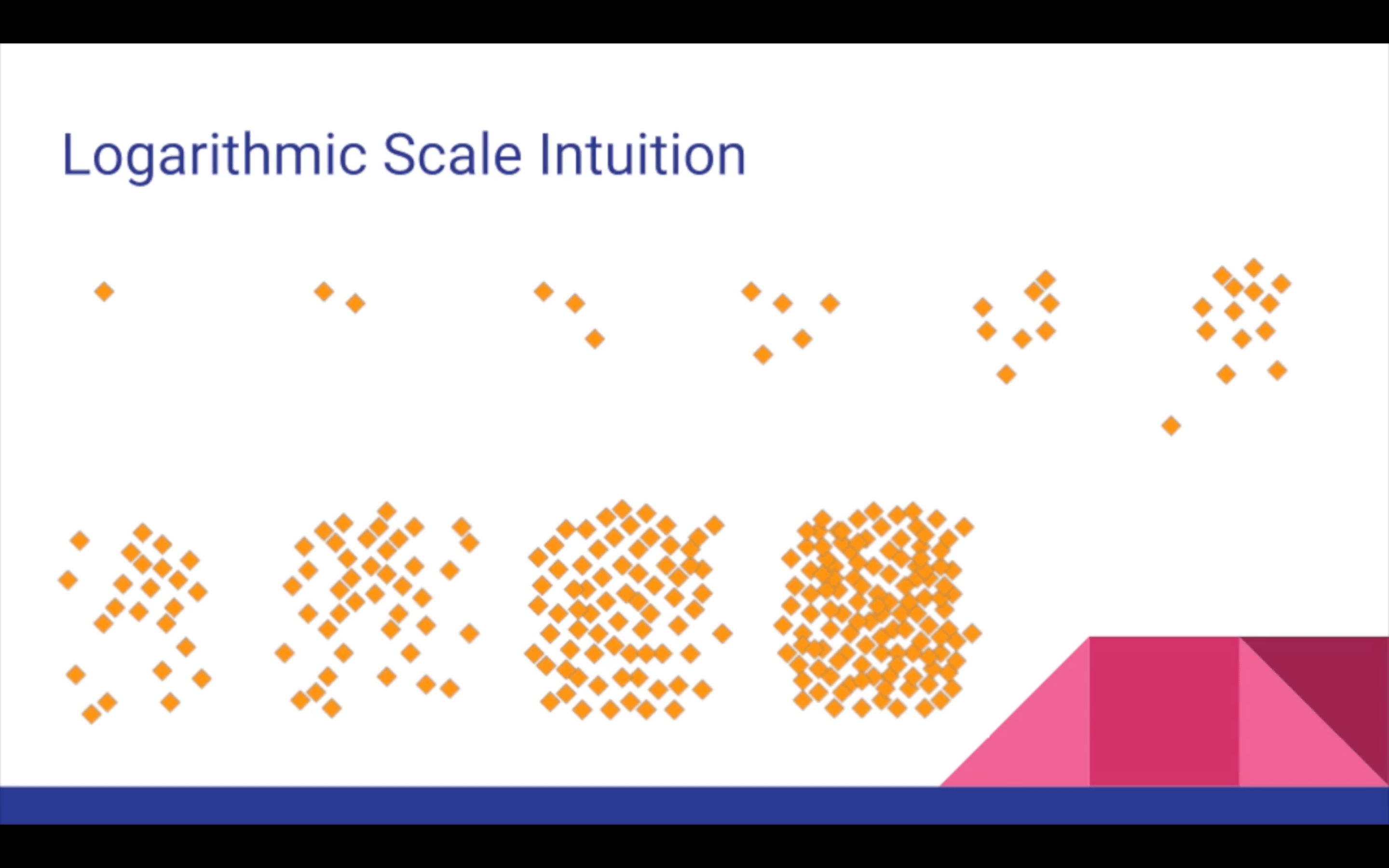
I would like to suggest that Logarithmic Scales of Pleasure and Pain (“Log Scales” from here on out) presents a novel, meaningful, and non-trivial contribution to the field of Effective Altruism. It is novel because even though the terribleness of extreme suffering has been discussedmultipletimesbefore, such discussions have not presented a method or conceptual scheme with which to compare extreme suffering relative to less extreme varieties. It is meaningful because it articulates the essence of an intuition of an aspect of life that deeply matters to most people, even if they cannot easily put it into words. And it is non-trivial because the inference that pain (and pleasure) scales are better understood as logarithmic in nature does require one to consider the problem from multiple points of view at once that are rarely, if ever, brought up together (e.g. combining empirical deference graphs, descriptions of pain scales by their creators, latent-trait analysis, neural recordings, and psychophysics).
Fundamentally, we could characterize this article as a conceptual reframe that changes how one assesses magnitudes of suffering in the world. To really grasp the significance of this reframe, let’s look back into how Effective Altruism itself was an incredibly powerful conceptual reframe that did something similar. In particular, a core insight that establishes the raison d’etre of Effective Altruism is that the good that you can do in the world with a given set of resources varies enormously depending on how you choose to allocate it: by most criteria that you may choose (whether it’s QALYs or people saved from homelessness), the cost-effectiveness of causes seem to follow much more closely (at least qualitatively) a long-tail rather than a normal distribution (see: Which world problems are the most pressing to solve? by Benjamin Todd; the long-tail on the left below). In turn, this strongly suggests that researching carefully how to invest one’s altruistic efforts is likely to pay off in very large ways: choosing a random charity versus a top 1% charity will lead to benefits whose scale differs by orders of magnitude.
Log Scales suggests that pain and pleasure themselves follow a long-tail distribution. In what way, exactly? Well, to a first approximation, across the entire board! The article (and perhaps more eloquently the subsequent video presentation at the NYC EA Meetup on the same topic) argues that when it comes to the distribution of the intensity of hedonic states, we are likely to find long-tails almost independently of the way in which we choose to slice or dice the data. This is analogous to, for example, how all of the following quantities follow long-tail distributions: avalanches per country, avalanches per mountain, amount of snow in mountains, number of avalanche-producing mountains per country, size of avalanches, number of avalanches per day, etc. Likewise, in the case of the distribution of pain, the arguments presented suggest we will find that all of the following distributions are long-tails: average pain level per medical condition, number of intensely painful episodes per person per year, intensity of pain per painful episode, total pain per person during life, etc. Thus, that such a small percentage of cluster headache patients accounts for the majority of episodes per year would be expected (see: Cluster Headache Frequency Follows a Long-Tail Distribution; the long-tail on the right above), and along with it, the intensity of such episodes themselves would likely follow a long-tail distribution.
This would all be natural, indeed, if we consider neurological phenomena such as pain to be akin to weather phenomena. Log Scales allows us to conceptualize the state of a nervous system and what it gives rise to as akin to how various weather conditions give rise to natural disasters: a number of factors multiply each other resulting in relatively rare, but surprisingly powerful, black swan events. Nervous systems such as those of people suffering from CRPS, fibromyalgia, and cluster headaches are like the Swiss Alps of neurological weather conditions… uniquely suited for ridiculously large avalanches of suffering.
Log Scales are not just of academic interest. In the context of Effective Altruism, they are a powerful generator for identifying new important, neglected, and tractable cause areas to focus on. For instance, DMT for cluster headaches, microdose ibogaine for augmentation of painkillers in sufferers of chronic pain, and chanca piedra for kidney stones (writeup in progress) are all what we believe to be highly promising interventions (of the significant, neglected, and tractable variety) that might arguably reduce suffering in enormous ways and that would not have been highlighted as EA-worthy were it not for Log Scales. (See also: Get-Out-Of-Hell-Free Necklace). On a personal note, I’ve received numerous thank you notes by sufferers of extreme pain for this research. But the work has barely begun: with Log Scales as a lens, we are poised to tackle the world’s reserves of suffering with laser-focus, assured in the knowledge that preventing a small fraction of all painful conditions is all that we need to abolish the bulk of experiential suffering.
But does Log Scales make accurate claims? Does it carve reality at the joints? How do we know?
The core arguments presented were based on (a) the characteristic distribution of neural activity, (b) phenomenological accounts of extreme pleasure and pain, (c) the way in which the creators of pain scales have explicitly described their meaning, and (d) the results of a statistical analysis of a pilot study we conducted where people ranked, rated, and assigned relative proportions to their most extreme experiences. We further framed this in terms of comparing qualitative predictions from what we called the Normal World vs. Lognormal World. In particular, we stated that: “If we lived in the ‘Lognormal World’, we would expect: (1) That people will typically say that their top #1 best/worst experience is not only a bit better/worse than their #2 experience, but a lot better/worse. Like, perhaps, even multiple times better/worse. (2) That there will be a long-tail in the number of appearances of different categories (i.e. that a large amount, such as 80%, of top experiences will belong to the same narrow set of categories, and that there will be many different kinds of experiences capturing the remaining 20%). And (3) that for most pairs of experiences x and y, people who have had both instances of x and y, will usually agree about which one is better/worse. We call such a relationship a ‘deference’. More so, we would expect to see that deference, in general, will be transitive (a > b and b > c implying that a > c).” And then we went ahead and showed that the data was vastly more consistent with Lognormal World than Normal World. I think it holds up.
An additional argument that since has been effective at explaining the paradigm to newcomers has been in terms of exploring the very meaning of Just-Noticeable Differences (JNDs) in the context of the intensity of aspects of one’s experience. Indeed, for (b), the depths of intensity of experience simply make no sense if we were to take a “Just-Noticeable Pinprick” as the unit of measurement and expect a multiple of it to work as the measuring rod between pain levels in the 1-10 pain scale. The upper ends of pain are just so bright, so immensely violent, so as to leave lesser pains as mere rounding errors. But if on each step of a JND of pain intensity we multiply the feeling by a constant, sooner or later (as Zvi might put it) “the rice grains on the chessboard suddenly get fully out of hand” and we enter hellish territory (for a helpful visual aid of this concept: start at 6:06 of our talk at the 2020 EAGxVirtual Unconference on this topic).
From my point of view, we can now justifiably work under the assumption that the qualitative picture painted by Log Scales is roughly correct. It is the more precise quantitative analysis which is a work in progress that ought to be iterated over in the coming years. This will entail broadening the range of people interviewed, developing better techniques to precisely capture and parametrize phenomenology (e.g. see our tool to measure visual tracers), use more appropriate and principled statistical methods (e.g. see the comment in the original piece about the Bradley-Terry model and extreme value theory), experimental work in psychophysics labs, neuroimaging research of peak experiences, and the search for cost-effective pragmatic solutions to deal with the worst suffering. I believe that future research in this area will show conclusively the qualitative claims, and perhaps there will be strong consilience on the more precise quantitative claims (but in the absence of a true Qualiascope, the quantitative claims will continue to have a non-negligible margin of error).
Ok, you may say, but if I disagree about the importance of preventing pain, and I care more about e.g. human flourishing, why should I care about this? Here I would like to briefly address a key point that people in the EA sphere have raised in light of our work. The core complaint, if we choose to see it that way, is that one must be a valence utilitarian in order to care about this analysis. That only if you think of ethics in terms of classical Benthamite pain-minimization and pleasure-maximization should we be so keen on mapping the true distribution of valence across the globe.
But is that really so?
Three key points stand out: First, that imperfect metrics that are proxies for aspects of what you care about (even when not all that you care about) can nonetheless be important. Second, that if you cared a little about suffering already, then the post-hoc discovery that suffering is actually thatfreakingskewed really ought to be a major update. And third, there really are reasons other than valence maximization as a terminal goal to care about extreme suffering: intense suffering is antithetical to flourishing since it has long-term sequelae. More so, even if confined to non-utilitarian ethical theories, one can make the case that there is something especially terrible about letting one’s fellow humans (and non-humans) suffer so intensely without doing anything about it. And perhaps especially so if stopping such horrors turn out to be rather easy, as is indeed the case.
Let’s tackle these points each in turn.
(1) Perhaps here we should bring a simple analogy: GDP. Admittedly, there are very few conceptions of the good in which it makes sense for GDP to be the metric to maximize. But there are also few conceptions of the good where you should disregard it altogether. You can certainly be skeptical of the degree to which GDP captures all that is meaningful, but in nearly all views of economic flourishing, GDP will likely have a non-zero weight. Especially if we find that, e.g. some interventions we can do to the economy would cause a 99.9% reduction in a country’s GDP, one should probably not ignore that information (even if the value one assigns to GDP is relatively small compared to what other economists and social scientists assign it). Likewise for extreme suffering. There might be only a few conceptions of the good where that is the only thing we ought to work on. But avoiding hellish states is a rather universally desired state for oneself. Why not take it at least somewhat into account?
In truth, this is not something that classical questions in Effective Altruism pre-Log Scales couldn’t overcome either. For instance, as far as I am aware, in practice QALYs are used more as a guide than as an absolute; their value within EA comes from the fact that in practice interventions are orders of magnitude different when it comes to their cost-effectiveness when assessed with QALYs. So even though the vast majority of EAs are not QALY absolutists, the differences in QALYs saved between interventions are large enough that as an approximate guide, the metric still generates huge amounts of consilience.
(2) In turn, the post-hoc finding that hellish states are much, much worse than one would intuitively believe really should at least rebalance one’s priorities somewhat. Is there really no amount of suffering that would do so? Unless one has a utility function akin to a ReLu activation function, going far enough down into the depths of hell ought to count for something. And…
(3) Speaking candidly, fully articulating the true significance of this finding will take us to philosophically polemical territory: philosophy of personal identity where person-affecting views will see the situation quite differently than person-moment-affecting views, philosophy of mind where the ontological status of pleasure and pain might be questioned, and intricate questions that arise at the interface between the views of virtue ethicists, deontologists, negative and classical utilitarians. Of course a negative utilitarian who believes in Empty Individualism and Eternalism at the same time will likely be especially horrified by this information. But, with that said, I would suggest that there are good reasons to care about Log Scales no matter how antithetical one’s views are to philosophical hedonism.
In particular, I would argue that deontologists and virtue ethicists should still take note. The cultivation of virtue requires a minimum of wellbeing in order to maintain motivation to live. And perhaps deontologists might find extreme suffering particularly egregious from the point of view of “things so horrible that ought not to be”. Really, the people we interviewed for the cluster headache writeup told us that experiencing such levels of hellish suffering causes profound psychological transformations (e.g. one interviewee told us that experiencing the higher ends of pain in a cluster headache feels like a profound “spiritual violation” from which you may never recover – a feeling most certainly aggravated by the seeming indifference of people at large about their plight). Virtue ethicists and deontologists might as well recognize this cause area as work that is unconscionable not to perform, regardless of arguments based on the precise mathematical optimization of the prevention of negative valence.
And finally, in all seriousness, as the cognitive intelligentsia of the world begins to see clearly the nature of the distribution of pleasure and pain, we can expect there to be a big social benefit to being the one who destroys hell. Right now there isn’t a huge social reward to be obtained by working on this cause, but I predict this will change. And, pragmatically, it is sensible to present this cause in a motivating rather than depressing light: indeed, let’s give honor, glory, and endless admiration to whoever makes tangible progress in tearing hell down. And to all of the millionaires and billionaires reading this: this could be you! You could be the one who took on the mantle of preventing all future cluster headaches, established the field of anti-tolerance drugs for severe chronic pain, or got rid of kidney stones (and you did it before it was cool!). Let’s get to work!
Some of you might remember me. I was one of the moderators here for half a decade or so until my life got busy enough that it became difficult to keep up.
I have a small fragrance line myself and I occasionally make fragrances for other brands. Occasionally websites like Fragrantica and Now Smell This will write articles about my fragrances. I’m by no means a famous perfumer, but… I’ve worked enough as a perfumer to have insight into how fragrances are made.
The average person doesn’t really think about what’s actually in their fragrances any more than the average person really considers what flavors blend together to make up the taste of cola. (As a side note, you can make a passable cola flavor out of orange, lime, cinnamon, lemon, nutmeg, and coriander). When people do start thinking about it, they inevitably come across fragrance notes.
Fragrance notes are both incredibly useful and completely misleading because notes are not ingredients! Notes are the impressions that the fragrance creator thinks a lay person might get from smelling the fragrance. They aren’t necessarily the ingredients used in the fragrance, and also, (this is another important bit), they’re not necessarily even what the perfumer was attempting to make the fragrance smell like.
There’s a fundamental misconception on the part of most consumers. Most consumers think that fragrances are made largely from familiar materials. Orange, lemon, jasmine, rose, birch leaves, lily of the valley, etc. Ok, maybe most people realize that most fragrances contain synthetic materials, but there’s quite often an implicit assumption that the synthetics are a synthetic version of a natural material. In other words, that the synthetic is an attempt to recreate a smell that is found in nature and that all (or at least most) of the smells in a modern fragrance can be reproduced with naturals. I suppose that if you asked someone “do you think that all synthetics are an attempt to recreate a natural smell?” they would think about it and quickly come to the conclusion that this doesn’t really make sense, but most people haven’t actually stopped and thought about it. I see evidence of this assumption all over the place online:
“I’m looking for all natural version of [fragrance X].”
“I’m looking for a less synthetic version of Sauvage.”
“Can someone tell me which essential oils I can mix together to make an aquatic smell like Cool Water?”
It’s really only pretty recently that there has been any real visibility (to the general public) into what materials go into a commercial fragrance, so this is an understandable point of view.
It’s very, very wrong, though.
We need to take a giant step back and clarify some things.
Natural oils (essential oils/absolute oils/SCO2 extracts/etc.) are typically made up of dozens to hundreds of different materials [typically distributed in a long-tail]. They’re like miniature perfumes in and of themselves with top notes, heart notes, and base notes. They’re complex and beautiful, but they can only be manipulated in a limited way. They’re like photographs.
Specialty bases are typically made up of dozens of individual ingredients, some natural, some man-made, some that exist in nature, some that didn’t exist until they were created in a lab in the 60s. Basically, the sky is the limit. You generally don’t know exactly what’s in them, but they’re produced by suppliers that you can be pretty sure will still be making them in 20 years. Sometimes, they’re direct attempts to reproduce (or improve upon) a natural smell, for reasons of cost, safety, or performance. Sometimes, they’re just a novel smell, like Givaudan‘s aquatic smelling Ultrazur base. These are like computer generated images [or Photoshop filters].
Isolates are ingredients made of a single molecule. They can be naturally derived or lab-made. They can exist in nature or not. They have names like linalool, coumarin, limonene, ambroxide [better known as ambroxan – the qualia of the day in this video and one of my favorite aromachemicals], methyl dihydrojasmonate and you can describe and find the chemical formula for them. A lot of them have trade names that are shorter and refer to one company’s version. E.g. Hedione is a trade name for methyl dihydrojasmonate. Quite often, isolates can also be found in natural oils. Natural lavender oil is typically ~42% linalyl actate and ~40% linalool [note: lavender oil with more linalyl acetate relative to linalool tends to smell “dryer” and “dustier”]. When composing fragrances, I’ll use linalool and linalyl acetate as isolates as well. Sometimes I’ll use them to “tune” other ingredients that already contain them, but not in the quantities I want (like lavender [e.g. “LAVENDER OIL 40/42 has fresh, herbal, clean, aromatic nuances. The numbers in Lavender 40/42 indicate the linalyl acetate content; in this case, they indicate the product contains 40%-42% of linalyl acetate. Lavender 40/42 is generally a blend of various lavenders in order to get a consistent scent from batch to batch, with processors adding linalyl acetate to cover the smell of camphor or borneol components of a given lavender.“]). Sometimes I’ll use them to add a sweet, floral character to completely unrelated materials. If natural oils are like photographs and bases are like CGI, isolates are like paints. You have the most control, but it takes the most skill to turn them into something beautiful and complex.
“Aromachemical” is a catch-all term used to describe these fragrant materials, though it typically connotes materials that are either isolates or bases.
Now that we have that out of the way, let’s take a look at how commercial fragrances are created. The easiest way to do that is to take a look at a formula:
This is an example formula for a “cologne” accord that was composed by Givaudan. It’s by no means a finished fragrance, but most everyone would recognize the smell. It’s a fresh, slightly sweet, slightly bitter, slightly green smell that often finds its way into men’s fresh fragrances in one way or another (though that’s not to say that this exact formula does).
Florhydral – 10
Exaltolide Total – 10
Ultrazur – 15
Peonile – 60
Petitgrain oil -70
Ethylene Brassylate – 90
Aurantiol Pure – 100
Geranyl Acetate – 120
Linalyl Acetate – 220
Dihydro Myrcenol – 305
Total: 1000
Lets take a look at these ingredients one by one:
Florhydral is the trade name for an isolate. It is a floralizer that can add a sort of fresh, green, floral note to fragrances. It is not found in nature.
Exaltolide is another single molecule, a white musk. It’s very delicately animalic, with the characteristic smell of a white musk. It’s been used as a reference white musk because it’s so typical of the “white musk” family.
Ultrazur is a specialty base from Givaudan. It’s marine smelling, more oceanic than the Calone 1951 found in Cool Water. By itself, in concentration, it reminds me very much of fabric softener.
Peonile is another “not found in nature” molecule. It has a sort of rosy, sort of geranium-like, sort of peony-like, sort of grapefruit-like odor and acts as a volumizer and fixative. Odor descriptions that call to mind an assortment of known materials are fairly common, but it’s important to note that they don’t mean that it smells like x+y+z. It just means that they have facets that are reminiscent of these materials in some way.
Petitgrain oil is a natural oil made from the greenery of a citrus tree. Usually from orange trees, but varieties from mandarin, lemon, and all sorts of other citrus are also available.
Ethylene brassylate is a sweet, floral, white musk that can smell a touch old fashioned to some people by itself, or in really high concentrations. It’s still a fairly clean musk, however. Yet another single molecule.
Aurantiol is a very, very commonly used material in fragrances, particularly men’s fragrances. It’s a single molecule (more or less). Aurantiol is a Schiff Base, which is a class of materials that you get when you combine an aldehyde and an amine and they react with each other. Most amines don’t smell very good, but one of them, something called methyl anthranilate, does. It’s found in white florals, particularly neroli [see: The Neroli Neighborhood for a deep dive into the neroli vibe], as well as grapes. Artificial grape flavor is basically methyl anthranilate. Hydroxycitronellal is an aldehyde that is often said to smell as close as any single material does to Lily of the Valley. When they’re mixed together and heated, you get water and a very thick, highlighter yellow colored schiff base that smells like a more mild version of methyl anthranilate. It’s sweet, long-lasting, and reminiscent of orange blossom/neroli and grape.
Geranyl acetate is the acetate version of geraniol. It’s a single molecule that is literally found in hundreds of natural oils. Everything from oregano and thyme to ylang ylang, rose, geranium and neroli, to fir needle and frankincense. It’s everywhere (much like linalool and linalyl actetate [note: in addition to lavender, also petitgrain, neroli, and bergamot all have very high concentrations of both linalool and linalyl acetate at the same time]). It’s sweet, fruity-floral, and vaguely green smelling. It also has a smell that I think of as the “acetate smell,” which can make it smell “chemically” to some people in isolation, even though it’s found everywhere in nature.
Linalyl acetate is another material like geranyl acetate that’s found all over the place in nature. Natural lavender oil is ~42% linalyl acetate. It’s also found in most of the natural oils I mentioned for geranyl actetate. The description for it is also very similar to geranyl acetate, but it’s more lavendery and less rosy. I really like this material and use it when I want to add an ethereal fruity/floral sweetness to a composition.
Dihydromyrcenol is aggressively fresh, cold, and almost harsh. It’s somewhat reminiscent of citrus and lavender. Mostly, though, it smells like laundry detergent. It was used to scent laundry detergent for years before it made it into fine fragrance. At first it was used in tiny doses, but by the 1980s it was being used much more prominently. Something like 10% of the formula of Drakkar Noir was dihydromyrcenol [and apparently also the fragrance super-star of the 90s Calvin Klein One]. It’s found in trace amounts in nature, but nothing natural really smells prominently of it.
So now that I’ve explained all the materials, let’s take a look at the formula. Here are some observations:
Natural oils from recognizable sources only make up 7% of the accord. There are other materials that are found in nature, but they’re all isolates, one alien smelling-molecule refined from a more familiar-smelling material. More than half of the formula is made from 2 molecules [once again, long-tails]. More than 90% is made from 8. The amounts of materials used can vary wildly. Material strength is in no way consistent.
The perfumer who composed this formula painted the majority of the formula in broad strokes from single molecule aromachemicals and then filled in depth and details with natural petitgrain oil, and tiny amounts of a specialty base (ultrazur) and a powerful aldehyde (florhydral).
I didn’t compose this, and I can’t speak for the perfumer who did, but I can imagine how it might have been composed. I’ll walk you through how I’m imagining the perfumer’s process:
I imagine the accord was inspired by petitgrain, but the perfumer wanted something fresher and more stylized and abstract, in the same way a graphic designer might prefer a stylized logo to a photo. Dihydromyrcenol is fresh and powerful, but also cold and harsh and almost bitter. It’s a good compliment to petitgrain, but right off the bat, I know it’s not going to be suitable by itself unless I’m trying to just modify the smell of petitgrain a little bit by adding a teeny tiny bit dihydromyrcenol. It needs some cushion, something to cut the harshness. Geranyl acetate and linalyl acetate add a niche cushioning effect, can be used liberally, and are both found in petitgrain, so they’ll go well with it. By itself, that composition is still cold and bitter. It needs a bit more warmth, but not a candy-like warmth. Something keeping in line with the petitgrain. Aurantiol is the obvious choice. The scent of orange tree leaves goes well with the scent of the orange blossoms that nestle amongst them. In keeping with the “more abstract” theme though, we don’t want to just dump neroli or orange blossom absolute into this. Too much complexity can leave a composition smelling muddled [see quote below for more on this], and we want the bitter, fresh, green petitgrain to be the star of the show here, not the neroli. Plus, neroli is quite expensive and not as long-lasting as aurantiol. We add the aurantiol for warmth. The peonile for volume and some white musks for depth. It’s pretty common to use multiple musks in a fragrance because many people are anosmic to some musks, so you want to make sure they’re able to smell at least one of them.
Then as finishing touches, we add a hint of Ultrazur, which adds a bit of modern sophistication and florhydral, which in tiny amounts adds a bit of a dewy, natural, green smell to the composition.
This composition isn’t about taking familiar smells and mixing them together like some sort of fruit salad with hunks of this and hunks of that. It’s about taking an idea and enhancing aspects of it, rebalancing it until it fits the vision. It’s more like painting than making a collage. It’s not necessarily as detailed or accurate, but it’s not supposed to be. Degas wasn’t trying to create photorealistic ballerinas. Van Gogh wasn’t trying to accurately render the night sky. They were trying to evoke an impression. Perfumers are the same way.
If that fragrance doesn’t smell like realistic rose/jasmine/cedar/etc., chances are, it wasn’t intended to. The perfumer wasn’t trying to make a realistic jasmine and failing, the perfumer was trying to make an entirely new smell that just has aspects that are jasmine-like.
Breaking it apart into notes is actually counterproductive in a lot of ways.
…but that’s a subject for another post.
Relatedly:
In response to the Reddit r/DIYfragrance question: “Lavender + Lemon + Rose accord – How would you use a lavender + lemon + rose accord? I like that combo a lot – a narcotic acidic mix with powerful mood-lifting properties. But as soon as I use patchouli, ginger, or even chamomile as the base notes for the composition, the magic of the accord gets drowned out by the base. I’m curious how more experienced DIY fragrance makers would go about harnessing the magic of that accord by blending it with things that enhance rather than detract from it. Thank you in advance 🙂“
I’m going to take a shot in the dark here and say that it sounds like you’re using essential oils rather than individual aromachemicals for your accords.
If that does happen to be the case, that’s your issue. It’s not that there’s anything specific about Rose/Lemon/Lavender that doesn’t play nice with other scents. It’s that essential oils inherently get “muddy” when you start to mix more than a few together.
Essential oils are a complex combination of hundreds of individual aromachemicals. They’re almost like finished fragrances unto themselves. I look at them like jellybeans. One jellybean tastes like whatever flavor it’s supposed to taste like. Two or three jellybeans can taste like a fun combination of flavors.
But have you ever tried popping a handful of jellybeans? The flavors all muddle together and create this generic sort of fruity sweetness that doesn’t really taste like anything in specific. It’s the flavor equivalent of swirling together a bunch of colors until you get brown.
Same with essential oils. For example, lemon and lime essential oil share a ton of common ingredients, mostly terpenes like limonene, pinene, terpinene, Myrcene, etc. But anyone who has smelled lemon and lime knows that they smell very distinct. This is because they have slightly different proportions of these ingredients. Lemon might have 70% limonene, 10% pinene, and 15% terpinene whereas lime has 50% limonene, 5% pinene and 10% terpinene. When you blend them together, these distinct proportions are lost, and with them, their characteristic smells.
Same goes for mixing other different oils: ginger for example also contains a lot of the same terpenes that lemon contains. But it also has a big dose of camphene and zingiberene which give it the characteristic sharp ginger bite. But when you mix ginger with lemon, it throws off the delicate balance of terpenes in the lemon and thus muddies the character. Same with patchouli: lots of patchoulol and guaiene, but also lots of terpenes found in lemon. Same with chamomile: lots of ethereal esters but also lots of terpenes.
In fact, it’s hard to find essential oils that don’t muddy the balance of lemon. Lavender happens to have a fairly close balance of terpenes (in addition to the characteristic lavender combination of Linalool and Linalyl Acetate). And rose is almost all alcohols.
Basically, with each essential oil you add, you also add a large list of other oils you can’t add without muddying your scent. And with lavender/lemon/rose, there’s really not much room to explore if you’re using essential oils only.
And there’s the rub: if you really want to explore enhancing your scent, you need to get more granular and start using individual aromachemicals rather than entire essential oils into themselves.
If you’re dead set on using essential oils only, check out www.2pih.com/ingredients.php: I put together a resource with about 200 different essential oils and their constituent ingredients. You want to find ones that use either entirely different ingredient sets than what are found in your main accord (which will be difficult because you’ve really covered a broad swath of ingredients with your combination), or find ones whose common ingredients are in similar proportion (which will also be difficult).
On the other hand, if you’re already using individual aromachemicals and your description of the accord is more abstract than literal, then you probably know all of this, so my apologies for the presumption, and I hope this comment is helpful for anyone else reading this.
From: Ingram, D. M. (2018). Mastering the Core Teachings of the Buddha: An Unusually Hardcore Dharma Book, Second Edition Revised and Expanded. Newburyport. AEON Books.
Re-observation may not sound like much of a problem, as it has such a sanitized and boring name. However, friends have suggested renaming it with various four-letter Anglo-Saxon vernacular terms, usually in some grammatically problematic but emotionally cathartic string. This stage is often, though not always, like a brick wall, particularly the first few times we collide with it. It can be as if all the worst aspects of the Dark Night stages converge for one last important lesson, that of Re-observation.
We must perceive the true nature of the sensations that make up our ideas of perfection, all the ideals we cling to, all images of how the world should and should not be, all desire for anything to be other than exactly the way it is, as well as all desire for awakening to be anything other than this. It may seem impossible to sit for even a minute, as the levels of restlessness and aversion to meditation and all experience can get high. The sudden complete inability to sit on the cushion for even a few minutes is a classic mark of this stage. As a physician, I speculate that at some point they will find some physiologic commonality between this stage and the pathways of restless leg syndrome, but the whole-body version.
This stage, and part of the stage of Three Characteristics share some features. In other words, be warned, particularly those of you who are prone to being overly certain about “where you are” on these maps. I get a reasonable number of emails and calls from people who claim they are certain they are in Re-observation, and shortly thereafter they are describing A&P territory, meaning that they had just been in Three Characteristics territory, not Re-observation. Continuing to investigate the true nature of these sorts of sensations and our map theories is often difficult, and this is a common cause of failure to progress.
Now, I am about to describe all sorts of emotional or psychological manifestations that can sometimes happen in Re-observation. The more extreme the description of a possible side effect of this stage, the rarer that side effect is likely to be, particularly those that sound like descriptions of severe mental illness. For someone who is staying at the level of bare sensate experience, as I strongly recommend, the only difficult manifestations that seem to be quite common at this stage are a strong sense of aversion and resistance to formal meditation and experience, and a deep sense of primal frustration, though these tend to fade quickly in the face of good practice. If our concentration is strong enough and our other factors are in balance, we may move through this stage with no problem at all at the level of vibrations or even pure, abstract patterns of light and/or sound, bypassing all the potential complexity I am about to describe.
For those using more ordinary objects, aversion to meditation and experience can arise as we react to the vibrations in this stage, which can be fast, chaotic, and harsh. The noise in our repetitive minds can be quite irritating. By repetitive, I mean that this stage can involve repeating thoughts, songs, and stories, like we have a horrible case of the evil earworms (in the metaphorical sense of annoying songs that get stuck playing in our heads). Ever had a fever and had some irritating thought circling again and again in your head? This stage can produce similar experiences.
Some of my own descriptions of this stage while on retreat have included such phrases as “the mind-storm” and “a bracing work in D minor for six sense doors, hailstorm, and stuttering banshee”. If we are very powerful meditators who yet lack enough equanimity and tranquility (remember the seven factors?), it can literally feel as if we will be torn apart by harsh vibrations. At some illusory level of the sense of continuity and stability, this is exactly what we are trying to accomplish.
However, even if very difficult manifestations arise, if we are practicing well, they should not last long at all, at best minutes, at worst, hours or days. Once I began to get what this stage was about and what it was useful for, a perspective that had a hard learning curve, I would intentionally amplify the sense of being torn apart, directing this stage’s sharp and cutting ability to shred reality at anything that appeared even the slightest bit stable or continuous anywhere in the body, mind, or experience in general. That is a skillful use of the perspective that this stage allows us.
In a similar vein, and as mentioned before, those few who are crossing this territory with world-class concentration abilities and using a very rarefied object, such as a complex visualization on sacred geometry, may, if they are very good at it, pass through this stage with little or no difficulty. It can be fascinating and subtly rapturous, as this is the peak of the third vipassana jhana. Strong practitioners fusing insight and concentration practices may notice that the proportion of the visualized field that is organized into clear images gets broader and broader. The patterns may become more complex. The phase problems get more and more bizarre. The visual field may take on more spherical dimensions, with curving images beginning to encircle (or “ensphere”) you. The images may appear to have manifold symmetries and repetitions, and these generated images and sounds may come around to encompass basically the whole field of experience.
This can be like watching an IMAX movie of a moving technicolor spirograph in the front row. As mentioned earlier, I have also seen gigantic fields of hyper-detailed, repeating, shifting patterns of things like spiders, mushrooms, snakes, skulls, fingers with claws, and other creepy and disconcerting things but, on careful inspection, they were beautiful, vibrant, and amazing in their intricacy. I use this example partly due to my own experiments and partly to illustrate general points.
Different objects and practitioners will most definitely produce different specifics, such as colors, images, etc., while some aspects of what happens at this stage will remain the same, and are therefore universal. It goes to illustrate a basic point: Re-observation need not be a problem if you have very solid meditation skills. Even if you don’t, it still need not be a big deal if you know what to look for, what to expect, how to handle it, and that it too shall pass. Dry insight workers get through this stage all the time just fine with good practice. Further, if you are reading this book, you probably already crossed the A&P as mentioned already, and so you have probably already handled it at least once and may not have even known it, and even if you haven’t yet, you still may do just fine. We’ve all been through hard times, and this is just one more phase that might be potentially challenging.
You see, Re-observation is all fluff and no substance but, if you confuse fluff for substance, the effect will be the same as if it actually had substance. Bodily sensations of creepy revulsion, disgust, or profound existential angst may arise, and yet, those with wisdom will notice they are like confetti, like sparkles of light, like raindrops, albeit seemingly acid raindrops. Still, they are not harmful. In fact, they apparently do something great to the mind, since Re-observation leads to the next stage, Equanimity. This normalizing knowledge is power.
Re-observation is like a toothless dog with a ferocious bark. If you run screaming or faint from fear when the dog barks, then it needed no teeth to prevent your progress. It is like a hologram of a snarling demon that you can just walk right through and it can’t touch or harm you at all. There is a curious freedom when you deeply realize that you are safe in Re-observation, that you can go deep into the pit, and the pit is just fine. In Review stages, a period when it can be easy to call up specific stages and stay in them to get a better sense of them, I have again and again called up Re-observation just to check it out and learn its secrets.
On a somewhat different note, however bad Re-observation is, we can’t always blame it for everything. The primary sign that the negative side effects that may occur in the Dark Night are not associated with insight stages (but instead are due to other, ordinary, real-world processes) is that they do not change much in the face of strong and accepting investigation or when we stop practice entirely. Remember, you have two sets of effects going on: insight-related, and other circumstances and psychological aspects of your life. If good insight practice, done well and bravely, with strong investigation and good technique, is not fixing your life situation, then you may instead have standard, ordinary problems to be dealt with by ordinary, real-world methods.
As you can likely already tell, the Dark Night tends to get practitioners strategizing, trying to figure out the best way to crack it and get to Equanimity. This has led to various teachers and practitioners developing their own distinct schools of thought that may deem some techniques and approaches the most optimal, typically the techniques that have worked best for them. However, those who have gone through the Dark Night enough times and with a range of approaches, techniques, attitudes, and practice conditions will eventually realize that there are many, many ways to skin this cat, to use an un-Buddhist metaphor. Exercise often helps. Loving-kindness practices get recommended often for good reason. Strict vipassana and ultra-rapid noting work well for those with a high tolerance for pain. Slower noting might work for those with a bit more time and less interest in shattering themselves.
Some teachers highly recommend physical practices, such as yoga with a high degree of bodily awareness, as that can ground people in something other than their psychological stuff. Others might highly recommend plunging hard into their psychological issues and healing, with a high degree of sensate mindfulness of that process to ensure it keeps producing insights. Others with mighty concentration skills might go for more abstract objects, such as sacred geometry, as mentioned above. The “concentrate your ass off” strategy in the Dark Night has much to recommend it. Loving-kindness practices and other brahma viharas (covered in Part Six) are commonly reported to be helpful. Yet others might recommend more shamanic and psychonautic techniques to cause the sort of radical unsticking that can happen with those methods, and reality testing shows that those do sometimes work for some people but cause problems for others, and predicting which will result is not easy. Each of these strategies has risks and benefits to be considered.
In contrast to what most people might expect me to advocate here, it is true that much more gentle approaches can also work in Re-observation and the Dark Night in general. Some find that softening, opening, and accepting generate much better results than more aggressive approaches such as rapid noting or surfing fine vibrations. Sometimes just carefully investigating and gently relaxing what is often called “body armor”, those physical tensions that correspond to psychological blocks and tensions, can be quite effective in this territory.
Others among us will notice that just carefully investigating other aspects of our lives, like physical tensions related to roles and identities, will help facilitate progress here. Some do well with intellectual reflection coupled with some sensate investigation, and repeated questions such as, “Where am I contracted?” or, “What am I clinging to?”, asked well and often enough, will actually yield good results. Some with more spacious tendencies may notice that just feeling into the subtle moving warps in our sense of attention or space that are the hallmarks of the third vipassana jhana will be all they need, and doing this with the eyes open rather than closed can help us keep from getting lost. Many of these methods just require doing them well enough for long enough to get them to cause progress.
Even stranger measures can be oddly facilitating here although they may superficially seem to have little to nothing to do with insight practice. Some practitioners may just need to change locations, resolve a single conflict with one person, cry about one issue they need to grieve over properly, make some other simple change, or go through some other simple process, and then suddenly everything opens. Just giving yourself permission to care for yourself might make a difference. I recommend When Things Fall Apart and Start Where You Are, by Ani Pema Chödrön, as the yin energy of these books will help counterbalance the energy of this book, which can be too yang sometimes. Nurturing strategies often help a lot in the Dark Night.
I remember one cycle through this territory where what cracked it was just dancing wildly for hours until I was totally exhausted. A few will do oddly well by stopping practice entirely, forgetting entirely about progress and the maps and all of that, and just surrendering, but this last one generally only works when the meditator is in the correct place and has done enough work and growth already for that strategy to make sense.
This is a small subset of the various strategies that might work and that teachers advocate. You will have to assess your own capabilities, inclinations, intuition, resources, and what you have available to find what works best for you. Experimentation and a willingness to regroup and retry if you fail with one approach are key, as failure and frustration are common experiences the first few times we try to crack the nut of the Dark Night. If you are on retreat, it typically only takes about ten days to two weeks of struggling in the Dark Night to fall back to earlier stages and have another shot at it, so you can try a new strategy on the next pass if the first pass strategy didn’t work. I still generally feel that very simple practice: six sense doors, three characteristics, is the best practice for all insight stages. One day, I hope that scientific methods and controlled experiments are applied to find how best to navigate this territory. Until then, take your best guess and, if it doesn’t work, try again.
Due to the sorts of frustrations and failures that are common in this territory, this stage is sometimes called the “rolling up the mat stage”, when many who joined monasteries in the stage of the Arising and Passing Away now give up and disrobe. People on retreats tend to need much reassurance but often leave right then even with good support, guidance, and encouragement. Are you suddenly needing to leave a retreat that you had planned to stay in much longer? You are likely in this stage.
There can be the distinct feeling that there is no way to go forward, and it is useless to go back, which is exactly the lesson we should learn. Acceptance of exactly this, right here and right now, is required, even if it seems that this mind and this body are completely unacceptable and unworthy objects of investigation. Remember: no sensations are unworthy of investigation!
One of the hallmarks of the early part of this stage is that we may begin to clearly see exactly what our minds do all day long, see with great clarity how the illusion of a dualistic split is created in the first place, sensation by sensation, moment to moment, but there is not yet enough of a meta-perspective and equanimity to make good use of this information. This can be very frustrating, as we wonder how many times we must learn these lessons before they stick. The interesting thing is that this stage, when gone through at the level of emotions and vibrations, rather than in the realms of light produced by strong concentration, will nearly always come with a sense that it lasted just a bit longer than we could take it, and yet somehow, we can take it, and it does end.
Intense feelings of frustration and disenchantment with life, relationships, sex, jobs, moral codes, the world, and worldly responsibilities may emerge at this stage in ways that can cause enormous disorientation, disruption, and angst. Re-observation can take whatever issues and reactions arose in the earlier stages of Fear, Misery, Disgust, and Desire for Deliverance, combine them in fiendish ways, and then crank that intensity to the next level, a level that can seem overwhelming. These aspects of our life can temporarily seem bland and pointless at this stage, though it may seem that this will always be the way we feel about them.
This stage can mimic or perhaps manifest as some degree of clinical depression. Beware of making radical life changes that cannot be easily undone, such as a divorce or firing off angry emails to your boss, based upon the temporary feelings that may arise during this stage. For those who recognize that they are in this stage, some form of active mental compensation for these potential effects can be helpful to facilitate maintaining our relationships, jobs, studies, etc., at a functional level. This can be very skillful if it is also combined with practice that allows the experiences of this stage to be acknowledged and understood as well.
I should be careful here in that, while I generally advocate for maintaining jobs, relationships, studies and the like, if possible, in the face of Dark Night stuff, there is obviously no way for me to know for certain that this is the right course of action for you or anyone else, as the future is unknown and unpredictable. This is obviously not helpful, as we might wish for concrete, reliable guidelines as to how to proceed, and yet, unfortunately, there are none. Maybe shaving your head and joining a monastery really is the best thing you could possibly do. On the other hand, maybe preserving your marriage and job is.
There are obviously many other options that might suddenly seem like good ideas in this stage, and whether, in retrospect, they will have been as good an idea as they seemed at the time is anyone’s guess. I wish I could definitively tell you what to do, but I can’t. Still, there is something to be said for optionality, even if, in the Dark Night, all options can seem like bad options. Not trashing possibly valuable relationships helps preserve optionality and generally lessens later regrets. There are ways to gain some space in which to let this disorienting and often disruptive process mature that are more skillful and less damaging than others, and I wish you well finding those.
Layers of unhelpful and previously hidden expectation, pressure, and anxiety can reveal their true uselessness, though this beneficial process can feel very confusing and difficult. We may get the sense that we have never had such a strong emotional life, and until we get used to this new awareness of our previously subtle or unacknowledged feelings, this stage can seem overwhelming.
Occasionally, people at this stage can also have what appears to be a full psychotic break, or what is often called a nervous breakdown, though if these are truly a side effect of insight practices, they should pass quickly. The main key here is to continue to acknowledge and accept the content but also to see the true nature of the sensations that make up these natural phenomena. This can be extremely hard to do, especially if people have chanced upon this stage without the benefit of the support and guidance of a well-developed insight tradition and qualified teachers who can easily recognize and navigate this territory.
Even for those who do get into this in a well-developed tradition, unrealistic spiritual ideals can really screw up practice. In your idealized spiritual world, you imagine you aren’t supposed to be insanely frustrated, on edge, shuddering from some strange wrongness you can’t figure out, because you are a meditator, you are practicing something good, and so you shouldn’t feel this way, or at least so the traditions might seem to tell us. However, this is exactly where your practice led you at some point, where it took you, what is really going on, because you have entered aspects of the human psyche you wished would just go away and you wouldn’t have to deal with. Go into them, but with wisdom, with clear morality, with some sense that you can go there and be okay, with some control of what you think, say, and do.
The classic arc of the hero’s journey, where at some point they must enter the underworld, mirrors this part of the path. Part of the flip side of the next stage involves going there, being honest, dealing with an utterly “un-spiritual” way of being that might not fit your ideals at all. Keep a lid on the bleed-through, but internally be willing to be emotionally honest, and keep investigating. This is an acquired taste and getting comfortable doing this is not easy for most people. Still, it is a great skill to learn.
Those who do not know what to do with this stage or who are overwhelmed by the mind states can get so swept away in the content that they begin to lose it. This is the far extreme of what can happen in this stage. Fear is frightening, Misery is miserable, and seemingly psychotic episodes are confusing and destabilizing. In the face of such miserable experiences, we may swing to the opposite extreme, clinging desperately to grandiose or narcissistic images of ourselves. These reactions can easily perpetuate themselves, and this can become a blatantly destructive mental habit if people persist in wallowing in these dark emotions and their deep and unresolved issues for too long. It can be like cognitive restructuring from hell. Do not do this to yourself.
I should mention the problem with developing concentration, which you must have succeeded at to at least some degree at some point to get into this territory. Strong concentration is a generic force that may be used for good or ill. If you use strong concentration to write positive qualities on the mind, they will be written more strongly than if you didn’t have strong concentration. Likewise, if you have strong concentration and end up writing negative qualities on the mind, those will also be written more strongly than if you lacked strong concentration. That is the danger in this stage. Thus, the essential point is, if you ever develop strong concentration, you must be extremely careful with what you do with it. Part Six, specifically chapters fifty-eight to sixty-one, will go into more about this, but the basic lesson is straightforward.
Specifically, if you continue to be strongly identified with content, without perceiving its true nature, and your strongly concentrated mind dives down that pathway of focusing entirely on the story, particularly negative interpretations of the story without seeing those thoughts as thoughts, then the mind can spiral down and down into madness and despair, and more madness and despair can lead to a horrid feedback loop. I call this “dark jhana”: like the exact reverse of jhana. In skillful jhana, we skillfully use positive qualities to attract and stabilize attention, which then reinforces those positive qualities in a positive feedback loop. In dark jhana, we unskillfully reinforce horrible mind states by obsessing about horrible mind states from within horrible mind states while being freaked out by horrible mind states.
If you recognize dark jhana is happening, put the brakes on it right then with everything you have. Seize control. Refuse to lose that control. Find a way to get a grip on yourself. Splash cold water on your face. Eat grounding food. Exercise or take a walk in nature. Take a warm bath. Listen to soothing music. Sing. Dance. Play a video game. Watch a funny movie or funny cat videos on YouTube. Read the section in Part One where the Buddha talked about the removal of distracting thoughts and apply those instructions with full force: this is when they really come in handy. Stand with your legs planted firmly on the ground, your hands gripping something like a sink, countertop, or the back of a chair, and figure out where the actual problem is in your body and the space in which you stand. Note physical sensations of restlessness and irritation with precision and bravery.
Dark jhana sucks and should be avoided at all costs. Wire your brain in a positive way, not a negative way, and you will do much better. Go into that territory at a bare sensate level that remembers there is space and you will do much better. Go into it divorced from the senses and lost in the content, and badness will likely result.
When people mention “touching their own madness” on the spiritual path, they are often talking about this stage. This stage can make people feel claustrophobic and tight. If they push to make progress, they can feel that they are just getting more and more tightly wound and are about to snap. If they do nothing, they continue to suffer anyway.
The advice here: stick with the process but don’t force it. Pay attention to balancing effort and gentle acceptance. Remember that discretion is the better part of valor. Practicing in moderation as well as maintaining a long-term view can be helpful. Think of practice as a lifelong endeavor, but do just what you can each day. Stay present-oriented. Walks in nature or places with open, expansive views can help, as can exercise. Re-observation has the power to profoundly purify us, given sufficient commitment to just being willing to sit with it. Be clear, precise and accept all this despite the pain and anguish, both physical and mental, that it can bring.
If you are on retreat, let the teachers know what is going on immediately. Sit and walk according to the schedule. Apply the technique as prescribed every second, if humanly possible, and do not leave the retreat early! Remember: applying the technique means seeing everything arise naturally, without anything having to happen at all. This can really take the pressure off, a pressure that really doesn’t help in this stage. There is a way to keep practicing well that nevertheless drops the unskillful aspects of striving which are pulling you away from each moment. Other than just sticking to the schedule, not a lot needs to happen beyond what is already happening. Thus, and very critically, you can’t power this stage, but you can try to accept and synchronize with what is going on at a direct experiential level.
Again, if on retreat, try walking outside as opposed to inside if logistically possible. Reclining sometimes rather than sitting might help, but some will find the restless energy too much, in which case walking may help. It can seem counterintuitive to keep practicing when things feel so unproductive, unspiritual, unpleasant, and unbearable, but keeping at it in skillful ways builds the wiring that leads to the good stuff that comes in the next stage even if it feels like it is doing nothing good at all.
This stage is a profound opportunity to see clearly the pain of the dualistic aspect of our attachments, aversions, desires, hopes, fears, and ideals, as our awareness of all this has been amplified to an unprecedented level. At its best, it is very humanizing and very emotionally honest. This is the stage that makes possible the path of heroic effort, the diligent investigation of this moment based upon the powerful wish for awakening, because at this stage all the unskillful aspects of this wish are beaten out of the meditator with a force equal to the suffering caused by them. You can get very far on highly imbalanced and goal-oriented practice, and it can provide sufficient momentum and meditation skills so that, should you get your ass kicked at this stage, you continue making quick progress anyway, even when you drop off the imbalanced striving power and let the insight machine you have built coast somewhat on its own momentum.
Again, if meditators stop practicing entirely at this stage, they can get stuck and haunted for the rest of their lives until they complete this first progress of insight. Not moving forward with practice at this stage will deprive meditators of its primary benefits, such as the increased perceptual abilities that allowed them to get this much insight in the first place. They teeter on the brink of meditative greatness. Remembering this will help increase faith, and it can take a lot of that to get through this stage. Good teachers will help students develop faith in their own abilities to handle these stages, and to balance this with backing off if it truly gets to be too much.
To get through the Dark Night on your own power and to get to Equanimity is true meditative greatness. The next stage is fantastic and what comes after it is even more so. Thus, those who quit in these stages reduce their chances of ever getting beyond this stage, and the whole range of consequences, both physical and emotional, can remain long after the meditation skills have faded. Finding that balance, knowing what you can take and what you can’t, is as much art as science, with no perfectly clear guidelines that can be given. However, we strongly need to consider that quitting in these difficult stages increases the chances of doing it again the next time it happens, as the way we practice creates pathways in the brain that will be stronger next time. This pattern of bailing on practice in the tough stages can create “chronic Dark Nighters”, meditators who just don’t figure out how to move through this stage for a long time.
You would be surprised how many of these people are out there. Their failure to unstick themselves may be due to their own psychological makeup, poor instruction, belief that the spiritual life is all about bliss and wonderful emotions, belief in unrealistic and absurd models of spirituality that do not allow for the full range of the emotional and mental life, or chancing upon this stage outside the context of a well-developed insight tradition.
I was a chronic Dark Nighter for over ten years without having any idea what the hell was happening to me, so I can speak on this topic with some authority. Further, I have gone through numerous other Dark Nights at the higher stages of awakening and have come across the same issues again and again. Being stuck in the Dark Night can manifest as anything from chronic mild depression and free-floating anxiety to serious delusional paranoia and other classic mental illnesses, such as narcissism and delusions of grandeur (which I am sure you recognize at points in this book, parts that were likely written in this phase). Dark Nighters may act with a disarming mixture of dedicated spirituality, social conscience, compassion, and reactive darkness.
I mentioned that the A&P could impart a bit of the inspirational, radical religious leader quality to those with such tendencies. For these same individuals, Re-observation can sometimes lend a bit of a paranoid, apocalyptic cult leader quality to them, a confused whirlwind of powerful inspiration and frantic desperation. Just because someone has borderline or antisocial personality disorder doesn’t mean they can’t make progress in insight, and when they hit these stages it can get wild. In fact, this basic pattern of the A&P happening to a psychopath leading to a cult-following and then mass-suicidal crash when they inevitably hit Re-observation is seen again and again in history and is perfectly explanatory of this otherwise perplexing phenomenon. Same goes for suicide bombers and militant recent converts in general.
We may all have our own neurotic tendencies that come out when we are under stress, but if you feel that you are really losing it, get help, particularly from those who know this territory firsthand and are willing to talk honestly about it. Don’t be a macho meditator, go it alone, or get stuck; and don’t imagine that spiritual practice can’t cause some wild and sometimes extremely unpleasant side effects. One of the best things about working with thoroughly qualified and realized insight meditation teachers before we get into trouble is that they will have some idea of our baseline level of sanity and balance and thus know what our capacity is and what we can manage.
That said, I suspect that both the mushroom factor and the dharma culture of jet-set teachers popping in and out of our lives with little chance for students to have meaningful contact with them off-retreat contributes to the significant number of Dark Nighters out there. I suspect that there are fewer problems with chronic Dark Nighters in traditions in which the maps outlining what can happen are well-known and in which there are teachers who are accessible and honest about their humanity and the varied landscapes of the spiritual terrain. Naming and normalizing these stages can be profoundly empowering to those going through them in order to find and master their own meditative power.
On the other hand, genuine mental illness or unrelated emotional or psychological difficulties can show up in people’s lives. Blaming it all on the Dark Night may not always be accurate or helpful, though if you have recently crossed the A&P but have not completed an insight cycle or gotten into the next stage (Equanimity), there is going to be some Dark Night component mixed in with whatever else is going on.
Meditation traditions tend to attract what can seem like more than their fair share of the spiritual, emotional, and psychological equivalents of the walking wounded. Sorting out what’s what can sometimes get murky and may require the help of both those who know this insight territory and those who deal with ordinary mental illness and the emotional and psychological difficulties unique to the culture in which practitioners were raised. The best guide would be familiar with both realms. I have an awakened friend who has found it very useful to take medication to treat his very real bipolar disorder. There is something very down-to-earth and realistic about that. These practices won’t save us from our biology. They merely reveal something in the relationship to it.
On the other hand, there are those of us who are so deeply indoctrinated by the models of “working through” our “dark stuff” that whenever it comes up we turn to psychotherapy or a whole host of other ways of getting our issues to “resolve” or go away. This view implies false solidity and an exaggerated importance being given to these things, making it very hard to see the true nature of the sensations that make them up. The trap here is that we turn a basic crisis of fundamental identity into a witch hunt for the specific parts of our lives we imagine are to blame for our feeling such dissatisfaction with our basic experience. If someone has gotten to this level of practice, no amount of tinkering with the circumstances or issues in their life will ever solve the core perceptual issue.
That doesn’t mean that some of the dissatisfaction with specific aspects of our lives are not valid—quite often it is. However, these relative issues get conflated with a far deeper issue, that of what we really are and are not, and until this cycle of insight has been completed, this conflation tends to cause us to greatly exaggerate our criticisms of those things in our lives that could actually stand improvement and work. Learning this lesson can be very hard for some people, and the dark irony is that we may wreck our relationships, careers, and finances, as well as emotional and physical health, trying to get away from our own high level of insight into the true nature of reality.
It can also make us have strong reactions to our meditation teachers and dharma friends, either being very dissatisfied with them, or demanding that they somehow save us, or more likely, both. Until we are willing to work on a more direct, sensate level, there is no limit to the amount of angst and negativity we can project onto our world. I have seen this play out again and again in myself and in the lives of my dharma companions—the strange volatility that can be created by Dark Night–amplified reactive attachment disorders. It can be a very ugly business.
My advice: if careful analysis of your insight practice leads you to the conclusion that you are in Re-observation, resolve that you will not wreck your life through excessive negativity. Resolve this repeatedly and intensely. Follow your heart as best you can, but try to spare yourself and the world from as much needless pain as possible. Through sheer force of will, and with the assistance of whatever skillful supports you can connect with, keep it together until you are willing to face your sensate world directly and without anesthesia or armor. I have seen what happens when people do otherwise, and have concluded that, in general, things go badly when people do not follow this advice, though some unexpected good, in the form of learning the hard way, can and does come from such situations.
The framework of the three trainings and the three types of suffering that are found within each of their scopes can be helpful here as well. Since most of us are generally not used to facing fundamental identity crises, which is the basic issue in Re-observation, we are not familiar with the misery of fundamental suffering. Being unfamiliar with that misery, we are likely to conclude that it is produced by the specifics of our ordinary world and personal circumstances. However, if we have gotten to Re-observation, that is, if we have found these techniques to be effective, we need to have faith that the remaining advice may be of value to fulfill this part of the experiment. If we are in Re-observation, the task that confronts us is to tease out the fundamental suffering we now know all too well from the specific problems of our lives in an ordinary sense. Remember the five spiritual faculties? Remember balancing faith and wisdom? This is one phase of practice when you get to see what that truly means, as it will test both.
This advice to at least partially decouple our felt sense of suffering from our ordinary circumstances may sound dangerous, heartless, or bizarre to some people. It is a valid criticism. In an ideal world, we would not have to go around second-guessing ourselves and the sources of our misery in the specific way that I advocate here. In an ideal world, we would really have our psychological trip together, be able to stay with the practice during these stages, and thus cross quickly through the Dark Night and finish this practice cycle. It can be done.
We are not always ideal practitioners, and thus the Dark Night often causes the problems mentioned previously that need to be addressed. My solutions to what happens when we cannot or will not do insight practices in the face of the Dark Night are also not ideal. However, the outcomes are likely to be much healthier in the short and long term than those that come from simply allowing unrestrained Dark Night bleed-through, which often occurs in the absence of solid and sufficient training in morality. Strangely, I have concluded that simply practicing is often much easier than trying to stop Dark Night bleed-through if we are willing to just try it, though it can often seem otherwise. The old kindergarten evaluation, “Follows instructions, plays well with others,” is still a valuable standard in the Dark Night.
While in the Dark Night, not restraining negativity and reactivity that issue from our thoughts, speech, and physical actions is a bit like getting stinking drunk and then driving in heavy traffic rather than just sitting down and waiting to sober up. Not continuing to do insight practices in this stage is like going into surgery, getting an incision, getting the surgery, and then having the surgeon leave you with a large, open incision. Until you get that wound closed you are basically screwed, no matter how anyone might try to comfort you. In this case, you are both the surgeon and the patient. Face the wound and close it up! You have the necessary skills, as you have gotten this far. Use them. The procedure is almost done.
There are also those who try to investigate the true nature of their psychological demons and life issues but get so fixated on using insight to make them go away that they fail to hold these things in perspective. This subtle but common corruption of insight practices turns practice into another form of aversion, escape, or denial rather than a path to awakening. Drawing from the agendas of mostly psychology and confused morality, in which there is concern for the specific thoughts and feelings that make up our experience, we fail to make progress in insight, whose agenda is simply to see the true nature of all sensations as they are. Both are important, but it is a question of timing.
I have concluded that, with very rare and fleeting exceptions, ninety-five percent of the sensations that make up our experience are really no problem at all, even in the difficult stages, but seeing this clearly is not always easy. When we fixate on very painful or very pleasant sensations, we can easily miss the fact that most of our reality is likely made up of sensations that are no big deal, and thus we miss many great opportunities for easy insights. Further, the Dark Night can bring up all sorts of unfamiliar feelings that we have experienced rarely if ever with such clarity or intensity. This has the effect of busting attempts at spiritual bypassing, as the Dark Night is basically the exact opposite of spiritual bypassing. We are in it, deep into it, facing our darkest and most challenging stuff. However, until we get used to these feelings, they can frighten us and make us reactive because of our lack of familiarity with them, even if they are not actually that strongly unpleasant at a sensate level.
What compounds our misery is the mental content we tend to kick up in response to sensations. Often the stories we make up and then tell ourselves, about why these difficulties are happening and what it all means, exacerbate the problem they were intended to solve. There are multiple ways to reframe the meaning of these occurrences that might make them more bearable and point to solutions that are more likely to work, particularly learning to reframe them in terms of these insight maps (and the three characteristics), which is why they can be so valuable. It is not that the insight maps are the be-all and end-all of meaning, as they obviously aren’t. However, focusing entirely on the psychological end of our work without also focusing on the underlying insight process is a common trap that typically doesn’t go as well as the dual approach that keeps making progress on the insight front also. [Man’s Search for Meaning, by Viktor E. Frankl, may shed light on some of the skillful and therapeutic uses of meaning as we confront these challenging insight stages.]
I highly recommend using physical sensations as the objects of inquiry during the Dark Night whenever possible, such as those of the breath, with particular attention to the fact that these sensations occur in space. Diving into emotional content, even with the intention of investigating it, can sometimes be a very hard way to go. Remember, whether we gain insight through investigating physical or mental objects is completely irrelevant. Insight is insight. Whenever possible choose objects for investigation by which you won’t easily get caught. The best thing about reality, particularly in the Dark Night, is that you only have to deal with one little flickering sensation in space at a time. Staying on that level when doing insight practices is an unusually good idea. Pay attention to what is right in front of you, but keep your attention open.
Using physical object allows you to investigate how much physical pain you are actually in. Does reality seem totally horrible? Notice how much of it is actually excruciatingly painful. If it is not that painful, why do you think it’s horrible? Investigate that carefully in your body, so as to notice exactly where the pain is and also exactly where it is not. Open your eyes and notice the space you are sitting in. Are you in a safe place? No gunfire nearby? Have enough to eat? Decent water? Immediate threat to life or limb? If not, is that much fussiness, reactivity, and drama really necessary? Probably not. Sink into that down-to-earth, common-sense understanding, and basic, practical wisdom. Do some solid reality testing. Notice exactly what volume of space is really a problem and exactly how much of it is not. You will very likely find that the majority is not, and somehow your mind had forgotten that much if not most of it is okay and perhaps even pretty good or interesting. Then get back to a detailed but open, wide, all-embracing, moment-to-moment sensate investigation.
Scary stuff said, there are people who breeze straight from the Arising and Passing Away through the whole of the Dark Night in as little as a few easy minutes or hours and hardly notice it at all, so don’t let my descriptions of what can happen script you into imagining that the Dark Night has to be a major suffering event. It absolutely does not. These descriptions of what can occur are merely there to help those who do encounter these sorts of problems to realize that these things do occur, and can be skillfully addressed. There is no medal awarded for having a tough time in the Dark Night or for staying in it for longer than necessary, much to my dismay.
At my best and on retreat, I have gotten through Dark Night territory in as little as about a day and a half. Bill Hamilton said one Dark Night took him about seven minutes, which is really fast, but it means it can be done. I have had Dark Night phases that were no worse than the general stress I encounter in daily life in ordinary situations. That said, off-retreat I have had Dark Night phases hit hard for months, those being before I knew anything about what they were or how to deal with them. Contextualization, explanation, normalization, and the empowerment that comes with knowledge and well-applied time-tested techniques make a huge difference, as I have noticed by doing the experiment myself many, many times, and as many others have reported.
One of the more bizarre potholes we can fall into in the Dark Night is to become fascinated by and identified with the role of The Great Spiritual Basket Case. “I am so spiritual that my life is a nonstop catastrophe of uncontrollable insights, disabling and freakish raptures, and constant emotional crises of the most histrionic nature. My spiritual abilities are proven and verified by what a consummate mess I am making of my life. How brave and dedicated I must be to screw up my life in this way. Oh, what a glorious, holy, special, and saintly wreck I am!” Both my sympathy and intolerance for those caught in this trap are directly related to the amount of time I have spent in that trap being just like them. While we should not try to pretend that the Dark Night hasn’t made us a basket case, if it has done so, neither should we revel in or wallow in being a basket case, nor use the Dark Night as an excuse for not being as kind and optimally functional members of society as we can possibly be.
Try to navigate the Dark Night with panache, dignity, self-respect, decency, gentleness, poise, and if possible, a sense of humor, which often seems to be the first thing to be sacrificed at its bloody altar. Even a cutting, cynical, and dark sense of humor about your current experience would be better than none at all, but avoid hurting people with it. Feel free to use humor on yourself as much as you wish. Remember to balance all that with some honest humanity. It is actually possible to have fun with the Dark Night, just like it can be fun to go on a scary roller coaster or see a scary movie, like the alleviating feeling of a really good cry, like the weird thrill that comes from primal scream therapy. Remember that.
Additionally, the practice of remembering the good, true, and beautiful aspects of the world, and the myriad kindnesses shown you and others by you and others—to literally stop and smell the roses—can help a lot to regain perspective. My roses are actually blooming nicely as I write this, with their beautiful fragrance wafting through the open window. This advice is likely to ring cheesy to one in the Dark Night, but remember this and you will do better.
Speaking of doing better, and getting away from the crazy and back to the vipassana, I should mention something about the micro-phenomenology that I really care about, that makes insight practice more than just psychology. The patterns happening from a sensate point of view in Re-observation are the pinnacle of the third vipassana jhana and, because of this, have the following qualities: first, they are very broad—very around the “back”, very on the periphery of attention. That is where attention is naturally very strong in this phase, so go with that first, as it is easier. Allowing attention to be its natural fluxing shape will make this work a lot better than trying to go narrow and forcing things—that would be using a first vipassana jhana coping strategy at a stage in which it isn’t likely to work well.
Second, the frequencies of pulses are chaotic and fast. We are getting into more sophisticated forms of more inclusive attention that are starting to broaden enough to include many diverse, irregular, erratic, intricate aspects of reality. Go for that attention-wise, meaning go into frequencies of the oscillation of the sensations that appear to be subject and object that are really fast and harmonically irritating, instead of regular and predictable. We are talking at least ten to eighteen pulses of sensations per second, if not a lot more. While noting can help if we are getting run over in this stage, if we can get it together to go into the broad vibrational complexity directly, we can learn to draw on the remarkable discerning power of our minds. We can notice how fast reality is arising, and, as reality and comprehension are the same thing in their essence, we can notice that comprehension, and thus contemplation, can go this fast. It takes an elegant letting go of control and an embracing of that to get what Re-observation is trying to teach you.
Do not try to power through this: that’s first vipassana jhana. Do not try to go for really tight, narrow, fine, tingly frequencies that are all about a center of attention and not about background: that is second vipassana jhana. Re-observation comes at the peak of the third vipassana jhana: it is broad, rich, chaotic, and about the “background” and issues of synchrony and asychrony. “Background” here means those things we typically think of as on “this side”, as well as those sensations that tend to frame objects in the center of attention, as well as just those sensations that are more in the direction of “us”.
The fourth jhana will put it all together later, so here, you just need to learn the third jhana piece well. The first jhana’s linear, controlling, effortful attention paradigm can’t go that fast, but reality can, and reality is attention itself, so just embrace that. You need to let reality start learning to recognize that it is already recognizing itself. That’s the only way the mind can realize the massive processing power it already actually has and embrace a vast and complex world of sensate experience that the limited, linear mind cannot possibly track in all its richness and intricacy.
This is vipassana. Notice that every little background sensation already is its own comprehension, where it is, as it arose and vanished, and that trying to pretend to be a little point in space observing and controlling all that sensate complexity is absurd and just causes suffering: that is the lesson here. That is the three characteristics, and the three characteristics are the key in this stage, as with all the others. Do not get all caught up in my psychological descriptions, they are there to help only if you get thrown totally off your vipassana game. As soon as you get back on your game even a little bit, get back to noticing all this come and go on its own, naturally, effortlessly, at a basic, fast, sensate level. This is the most important paragraph of this whole section.
One way or another, when we finally give up and rest in what ishappening without trying to alter it or stabilize it, when we can accept our actual humanity as well as be clear about the three characteristics of naturally flowing mental and physical phenomena, there arises … [Equanimity]
Caption: These are a series of very general sketches of some typical qualities of the stages of insight (ñanas). Note well: there may be some individual variation depending on all sorts of factors, including individual proclivities, levels of concentration, physical and mental health, technique, dose of practice, setting, and a whole host of other factors. Thus, take these as very general guidelines, not as hard and fixed rules. There is a Vimeo Video explaining them here. (Image and caption credit: Daniel Ingram; image taken from here).
Excerpt from Awakening Your Ikigai: Howthe Japanese wake up to joy and purpose every day (2017) by Ken Mogi (pgs. 67-73, 79-81)
NOTE TO THE READER
The Five Pillars of Ikigai
Throughout this book, I refer to the Five Pillars of ikigai. They are:
Pillar 1: Starting small
Pillar 2: Releasing yourself
Pillar 3: Harmony and sustainability
Pillar 4: The joy of small things
Pillar 5: Being in the here and now
These pillars come up frequently, because each one provides the supportive framework—the very foundations—that allows ikigai to flourish. They are not mutually exclusive or exhaustive, nor do they have a particular order or hierarchy. But they are vital to our understanding of ikigai, and will provide guidance as you digest what you read in the forthcoming pages and reflect on your own life. Each time they will come back to you with a renewed and deepened sense of significance.
I hope you enjoy this journey of exploration.
CHAPTER 4: The sensory beauty of ikigai
A starry bowl in good condition, if put in an auction, would fetch millions of dollars. Of the ones that remain, the Inaba starry bowl (inaba tenmoku) is regarded as the finest of the three. It was handed down from the Tokugawa Shogunate to the house of Inaba, and would fetch tens of millions of dollars if put on the market today.
Koyata Iwasaki, the fourth president of Mitsubishi Conglomerate, and one of the richest men in modern Japan, became the owner of that particular bowl in 1934. However, considering himself unworthy of it, Iwasaki never used it at his tea ceremonies.
The Japanese certainly make a fuss of pretty bowls. After all, a bowl is just a bowl, and its function is to contain liquid.
In terms of that capacity, it is no different from any ordinary bowl in the market. And while the enthusiasm surrounding these receptacles would surely find parallels in other cultures, one feels that there is something unique in the Japanese culture that makes the passion for them quite extraordinary. Where does this kind of sensory enthusiasm come from?
In Chapter 1, we referred to this lexical hypothesis, which states that expressions for important personalty traits in life gradually and eventually come to constitute a part of everyday language, as is the case with ikigai. There is another interesting aspect of the Japanese language, worth focusing on and particularly pertinent here.
In Japanese, a dog barks wan wan, while a cat goes nya nya. In English, they go bowwow and meow respectively. Every language has its share of such onomatopoeic expressions, but it is generally considered that the Japanese language has an inordinately abundant variety of them.
They are sometimes referred to as Japanese sound symbolism, and they are often made up of the same word said twice.
For example, bura bura means a nonchalant, carefree way of walking, while teka teka describes a shiny surface. Kira kira refers to the glittering of light, whereas gira gira refers to a more intense, almost blinding source of light, such as the headlight of a motorbike at night. Ton ton refers to a light tapping sound, whereas don don refers to a heavy, thudding one. A dictionary of onomatopoeia edited by Masahiro Ono lists 4,500 instances of sound symbolism.
With the growing popularity of Japanese manga and anime, an increasing number of people around the world are interested in Japanese sound symbolism, as many of the expressions are frequently used in popular manga and anime works. However, Japanese onomatopoeia is difficult to master, partly because of the subtlety in the way it is used and partly because there is so much of it. Unlike in some cultures, the Japanese continue to use sound symbolism in their adult life, as well as in childhood. Indeed, it is not uncommon for the Japanese to use sound symbolism when discussing things in a professional context. Such a perception structure has certainly developed more in some fields of industry than others, for example, in gastronomy. You can imagine sushi chefs such as Jiro Ono and experienced fish brokers such as Hiroki Fujita using onomatopoeia in their conversation, because sound symbolism is often used to describe the texture and flavor of food. Similarly, you can be sure samurai warriors used onomatopoeia to discuss the quality of swords, from the glitter to the texture of the blade surface. Manga artists make frequent use of it, too, using words such as ton ton and don don to reflect the subtle nuances of the actions of their characters.
The fact that there is so much sound symbolism in the Japanese language implies, according to the lexical hypothesis, that there is a correlation between it and the way in which the Japanese perceive the world. The Japanese seem to distinguish between many different nuances of experience, paying attention to the plethora of sensory qualities. The proliferation of onomatopoeia reflects the importance of detailed sensory nuances in the life of the Japanese.
Such attention to detail has nurtured a culture in which craftspeople continue to receive respect in an era where waves of innovation promise to change our lives.
Japan continues to have a large number of traditional products made by craftspeople. Craftspeople, although no outspoken or flamboyant, are held in high esteem and play pivotal roles in Japanese society. Often, their lives are regarded as the embodiment of ikigai—lives devoted to creating just one thing properly, however small.
The work of craftspeople is often very labor-intensive and time-consuming. As a result, the product tends to be highly refined and of excellent quality. Japanese consumers recognize that time and effort has gone into the creation of these goods and appreciate the quality, in such diverse areas as the crafting of knives, swords, blades, ceramics, lacquerware, washi paper, and of weaving.
The ethics and work of craftspeople continue to have an impact on a wide range of economic activities. Similarly, the Japanese understanding and handling of the great variety of sensory qualities have led to correspondingly fine artisanship and manufacturing techniques.
Although Japanese companies have been losing out for many years in the field of consumer electronics, one area in which the Japanese are still preeminent is the manufacturing of intricate instruments such as medical cameras. High-end precision engineering and commitment to perfection makes Japanese medical cameras among the best in the world. Likewise, in the case of semiconductor devices, Japanese manufacturers have the advantage, the accumulation of knowhow and carefully coordinated operations being a must for efficient and high quality production.
Paying attention to the multitude of sensory experiences is necessary to execute the finely tuned operations supporting craftsmanship and high-tech manufacturing. As with craftsmanship, these cognitive capabilities are reflected in the linguistic make-up of the language. The richness of the Japanese language as regards onomatopoeia reflects such fine-tuned sensibilities.
***
As we will see in Chapter 8, in the Japanese mind, each sensory quality is equivalent to a god [emphasis mine]. The Japanese tend to believe that there is an infinite depth to the nuances displayed by the multitudes of colors in nature and artifacts, just as the story of God creating the whole universe is deep.
[…]
The Cambridge-based neuroscientist Nicholas Humphrey, who discussed the functional significance of consciousness in his book Soul Dust: The Magic of Consciousness, argues that consciousness is functionally significant because it gives us sensory pleasure—a reason to carry on with life. Humphrey takes up the extraordinary example of the ritual prisoners’ last breakfast before their execution in the United States. The prisoners have the final privilege of choosing their own personal menu. Humphrey quotes the prisoner’s last menu as posted on the Texas Department of Criminal Justice website. One inmate might select fried fish fillet, French fries, orange juice, and German chocolate cake, another might go for a plate of chicken katsu. The point is that they give considerable thought to the very last meal of their life, a testimony of the importance of the sensory pleasures we derive from our food. It can be said to be an ultimate form of being in the here and now. It is almost as though finding ikigai in a given environment could be regarded as a form of biological adaptation. You could find your ikigai in a wide range of conditions, and the key to that resilience is sensory pleasure.
In the contemporary science of consciousness, sensory qualities that accompany an experience, including those in culinary consumption, are called “qualia”. The term refers to the phenomenological properties of sensory experience: the redness of red, the fragrance of a rose, or the coolness of water are all examples of qualia. How qualia arise from the activities of neurons in the brain is the greatest unsolved mystery in neuroscience, or, indeed, in the whole of science [emphasis mine]. Nothing turns us on like a great mystery. If you put a strawberry in your mouth (it does not have to be one of the expensive perfect fruits sold at Sembikiya), you have a certain spectrum of qualia, which would presumably give you pleasure. And the pleasure is equal to the mystery of life.
Earlier, we drew our attention to the fact that there are many examples of onomatopoeia (sound symbolism) in the Japanese language. Onomatopoeia, after all, is just representation of various qualia encountered in life.
There is a deep link here. In a mysterious way, releasing oneself is linked to the discovery of the sensory pleasures. The Japanese culture, with its abundance of onomatopoeia, has cultivated this linkage, nurturing a very robust system of ikigai in its course. By relieving ourselves of the burden of the self, we can open up to the infinite universe of sensory pleasure.
High Entropy Alloys of Experience (where we can perhaps think of the deliberate practice of embodying the Five Pillars of Ikigai as the cultivation of a beautiful high-entropy alloy of experience, or perhaps a self-organizing landscape for sustained harmonious creativity)
The Manifesto of Tactilism by F. T. Marinetti to explore some of the tactile qualities ripe for aesthetic utilization
A Language for Psychedelic Experiences where we attempt to develop a language to describe the (allegedly!) indescribable; sound symbolism of the sort Ken discusses above will no doubt be a welcomed addition to the hyperspace lexicon.
Key quote from his manifesto:
The elucidation of the origin of qualia-rich subjectivity is important not only as an activity in the natural sciences, but also as a foundation and the ultimate justification of the whole world of the liberal arts. Bridging the gap between the two cultures (C. P. Snow) is made possible only through a clear understanding of the origin of qualia and subjectivity.
Qualia symbolize the essential intellectual challenge for humanity in the future. The impact of its elucidation will not be limited to the natural sciences. The liberal arts, religion, and the very concept of what a man is will be reassessed from their very foundations.



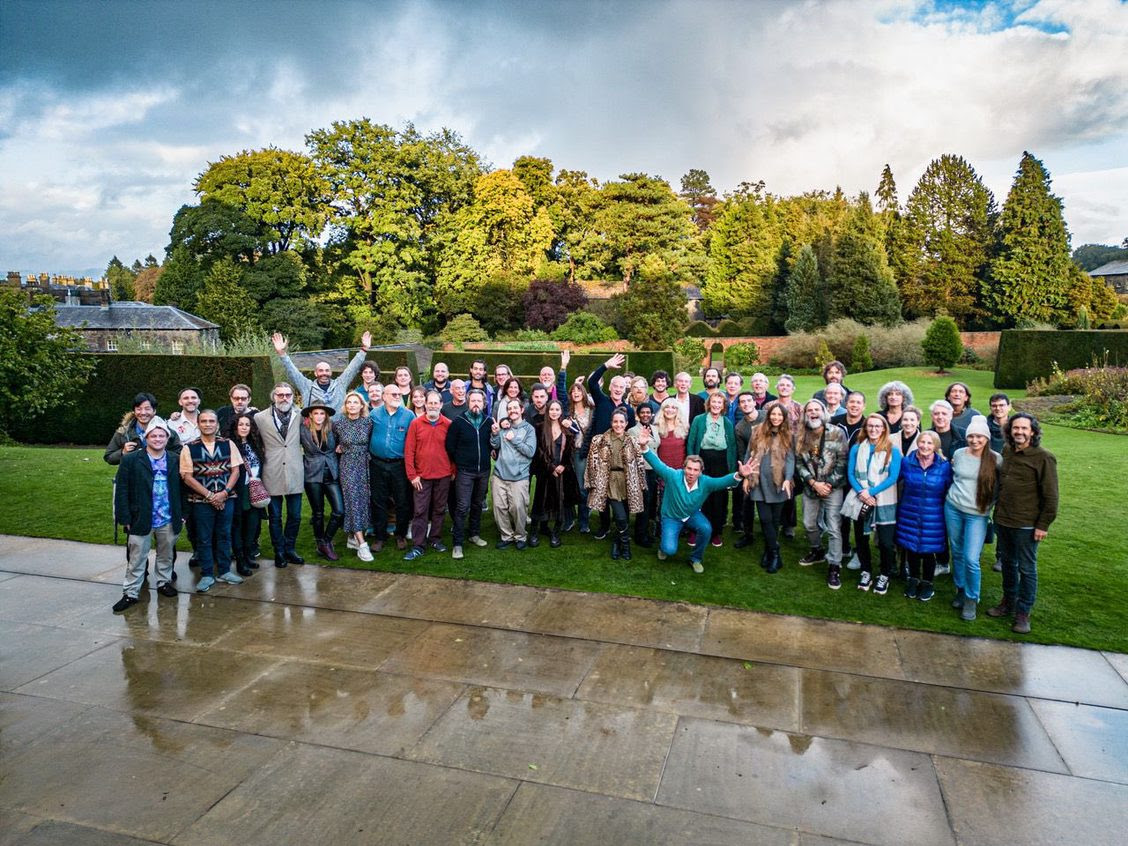






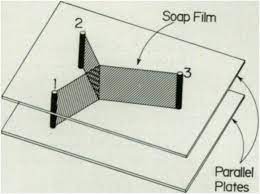





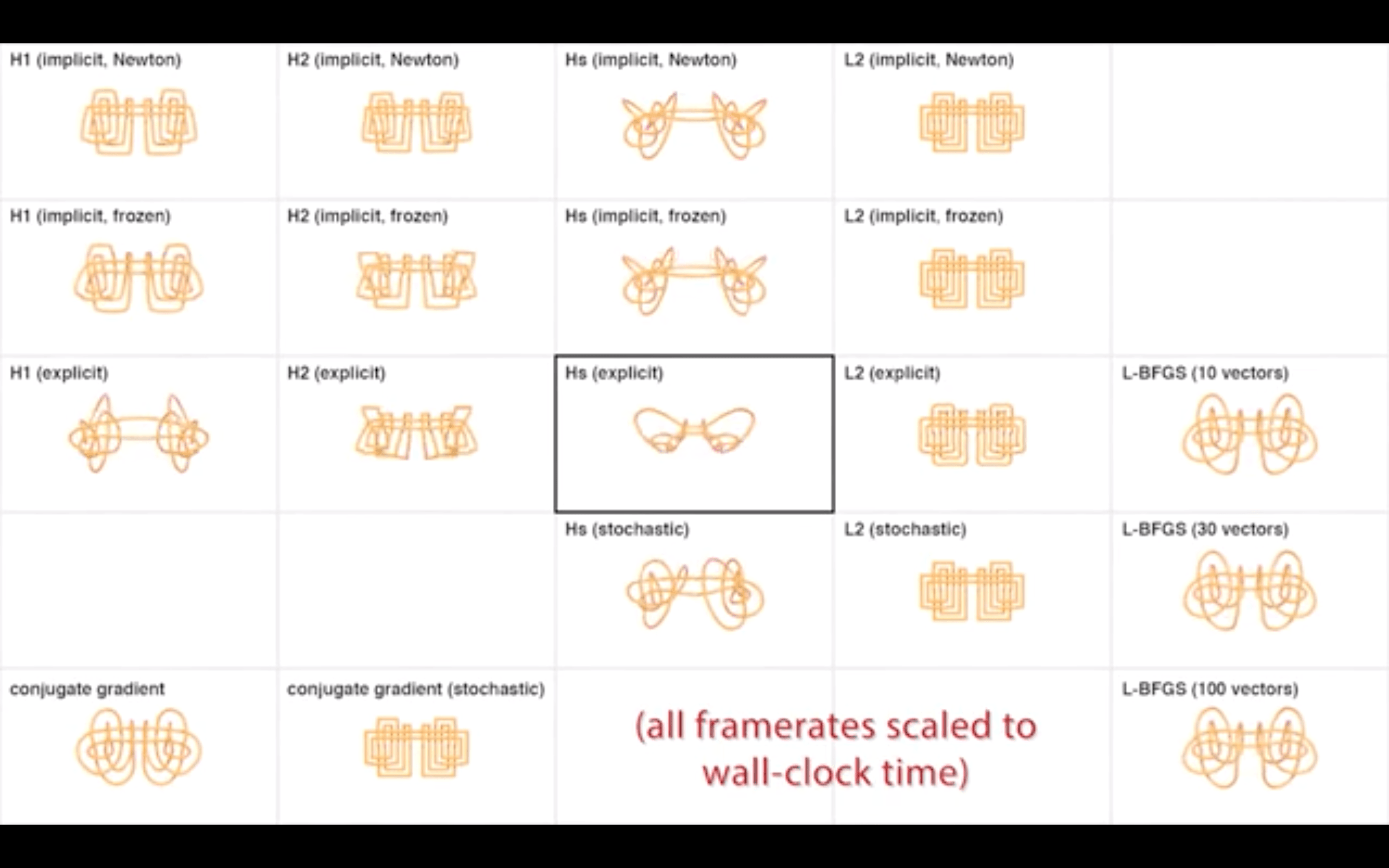





 What’s the trick?