I have not settled (and maybe it’s not for me to do it) on the core tenets of Team Consciousness. This would be a kind of philosophy or spirituality that tries to derive ethics from truth and actually get at the truth rather than a convenient approximation of it (or worse, a misrepresentation of it for the sake of memetic reproduction capacity). What I’ve thought for many years and has remained stable, is that we can reduce them to three core principles:
Oneness / Frame Invariance
Valence Realism
Math
First, we must realize that every point in reality is equally real. There are more or less intense experiences, of course, but this is in fact a measure of how much reality is expressed in each. The core idea here is not that every experience is literally equally significant (they’re not) but that the spatiotemporal coordinates of an experience are irrelevant for their significance. Your experiences or the experiences of the members of your tribe or species are not more or less real than those of anyone else, factoring in their degree and intensity of consciousness.
The second core idea is that valence – whether experiences feel good or bad – is the source of value. More so, valence structuralism (an implication of valence realism in light of empirical observations of what feels good or bad in practice) entails that the value of reality is encoded in the geometric and topological basis of consciousness. Indeed, there are better and worse forms of being, and this is not an arbitrary matter, but one that can be investigated directly and devoid of personal prejudice.
And finally: math. It is not the same to suffer for one second versus a million years. It is not the same for one person to suffer as it is for a billion persons in torment. It is not the same for love to exist for a minute versus it being the foundation of a civilization. Amounts matter; qualities matter. This is tautological, of course. But for strange reasons, our empathizing cognitive styles often neglect math. So we ought to correct for this bug.
I think that all of ethics can be reconstructed from these principles. And in fact, they might help solve many moral paradoxes and enigmas. Just apply them diligently and rigorously and see how they allow you to discern between good and evil.
My hope is that the reproductive capacity of these three core principles will come from the fact that (1) they are true (and truth is convergent for those who seek it) and (2) they are highly beneficial and generate excess value. On (2), I’d point out that valence realism and the oneness of consciousness principle have practical implications, ranging from a science of consciousness capable of reducing depression, anxiety, and chronic pain, to future consciousness-altering technologies that will greatly enhance our intelligence and collective coordination capacities. I wish for these tenets to not acquire additional clauses that are there merely for their reproduction capacity at the cost of truth or accuracy; they should stand on their own. But these might not be the final set. I’m open to suggestions and enhancements 🙂
The quote above comes from a lecture Richard Feynman gave in which he talks about the challenges and opportunities of studying and interacting with the world at a very small scale. Among other things, he touches upon how gaining access to e.g. a good-enough electron microscopes would allow us to answer long-standing questions in biology by just looking at the thing (cf. Seeing Cell Division Like Never Before). Once you start to directly engage with the phenomenon at a high-enough resolution, tackling these questions at the theoretical level would turn out, in retrospect, to be idle arm chair speculation.
I think that we can make the case that philosophy of ethics at the moment might be doing something like this. In other words, it speculates about the nature of value at a theoretical level without engaging with the phenomenon of value at a high resolution. Utilitarianism (whether classical or negative), at least as it is usually formulated, may turn out to have background assumptions about the nature of consciousness, personal identity, and valence that a close examination would show to be false (or at least very incomplete). Many criticisms of wireheading, for instance, seem to conflate pleasure and reward (more on this soon), and yet we now know that these are quite different. Likewise, the repugnant conclusion or the question between total vs. mean utilitarianism are usually discussed using implicit background assumptions about the nature of valence and personal identity. This must stop. We have to look at the thing!
Without further ado, here are some of the key ways in which an enriched understanding of consciousness can inform our ethical theories:
Mixed Valence
One ubiquitous phenomenon that I find is largely neglected in discussions about utilitarianism is that of mixed valence states. Not only is it the case that there are many flavors of pleasure and pain, but it is also the case that most states of consciousness blend both pleasurable and painful sensations in complex ways.
In Principia Qualia (Michael Johnson) the valence triangle was introduced. This describes the valence of a state of consciousness in terms of its loadings on the three dimensions of negative, positive, and neutral valence. This idea was extended in Quantifying Bliss, which further enriched it by adding a spectral component to each of these dimensions. Let’s work with this valence triangle to reason about mixed valence.
In order to illustrate the relevance of mixed valence states we can see how it influences policies within the context of negative utilitarianism. Let us say that we agree that there is a ground truth to the total amount of pain and pleasure a system produces. A naïve conception of negative utilitarianism could then be “we should minimize pain”. But pain that exists within an experience that also contains pleasure may matter a lot less than pain that exists in an experience without pleasure that “balances it out”!
The naïve conception, would thus, not be able to distinguish between the following two scenarios. In Scenario A we have two persons, one suffering from both an intense headache and an intense stomach ache and the other enjoying both a very pleasant sensation in the head and a very pleasant sensation in the stomach. In Scenario B, we switch it up: one person experiences an intense headache while also a very pleasant sensation in the stomach, and the other way around for the other person.
But if you have ever experienced a very pleasant sensation arise in the midst of an otherwise unpleasant experience you will know how much of a difference it makes. Such a pleasant sensation does not need to directly blunt the painful sensation; the mere presence of enough pleasure makes the overall nature of the experience far more tolerable. How and why this happens is still, of course, a mystery (in a future post we shall share our speculations) but it seems to be an empirical fact. This can have extraordinary implications, where for example a sufficiently advanced meditator might be able to dilute very painful sensations with enough equanimity (itself a high-valence state) or by e.g. generating jhanic sensations (see below). Have you ever seen this discussed in an academic journal on ethics? I didn’t think so.
We don’t need to invoke such fancy scenarios to see the reality and importance of mixed valence states. The canonical example that I use to illustrate this phenomenon is where: you just broke up with someone (-), are at a concert enjoying really good music (+), are coming up on weed and alcohol (+), but also need to pee really bad (-). We’ve all been there, haven’t we? If you get sufficiently absorbed into the cathartic pleasure of the music and the drugs, the negative feelings temporarily recede into the background and thus might tilt the experience towards the net positive for a while.
Once you consider the reality of mixed valence states, there is a veritable Cambrian Explosion of possible variants of utilitarianism. For example, if you do accept that pleasure can somehow dilute pain within a given moment of experience, then you could posit that there is a “line of hedonic zero” on the valence triangle and anything on one side of it is net positive:
A version of negative utilitarianism we could call within-subject-aggregated-valence negative utilitarianism recognizes any experience in the “Net Positive” region to be perfectly acceptable even though it contains painful sensations.
Alternatively, another version we may call strict negative valence utilitarianism might say that pain, whether or not it is found within an experience with a lot of pleasure, is still nonetheless unacceptable. Here, however, we may still have a lot of room for a civilization animated by information-sensitive gradients of bliss: we can use the gradients that have a mixture of positive and neutral Vedanā for information signaling:
Yet another view, perhaps called within-subject-majoritarian negative valence utilitarianism might say that what makes an experience worth-living and unproblematic is for it to be at least 50% pleasant, regardless of the composition of the other 50%:
Now, I am not going to adjudicate between these views today. All I am pointing for the time being is that actually engaging with the phenomenon at hand (i.e. how valence manifests in reality) radically enriches our conceptions, and allows us to notice that most of ethics has an impoverished understanding of the phenomenon it comments on. We can change that.
Logarithmic Scales
As argued in Logarithmic Scales of Pleasure and Pain (summary) we think that there is a wide range of evidence that suggests that the intensity of both pleasure and pain follows a long-tail distribution. I am not going to repeat the arguments here, since I’ve written and presented about them extensively already. I will merely mention that I am deeply suspicious of the intellectual seriousness of any ethicist who somehow fails to notice the enormous moral significance of the following states of consciousness, among others:
On the positive side:
Temporal lobe epilepsy
MDMA
Jhanas
Good high-dose 5-MeO-DMT trip
On the negative side:
Cluster Headaches
Kidney Stones
Bad high-dose 5-MeO-DMT trip
Valence and Self-Models
One of the claims of QRI is that every experience, no matter how outlandish and unlike our normal everyday human experience, has valence characteristics. An analogy can be made with the notion of physical temperature: every physical object has a temperature, no matter what it is made out of or what its shape is.
Most human experiences have a lot of shared structure, with things like a central “phenomenal self” that works as an organizing principle for arranging sensations. Many meditators and psychedelic enthusiasts point out that suffering seems to have something to do with our sense of self. That feelings matter only to the extent that they are happening to someone. But experiences without a phenomenal self (or with radically altered phenomenal selves) will nonetheless still have valence characteristics. Ego deaths can be dysphoric or euphoric.
We argue that what matter is actually the overall structure of the experience (cf. valence structuralism). It just so happens that above a certain level of valence, the phenomenal self starts to become an impediment to further bliss. Ultra-pleasant experiences, thus, tend to be selfless! But this does not make them worthless. On the contrary, their intrinsic worth, coming from their positive valence, can go through the roof.
That said, reporting the valence of very exotic experiences can be remarkably difficult. This doesn’t mean that we should give up; rather, we ought to develop new methods, vocabulary, and culture to be able to place these experiences on the same moral footing as our normal everyday life.
For example, the so-called “toroidal state” (on DMT) or during a meditative cessation can have profound valence effects, to the point of making you reconsider the very nature and scope of what matters.
Regardless of the way a specific door manifests, it reveals something completely extraordinary about the relationship between “the watcher” and “the watched” that it would take a very warped, non-Euclidean view of the universe to explain, though I will try shortly. One way or another, these fleeting experiences cannot easily be explained in terms of our normal, four-dimensional experience of space-time, or within our ordinary subject/object experience. […] When the no-self door predominates with suffering as its second aspect, then a very strange thing happens. There may be an image on one side staring back, but even if there isn’t, the universe becomes a toroid (doughnut-shaped), or occasionally a sphere, and the image and this side of the toroid switch places as the toroid universe spins. It may spin sideways (horizontally), or it may spin vertically (like head over heels), and may also feel like a hood of darkness suddenly being pulled over our heads as the whole thing synchronizes and disappears, or like everything twisting out of existence. The rarest no-self/suffering variant is hard to describe, and involves reality becoming like a doughnut whose whole outer edge rotates inwards such as to trade places with its inner edge (the edge that made the hole in the middle) that rotates to the outer edge position, and when they trade places reality vanishes. The spinning includes the whole background of space in all directions. Fruition occurs when the two have switched places and the whole thing vanishes.
I recommend reading the whole chapter for what I consider to be some ultra-trippy phenomenology of surprising ethical relevance (see also: No-Self vs. True Self).
In summary: this all indicates that states of consciousness have valence characteristics independently of the presence, absence, shape, or dynamic of a phenomenal self within them. If your ethicist isn’t considering the moral worth of Nirvana… perhaps consider switching to one who does.
Valence and Personal Identity
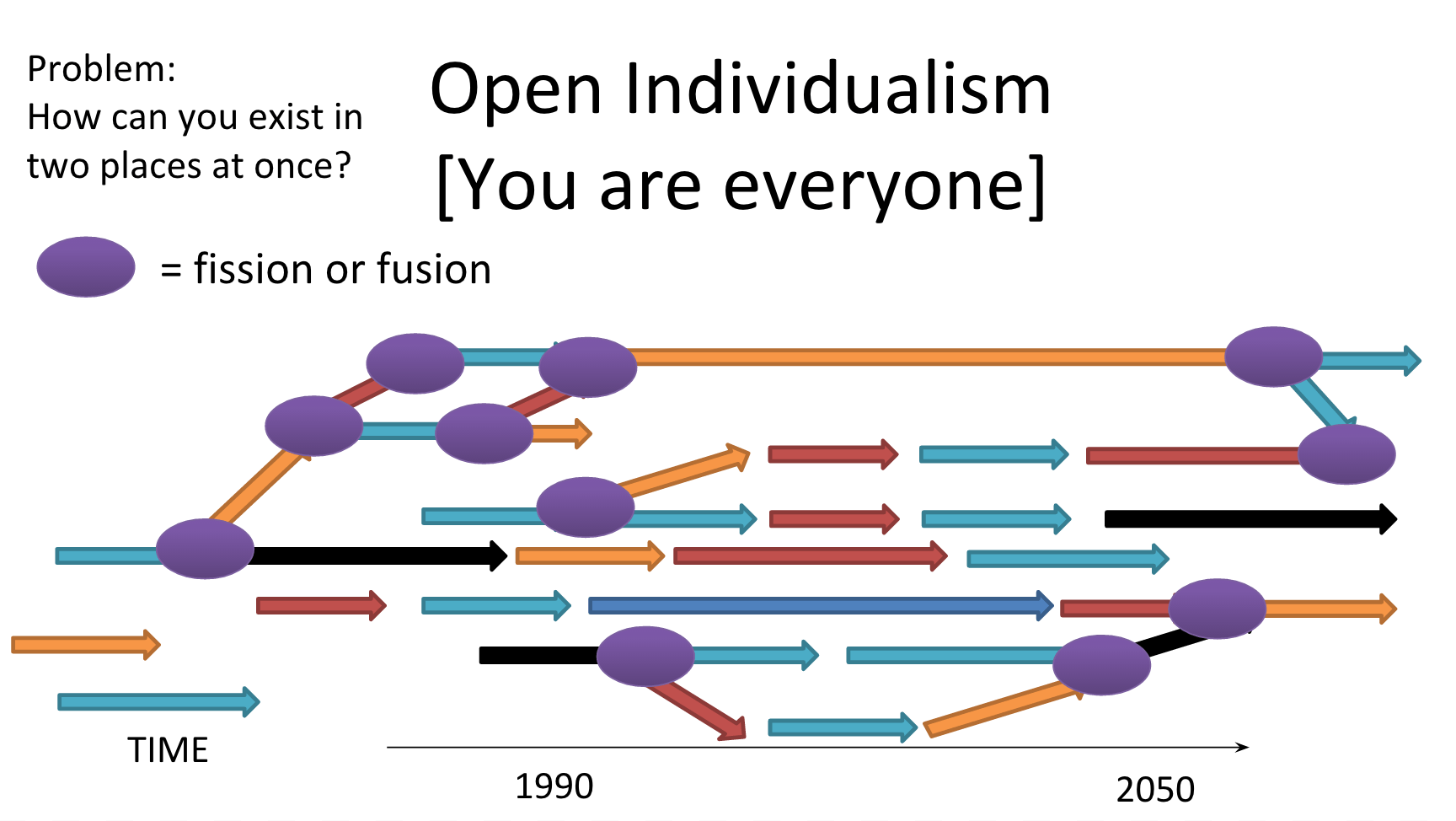
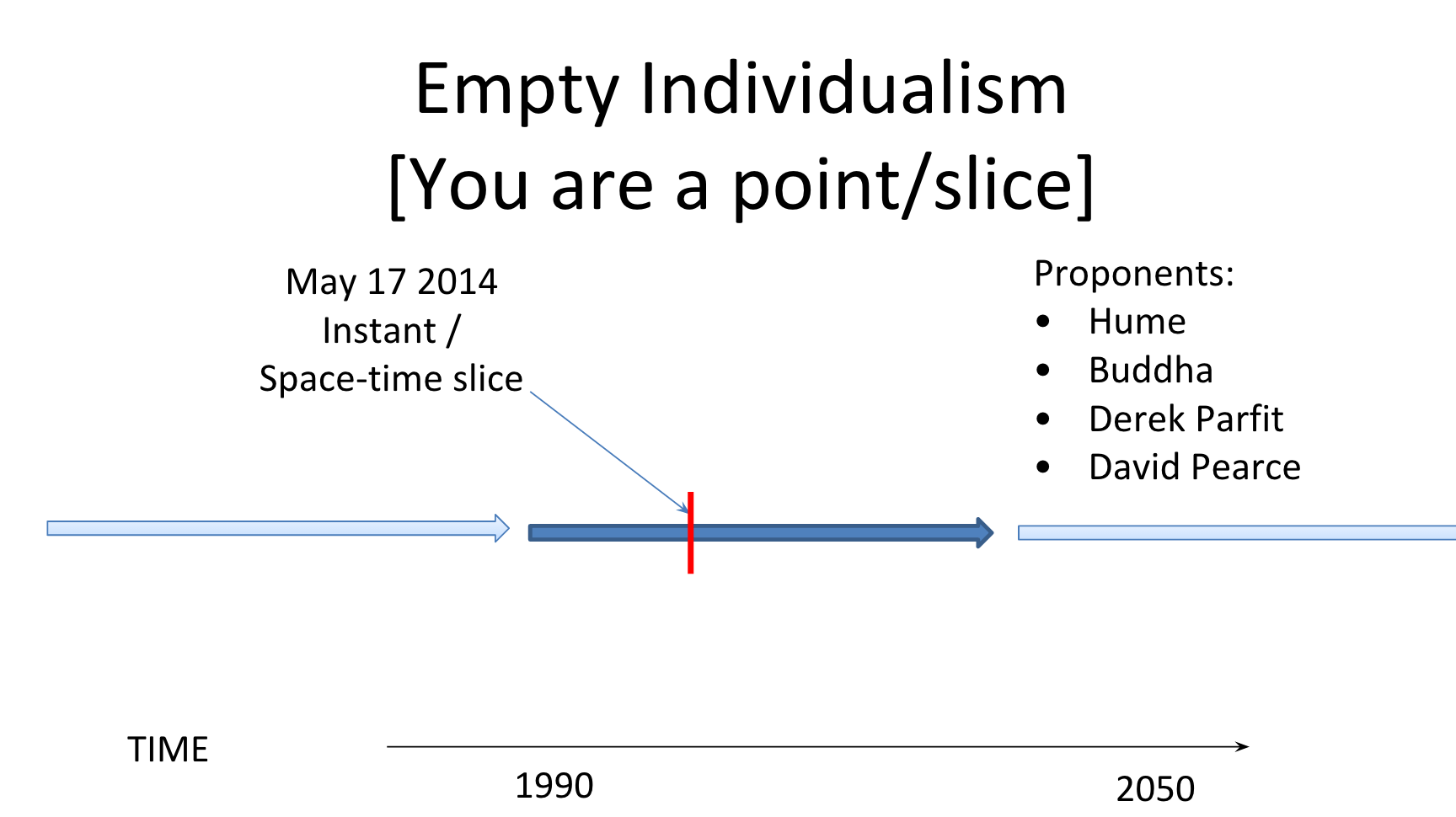
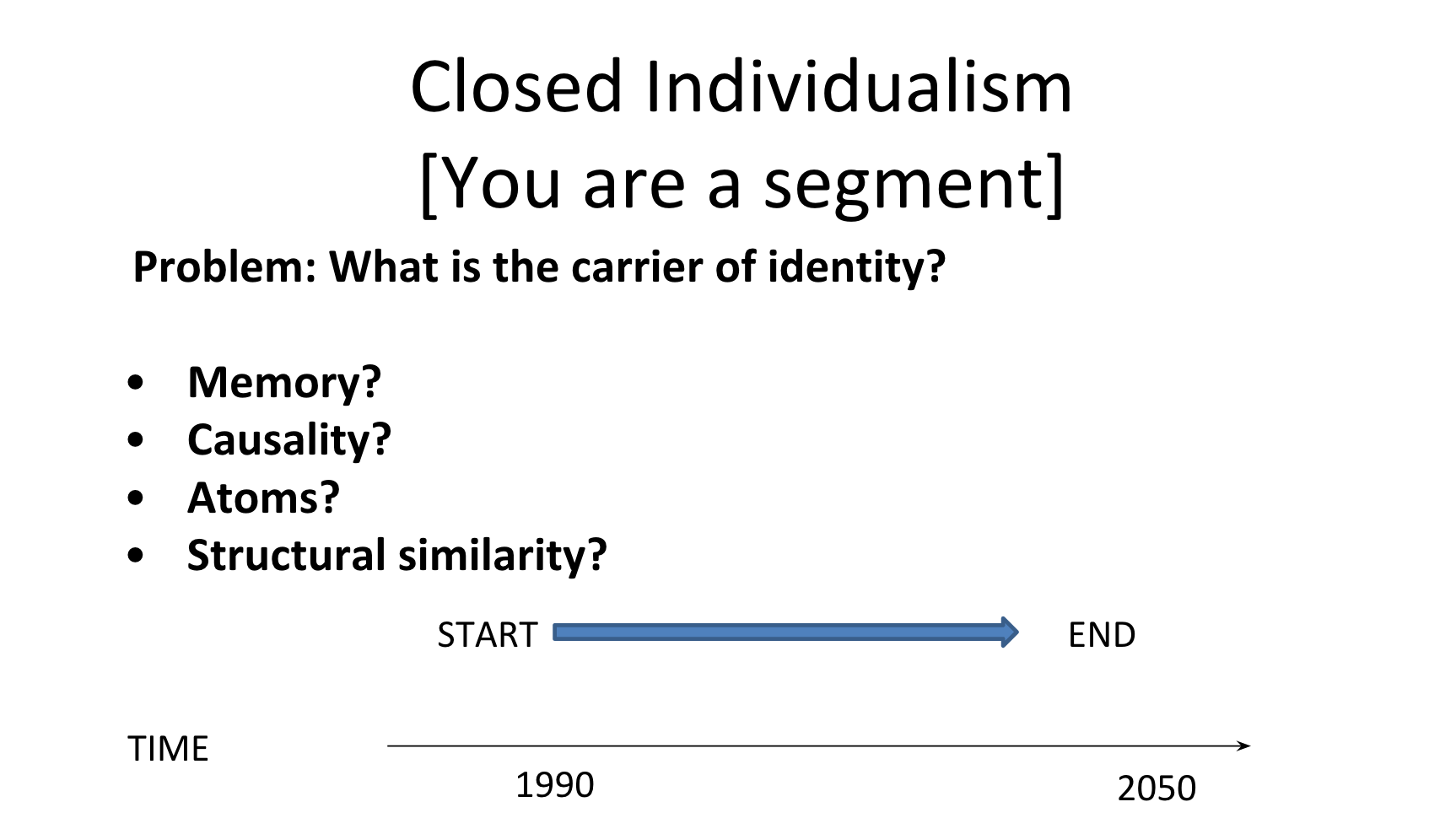
The solution to the phenomenal binding problem has implications for both personal identity and ethics. If, as I posit, each moment of experience is in fact a topological pocket in the fields of physics, then Closed Individualism would seem to be ruled out. Meaning, the standard conception of identity where you start existing when you are born and stop existing when you die would turn out to be a strange evolutionarily adaptive fiction. What really exists is a gigantic field of consciousness subdivided into countless topological pockets. Empty Individualism (“you are just a moment of experience”) and Open Individualism (“we are all the same universal consciousness”) would both be consistent with the facts, and it might be impossible to decide between them. Yet, I argue that the vast majority of ethical theories have as an implicit background assumption Closed Individualism. So realizing that it is false has major implications.
In particular, if we take the Empty Individualist perspective, it might be easier to defend negative utilitarianism: since each snapshot of experience is a completely separate being, you simply cannot “make it up” to someone who is currently suffering by giving him/her enough happiness in the future. Simply put, that suffering will never be redeemed.
Alternatively, if we take the Open Individualist perspective, we now might have actual grounds to decide between, say, average vs. total utilitarianism. Ultimately, you will be forced to experience everyone and everything. This line of reasoning becomes particularly interesting if you also take seriously something like Feynman and Wheeler’s One-electron Universe. Here we might possibly even objectively determine the moral worth of an experience in terms of “how long the one electron stays trapped inside it”. An experience with a huge spatial breadth and one with enormous temporal depth may be equivalent according to this metric: they’re just structured differently (cf. Pseudo-Time Arrow). In this account, you are bouncing backwards and forwards in time interfering with yourself forever. The multiverse is the structure emergent from this pattern of self-interference, and it is eternal and immutable in a certain sense. Relative to a small experience, a large experience would be one that keeps the one electron trapped for longer. Thus, there would be a strong case to care more about bigger and brighter experiences: you’ll be there for ages!
If indeed you are bouncing backwards and forwards forever in this structure, then perhaps average utilitarianism can be defended. In brief, since you are always somewhere, what matters is not how large the structure is, but the shape of its distribution of states.
Valence Structuralism
Finally, if you pay attention to the nature of highly valenced states of consciousness you will notice that they have structural features. The Symmetry Theory of Valence (overview; CDNS) can be experientially verified for oneself by introspecting on the structural features of one’s experience when enjoying intense bliss or enduring intense suffering. Rob Burbea’s meditation instructions are very well worth reading to get a sense of what I’m talking about. This would seem to matter a lot when it comes e.g. deciding what kind of artificial sentient minds we might want to create. Much more on this in the future.
Putting It All together
High-dose DMT experiences are an excellent example of the sort of state of consciousness that is part of reality, is generally not taken seriously in philosophy (despite its enormous significance), and has many elements that challenge preconceptions about pleasure and pain and inform our understanding of valence. These experiences:
For a theory of physics to be true it needs to be able to explain physical phenomena outside of room temperature. Likewise, for an ethical theory to be in any way true, it ought to be able to account for states of consciousness outside of the range of normal human everyday life experience. DMT states, among others, are examples of non-room-temperature states of consciousness that you can use to test if your theory of ethics actually generalizes. How do you make sense of experiences that have more qualia, have mixed valence, have exotic phenomenal selves, and have valence effects up there in the logarithmic scale? That’s what we need to answer if we are serious about ethics.
Evolutionary qualia suggests our inner world-simulations are not merely painted with different colors, but have different soundtracks, aesthetics, narrative themes, and walk-on character status. Cilantro tasting like soap to ~10% of people is merely the canary in the coal-mine. Our differences in qualia (and consciousness more broadly) probably involve modes of experience you and I don’t even know exist.
Excerpt from Global Brain (2000) by Howard Bloom (Pgs. 143 – 146). [Emphasis mine]
Our brains differ as much as our bodies. Indeed, they may differ more. One part of the brain, the anterior commissure […] varies seven-fold in area between one person and the next. Another part, the massa intermedia […], is not found at all in one in four people. The primary visual cortex can vary three-fold in area. Something called our amygdala (it is responsible for our fears and loves) can vary two-fold in volume – as can something called our hippocampus (involved in memory). Most surprisingly, our cerebral cortex varies in non-learning impaired people nearly two-fold in volume.
– Dr. John Robert Skoyles
Thanks to Plato, we have what purport to be records of the conversations of a human Cuisinart of concepts, an eclectic sage whose roughly fifty-year-long intellectual life bracketed the Periclean Golden Age (443-429 B.C.). This all-purpose conceptual chopper and blender was that son of a socially high-placed family, Socrates. Experts and neophytes agree that it’s impossible to tell how many of the words Plato ascribes to this self-appointed gadfly were authentic and how many were simply Plato’s way of getting his own notions into the public eye. But one thing is generally accepted as accurate – the names of the folks from whom Socrates extracted opinions before shredding them with the quiz mastering which now bears his name (Socratic dialogue). The cast of characters palavering with Socrates in Plato’s Dialogs, says learned reasoning, was too well known in Athens for Plato to have fudged.
Just who were the fonts of learned conversation whose wisdom Socrates whipped and whirled? Socrates’ interlocutors were frequently famous thinkers from distant cities, each of which specialized in a different manner of plucking goods from its surroundings and injecting them into the circulatory system through which the trade of the Mediterranean and the Black Sea swirled. Socrates was a student of Anaxagoras, who came from the Ionian city of Clazomenae on the coast of today’s Turkey. He was also a disciple of Archelaus, another Ionian import. The Socratic dialogues Plato “chronicled” included those with Protagoras from the Balkan city of Abdera, Hippias from Peloponnesian Elis, Parmenides from Italy’s Elea, and Gorgias from Sicily’s Leontini. Each visiting intellect had been shaped by contact with a unique group of surrounding tribes, and by the exigencies imposed on city structure, domestic habit, and vested interest by distinctive forms of enterprise. One result: each arrival presented a philosophy which appealed to a very different configuration of the human mind.
To understand how philosophy couples with the mind’s biology, let’s track the complex adaptive system’s best-concealed constituent to its hiding place. The five elements of the complex adaptive system are conformity enforcers, diversity generators, inner-judges, resources shifters, and intergroup tournaments. Inner-judges may be the most unusual of the crew, for they are physiological built-ins which work deep inside the body to transform a bacterium, a lizard, a baboon, a me, or a you into a module of a larger learning machine. The basic rule of learning machines is one we’ve already seen: turn on the juice to components which have a grip on the problem at hand and turn off the power to those components which just can’t seem to understand. Inner-judges help decide whether the components in which they reside will be enriched or will be denied, then they aid in carrying out the sentence. The irony is that these evaluators, prize givers, and executioners are built into their victims biologically. On the microlevel, inner-judges work through “programmed cell death” – apoptosis – a molecular chain reaction deep within the genes which ends in cellular suicide. In higher animals the inner-judges dole out interior punishments which range from overdoses of stress hormones to emotional miseries. Or they grant internal bonuses of zest and confidence to those of us fulfilling our group’s needs.
When we feel like kicking ourselves around the block or curling up and disappearing, our condemnation comes from inner-judges like guilt and shame. What’s a good deal harder to realize is that behind the scenes our inner-judges sicken us and dumb us down quite literally. If they sense we’re a drag on the collective intelligence, inner-judges down shift our immune system and neurochemically cloud our ability to perceive. They induce a narcotic haze by swamping our system with endorphins, the body’s self-produced equivalent of morphine*. And they flood us with glucocorticoids which kill off both brain cells and lymphocytes – critical cells in our fight against disease.
Inner-judges measure our contribution to the social learning machine by two yardsticks: (1) our personal sense of mastery; and (2) the hints we get from those around us telling us whether they want us eagerly or couldn’t care less if we disappeared like a blackhead from the face of decent society.
Mastery is a useful gauge. It measures whether we’re coping with the trials tossed our way, and whether our example can help steer others in their trip through choppy seas. Popularity is an equally practical yardstick. It measures the extent to which we’re feeding others’ physical, organizational, and/or emotional needs.
Nestled deep within our neuroendocrine complex, inner-judges operate on a sliding scale. By adjusting our mix of neurotransmitters like serotonin, dopamine, norepinephrine, and acetylcholine, or the balance between the gloomy right and sunny left side of the brain, they shift us from fear to daring, from misery to happiness, from grouchiness to charm, from timid silence to expansive speech, from deflation to elation, from pain to ecstasy, from confusion to insight, and from listlessness to lust or to the resolute pursuit of goals.
Some of us are born with inner-judges whose verdicts are perpetually harsh. The result is depression, shyness, and heightened susceptibility to pain. Others arrive from the womb with inner-judges preset to treat us generously, endowing us with energy, few inhibitions, a deep sense of security, and little sense of guilt or shame. But most of us are in the middle – our inner-judges sentence us sternly or magnanimously depending on the snugness with which we fit our social network’s needs.
Those born with inner-judges excessively lenient or severe have taught us much about the secrets of mental and emotional diversity. Harvard University researcher Jerome Kagan has probably never heard the term “inner-judges,” yet he may have done more than any other psychologist to uncover their capabilities. To understand what Kagan hath wrought, a background briefing is in order.
The early-twentieth-century psychoanalytic thinker Carl Jung, says Kagan, originated the concept of introverted and extroverted personalities. Jung also believed that each had a slightly different brain structure. Kagan feels that in his own way, he has proven Jung right. He’s found that 10 to 15 percent of infants are born with a tendency to be fearful and withdrawn, while another 10 to 15 percent are born with a flair for dauntless spontaneity. During the last few decades of the twentieth century, Kagan performed numerous experiments and accumulated large amounts of data demonstrating his concept’s validity.
He refers to facts like these:
In studies of Japanese and American newborns, some infants took the removal of the nipple from their mouths calmly, while others went into emotional fits. The babies as yet had had no opportunity to learn these reactions from their parents. The tendencies were those they’d brought with them from the isolation of the uterus. At fourteen months, the babies who’d been easily upset at birth were still so oversensitive that they often broke out crying when the sight of a stranger loomed. On another test, babies who became upset at birth when they were switched suddenly from water to a sugar solution squalled hysterically at the age of one or two when their mothers left the room, but babies who had taken the change in beverage casually did not. In addition, a study of 113 children showed that those who had a hard time handling the unexpected when they were one year old were still shy and withdrawn by the time they reached six.
This tendency toward variation in personality was not limited to human beings. According to Kagan, it appeared in dogs, mice, rats, wolves, cats, cows, monkeys, and paradise fish. Some of these animals were fascinated by novelty. Others were terrified by anything the least bit out of place.
Fifteen percent of cats steered clear of strangers and even avoided attacking rats. This was remarkably close to the percentage of humans frozen by anxiety attacks.
Kagan traces these differences to genes, which can help set off a lifelong domino effect in the brain. The production of key manufacturing enzyme for the stimulant norepinephrine, says Kagan, is controlled by a single pair of genes, making norepinephrine levels highly heritable. Norepinephrine – which is also a potent stress hormone – shows up very early in the development of the embryo, making the hippocampus oversensitive to the unfamiliar, and hyperactivating the amygdala, which jolts us with the warning signal we call fear. The hippocampus and amygdala – as we’ve seen earlier – are central shapers of the memory bank we call reality. They are also key to the inner-judges’ machinery.
[…]
Later in life the products of a prebirth norepinephrine cascade are timid children, who, in carefully controlled studies, are alert to slight changes in tones or brightness of light that other children miss. In other words, these children literally see and hear their world in ways others would not recognize. According to Kagan, the constitutionally frightened are endowed with a limbic system hair-triggered to curse them with a sense of imminent catastrophe. As a consequence, shy children attempt to escape punishment by hiding from everyday events which threaten to torment them hideously. Uninhibited children, on the opposite end of the scale, have underaroused limbic systems and demand a deluge of entertainment to dodge boredom’s intolerability. Their craving for excitement can sometimes wear their parents to a frazzle.
Kagan’s shy children are condemned to solitude and pain by hanging judges in their own biology. Kagan’s uninhibited kids are gifted with indulgent inner-judges predisposed by the limbic system to offer such unearned rewards as boldness and social dexterity. But most of the animals and humans Kagan has studied avoid these two extremes. Seventy percent remain in the middle, their inner-judges handing out positive and negative verdicts according to the rules of the learning machine.
*”Endorphin” is a contraption of the term “endogenous morphine.
To extend this recent EA Forum Post, I wanted to share the results of Qualia Research Institute’s research into using tryptamines to abort and prevent cluster headaches. While the quotes and statistics contained here can provide some notion of the pain experienced by cluster headache sufferers, I think it is truly unimaginable. This report contains specific interventions to be pursued in both a philanthropic and for-profit business capacity. While for-profit options are beyond our scope, those interested in supporting philanthropic interventions should consider donating to ClusterBusters (the most important nonprofit dedicated to researching treatments for cluster headaches), or QRI (which does foundational research on ways to reduce intense suffering).
Mission: Instantly and safely abort cluster headaches and treat migraines, the #2 and #10 (respectively) most painful medical conditions according to NHS. Emphasis is placed on chronic cluster headaches, which account for as much as 80% of all clusters and currently lack an effective treatment option.
I. Problem:
“Even child birth is 1/10th the pain of a cluster headache, seriously this name needs to change… call it ultra super migraine.” (source)
A back of the envelope calculation indicates there are roughly 14 thousand people enduring a cluster headache right now.[1]
14.2% of US adults 18 or older reported having migraine or severe headache in the previous 3 months in the 2012 NHIS. The overall age-adjusted 3-month prevalence of migraine in females was 19.1% and in males 9.0%, but varied substantially depending on age. (source)
Current treatments are either ineffective, costly, unsafe, or some combination of the three. The most effective treatments available for cluster headaches include oxygen, which requires the patient to carry an oxygen tank with them at all times, and triptans, which can be used a maximum of three times daily (an issue for chronic sufferers especially) and have side effects from pain to heart attack and stroke. The most effective treatments for migraines include triptans and opioids (which have high addiction potential). Emgality, a more promising treatment for episodic cluster headaches, has recently entered the market, but its long-term risk profile and efficacy have not yet been established.
Bob Wold founded “Cluster Busters” in 2002 with the explicit purpose of trying to get psychedelics to be prescription medication (see his lecture Treating Cluster Headaches with Psychedelics). He tried over 75 different prescription medications and was at the end of the rope when he found psychedelics could be helpful:
Medications Bob Wold tried that didn’t work (1/2)
Meditations Bob Wold tried that didn’t work (2/2)
As noted in this Qualia Computing article, the survey surfaced that about 83% of all cluster headaches are experienced by 20% of the sufferers, most of which are classified as ‘chronic’. No existing medication has been approved for use to treat chronic cluster headaches. Vaporizing DMT could be the first such treatment, offering instant relief for cluster headaches as often as they arise in a (potentially large) percentage of sufferers.
II. Solution:
“One of the most incredible experiences of my life was when I first aborted a CH [cluster headache] with DMT. That feeling of going from a place of excruciating pain…and feeling the pain fizzle away and die in a matter of seconds” (source)
It is known by a majority of cluster headache sufferers that psychedelics can be highly effective treatments. Due to the legal status of psychedelics, no randomized controlled trial (RCT) has been conducted, but analysis has been done on online forum responses and anonymous surveys, and interviews have been recorded. Evidence from these reports points to a number of important factors: tryptamines (the class of psychedelics which includes compounds like N,N-DMT and psilocybin, the active chemical in ‘magic mushrooms’) seem especially effective, sub-psychoactive and non-psychedelic doses can be therapeutic, and psychedelics can also decrease the frequency of headaches on long time horizons. While smoking/vaporizing is the fastest method of administration available, information from a private correspondence suggests that the FDA may be averse to approving inhalants. Intramuscular administration, utilizing Rick Strassman’s protocol, could be an alternative that would achieve rapid relief without the use of an inhalation device[2]. Since the pain being experienced is so severe, having a faster method of administration is critical.
From the relevant academic literature:
“The indoleamine hallucinogens, psilocybin, lysergic acid diethylamide, and lysergic acid amide, were comparable to or more efficacious than most conventional medications. These agents were also perceived to shorten/abort a cluster period and bring chronic cluster headache into remission more so than conventional medications.” (source)
“Also, for DMT, it was suggested that singular or infrequent dosage could have potential long-term beneficial effects on headache disorders: ‘Even a single dose, or perhaps a couple, can be a lifelong benefit.’” (source)
“Of interest, an open-label study found that similar compounds (2-bromo-LSD) without psychedelic effect were promising for this purpose” (source)
From online surveys:
A survey of members of online cluster headache forums revealed that 68% of respondents who used tryptamines had a 4 or 5 out of 5 relief. 5 indicates “completely eliminated the cluster headaches”.
This survey again suggests that the main barrier to use is lack of access and hallucinogenic effects. As we found in an interview with an anonymous sufferer (see below), hallucinogenic effects may be avoidable.
Difficulty getting. 0 – Extremely easy to acquire, 5 – Nearly impossible to acquire
Legal risk. 0 – Not concerned at all, 5 – Extremely concerned
Side effects. 0 – Not concerned at all, 5 – Extremely concerned
From interviews with cluster headache sufferers who have tried N,N-DMT:
Due to the Schedule I status of psychedelics in the United States, pursuing this intervention in the US will not be feasible for a number of years (see Section IV for more information on pursuing FDA approval for DMT for cluster headaches/migraines).
A possible solution would be to create an online education campaign publicizing the results of this report to cluster headache sufferers, designated as ‘information-only’, and pursuing the use of psychedelics to treat cluster headaches and migraines in countries where tryptamines are legal, including Brazil, Jamaica and the Netherlands. In addition, given the gravity of the disorder, it could be cost-effective to fly patients to such countries for months at a time.
While we believe that traditional metrics such as the QALY do not accurately capture the suffering caused by a cluster headache (see upcoming post on the true pain/pleasure scale), a rough QALY calculation would be as follows (focusing on chronic cluster headache sufferers rather than average, since they compromise up to 83% of total headaches[3]):
Facebook AD campaign:
An estimated 370,000 Americans suffer from cluster headaches, 68% of whom are on Facebook[4] (=251,000). About 15% of these suffer from chronic cluster headaches (=37,740). According to Sprout Social, the average estimated cost per click of an ad campaign is $1.72. Assuming 1/10 who click are cluster headache sufferers, to reach all chronic sufferers would take (ballpark) $650,000.
Assuming about 30% of those who view the ad will pursue the treatment (rough estimate-those who put 2 or less on survey results for questions of legality, difficulty to acquire etc.) and that in 68% of cases it cured or nearly cured their clusters (based on survey results), then the resulting increase in QALYs would be (37,740 people * 0.3 * 0.68) * [0.760 (QALY coefficient) * 1 QALY – ( -0.429 (QALY coefficient)* (0.47QALY)) [5]] = $650,000/7, 404QALY = $87.70 per QALY.
These ads could also be targeted to users in countries where psilocybin and DMT are legal for use recreationally, increasing conversion rate. Further targeting could be done on Facebook groups (and other social media groups) which are associated with cluster headache treatment.
IV. For-profit Opportunities
The recent emergence of psychedelics in for-profit business settings also affords the opportunity for entrepreneurs to seek legal rescheduling of N,N-DMT in the US for the purpose of treating cluster headaches and/or migraines. Below is an outline of the process of navigating the FDA IND process, which could result in a change in legal status:
Market Size:
‘Orphan disease’ status:
There are two main classifications of cluster headaches, chronic and episodic. Episodic cluster headaches are characterized by periods of headaches (up to 8 times per day) of a week to a full year, which remit for periods from a month up to a year. Chronic cluster headaches, on the other hand, either last for longer than a year or have remittance periods of less than a month[6]. A meta-analysis from the NIH estimates that cluster headaches affect 124/100,000 in the U.S., meaning an estimated 370,000 people suffer from cluster headaches a year[7]. Of these, about 15%, or 60,000, suffer from chronic cluster headaches.
The FDA grants ‘orphan disease’ status to diseases which affect fewer than 200,000 persons in the U.S per year, and offers incentives to those pursuing treatments through the FDA’s IND process for such diseases, such as longer periods of exclusivity (monopoly on drug manufacture and sale) for the treatment after approval.
The global market for migraine drugs (which encompasses cluster headache drugs) in 2017 was $1.7 billion.
Healthcare and lost productivity costs associated with migraine are estimated to be as high as $36 billion annually in the U.S. Current estimates of cluster headaches’ annual cost in the U.S. is ~$3.5 billion.
Share of market
5 years after launch (with FDA approval, with a 5-year monopoly) – serve 20% of chronic migraine sufferers (800,000), serve 20% of cluster headache sufferers (40,000)
Platform’s average annual revenue per patient (migraines): $452/patient/year
1g of DMT is ~$100, approximately 50 doses (although an anecdote indicate 3mg may be sufficient). Compare to triptans, at ~$115 per 9 doses. Assuming 20% markup:
There is significant variance in frequency of cluster headaches: estimates range from [$120/g*0.02g/dose*30 doses/month *3 months = $324, $120/g*0.02g/dose*120 doses/month*12 months = $6912/patient/year].
Annual revenue, 5 years after launch: $13.6M [low cluster headache estimate] – $344M [high cluster headache estimate]
Annual revenue, 5 years after launch (migraines): $344M
The 5-year (or more, if ‘orphan disease’ status is gained) monopoly provided by the FDA would allow for further R&D, and as-yet undetermined projects. Some promising directions:
DMT may be beneficial for tobacco cessation ($7.0B market).
Ayahuasca shows significant evidence for efficacy in treating addiction.
There is anecdotal evidence that vaporized DMT is also effective in this space.
Why now?
FDA on track to approve MDMA therapy in 2021, psilocybin therapy in 2022
FDA approval will catalyze a large increase in demand for psychedelic services
There is sufficient evidence to attempt bringing DMT for headaches through the FDA process as it becomes increasingly open to psychedelic interventions
Reasons to start before FDA approval of MDMA and psilocybin:
A “psychedelic renaissance” is underway: funding for psychedelic research has skyrocketed, and multiple psychedelic decriminalization initiatives (1, 2) have recently passed. Riding the current wave of activist and public support is advantageous to our efforts.
More time to build relationship with the FDA (important for seeking DMT clearance)
More time to build relationships with organizations currently seeking FDA approval for therapeutic uses of psychedelics (MAPS &Compass Pathways)
Challenges:
Regulatory:
Taking on the FDA IND process can be challenging and high risk from an investment standpoint. The average cost of successfully completing Phase 1-3 trials (after which the drug can be rescheduled and approved for medical use) is $100m, requires about 9-11 years and has a 6.7% success rate (private correspondence).
The Multidisciplinary Association for Psychedelic Studies (MAPS) has recently raised $26.7M for Phase 3 MDMA trials alone[8]. Total, MAPS has spent in the ballpark of $30M. If Phase 3 trials demonstrate statistically-significant results, MDMA could be selectively rescheduled for use in therapeutic settings, but would require subsequent Phase 4 trials.
The FDA is risk-averse and has incurred backlash from their last notable rescheduling of fentanyl in 1985[9]. Convincing the FDA to pursue rescheduling for treatment of a relatively rare disease with other available medications will likely be difficult.
The success or failure of MAPS in receiving approval for MDMA will be crucial for defining the regulatory landscape for other psychedelics. Should they fail, bringing another similar substance through the process may prove much more difficult.
Competition:
As discussed in Section I, most available migraine and cluster headache drugs are ineffective, expensive, and/or have heavy risk profiles. Emgality, a new migraine drug approved last month, has received FDA ‘breakthrough therapy’ status for its ability to decrease the frequency of episodic cluster headaches and has shown promise as a palliative for migraines as well[10]. Emgality has not been approved for use in treating chronic cluster headaches, however, and does not achieve the same rapidity of administration as the DMT vape pen (see Section III). Thus, our solution is still critical for relieving symptoms instantly, and maintains the advantage of being eligible to treat chronic cluster headaches, an ‘orphan disease’.
Phase 1 studies (typically involve 20 to 80 people).
Phase 2 studies (typically involve a few dozen to about 300 people).
Phase 3 studies (typically involve several hundred to about 3,000 people).
Use of Funds
Expenses for research and operations staff
Technicians
Analysis consultants
Researchers with clinical experience
Legal counsel (paperwork)
Phase 1 FDA trial (our connections to expertise in the field would reduce the cost compared to average Phase 1 trials)
Data on Cost of Trials
The following information is from the MDMA/PTSD Trials led by MAPS. However, the treatment for PTSD involves: multiple therapy sessions and an MDMA-trained psychotherapist. Therapy sessions also last 6-8 hours. Presumably, some of these costs would not apply to a DMT/CH trial, so we expect trials for DMT/CH to be cheaper than the MDMA/PTSD Trials.
However, cluster headaches are not well suited to the therapeutic environment that is used to treat mental health conditions (they arise unpredictably, and require instant relief). This means there are likely significant cost-saving opportunities in the experimental design protocol.
Summary of costs for MAPS IND Process:
[1] Assume a world population of 7.7 billion people, and 53 out of 100,000 yearly prevalence suffering from this. Going by public health records, we see that the average number of cluster headache attacks that a sufferer experiences is about 30 a year (with a huge variance, where some people get only about 5 a year and some get them multiple times a day). Attacks last on average 1 hour (but range from 20 minutes to 3 hours). Hence, the number of people currently experiencing a CH is: 0.00053*7,700,000,000*(30/(24*365)) = 13,976.03 ~= 14 thousand
[July 18 2019 addendum: This assumes that coffee has a causal- rather than merely correlational- influence on longevity. See comment section for more details.]
The T-shirt in the featured image was probably designed as a joke, but I take it very seriously.
Indeed, I think there is a strong case to be made that subsidizing coffee could be seen as an Effective Altruist priority. You see, you can save a life with coffee for as little as $50k. This makes coffee an intervention that is on par with some of the top charities in the world, and it is an outlier when it comes to the cost-benefit ratio of medical interventions. Consider how, e.g. this article on QALY states that:
“The UK’s recommendations, for example, are about £20,000 to £30,000 ($30,000 to $45,000) for each additional year of good health, once it has been adjusted to take into account the quality of life. So a drug that achieved 0.5 on the QALY measure would only merit £10,000-15,000 ($15,000 to $22,500).”
Assuming a QALY-adjusted average life-span of about 60 years per person, coffee is about 30 to 50 times more cost-effective than the types of medical interventions the UK is willing to subsidize to extend people’s lives. And that’s not even considering what people themselves are willing to pay to extend their own lives, which is, of course, a lot more than what a government would.
Relative to GiveWell‘s top charities this is still not the best intervention out there (with some of the ultra-effective charities saving a life for about 2,000 dollars). I would nonetheless point out that the ultra-effective charities out there are all effective because they address populations where very basic human needs are not typically met. In Malaria-ridden, war-torn areas, a little can go a long way. But what’s different about coffee is that it is as effective everywhere in the world. Sure, you can save a life with $50k in many African countries. But can you do so in Sweden?! With coffee you can!
…
Anyhow, how did I arrive at these numbers? Well consider that you can get about 380 doses of coffee for as little as 10 dollars.*
So this means you can have a cup of coffee for as little as 2.63 cents(!). In turn, we know from a lot of research that each cup of coffee up to 4 cups a day prevents about 1/2 micromorts (interestingly, it is just as cost-effective to encourage people who don’t drink coffee to drink 1 cup as it would be to encourage people who drink 3 to go ahead and drink 4).
Given those numbers, we have that the cost of a full life-span worth of micromorts is about $52,631.58.
Why are we not funding this?!
*With: Example 48 oz brand. (we could do even better buying in bulk – I reached out to a delivery company to get a quota and will update when I know more).
Some errors are ethically catastrophic. Prioritizing the prevention of suffering based on the number of cortical neurons of the brains that would generate such suffering might be one of them.
We should avoid jumping to conclusions. It is possible that moral significance will ultimately be revealed to be based on capacity to suffer and experience joy, which is related to the limbic system, pleasure centers, and thalamus rather than the capacity to verbalize and cogitate, which is related to number of cortical neurons. People’s perceptions and intuitions are likely to be biased towards over-valuing intelligence because that’s something that got ingrained into our perception of value due to sexual and kin selection.
If QRI’s Symmetry Theory of Valence is correct, most intense and (dis)valuable experiences will turn out to be very simple in structure (even if very high energy-wise). Complexity of neural architecture is correlated with potential for intelligence and complex states. But it is not necessary for emotionally powerful experiences. The cortex, after all, plays majorly an inhibitory role in the brain. Emotion centers, on the other hand, are excitatory, evolutionarily ancient and phylogenetically preserved across the animal kingdom (e.g. even octopodes enjoy MDMA). Based on this, uninhibited base emotions are likely to feel roughly the same (or close to the same) in human and nonhuman animals alike.
What about an animals’ capacity to inhibit base emotions? As John Lilly’s studies indicate, the thickness of an animal’s cortex is correlated with its emotional control. A macaque in panic is more impulsive and violent than a chimpanzee in panic, which in turn is more impulsive and violent than a human in panic. The same goes for humans with different cortical sizes. Hence, sadly, there is a good chance that pigs, dogs, birds, and cows experience emotions more- rather than less- intensely. Their emotions may not be as ‘subtle’ and multilayered, but why would that matter for ethics? Raw panic is worse than subtle poetic melancholia and other ‘valued (i.e. fetishized) human emotions’. Again, we overvalue such subtle emotions as a side effect of the specific sexual selection pressures experienced in our recent evolutionary history, rather than for good well-thought-out reasons.
In this age of ethical emergencies (aka. the Darwinian age), I would like to offer the suggestion of enforcing pleasure center activation in factory farm animals as a precondition for having them raised for meat or dairy. Likewise, such should be done in nonhuman animal studies that focus on things other than the brain. Why not wirehead rats who are being studied for kidney failure? It won’t matter for that area of research… but it will certainly matter for the subjective wellbeing of the rats in question.
A relevant side note here would concern another human bias in addition to the fetishization of cortical neurons. Namely, our positive bias towards cute animals due to mirror neuron activation. Cuteness and neoteny are attractive to humans for good evolutionary reasons, but this is a perceptual bias rather than the result of careful moral reasoning. The fact that humans perceive pandas as cute hardly justifies letting millions of sentient beings suffer in exchange for “saving the panda” (cf. Should We Let Pandas Go Extinct?*).
Really what we need is what Mike Johnson has pointed at in his blog for ages: objective measures of species’ specific valence landscapes.
My dark hunch: the life of some animals is simply not worth living no matter their environmental conditions. Crickets- the consciousnesses science of 2050 could reveal- are 100% driven by dissonance and never experience pleasure. If so, let’s fix them or phase them out.
Finally, also consider: Cluster headaches are 10,000sX more painful than other medical conditions. Given this extreme outlier in humans, we could infer that there are good odds that there are other kinds of ultra-high-intensity suffering lurking in species’ specific diseases. Morally, it ought to be key to identify these cases and treat them as our priority. Focusing on cortical neurons instead would be a- possibly ethically catastrophic- red herring.
* This is not to say that it is desirable for the panda to go extinct. It is a question of opportunity cost. It might make sense to put efforts instead in sequencing the DNA of the entire panda population and consider rebooting it sometime in the future.
tl;dr If we construct a theory of meaning grounded in qualia and felt-sense, it is possible to congruently arrive at “should” statements on the basis of reason and “is” claims. Meaning grounded in qualia allows us to import the pleasure-pain axis and its phenomenal character to the same plane of discussion as factual and structural observations.
Introduction
TheIs-Ought problem (also called “Hume’s guillotine”) is a classical philosophical conundrum. On the one hand people feel that our ethical obligations (at least the uncontroversial ones like “do not torture anyone for no reason”) are facts about reality in some important sense, but on the other hand, rigorously deriving such “moral facts” from facts about the universe appears to be a category error. Is there any physical fact that truly compels us to act in one way or another?
A friend recently asked about my thoughts on this question and I took the time to express them to the best of my knowledge.
Takeaways
I provide seven points of discussion that together can be used to make the case that “ought” judgements often, though not always, are on the same ontological footing as “is” claims. Namely, that they are references to the structure and quality of experience, whose ultimate nature is self-intimating (i.e. it reveals itself) and hence inaccessible to those who lack the physiological apparatus to instantiate it. In turn, we could say that within communities of beings who share the same self-intimating qualities of experience, the is/ought divide may not be completely unbridgeable.
Summaries of Question and Response
Summary of the question:
How does a “should” emerge at all? How can reason and/or principles and/or logic compel us to follow some moral code?
Summary of the response:
If “ought” statements are to be part of our worldview, then they must refer to decisions about experiences: what kinds of experiences are better/worse, what experiences should or should not exist, etc.
A shared sense of personal identity (e.g. Open Individualism – which posits that “we are all one consciousness”) allows us to make parallels between the quality of our experience and the experience of others. Hence if one grounds “oughts” on the self-intimating quality of one’s suffering, then we can also extrapolate that such “oughts” must exist in the experience of other sentient beings and that they are no less real “over there” simply because a different brain is generating them (general relativity shows that every “here and now” is equally real).
Reduction cuts both ways: if the “fire in the equations of physics” can feel a certain way (e.g. bliss/pain) then objective causal descriptions of reality (about e.g. brain states) are implicitly referring to precisely that which has an “ought” quality. Thus physics may be inextricably connected with moral “oughts”.
If one loses sight of the fact that one’s experience is the ultimate referent for meaning, it is possible to end up in nihilistic accounts of meaning (e.g. such as Quine’s Indeterminacy of translation and Dennett’sinclusion of qualia within that framework). But if one grounds meaning in qualia, then suddenly both causality and value are on the same ontological footing (cf.Valence Realism).
To see clearly the nature of value it is best to examine it at its extremes (such as MDMA bliss vs. the pain of kidney stones). Having such experiences illuminates the “ought” aspect of consciousness, in contrast to the typical quasi-anhedonic “normal everyday states of consciousness” that most people (and philosophers!) tend to reason from. It would be interesting to see philosophers discuss e.g. the Is-Ought problem while on MDMA.
Claims that “pleasure and pain, value and disvalue, good and bad, etc.” are an illusion by long-term meditators based on the experience of “dissolving value” in meditative states are no more valid than claims that pain is an illusion by someone doped on morphine. In brief: such claims are made in a state of consciousness that has lost touch with the actual quality of experience that gives (dis)value to consciousness.
Admittedly the idea that one state of consciousness can even refer to (let alone make value judgements about) other states of consciousness is very problematic. In what sense does “reference” even make sense? Every moment of experience only has access to its own content. We posit that this problem is not ultimately unsolvable, and that human concepts are currently mere prototypes of a much better future set of varieties of consciousness optimized for truth-finding. As a thought experiment to illustrate this possible future, consider afull-spectrum superintelligence capable of instantiating arbitrary modes of experience and impartially comparing them side by side in order to build atotal order of consciousness.
Full Question and Response
Question:
I realized I don’t share some fundamental assumptions that seemed common amongst the people here [referring to the Qualia Research Institute and friends].
The most basic way I know how to phrase it, is the notion that there’s some appeal to reason and/or principles and/or logic that compels us to follow some type of moral code.
A (possibly straw-man) instance is the notion I associate with effective altruism, namely, that one should choose a career based on its calculable contribution to human welfare. The assumption is that human welfare is what we “should” care about. Why should we? What’s compelling about trying to reconfigure ourselves from whatever we value at the moment to replacing that thing with human welfare (or anything else)? What makes us think we can even truly succeed in reconfiguring ourselves like this? The obvious pitfall seems to be we create some image of “goodness” that we try to live up to without ever being honest with ourselves and owning our authentic desires. IMO this issue is rampant in mainstream Christianity.
More generally, I don’t understand how a “should” emerges within moral philosophy at all. I understand how starting with a want, say happiness, and noting a general tendency, such as I become happy when I help others, that one could deduce that helping others often is likely to result in a happy life. I might even say “I should help others” to myself, knowing it’s a strategy to get what I want. That’s not the type of “should” I’m talking about. What I’m talking about is “should” at the most basic level of one’s value structure. I don’t understand how any amount of reasoning could tell us what our most basic values and desires “should” be.
I would like to read something rigorous on this issue. I appreciate any references, as well as any elucidating replies.
Response:
This is a very important topic. I think it is great that you raise this question, as it stands at the core of many debates and arguments about ethics and morality. I think that one can indeed make a really strong case for the view that “ought” is simply never logically implied by any accurate and objective description of the world (the famous is/ought Humean guillotine). I understand that an objective assessment of all that is will usually be cast as a network of causal and structural relationships. By starting out with a network of causal and structural relationships and using logical inferences to arrive at further high-level facts, one is ultimately bound to arrive at conclusions that themselves are just structural and causal relationships. So where does the “ought” fit in here? Is it really just a manner of speaking? A linguistic spandrel that emerges from evolutionary history? It could really seem like it, and I admit that I do not have a silver bullet argument against this view.
However, I do think that eventually we will arrive at a post-Galilean understanding of consciousness, and that this understanding will itself allow us to point out exactly where- if at all- ethical imperatives are located and how they emerge. For now all I have is a series of observations that I hope can help you develop an intuition for how we are thinking about it, and why our take is original and novel (and not simply a rehashing of previous arguments or appeals to nature/intuition/guilt).
So without further ado I would like to lay out the following points on the table:
I am of the mind that if any kind of “ought” is present in reality it will involve decision-making about the quality of consciousness of subjects of experience. I do not think that it makes sense to talk about an ethical imperative that has anything to do with non-experiential properties of the universe precisely because there would be no one affected by it. If there is an argument for caring about things that have no impact on any state of consciousness, I have yet to encounter it. So I will assume that the question refers to whether certain states of consciousness ought to or ought not to exist (and how to make trade offs between them).
I also think thatpersonal identity is key for this discussion, but why this is the case will make sense in a moment. The short answer is that conscious value is self-intimating/self-revealing, and in order to pass judgement on something that you yourself (as a narrative being) will not get to experience you need some confidence (or reasonable cause) to believe that the same self-intimating quality of experience is present in other narrative orbits that will not interact with you. For the same reasons as (1) above, it makes no sense to care about philosophical zombies (no matter how much they scream at you), but the same is the case for “conscious value p. zombies” (where maybe they experience color qualia but do not experience hedonic tone i.e. they can’t suffer).
A very important concept that comes up again and again in our research is the notion that “reduction cuts both ways”. We take dual aspect monism seriously, and in this view we would consider the mathematical description of an experience and its qualia two sides of the same coin. Now, many people come here and say “the moment you reduce an experience of bliss to a mathematical equation you have removed any fuzzy morality from it and arrived at a purely objective and factual account which does not support an ‘ought ontology'”. But doing this mental move requires you to take the mathematical account as a superior ontology to that of the self-intimating quality of experience. In our view, these are two sides of the same coin. If mystical experiences are just a bunch of chemicals, then a bunch of chemicals can also be a mystical experience. To reiterate: reduction cuts both ways, and this happens with the value of experience to the same extent as it happens with the qualia of e.g. red or cinnamon.
Mike Johnson tends to bring up Wittgenstein and Quine to the “Is-Ought” problem because they are famous for ‘reducing language and meaning’ to games and networks of relationships. But here you should realize that you can apply the concept developed in (3) above just as well to this matter. In our view, a view of language that has “words and objects” at its foundation is not a complete ontology, and nor is one that merely introduces language games to dissolve the mystery of meaning. What’s missing here is “felt sense” – the raw way in which concepts feel and operate on each other whether or not they are verbalized. It is my view that herephenomenal binding becomes critical because a felt sense that corresponds to a word, concept, referent, etc. in itself encapsulates a large amount of information simultaneously, and contains many invariants across a set of possible mental transformations that define what it is and what it is not. More so, felt senses are computationally powerful (rather than merely epiphenomenal). ConsiderDaniel Tammet‘s mathematical feats achieved by experiencing numbers in complex synesthetic ways that interact with each other in ways that are isomorphic to multiplication, factorization, etc. More so, he does this at competitive speeds. Language, in a sense, could be thought of as the surface of felt sense. Daniel Dennett famously argued that you can “Quine Qualia” (meaning that you can explain it away with a groundless network of relationships and referents). We, on the opposite extreme, would bite the bullet of meaning and say that meaning itself is grounded in felt-sense and qualia. Thus, colors, aromas, emotions, and thoughts, rather than being ultimately semantically groundless as Dennett would have it, turn out to be the very foundation of meaning.
In light of the above, let’s consider some experiences that embody the strongest degree of the felt sense of “ought to be” and “ought not to be” that we know of. On the negative side, we have things like cluster headaches and kidney stones. On the positive side we have things like Samadhi, MDMA, and 5-MEO-DMT states of consciousness. I am personally more certain that the “ought not to be” aspect of experience is more real than the “ought to be” aspect of it, which is why I have a tendency (though no strong commitment) towards negative utilitarianism. When you touch a hot stove you get this involuntary reaction and associated valence qualia of “reality needs you to recoil from this”, and in such cases one has degrees of freedom into which to back off. But when experiencing cluster headaches and kidney stones, this sensation- that self-intimating felt-sense of ‘this ought not to be’- is omnidirectional. The experience is one in which one feels like every direction is negative, and in turn, at its extremes, one feels spiritually violated (“a major ethical emergency” is how a sufferer of cluster headaches recently described it to me). This brings me to…
The apparent illusory nature of value in light of meditative deconstruction of felt-senses. As you put it elsewhere: “Introspectively – Meditators with deep experience typically report all concepts are delusion. This is realized in a very direct experiential way.” Here I am ambivalent, though my default response is to make sense of the meditation-induced feeling that “value is illusory” as itself an operation on one’s conscious topology that makes the value quality of experience get diminished or plugged out. Meditation masters will say things like “if you observe the pain very carefully, if you slice it into 30 tiny fragments per second, you will realize that the suffering you experience from it is an illusory construction”. And this kind of language itself is, IMO, liable to give off the illusion that the pain was illusory to begin with. But here I disagree. We don’t say that people who take a strong opioid to reduce acute pain are “gaining insight into the fundamental nature of pain” and that’s “why they stop experiencing it”. Rather, we understand that the strong opioid changes the neurological conditions in such a way that the quality of the pain itself is modified, which results in a duller, “asymbolic“, non-propagating, well-confined discomfort. In other words, strong opioids reduce the value-quality of pain by locally changing the nature of pain rather than by bringing about a realization of its ultimate nature. The same with meditation. The strongest difference here, I think, would be that opioids are preventing the spatial propagation of pain “symmetry breaking structures” across one’s experience and thus “confine pain to a small spatial location”, whereas meditation does something different that is better described as confining the pain to a small temporal region. This is hard to explain in full, and it will require us to fully formalize how the subjective arrow of time is constructed and how pain qualia can make copies across it. [By noting the pain very quickly one is, I believe, preventing it from building up and then having “secondary pain” which emerges from the cymatic resonance of the various lingering echoes of pain across one’s entire “pseudo-time arrow of experience”.] Sorry if this sounds like word salad, I am happy to unpack these concepts if needed, while also admitting that we are in early stages of the theoretical and empirical development.
Finally, I will concede that the common sense view of “reference” is very deluded on many levels. The very notion that we can refer to an experience with another experience, that we can encode the properties of a different moment of experience in one’s current moment of experience, that we can talk about the “real world” or its “objective ethical values” or “moral duty” is very far from sensical in the final analysis. Reference is very tricky, and I think that a full understanding of consciousness will do some severe violence to our common sense in this area. That, however, is different from the self-disclosing properties of experience such as red qualia and pain qualia. You can do away with all of common sense reference while retaining a grounded understanding that “the constituents of the world are qualia values and their local binding relationships”. In turn, I do think that we can aim to do a decently good job at re-building from the ground up a good approximation of our common sense understanding of the world using “meaning grounded in qualia”, and once we do that we will be in a solid foundation (as opposed to the, admittedly very messy, quasi-delusional character of thoughts as they exist today). Needless to say, this may also need us to change our state of consciousness. “Someday we will have thoughts like sunsets” – David Pearce.
In response to the Quora question “I feel like a lot of evil actions in the world have supporters who justify them (like Nazis). Can you come up with some convincing ways in which some of the most evil actions in the world could be justified?” David Pearce writes:
“Tout comprendre, c’est tout pardonner.”
(Leo Tolstoy, War and Peace)
“Despite everything, I believe that people are really good at heart.”
(Anne Frank)
The risk of devising justifications of the worst forms of human behaviour is there are people gullible enough to believe them. It’s not as though anti-Semitism died with the Third Reich. Even offering dispassionate causal explanation can sometimes be harmful. So devil’s advocacy is an intellectual exercise to be used sparingly.
That said, the historical record suggests that human societies don’t collectively set out to do evil. Rather, primitive human emotions get entangled with factually mistaken beliefs and ill-conceived metaphysics with ethically catastrophic consequences. Thus the Nazis seriously believed in the existence of an international Jewish conspiracy against the noble Aryan race. Hitler, so shrewd in many respects, credulously swallowed The Protocols of the Elders of Zion. And as his last testamentdisclosed, obliquely, Hitler believed that the gas chambers were a “more humane means” than the terrible fate befalling the German Volk. Many Nazis (Himmler, Höss, Stangl, and maybe even Eichmann) believed that they were acting from a sense of duty – a great burden stoically borne. And such lessons can be generalised across history. If you believed, like the Inquisition, that torturing heretics was the only way to save their souls from eternal damnation in Hell, would you have the moral courage to do likewise? If you believed that the world would be destroyed by the gods unless you practised mass human sacrifice, would you participate? [No, in my case, albeit for unorthodox reasons.]
In a secular context today, there exist upstanding citizens who would like future civilisation to run “ancestor simulations”. Ancestor simulations would create inconceivably more suffering than any crime perpetrated by the worst sadist or deluded ideologue in history – at least if the computational-functional theory of consciousness assumed by their proponents is correct. If I were to pitch a message to life-lovers aimed at justifying such a monstrous project, as you request, then I guess I’d spin some yarn about how marvellous it would be to recreate past wonders and see grandpa again.
And so forth.
What about the actions of individuals, as distinct from whole societies? Not all depraved human behaviour stems from false metaphysics or confused ideology. The grosser forms of human unpleasantness often stem just from our unreflectively acting out baser appetites (cf. Hamiltonian spite). Consider the neuroscience of perception. Sentient beings don’t collectively perceive a shared public world. Each of us runs an egocentric world-simulation populated by zombies (sic). We each inhabit warped virtual worlds centered on a different body-image, situated within a vastreality whose existence can be theoretically inferred. Or so science says. Most people are still perceptual naïve realists. They aren’t metaphysicians, or moral philosophers, or students of the neuroscience of perception. Understandably, most people trust the evidence of their own eyes and the wisdom of their innermost feelings, over abstract theory. What “feels right” is shaped by natural selection. And what “feels right” within one’s egocentric virtual world is often callous and sometimes atrocious. Natural selection is amoral. We are all slavesto the pleasure-pain axis, however heavy the layers of disguise. Thanks to evolution, our emotions are “encephalised” in grotesque ways. Even the most ghastly behaviour can be made to seem natural –like Darwinian life itself.
Are there some forms of human behaviour so appalling that I’d find it hard to play devil’s advocate in their mitigation – even as an intellectual exercise?
Well, perhaps consider, say, the most reviled hate-figures in our society – even more reviled than murderers or terrorists. Most sexually active paedophiles don’t set out to harm children: quite the opposite, harm is typically just the tragic by-product of a sexual orientation they didn’t choose. Posthumansmay reckon that all Darwinian relationships are toxic. Of course, not all monstrous human behavior stems from wellsprings as deep as sexual orientation. Thus humans aren’t obligate carnivores. Most (though not all) contemporary meat eaters, if pressed, will acknowledge in the abstract that a pig is as sentient and sapient as a prelinguistic human toddler. And no contemporary meat eaters seriously believe that their victims have committed a crime (cf. Animal trial – Wikipedia). Yet if questioned why they cause such terrible suffering to the innocent, and why they pay for a hamburger rather than a veggieburger, a meat eater will come up with perhaps the lamest justification for human depravity ever invented:
[Epistemic status: sloppy thoughts not informed by the literature. Hoping actual population ethicists might show up and correct me or point me to whoever has already thought about something like this better.]
Person-affecting views say that when you are summing up the value in different possible worlds, you should ignore people who only exist in one of those worlds. This is based on something like the following intuitions:
World A can only be better than world B insofar as it is better for someone.
World A can’t be better than world B for Alice, if Alice exists in world A but not world B.
The further-fact view says that after learning all physical facts about Alice and Alice’—such as whether Alice’ was the physical result of Alice waiting for five seconds, or is a brain upload of Alice, or is what came out of a replicating machine on Mars after Alice walked in on Earth, or remembers being Alice—there is still a further meaningful question of whether Alice and Alice’ are the same person.
I take the further-fact view to be wrong (or at least Derek Parfit does, and I think we agree the differences between Derek Parfit and I have been overstated). Thinking that the further-fact view is wrong seems to be a common position among intellectuals (e.g. 87% among philosophers).
If the further-fact view is wrong, then the what we have is a whole lot of different person-moments, with various relationships to one another, which for pragmatic reasons we like to group into clusters called ‘people’. There are different ways we could define the people, and no real answer to which definition is right. This works out pretty well in our world, but you can imagine other worlds (or futures of our world) where the clusters are much more ambiguous, and different definitions of ‘person’ make a big difference, or where the concept is not actually useful.
Person-affecting views seem to make pretty central use of the concept ‘person’. If we don’t accept the further-fact view, and do want to accept a person-affecting view, what would that mean? I can think of several options:
How good different worlds are depends strongly on which definition of ‘person’ you choose (which person moments you choose to cluster together), but this is a somewhat arbitrary pragmatic choice
There is some correct definition of ‘person’ for the purpose of ethics (i.e. there is some relation between person moments that makes different person moments in the future ethically relevant by virtue of having that connection to a present person moment)
Different person-moments are more or less closely connected in ways, and a person-affecting view should actually have a sliding scale of importance for different person-moments
Before considering these options, I want to revisit the second reason for adopting a person-affecting view: If Alice exists in world A and not in world B, then Alice can’t be made better off by world A existing rather than world B. Whether this premise is true seems to depend on how ‘a world being better for Alice’ works. Some things we might measure would go one way, and some would go the other. For instance, we could imagine it being analogous to:
Alice painting more paintings. If Alice painted three paintings in world A, and doesn’t exist in world B, I think most people would say that Alice painted more paintings in world A than in world B. And more clearly, that world A has more paintings than world B, even if we insist that a world can’t have more paintings without somebody in particular having painted more paintings. Relatedly, there are many things people do where the sentence ‘If Alice didn’t exist, she wouldn’t have X’.
Alice having painted more paintings per year. If Alice painted one painting every thirty years in world A, and didn’t exist in world B, in world B the number of paintings per year is undefined, and so incomparable to ‘one per thirty years’.
Suppose that person-affecting view advocates are right, and the worth of one’s life is more like 2). You just can’t compare the worth of Alice’s life in two worlds where she only exists in one of them. Then can you compare person-moments? What if the same ‘person’ exists in two possible worlds, but consists of different person-moments?
Compare world A and world C, which both contain Alice, but in world C Alice makes different choices as a teenager, and becomes a fighter pilot instead of a computer scientist. It turns out that she is not well suited to it, and finds piloting pretty unsatisfying. If Alice_t1A is different from Alice_t1C, can we say that world A is better than world C, in virtue of Alice’s experiences? Each relevant person-moment only exists in one of the worlds, so how can they benefit?
I see several possible responses:
No we can’t. We should have person-moment affecting views.
Things can’t be better or worse for person-moments, only for entire people, holistically across their lives, so the question is meaningless. (Or relatedly, how good a thing is for a person is not a function of how good it is for their person-moments, and it is how good it is for the person that matters).
Yes, there is some difference between people and person moments, which means that person-moments can benefit without existing in worlds that they are benefitting relative to, but people cannot.
The second possibility seems to involve accepting the second view above: that there is some correct definition of ‘person’ that is larger than a person moment, and fundamental to ethics – something like the further-fact view. This sounds kind of bad to me. And the third view doesn’t seem very tempting without some idea of an actual difference between persons and person-moments.
So maybe the person-moment affecting view looks most promising. Let us review what it would have to look like. For one thing, the only comparable person moments are the ones that are the same. And since they are the same, there is no point bringing about one instead of the other. So there is never reason to bring about a person-moment for its own benefit. Which sounds like it might really limit the things that are worth intentionally doing. Isn’t making myself happy in three seconds just bringing about a happy person moment rather than a different sad person moment?
Is everything just equally good on this view? I don’t think so, as long as you are something like a preference utilitarian: person-moments can have preferences over other person-moments. Suppose that Alice_t0A and Alice_t0C are the same, and Alice_t1A and Alice_t1C are different. And suppose that Alice_t0 wants Alice_t1 to be a computer scientist. Then world A is better than world C for Alice_t0, and so better overall. That is, person-moments can benefit from things, as long as they don’t know at the time that they have benefited.
I think an interestingfeature of this view is that all value seems to come from meddling preferences. It is never directly good that there is joy in the world for instance, it is just good because somebody wants somebody else to experience joy, and that desire was satisfied. If they had instead wished for a future person-moment to be tortured, and this was granted, then this world would apparently be just as good.
So, things that are never directly valuable in this world:
Joy
Someone getting what they want and also knowing about it
Anything that isn’t a meddling preference
On the upside, since person-moments often care about future person-moments within the same person, we do perhaps get back to something closer to the original person-affecting view. There is often reason to bring about or benefit a person moment for the benefit of previous person moments in the history of the same person, who for instance wants to ‘live a long and happy life’. My guess after thinking about this very briefly is that in practice it would end up looking like the ‘moderate’ person-affecting views, in which people who currently exist get more weight than people who will be brought into existence, but not infinitely more weight. People who exist now mostly want to continue existing, and to have good lives in the future, and they care less, but some, about different people in the future.
So, if you want to accept a person-affecting view and not a further-fact view, the options seem to me to be something like these:
Person-moments can benefit without having an otherworldly counterpart, even though people cannot. Which is to say, only person-moments that are part of the same ‘person’ in different worlds can benefit from their existence. ‘Person’ here is either an arbitrary pragmatic definition choice, or some more fundamental ethically relevant version of the concept that we could perhaps discover.
Benefits accrue to persons, not person-moments. In particular, benefits to persons are not a function of the benefits to their constituent person-moments. Where ‘person’ is again either a somewhat arbitrary choice of definition, or a more fundamental concept.
A sliding scale of ethical relevance of different person-moments, based on how narrow a definition of ‘person’ unites them with any currently existing person-moments. Along with some story about why, given that you can apparently compare all of them, you are still weighting some less, on grounds that they are incomparable.
Person-moment affecting views
None of these sound very good to me, but nor do person-affecting views in general, so maybe I’m the wrong audience. I had thought person-moment affecting views were almost a reductio, but a close friend says he thought they were the obvious reasonable view, so I am curious to hear others’ takes.
An interesting thing to point out here is that what Katja describes as the further-fact view is terminologically equivalent to what we here call Closed Individualism (cf. Ontological Qualia). This is the common-sense view that you start existing when you are born and stop existing when you die (which also has soul-based variants with possible pre-birth and post-death existence). This view is not very philosophically tenable because it presupposes that there is an enduring metaphysical ego distinct for every person. And yet, the vast majority of people still hold strongly to Closed Individualism. In some sense, in the article Katja tries to rescue the common-sense aspect of Closed Individualism in the context of ethics. That is, by trying to steel-man the common-sense notion that people (rather than moments of experience) are the relevant units for morality while also negating further-fact views, you provide reasons to keep using Closed Individualism as an intuition-pump in ethics (if only for pragmatic reasons). In general, I consider this kind of discussions to be a very fruitful endeavor as they approach ethics by touching upon the key parameters that matter fundamentally: identity, value, and counterfactuals.
As you may gather from pieces such as Wireheading Done Right and The Universal Plot, at Qualia Computing we tend to think the most coherent ethical system arises when we take as a premise that the relevant moral agents are “moments of experience”. Contra Person-affecting views, we don’t think it is meaningless to say that a given world is better than another one if not everyone in the first world is also in the second one. On the contrary – it really does not matter who lives in a given world. What matters is the raw subjective quality of the experiences in such worlds. If it is meaningless to ask “who is experiencing Alice’s experiences now?” once you know all the physical facts, then moral weight must be encoded in such physical facts alone. In turn, it could certainly happen then that the narrative aspect of an experience may turn out to be irrelevant for determining the intrinsic value of a given experience. People’s self-narratives may certainly have important instrumental uses, but at their core they don’t make it to the list of things that intrinsically matter (unlike, say, avoiding suffering).
A helpful philosophical move that we have found adds a lot of clarity here is to analyze the problem in terms of Open Individualism. That is, assume that we are all one consciousness and take it from there. If so, then the probability that you are a given person would be weighted by the amount of consciousness (or number of moments of experience, depending) that such person experiences throughout his or her life. You are everyone in this view, but you can only be each person one at a time from their own limited points of view. So there is a sensible way of weighting the importance of each person, and this is a function of the amount of time you spend being him or her (and normalize by the amount of consciousness that person experiences, in case that is variable across individuals).
If consciousness emerges victorious in its war against pure replicators, then it would make sense that the main theory of identity people would hold by default would be Open Individualism. After all, it is only Open Individualism that aligns individual incentives and the total wellbeing of all moments of experience throughout the universe.
That said, in principle, it could turn out that Open Individualism is not needed to maximize conscious value – that while it may be useful instrumentally to align the existing living intelligences towards a common consciousness-centric goal (e.g. eliminating suffering, building a harmonic society, etc.), in the long run we may find that ontological qualia (the aspect of our experience that we use to represent the nature of reality, including our beliefs about personal identity) has no intrinsic value. Why bother experiencing heaven in the form of a mixture of 95% bliss and 5% ‘a sense of knowing that we are all one’, if you can instead just experience 100% pure bliss?
At the ethical limit, anything that is not perfectly blissful might end up being thought of as a distraction from the cosmic telos of universal wellbeing.
Excerpt from Superintelligence: Paths, Dangers, Strategies (2014) by Nick Bostrom (pg. 207-210).
Would Maximally Efficient Work Be Fun?
One important variable in assessing the desirability of a hypothetical condition like this* is the hedonic state of the average emulation**. Would a typical emulation worker be suffering or would he be enjoying the experience of working hard on the task at hand?
We must resist the temptation to project our own sentiments onto the imaginary emulation worker. The question is not whether you would feel happy if you had to work constantly and never again spend time with your loved ones–a terrible fate, most would agree.
It is moderately more relevant to consider the current human average hedonic experience during working hours. Worldwide studies asking respondents how happy they are find that most rate themselves as “quite happy” or “very happy” (averaging 3.1 on a scale from 1 to 4)***. Studies on average affect, asking respondents how frequently they have recently experienced various positive or negative affective states, tend to get a similar result (producing a net affect of about 0.52 on a scale from -1 to 1). There is a modest positive effect of a country’s per capita income on average subjective well-being.**** However, it is hazardous to extrapolate from these findings to the hedonic state of future emulation workers. One reason that could be given for this is that their condition would be so different: on the one hand, they might be working much harder; on the other hand, they might be free from diseases, aches, hunger, noxious odors, and so forth. Yet such considerations largely miss the mark. The much more important consideration here is that hedonic tone would be easy to adjust through the digital equivalent of drugs or neurosurgery. This means that it would be a mistake to infer the hedonic state of future emulations from the external conditions of their lives by imagining how we ourselves and other people like us would feel in those circumstances. Hedonic state would be a matter of choice. In the model we are currently considering, the choice would be made by capital-owners seeking to maximize returns on their investment in emulation-workers. Consequently, this question of how happy emulations would feel boils down to the question of which hedonic states would be most productive (in the various jobs that emulations would be employed to do). [Emphasis mine]
Here, again, one might seek to draw an inference from observations about human happiness. If it is the case, across most times, places, and occupations, that people are typically at least moderately happy, this would create some presumption in favor of the same holding in a post-transition scenario like the one we are considering. To be clear, the argument in this case would not be that human minds have a predisposition towards happiness so they would probably find satisfaction under these novel conditions; but rather that a certain average level of happiness has proved adaptive for human minds in the past so maybe a similar level of happiness will prove adaptive from human-like minds in the future. Yet this formulations also reveals the weakness of the inference: to wit, that the mental dispositions that were adaptive for hunter-gatherer hominids roaming the African savanna may not necessarily be adaptive for modified emulations living in post-transition virtual realities. We can certainly hope that the future emulation-workers would be as happy as, or happier than, typical workers were in human history; but we have yet to see any compelling reason for supposing it would be so (in the laissez-faire multipolar scenario currently under examination).
Consider the possibility that the reason happiness is prevalent among humans (to whatever limited extent it is prevalent) is that cheerful mood served a signaling function in the environment of evolutionary adaptedness. Conveying the impression to other members of the social group of being in flourishing condition–in good health, in good standing with one’s peers, and in confident expectation of continued good fortune–may have boosted an individual’s popularity. A bias toward cheerfulness could thus have been selected for, with the result that human neurochemistry is now biased toward positive affect compared to what would have been maximally efficient according to simpler materialistic criteria. If this were the case, then the future of joie de vivre might depend on cheer retaining its social signaling function unaltered in the post-transition world: an issue to which we will return shortly.
What if glad souls dissipate more energy than glum ones? Perhaps the joyful are more prone to creative leaps and flights of fancy–behaviors that future employers might disprize in most of their workers. Perhaps a sullen or anxious fixation on simply getting on with the job without making mistakes will be the productivity-maximizing attitude in most lines of work. The claim here is not that this is so, but that we do not know that it is not so. Yet we should consider just how bad it could be if some such pessimistic hypothesis about a future Malthusian state turned out to be true: not only because of the opportunity cost of having failed to create something better–which would be enormous–but also because the state could be bad in itself, possibly far worse that the original Malthusian state.
We seldom put forth full effort. When we do, it is sometimes painful. Imagine running on a treadmill at a steep incline–heart pounding, muscles aching, lungs gasping for air. A glance at the timer: your next break, which will will also be your death, is due in 49 years, 3 months, 20 days, 4 hours, 56 minutes, and 12 seconds. You wish you had not been born.
Again the claim is not that this is how it would be, but that we do not know that it is not. One could certainly make a more optimistic case. For example, there is no obvious reason that emulations would need to suffer bodily injury and sickness: the elimination of physical wretchedness would be a great improvement over the present state of affairs. Furthermore, since such stuff as virtual reality is made of can be fairly cheap, emulations may work in sumptuous surroundings–in splendid mountaintop palaces, on terraces set in a budding spring forest, or on the beaches of azure lagoon–with just the right illumination, temperature, scenery and décor; free from annoying fumes, noises, drafts, and buzzing insects; dressed in comfortable clothing, feeling clean and focused, and well nourished. More significantly, if–as seems perfectly possible–the optimum human mental state for productivity in most jobs is one of joyful eagerness, then the era of the emulation economy could be quite paradisiacal.
There would, in any case, be a great option value in arranging matters in such a manner that somebody or something could intervene to set things right if the default trajectory should happen to veer toward dystopia. It could also be desirable to have some sort of escape hatch that would permit bailout into death and oblivion if the quality of life were to sink permanently below the level at which annihilation becomes preferable to continued existence.
Unconscious outsourcers?
In the long run, as the emulation era gives way to an artificial intelligence era (or if machine intelligence is attained directly via AI without a preceding whole brain emulation stage) pain and pleasure might possibility disappear entirely in a multipolar outcome, since a hedonic reward mechanism may not be the most effective motivation system for a complex artificial agent (one that, unlike the human mind, is not burdened with the legacy of animal wetware). Perhaps a more advanced motivation system would be based on an explicit representation of a utility function or some other architecture that has not exact functional analogs to pleasure and pain.
A related but slightly more radical multipolar outcome–one that could involve the elimination of almost all value from the future–is that the universal proletariat would not even be conscious. This possibility is most salient with respect to AI, which might be structured very differently than human intelligence. But even if machine intelligence were initially achieved through whole brain emulation, resulting in conscious digital minds, the competitive forces unleashed in a post-transition economy could easily lead to the emergence of progressively less neuromorphic forms of machine intelligence, either because synthetic AI is created de novo or because the emulations would, through successive modifications and enhancements, increasingly depart their original human form.
* Scenarios where sentient emulations are being used to do maximally efficient work.
** Footnote: “An ethical evaluation might take into account many other factors as well. Even if all the workers were constantly well pleased with their condition, the outcome might still be deeply morally objectionable on other grounds–though which other grounds is a matter of dispute between rival moral theories. But any plausible assessment would consider subjective well-being to be one important factor. See also Bostrom and Yudkowsky (2015).”